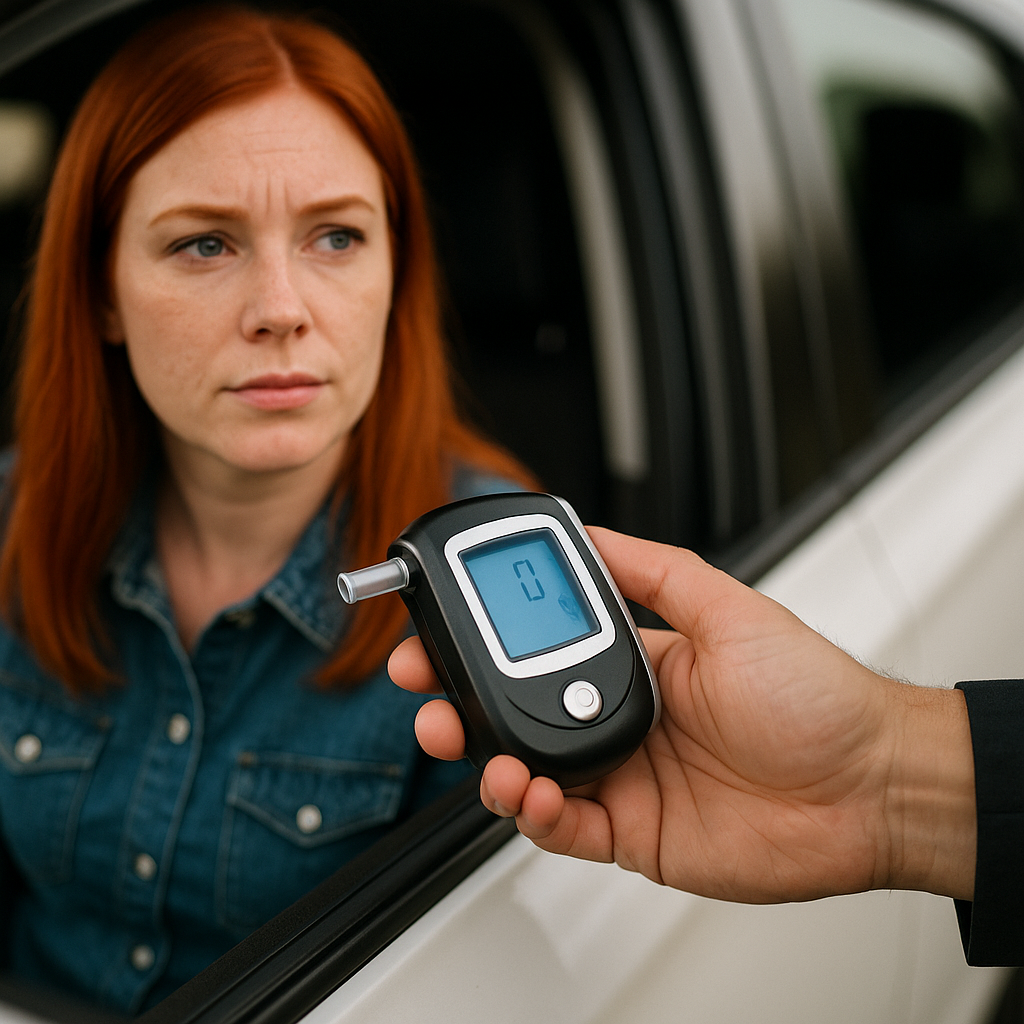
Alaska doesn't require SR-22 filings, but a DUI conviction in Anchorage typically doubles your premiums and forces you into the non-standard market. Here's which carriers still write DUI drivers and what your coverage will cost.
Alaska's DUI Insurance Requirements Without SR-22
Alaska does not require SR-22 certificates of financial responsibility, which eliminates the filing fee and continuous certification burden that exists in 47 other states. After a DUI conviction in Anchorage, the Alaska Division of Motor Vehicles instead mandates proof of liability coverage at minimum state limits for three years, enforced through random verification requests rather than mandatory filing. You submit proof when requested — not continuously through your insurer.
This structure means no $25–50 SR-22 filing fees and no automatic license suspension if your policy lapses, but the DMV can and does audit coverage status at any time during your three-year monitoring period. A lapse discovered during an audit triggers immediate suspension until you provide current proof of insurance. The practical difference: you avoid the SR-22 administrative layer, but you cannot let coverage drop for even a single day without risking suspension.
The three-year period begins from your conviction date, not your arrest date or license reinstatement date. If you were convicted of DUI on March 15, 2024, your mandatory coverage period runs through March 14, 2027, regardless of when you reinstated your license after any suspension. Most Anchorage drivers don't track this correctly and maintain higher-cost non-standard policies longer than legally required. Alaska's point system and violation surcharges
Which Carriers Write DUI Drivers in Anchorage
Standard carriers — GEICO, State Farm, Allstate, Progressive's preferred tier — will non-renew or decline new quotes for Anchorage drivers with a DUI on record. The Alaska non-standard market is limited to roughly six active carriers: Progressive's non-standard tier, The General, National General, Bristol West, Dairyland, and locally appointed independent agents writing through regional carriers like Kemper.
Progressive writes the highest volume of DUI policies in Anchorage through its non-standard division, typically quoting $240–320/month for state minimum liability ($50,000 bodily injury per person, $100,000 per accident, $25,000 property damage). The General and National General run $10–30/month higher on average but may offer better rates if you also have points from speeding violations or at-fault accidents on your record. Bristol West and Dairyland are available through independent agents and sometimes beat captive carriers by 15–20% if you bundle with renters or have a spouse with a clean record.
Alaska's limited carrier competition means shopping all six available options can produce a $600–900 annual difference for the same coverage. Standard-market drivers might see 10–15% variance between quotes; non-standard DUI drivers in Anchorage routinely see 30–40% spreads. Most drivers quote only one or two carriers and overpay for the entire three-year monitoring period. non-standard auto insurance
Premium Impact and Rate Timeline After an Anchorage DUI
A first-offense DUI in Anchorage typically increases your premium by 90–140% at policy renewal, with the exact multiplier depending on your carrier, prior driving record, and coverage limits. A driver paying $110/month pre-DUI should expect $210–265/month post-conviction with a non-standard carrier. Second-offense DUI drivers or those with concurrent violations (speeding 20+ over, reckless driving) often see 150–200% increases or outright declination.
Alaska insurers can surcharge a DUI for up to 10 years under state law, but most carriers apply the heaviest surcharge for the first three to five years and gradually reduce it afterward. Your premium typically drops 20–30% at year four, another 15–25% at year six, and approaches clean-record rates by year eight if you maintain a violation-free record. Switching carriers at the three-year mark — when your mandatory monitoring period ends — is the single highest-leverage action for reducing cost, often producing a 30–50% immediate drop as you re-enter the standard or preferred-risk market.
Your ability to return to standard-market carriers depends on both time and clean record maintenance. Most standard carriers in Alaska require five years from conviction date with no additional violations before considering you for preferred rates. A second speeding ticket or at-fault accident during your monitoring period resets that clock and can lock you in the non-standard market for another three to five years.
License Reinstatement and Coverage Proof Requirements
Anchorage DUI convictions trigger automatic license revocation for 90 days (first offense) or one year (second offense within 10 years), with eligibility for a limited license after 30 days for first-offense drivers who complete alcohol screening and install an ignition interlock device. To reinstate your full license, you must submit proof of insurance to the Alaska DMV, pay a $100 reinstatement fee, complete a state-approved alcohol safety action program, and maintain interlock installation for at least six months.
The DMV requires proof of current liability coverage at or above state minimums at the time of reinstatement — not future coverage or a binder, but an active policy showing current effective dates. Most Anchorage drivers bind their non-standard policy one to three days before their scheduled reinstatement appointment to avoid paying for coverage they cannot use during their suspension. This is legal and does not delay reinstatement, but your three-year mandatory coverage monitoring period begins from conviction, not from policy effective date, so you're already several months into that window at reinstatement.
Ignition interlock requirements add $75–125/month in device lease and monitoring fees, separate from your insurance premium. Some non-standard carriers offer small premium discounts (5–10%) if you maintain an interlock device longer than the minimum required period, treating it as a risk-reduction signal. These discounts rarely exceed $15–20/month and disappear once the device is removed. liability coverage limits and how they work
Coverage Strategy for Anchorage DUI Drivers
Most Anchorage DUI drivers default to state minimum liability to control premium cost, but this creates severe financial exposure in a state with high accident severity. Alaska's average bodily injury claim exceeds $28,000, and the state minimum $50,000 per-person limit leaves you personally liable for any excess. A single moderate-injury accident can produce $80,000–150,000 in medical and lost-wage claims, and Alaska law allows judgment creditors to garnish wages and seize assets if you're underinsured.
Carrying $100,000/$300,000 liability limits instead of state minimums typically adds $30–60/month to your premium but eliminates most personal exposure risk. Uninsured motorist coverage — which protects you if hit by an uninsured driver — adds another $15–30/month and is worth carrying in Anchorage, where roughly 14% of drivers operate without insurance despite the mandatory coverage law. Collision and comprehensive coverage are optional unless you finance your vehicle, and most non-standard carriers price these coverages 20–40% higher for DUI drivers.
Re-shop your policy every 12 months during your three-year monitoring period even if you stay with the same carrier. Non-standard insurers frequently adjust their DUI surcharge schedules, and a carrier that was cheapest at reinstatement may be 25% more expensive than a competitor by year two. Set a calendar reminder for your conviction anniversary date and quote all available carriers 30 days before renewal. The average Anchorage DUI driver who re-shops annually saves $700–1,100 over the three-year period compared to drivers who set-and-forget their initial policy.