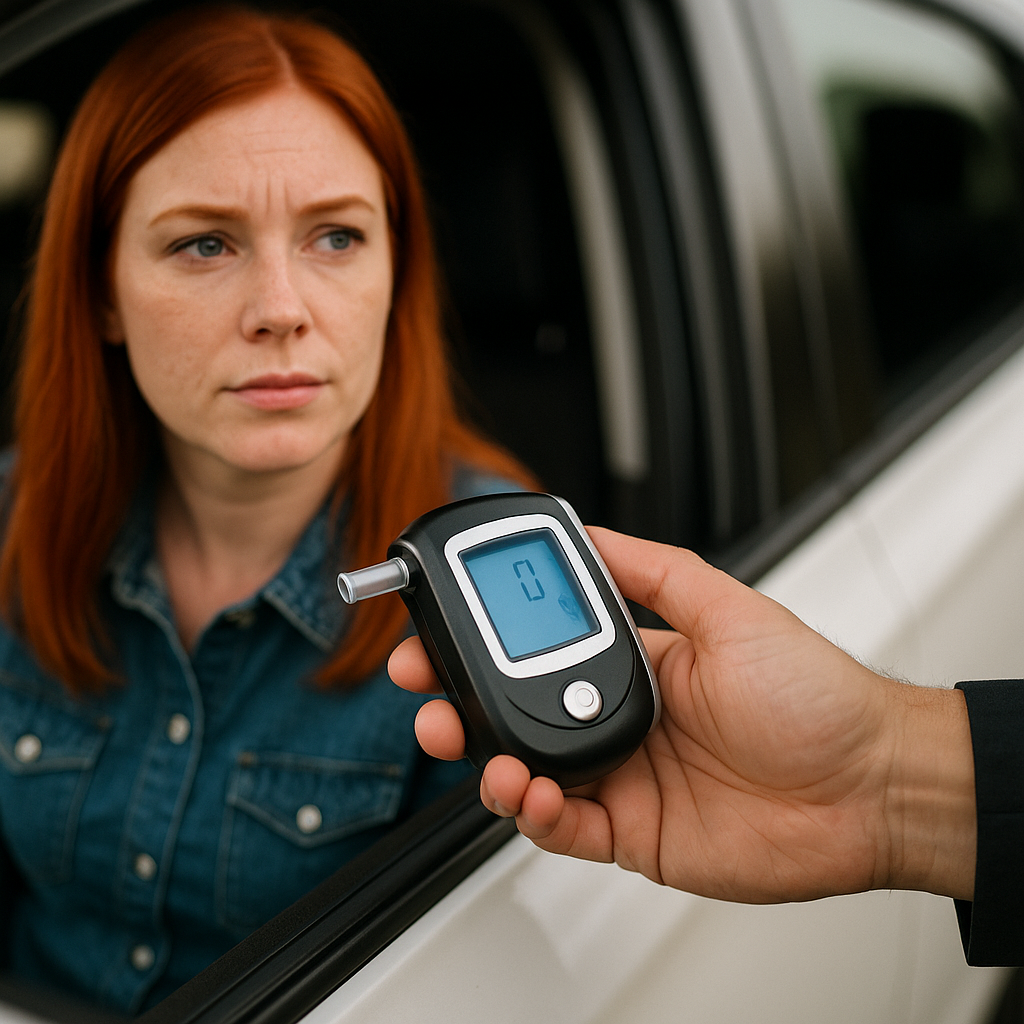
After a DUI in Baton Rouge, most major carriers will non-renew your policy within 30-60 days, but Louisiana's non-standard market includes at least 8 carriers actively writing high-risk drivers with SR-22 filings — and comparing them can cut your premium by 40% or more.
What Happens to Your Current Policy After a DUI in Baton Rouge
Most major carriers — State Farm, Allstate, USAA — will not immediately cancel your policy the day you're convicted of a DUI in East Baton Rouge Parish. Instead, they wait until your current policy term ends, then issue a non-renewal notice 30 to 60 days before expiration. Louisiana law requires insurers to provide at least 30 days' written notice before non-renewing a policy, which means you have a narrow window to secure replacement coverage before your existing policy lapses.
A DUI conviction in Louisiana triggers SR-22 filing requirements for three years from the date of reinstatement, not the date of conviction. The Louisiana Office of Motor Vehicles will suspend your license for 90 days to one year depending on prior offenses, and you cannot reinstate without proof of insurance via SR-22. If your current carrier non-renews you, you will need to find a carrier willing to file SR-22 on your behalf before the OMV will issue a hardship license or reinstate your driving privileges.
The rate impact is immediate and substantial. A first-offense DUI in Louisiana typically raises your annual premium by 70% to 130% compared to your pre-conviction rate, according to Insurance Information Institute data. If you were paying $1,400 per year before the DUI, expect quotes in the $2,400 to $3,200 range from non-standard carriers. The increase persists for the full three-year SR-22 period, then begins to decline as the conviction ages off your record for insurance rating purposes — typically five years in Louisiana.
Which Carriers Write DUI Drivers in Baton Rouge
Louisiana's non-standard auto insurance market is more competitive than neighboring Mississippi or Alabama, with both national carriers and regional specialists actively writing SR-22 policies in East Baton Rouge Parish. Progressive writes DUI drivers directly through its non-standard division and is often the first call for high-risk shoppers, but rarely the lowest quote. GEICO's non-standard arm also writes SR-22 policies in Louisiana, though eligibility depends on the specifics of your conviction and whether you have prior violations.
Regional carriers offer the widest variance in pricing. Southern Fidelity, a Louisiana-domiciled carrier, specializes in high-risk drivers and frequently quotes DUI drivers below the major non-standard carriers, particularly if you bundle a hardship-restricted license with proof of employment. Acceptance Insurance and Direct Auto Insurance both maintain storefronts in Baton Rouge and write walk-in SR-22 business, often with same-day filings, though their rates skew higher than online competitors. National General and Dairyland also write Louisiana SR-22 policies but require broker placement in most cases.
The rate spread between the highest and lowest quote for the same DUI driver in Baton Rouge routinely exceeds 40%. A 32-year-old male with a first-offense DUI, no prior violations, and minimum liability coverage might receive quotes ranging from $210/month to $360/month depending on the carrier. This variance exists because each carrier uses proprietary underwriting models that weight DUI severity, time since conviction, and other risk factors differently. Shopping at least four carriers is not optional — it is the single action most likely to reduce your three-year SR-22 cost by $2,000 or more.
SR-22 Filing Requirements and Costs in Louisiana
Louisiana requires SR-22 filing for DUI convictions, license suspensions for points, and certain repeat violations. The SR-22 itself is not insurance — it is a certificate your insurer files electronically with the Louisiana Office of Motor Vehicles confirming you carry at least minimum liability coverage. The state minimum is 15/30/25: $15,000 bodily injury per person, $30,000 per accident, and $25,000 property damage. Most non-standard carriers will not write you for less than state minimums, and some require higher limits to offset their risk.
The SR-22 filing fee is typically $15 to $35 as a one-time charge when your insurer submits the certificate to the OMV. This fee is separate from your premium and is non-refundable. If you switch carriers during your three-year SR-22 period, your new insurer must file a new SR-22, and your old insurer will file an SR-26 cancellation notice. If the OMV receives an SR-26 without a replacement SR-22 on file, your license is automatically re-suspended, often without advance notice, and you must restart the SR-22 clock from zero.
Louisiana's three-year SR-22 requirement begins on the date of license reinstatement, not the date of conviction or arrest. If your license is suspended for 12 months and you wait six months after eligibility to reinstate, your SR-22 period does not start until you actually file for reinstatement. This is a common and expensive mistake — drivers assume the clock starts at conviction and let their SR-22 lapse after three years, only to discover the OMV considers them non-compliant because they miscounted from the wrong date. Verify your SR-22 start date with the OMV directly, not your insurer. Louisiana SR-22 requirements SR-22 insurance
How Long a DUI Affects Your Rates in Louisiana
A DUI conviction in Louisiana remains on your driving record for 10 years under state law, but insurers typically rate it as a major violation for five years. This means your premiums will remain elevated for five years from the date of conviction, after which most carriers will stop applying the DUI surcharge — though the conviction still appears on your record and may affect underwriting decisions for the full decade.
The rate increase follows a predictable decay curve. Years one through three — while SR-22 is active — see the steepest surcharges, often 80% to 130% above your clean-record rate. In year four, the surcharge typically drops to 40% to 60%, and by year five it falls to 20% to 30% or disappears entirely if you've maintained a clean record since the DUI. Drivers who accumulate additional violations during the five-year lookback period reset the clock and may be moved into assigned risk pools or declined coverage entirely.
Your credit score also plays an outsized role in post-DUI pricing. Louisiana is one of 45 states that allows insurers to use credit-based insurance scores in underwriting. A DUI driver with excellent credit may receive quotes 25% to 35% lower than a DUI driver with poor credit, all else equal. If your credit took a hit during the same period as your DUI — job loss, medical bills, other financial strain — rebuilding credit and re-shopping your insurance every six months can produce rate drops that compound over time.
Once you pass the five-year mark with no new violations, you become eligible for standard market carriers again. This is the point where aggressive re-shopping pays the largest dividend. Drivers who stay with their non-standard carrier out of inertia often overpay by $600 to $1,200 per year compared to a clean-record rate from a standard carrier. Set a calendar reminder for 60 months post-conviction and shop at least five standard carriers the moment you cross that threshold.
Hardship Licenses and Ignition Interlock Requirements
Louisiana offers restricted hardship licenses to first-offense DUI drivers after serving a minimum suspension period — typically 30 days of the 90-day total suspension. To qualify, you must file SR-22, pay a $100 reinstatement fee, and prove financial hardship or employment need. The hardship license restricts you to driving to and from work, school, medical appointments, and court-ordered programs. Violating the restrictions voids the hardship privilege and extends your full suspension.
Ignition interlock devices are required for all DUI offenders in Louisiana under Act 315, which took effect in 2018. First offenders must install an IID for six months, and the device cost averages $75 to $125 per month including installation, monitoring, and calibration. Your insurer does not pay for the IID, and installation does not reduce your premium — though some non-standard carriers offer small discounts if you complete the IID period without violations.
Some non-standard carriers in Louisiana will not write you a policy until the IID is installed and verified by the OMV. This creates a timing problem: you need insurance to get the hardship license, but the insurer wants proof of IID installation before binding coverage. The workaround is to pay for IID installation out-of-pocket first, obtain the OMV installation certificate, then shop carriers with proof in hand. Waiting to install the IID until after you secure insurance often results in delayed SR-22 filing and extended license suspension.
Comparing Quotes: What to Ask and What to Expect
When you call a non-standard carrier for a DUI quote, lead with three pieces of information: your DUI conviction date, your SR-22 requirement duration, and whether you currently have an ignition interlock device installed. This allows the underwriter to determine eligibility immediately and prevents wasted time on carriers who will not write your profile. Ask for quotes at both state minimum limits and 50/100/50 limits — the premium difference is often $15 to $30 per month, and higher limits protect your assets if you cause another accident during your SR-22 period.
Request the full three-year cost estimate, not just the six-month premium. Some carriers offer low introductory rates that spike at renewal, while others front-load the surcharge and offer small decreases each term. A carrier quoting $240/month for the first six months and $280/month thereafter is more expensive over three years than a carrier quoting a flat $260/month, even though the first quote looks cheaper up front. Ask whether the rate is locked or subject to renewal increases based on company-wide rate filings.
If you receive a quote above $350/month for minimum liability coverage with a first-offense DUI and no other violations, you are being overcharged or placed with the wrong carrier. Re-shop immediately and consider working with an independent agent who has access to multiple non-standard markets. Captive agents — those who work for a single carrier — cannot comparison-shop on your behalf and often have no non-standard options if their primary carrier declines you.
What to Do If You're Declined by Multiple Carriers
If three or more non-standard carriers decline you outright, you likely have compounding risk factors: a second DUI, a DUI combined with an at-fault accident, a suspended license at the time of the DUI, or a recent lapse in coverage. Louisiana does not operate a state-assigned risk pool, but it does participate in the Louisiana Automobile Insurance Plan (LAIP), a residual market mechanism that guarantees coverage to drivers who cannot obtain it in the voluntary market.
LAIP assigns you to a participating insurer who must offer you a policy at state-approved rates. The rates are high — often 30% to 50% above the most expensive voluntary market quote — but LAIP ensures you can meet SR-22 requirements and reinstate your license. You apply through a licensed agent; you cannot apply directly to LAIP. Once placed, you remain in LAIP until you qualify for voluntary market coverage, typically after 12 to 18 months of continuous coverage without new violations.
If cost is prohibitive even in LAIP, consider whether you can defer reinstatement and rely on alternative transportation until you have stable income or improved credit. Reinstating your license, paying for SR-22, and then letting the policy lapse due to non-payment restarts the SR-22 clock and adds a coverage lapse to your record, which raises future premiums by another 10% to 20%. It is better to wait an extra six months and reinstate once than to reinstate prematurely, lapse, and restart the cycle.