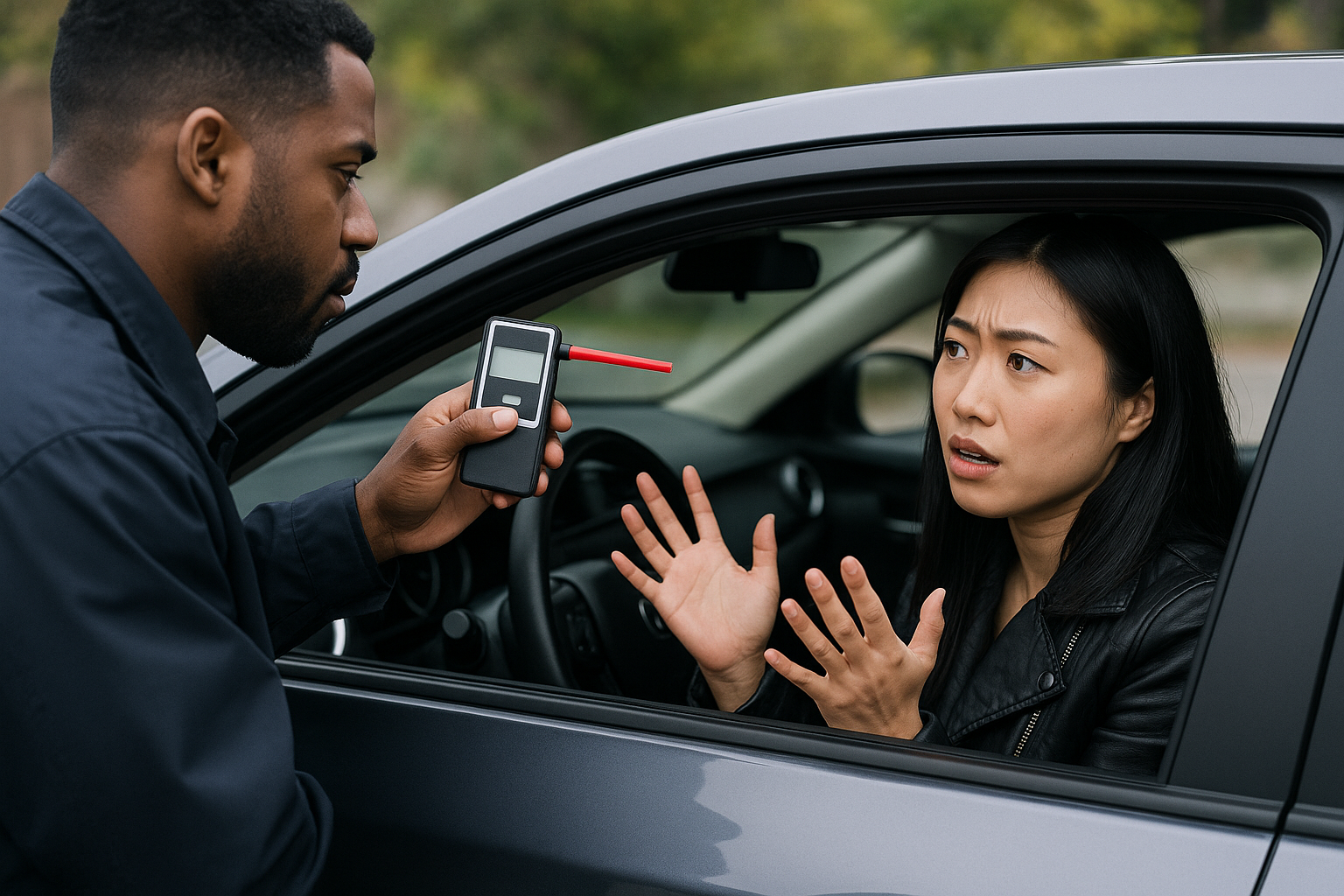
A DUI conviction in California triggers a 3-year SR-22 requirement and rate increases averaging 120–180%. Most standard carriers will drop you, but a small group of non-standard insurers specialize in post-DUI coverage — and their rates vary wildly.
What Changes Immediately After a California DUI Conviction
Your current insurer will either non-renew your policy at the next renewal period or cancel you outright if you were convicted during the policy term. California law requires insurers to check DMV records at renewal, so even if you don't report the DUI, they will discover it. Most standard carriers — State Farm, Allstate, Farmers — will not renew a policy after a DUI conviction appears on your record.
The California DMV suspends your license immediately upon DUI conviction. To reinstate, you must complete DUI school, pay a $125 reissue fee, and file an SR-22 certificate of financial responsibility for 3 years from the conviction date. The SR-22 itself costs $15–25 to file, but it must be attached to an active auto insurance policy with minimum liability limits of 15/30/5. If your policy lapses or cancels during the 3-year period, the insurer notifies the DMV within 15 days and your license is re-suspended.
Your rate increase depends on your prior driving record and the insurer you move to. California drivers with clean records before a DUI see rate increases averaging 120–180% with non-standard carriers. If you had prior violations or accidents, expect increases of 200% or more. A driver paying $150/month before a DUI should budget $330–420/month with a non-standard carrier, and potentially $500+/month if moving to a surplus lines insurer. California SR-22 insurance requirements
Admitted vs. Non-Admitted Carriers: The Structure That Determines Your Cost
California's post-DUI insurance market splits into two categories that function completely differently. Admitted non-standard carriers are licensed and regulated by the California Department of Insurance, participate in the state guarantee fund, and can file SR-22 certificates directly with the DMV on your behalf. Non-admitted surplus lines carriers are out-of-state insurers not subject to California rate regulation, do not participate in the guarantee fund, and typically require you to file the SR-22 separately through a third-party service.
Admitted carriers allow monthly installment payments, even for high-risk drivers. They must follow California's premium payment rules, which cap installment fees and require specific notice periods before cancellation for non-payment. Non-admitted carriers typically require 6-month or 12-month prepayment, which can mean $2,000–3,500 upfront for post-DUI coverage. This prepayment requirement is the single biggest barrier for California DUI drivers trying to reinstate their license.
The rate difference between admitted and non-admitted carriers is not always predictable. Some surplus lines carriers charge 20–30% more than admitted carriers for the same driver profile. Others are competitive or even cheaper, particularly for drivers with multiple violations or a second DUI. The lack of rate regulation means surplus lines carriers can price risk more aggressively in both directions — they may offer lower rates to drivers other carriers won't touch, or they may charge double what an admitted carrier would. non-standard auto insurance
Which Non-Standard Carriers Write Post-DUI Coverage in California
The admitted non-standard market in California is dominated by five carriers that consistently write post-DUI policies with SR-22 filing: Bristol West, Acceptance Insurance, Freeway Insurance, Infinity Insurance, and Fred Loya Insurance. All five are admitted carriers, file SR-22 directly, and allow monthly payments. Rates vary significantly by ZIP code, age, and prior record — a 35-year-old in San Diego with a single DUI and no other violations might pay $280/month with Bristol West and $340/month with Acceptance for the same 15/30/5 liability coverage.
Progressive and GEICO will sometimes write post-DUI policies in California, but only for drivers with a single DUI and no other recent violations. Both insurers will non-renew if you accumulate additional violations during the policy term. Their rates for DUI drivers are typically 10–20% higher than their standard market rates, which still makes them cheaper than most dedicated non-standard carriers. However, both require at least 6 months to have passed since the conviction date before they will quote you.
Surplus lines carriers accessible in California include Topa Insurance, Alliance United, and several Lloyd's of London syndicates that write high-risk auto through managing general agencies. These carriers typically surface when you work with an independent agent or high-risk insurance broker. They quote drivers that admitted carriers reject outright — second or third DUIs, DUI with accident involvement, or DUI combined with a suspended license for other violations. Expect full prepayment requirements and 30–50% higher premiums than admitted carriers, but in some cases these are the only options that will write you a policy. SR-22 certificate filing process
California DUI Rate Calculation: What Drives Your Premium
California uses a pure premium rating system for admitted carriers, which means your rate is based primarily on the statistical likelihood of a future claim given your profile. A DUI conviction increases your assigned risk score dramatically — insurers treat it as one of the strongest predictors of future claims. The Insurance Information Institute reports that drivers with a DUI are 2.7 times more likely to file a liability claim in the 3 years following conviction compared to drivers with clean records.
Your rate also depends on how much time has passed since the conviction. Most non-standard carriers use a sliding surcharge: 100% surcharge in year one, 80% in year two, 60% in year three. After 3 years, the DUI remains on your California driving record but insurers begin to reduce the surcharge. By year 5, many carriers treat the DUI as a minor factor. After 10 years, it falls off your DMV record entirely and no longer affects your rate. However, if you accumulate any additional violations during the 10-year period, the timeline resets.
Non-admitted carriers do not follow California's rating rules and can price however they choose. Some use flat-rate pricing tiers based on violation type rather than sliding surcharges. Others adjust rates quarterly based on claims experience across their entire California book of business. This creates pricing volatility — your 6-month renewal premium with a surplus lines carrier might increase 15–25% even if you had no additional violations, simply because the carrier's overall loss ratio changed.
SR-22 Filing Mechanics and the 3-Year Compliance Period
California requires continuous SR-22 filing for 3 years from your DUI conviction date, not from the date you reinstate your license. If your license was suspended for 6 months before you obtained insurance and filed SR-22, you still owe the full 3 years from conviction. The DMV does not credit you for time spent without a license. Your SR-22 requirement ends exactly 3 years after conviction, and your insurer will notify the DMV when the filing period is complete.
Any lapse in coverage during the 3-year period triggers an automatic license suspension. If your policy cancels for non-payment, the insurer sends a cancellation notice to the DMV within 15 days. The DMV suspends your license immediately and will not reinstate it until you file a new SR-22 attached to an active policy and pay a $55 suspension lift fee. The 3-year clock does not pause during a lapse — you still owe the full 3 years of continuous filing from the original conviction date, but you must also resolve the suspension and pay the lift fee each time you lapse.
Some drivers try to satisfy the SR-22 requirement with a non-owner policy if they don't own a vehicle. California allows this, but non-owner SR-22 policies do not provide coverage if you drive a vehicle you own or have regular access to. If you live with someone who owns a car and you drive it regularly, you need a standard policy with SR-22, not a non-owner policy. Premiums for non-owner SR-22 policies typically run $40–80/month with non-standard carriers, compared to $280–400/month for a standard liability-only policy.
How to Shop Post-DUI Coverage and Compare Real Quotes
Most online insurance comparison tools exclude non-standard carriers entirely, which means you won't see quotes from the carriers that actually write post-DUI policies. State Farm and Allstate will show up in comparison results, but both will decline to quote you once the DUI appears in underwriting. To access the non-standard market, you need to work with an independent agent who contracts with admitted non-standard carriers, or use a high-risk-specific quoting platform that includes Bristol West, Acceptance, and similar insurers.
When comparing quotes, focus on the total 6-month cost and the payment structure, not just the monthly premium. A carrier quoting $300/month with a $200 down payment costs $2,000 for 6 months. A carrier quoting $320/month with no down payment costs $1,920 for the same period. Non-standard carriers often bury the cost difference in down payment and installment fees. Ask for the total 6-month premium in writing before you commit.
Re-shop your coverage every 6 months during the SR-22 period. Non-standard carrier rates are volatile and change frequently based on their loss ratios and risk appetite in California. A carrier that quoted you $350/month at reinstatement might quote $280/month 6 months later, or vice versa. Once you complete the 3-year SR-22 requirement, immediately re-shop with standard carriers — Progressive and GEICO will often write you at significantly lower rates once the SR-22 filing ends, even though the DUI remains on your record for 7 more years.