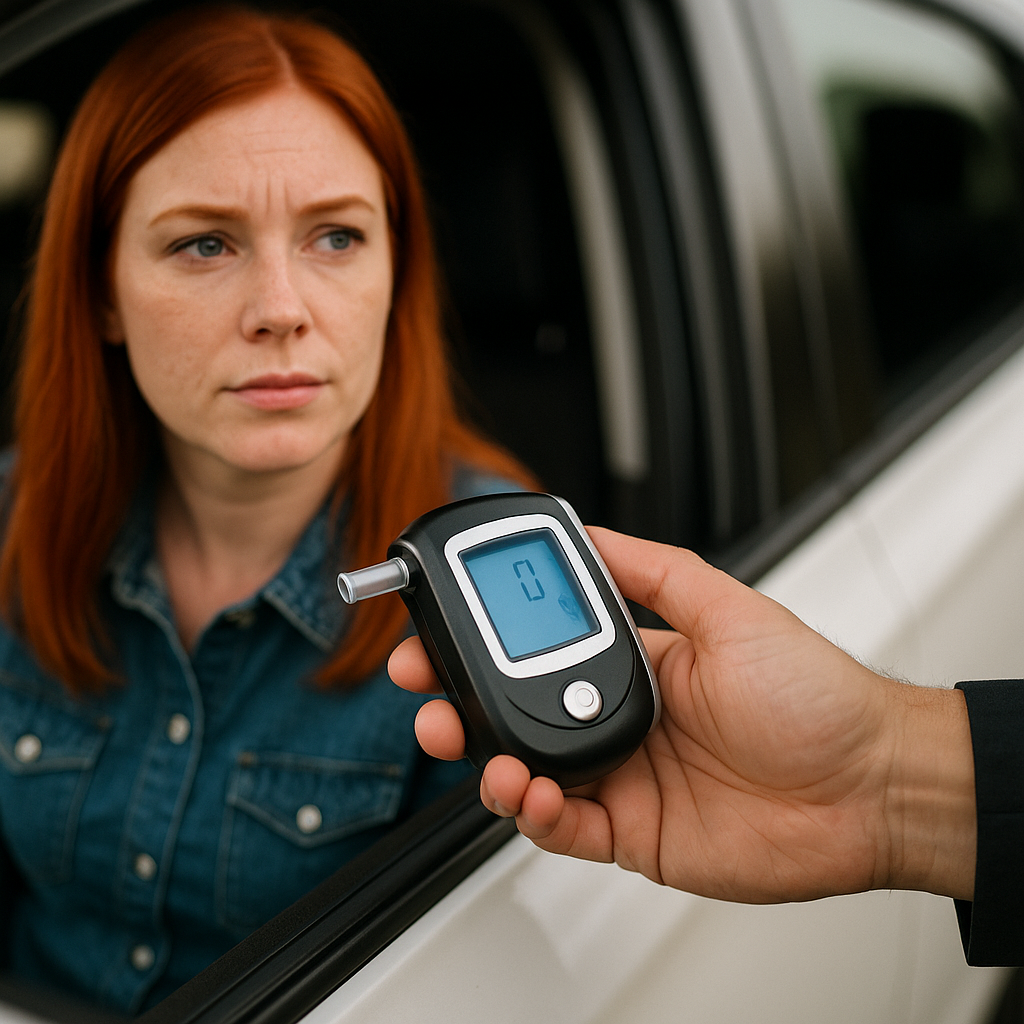
Virginia requires SR-22 filing after a DUI, and in Chesapeake you'll face a 3-year filing period plus a minimum 70% rate increase. Several standard and non-standard carriers still write coverage here — the key is knowing which underwriters remain active in the Hampton Roads market.
What a DUI Triggers in Virginia: SR-22, Points, and License Reinstatement
A DUI conviction in Virginia adds 6 demerit points to your driving record and triggers an automatic license suspension — first offense typically results in a 12-month administrative suspension, though court-ordered restrictions may differ. To reinstate your license, Virginia DMV requires you to submit an SR-22 certificate from an authorized insurer and maintain it for 3 years from your reinstatement date. The SR-22 itself costs $15–50 to file depending on your carrier, but the real cost is the premium increase that accompanies it.
Virginia's demerit point system runs separately from your insurance record. The 6 points from a DUI remain on your DMV driving record for 11 years, but insurers typically surcharge for the conviction itself for 3 to 5 years. This means your rates will normalize faster than your DMV record clears, assuming no additional violations during that window.
Reinstatement in Virginia after a DUI requires completion of the Virginia Alcohol Safety Action Program (VASAP), payment of a $145 reinstatement fee to DMV, proof of insurance via SR-22, and in some cases installation of an ignition interlock device. Your SR-22 filing period begins on your reinstatement date — not your conviction date — so delays in completing VASAP or paying fees extend the timeline before your 3-year clock starts. Virginia's SR-22 requirements and filing duration
Post-DUI Rate Increases in Chesapeake: What to Expect by Carrier Type
Drivers in Chesapeake with a DUI conviction typically see rate increases between 70% and 130% compared to their pre-conviction premium, though the exact multiplier depends heavily on which carrier you're placed with and your prior driving history. Standard carriers like State Farm and Geico often non-renew or move you to a higher-risk tier within their portfolio, while non-standard carriers like The General, Direct Auto, and National General actively underwrite DUI risks and price accordingly.
A clean-record driver in Chesapeake paying $1,200 per year before a DUI can expect post-conviction quotes ranging from $2,040 to $2,760 annually with standard carriers that choose to retain them, or $2,400 to $3,600 annually with non-standard specialists. The wide spread reflects underwriting philosophy: some carriers exit the risk entirely, others price aggressively to capture volume in the non-standard segment, and a few attempt to retain long-term customers at elevated but not prohibitive rates.
Chesapeake sits within the Hampton Roads metro insurance market, where competition among non-standard carriers is higher than in rural Virginia markets. This means rate shopping produces materially different results here than it would in Southwest Virginia or the Shenandoah Valley, where fewer carriers actively bid on DUI risks. Pulling quotes from at least four carriers — mixing both retained standard options and active non-standard underwriters — is the minimum threshold for ensuring you're not overpaying by 40% or more for identical coverage. non-standard auto insurance carriers
Which Carriers Still Write DUI Policies in Chesapeake
Several national and regional carriers maintain active underwriting for DUI drivers in Chesapeake, though not all operate through the same distribution channels. Non-standard specialists like The General, Acceptance Insurance, and Direct Auto write policies specifically designed for high-risk drivers and typically offer SR-22 filing as a standard service. These carriers expect DUI applicants and price them into their core book of business.
Some standard carriers — including State Farm, Nationwide, and Progressive — will consider retaining existing customers after a DUI, particularly if the driver has a long claim-free history with the company. Retention rates vary by underwriting guidelines and state-specific risk appetite, but drivers with 5+ years of prior continuous coverage and no other violations in the past 3 years have the highest likelihood of being retained at a surcharged rate rather than non-renewed. Progressive in particular operates a tiered system where DUI drivers may be moved to a higher-risk subsidiary but remain within the corporate family.
Regional carriers active in Virginia's non-standard market include National General and Bristol West, both of which write SR-22 policies in Chesapeake and compete on price in the post-DUI segment. Local independent agents in Chesapeake often have access to these carriers plus smaller surplus lines insurers that specialize in hard-to-place risks. Working with an independent agent who represents multiple non-standard carriers can surface options that direct-to-consumer channels do not offer, particularly for drivers with layered violations or lapses in addition to the DUI.
SR-22 Filing Mechanics in Virginia: What Happens When You Lapse
Virginia requires continuous SR-22 coverage for the full 3-year filing period. If your policy lapses for any reason — non-payment, cancellation, switching carriers without filing a new SR-22 — your insurer is legally required to notify Virginia DMV within 10 days. DMV then suspends your license and your 3-year SR-22 clock resets from the date you reinstate with a new SR-22 filing.
This reset provision is the costliest mistake post-DUI drivers make. A lapse 2.5 years into your filing period does not leave you with 6 months remaining — it restarts the entire 3-year requirement from your new reinstatement date. Reinstatement after a lapse also requires a second $145 reinstatement fee to DMV, plus any late fees or policy reinstatement charges from your carrier.
To avoid lapses, set up automatic payment with your carrier and maintain a buffer in your payment account. If you need to switch carriers during your SR-22 period — for rate savings or service reasons — coordinate the new policy effective date to overlap with your current policy's cancellation date by at least one day. Your new carrier will file an SR-22 with DMV, and as long as there is no gap in coverage dates, your filing period continues uninterrupted. Most carriers allow you to bind a new policy up to 30 days in advance, giving you a clean transition window. how SR-22 insurance works
Rate Recovery Timeline: When Premiums Start Dropping
Virginia insurers typically surcharge a DUI conviction for 3 to 5 years from the conviction date, with the largest rate impact occurring in years one and two. After year three, many carriers begin reducing the surcharge incrementally, and by year five most standard carriers treat the conviction as outside their lookback window for preferred pricing.
Your SR-22 requirement ends 3 years after reinstatement, but your rate recovery does not necessarily align with that date. If you were convicted in January 2023, reinstated in July 2023, and maintain a clean record, your SR-22 filing ends in July 2026 but your rate surcharge may persist through January 2026 or 2028 depending on your carrier's underwriting rules. The SR-22 filing itself adds minimal cost — the rate impact comes from the underlying DUI conviction, which insurers track independently.
Re-shopping your policy at the 3-year post-conviction mark is critical. Carriers that would not write you immediately after your DUI may now offer competitive rates, and carriers that retained you at a high surcharge may not automatically lower your premium without a renewal negotiation or competitive quote to respond to. Drivers who do not re-shop at the 3-year mark often overpay by 30% to 50% compared to what newly available standard carriers would charge for the same coverage.
Maintaining a violation-free record during your SR-22 period is the only factor under your direct control that influences rate recovery speed. A second violation during this window — even a minor speeding ticket — extends your high-risk classification and resets the timeline most carriers use to evaluate your risk profile. Defensive driving courses do not remove demerit points for a DUI in Virginia, but some carriers offer small premium discounts for completion, typically 5% to 10%.
How Chesapeake's Local Market Affects Your Options
Chesapeake's position within the Hampton Roads metro area gives you access to a denser network of independent agents and non-standard carriers than you would find in more rural parts of Virginia. The proximity to Norfolk, Virginia Beach, and Newport News means multiple regional underwriters maintain physical agent networks and compete actively for high-risk business, which translates to better rate dispersion and more coverage options.
Local independent agents in Chesapeake often represent 6 to 10 carriers, including non-standard specialists that do not sell direct to consumers online. These relationships give agents access to underwriting discretion and promotional rates that are not visible on aggregator sites. For DUI drivers, working with an agent who writes volume in the non-standard segment can surface options priced 15% to 25% below the lowest online quote, particularly if you have other risk factors like a lapse or prior at-fault accident layered on top of the DUI.
Chesapeake's market also supports several regional carriers that specialize in Virginia-only or Southeast-only business, such as Virginia Farm Bureau and Erie Insurance. These carriers occasionally offer more favorable DUI underwriting than national competitors, particularly for drivers with deep Virginia residency history and bundled home or renters policies. Not all of these carriers appear on national comparison tools, which is why local agent relationships remain relevant in the non-standard segment despite the dominance of online shopping for clean-record drivers.