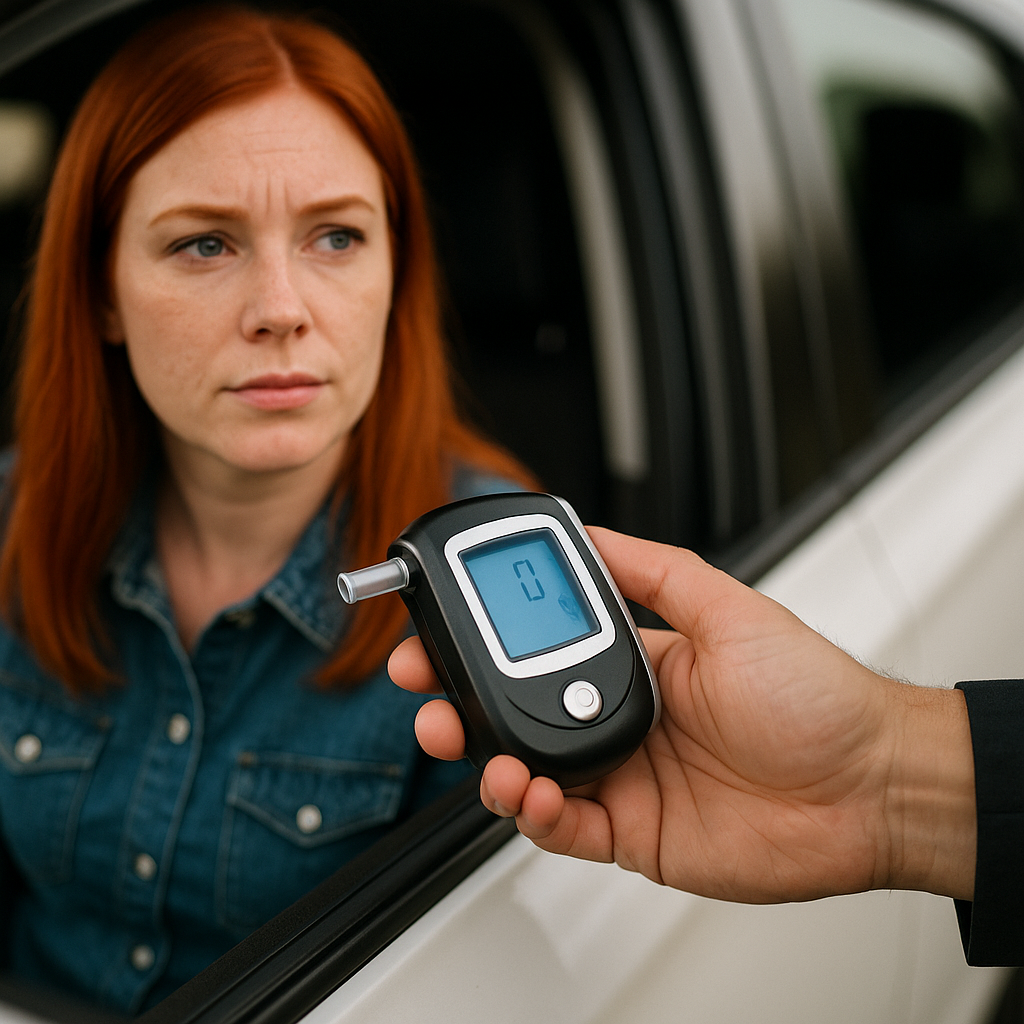
Cincinnati DUI drivers face a 3-year SR-22 requirement and average rate increases of 90–140%, but a dozen carriers still compete for your business — including three that specialize in immediate post-conviction coverage.
What a DUI Does to Your Insurance Status in Ohio
Ohio classifies a DUI as a major moving violation that triggers a mandatory SR-22 filing with the Ohio BMV for three years from your reinstatement date. Your license suspension runs 90 days minimum for a first offense, one year for a second, and two years for a third. The SR-22 clock does not start until your license is reinstated — if you wait six months to reinstate, you've added six months to your total SR-22 obligation.
Cincinnati drivers see post-DUI rate increases ranging from 90% to 140% depending on carrier, age, and prior history. A 35-year-old male paying $95/month before a DUI typically faces $180–$228/month after conviction with SR-22. That rate holds for the full three-year SR-22 period, then drops 30–50% once the filing requirement ends and you can shop standard carriers again.
Ohio does not require an ignition interlock device for first-time DUI offenders with a BAC below 0.17%, but if your court order includes an interlock, you'll need specialized coverage endorsements. Only seven carriers in the Cincinnati market write interlock-required policies, and monthly premiums run $40–$70 higher than standard SR-22 coverage. Ohio's SR-22 requirements
Which Carriers Write DUI Drivers in Cincinnati Right Now
Twelve carriers actively write SR-22 policies for DUI drivers in Hamilton County, but their underwriting speed and eligibility windows vary significantly. Progressive, Bristol West, and The General bind same-day SR-22 policies for drivers within 30 days of conviction — critical if you're facing a court deadline. State Auto and Grange require 60 days post-conviction before they'll quote, but often beat Progressive's rates by 15–25% once you're eligible.
Nationwide and Kemper write Cincinnati DUI policies but tier pricing aggressively based on BAC level and refusal status. A first-offense DUI with BAC 0.08–0.12% qualifies for their standard high-risk tier; anything above 0.15% or a refusal pushes you into their highest-cost tier, where monthly premiums run $240–$310 for minimum Ohio liability limits of 25/50/25.
Three regional carriers — Merchants Insurance Group, Westfield, and Cincinnati Insurance — will write post-DUI policies but only for drivers with 10+ years of prior clean history and homeowner bundling. If you qualify, their rates undercut the non-standard specialists by 20–30%, but approval takes 7–10 business days and requires manual underwriting review.
SR-22 Filing Costs and Reinstatement Fees in Ohio
The SR-22 certificate itself costs $15–$50 depending on carrier — Progressive charges $25, The General charges $50, and State Auto includes it at no additional fee. This is a one-time filing fee per policy term, so if you switch carriers during your three-year SR-22 period, you'll pay the fee again with the new carrier.
Ohio BMV reinstatement fees for a first-offense DUI total $475: $375 for the license reinstatement and $100 for the DUI/OVI-specific administrative fee. If you had an administrative license suspension (ALS) in addition to the court suspension, add another $475. The BMV will not reinstate your license until your SR-22 is on file, so coordinate your insurance effective date to match your eligibility date exactly — starting coverage earlier doesn't shorten your suspension.
Cincinnati municipal court and Hamilton County court both allow payment plans for fines and fees, but neither will release your driving privileges until your SR-22 is filed and proof is submitted to the court. Most carriers file electronically with the BMV within 24 hours, but paper filings take 7–10 business days — confirm your carrier's filing method before your reinstatement appointment. SR-22 insurance
How Long You'll Pay High-Risk Rates
Your SR-22 requirement runs three years from reinstatement, but your elevated premiums typically extend 5–7 years because the DUI conviction remains on your Ohio driving record for six years and most standard carriers review 5-year loss histories during underwriting. Year one post-reinstatement, you'll pay the highest rates — 90–140% above your pre-DUI premium. Year two drops 10–15% as you accumulate clean driving time. Year three, when your SR-22 ends, you can shop standard carriers again and often see a 30–50% rate reduction.
After your SR-22 period ends, you must request your carrier cancel the filing with the BMV — it does not terminate automatically. If you let your policy lapse during the three-year SR-22 period, the carrier is required to notify the BMV within 15 days, triggering an immediate license suspension. Reinstatement after an SR-22 lapse requires starting the entire three-year filing period over from scratch.
The fastest rate recovery path in Cincinnati is to maintain continuous coverage for the full SR-22 period, add a second vehicle or homeowner policy for multi-policy discounts once you're two years post-conviction, and shop at least three non-standard carriers annually. Drivers who follow this approach see their rates normalize to within 20% of standard market pricing by year five, even though the DUI remains on record for six.
What to Do If You're Uninsured at Conviction
If you didn't have insurance when you were convicted, you cannot drive legally until you purchase an SR-22 policy and the BMV confirms the filing. You do not need to own a vehicle to carry SR-22 coverage — Ohio allows non-owner SR-22 policies that provide liability-only coverage when you drive borrowed or rental vehicles. Progressive, The General, and Bristol West all write non-owner SR-22 policies in Cincinnati, with monthly premiums running $55–$95 for state minimum 25/50/25 liability limits.
Non-owner SR-22 satisfies your Ohio filing requirement and keeps your license active, but it does not cover a vehicle you own or regularly drive. If you purchase a vehicle during your SR-22 period, you must upgrade to an owner SR-22 policy within 30 days and notify the BMV of the change — the non-owner filing does not transfer automatically.
Four carriers in Cincinnati — GEICO, Allstate, Liberty Mutual, and Safeco — do not write SR-22 policies at all, regardless of violation type or time elapsed. If you had coverage with one of these carriers before your DUI, you'll need to switch to a non-standard carrier for the three-year SR-22 period, then can return to a standard carrier once the filing requirement ends.
Shopping Strategy for Cincinnati DUI Drivers
Rate spreads for identical SR-22 coverage in Cincinnati regularly exceed $100/month between the highest and lowest quotes. A 40-year-old male with a first-offense DUI might see quotes ranging from $165/month (State Auto) to $285/month (The General) for the same 25/50/25 liability limits. The variance comes from how each carrier weights BAC level, refusal status, prior claims history, and ZIP code risk factors.
Request quotes from at least one captive carrier (State Farm agents sometimes write DUI policies through non-standard subsidiaries), one direct non-standard carrier (Progressive or The General), and one regional specialist (Merchants or Westfield if you have homeowner bundling). Provide your exact BAC reading, refusal status, and conviction date — underwriting models treat a 0.09% BAC first offense very differently from a 0.18% refusal.
Cincinnati's competitive market means annual re-shopping delivers measurable savings. Drivers who re-shop every 12 months during their SR-22 period save an average of $420–$680 over three years compared to drivers who stay with their initial post-DUI carrier. Set a calendar reminder 30 days before each policy renewal to request new quotes — your risk profile improves every year you maintain clean driving, and carriers adjust pricing accordingly.