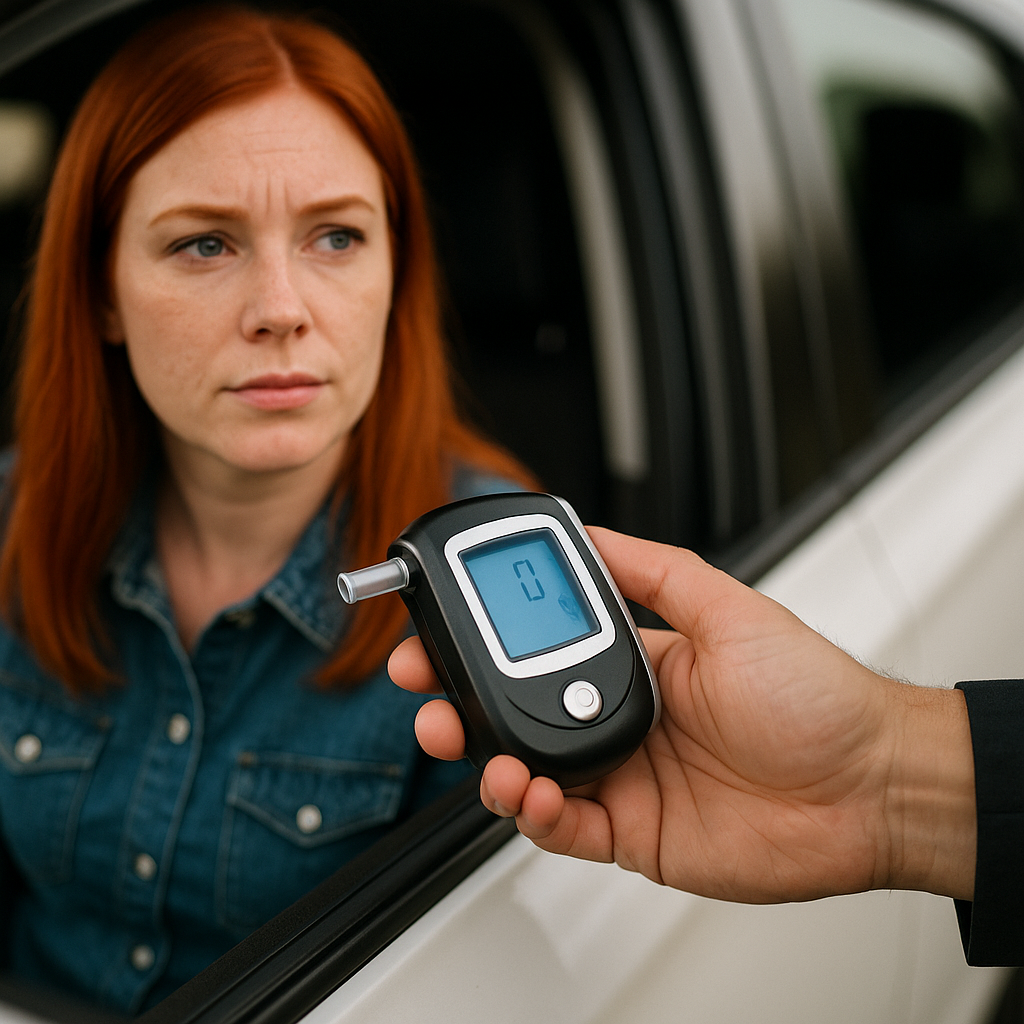
A DUI in Cleveland triggers SR-22 filing requirements and doubles or triples your premium, but eight major carriers still write policies for high-risk drivers — including some that specialize in immediate post-conviction coverage.
What Changes the Day Your DUI Conviction Posts in Ohio
Ohio BMV suspends your license for a minimum of six months on a first-offense DUI, requires SR-22 filing for three years post-reinstatement, and mandates high-risk classification with every carrier that pulls your MVR. Your current insurer receives automated notice of the conviction within 7–14 days and will either non-renew your policy at the next renewal date or surcharge you 80–150% immediately if they choose to retain you. Most standard carriers — State Farm, Nationwide, Allstate — non-renew Ohio DUI drivers rather than file SR-22, which forces you into the non-standard market whether you want to shop or not.
The SR-22 itself costs $25–50 to file in Ohio and runs for three years from your reinstatement date, not your conviction date. If you delay reinstatement by six months, your SR-22 clock starts six months later. The financial impact is not the filing fee — it is the 100–180% rate increase that accompanies high-risk classification. A Cleveland driver paying $110/month pre-DUI typically sees quotes between $240–$450/month post-conviction depending on carrier, coverage limits, age, and whether they carry other violations.
Ohio does not allow you to drive during the suspension period even with SR-22 on file. You must complete the suspension, pay reinstatement fees (typically $475 for a first DUI), file SR-22, and then receive a valid license before you can legally operate a vehicle. Some drivers attempt to maintain coverage during suspension to avoid a lapse surcharge when reinstating — this can save 15–25% on post-reinstatement quotes, but you are paying premiums on a policy you cannot legally use. Ohio SR-22 requirements non-standard auto insurance
Eight Carriers Writing DUI Drivers in Cleveland — And What They Actually Cost
Three non-standard carriers dominate the Cleveland post-DUI market because they quote immediately and file SR-22 without internal waiting periods: Acceptance Insurance (quotes average $320/month for a 35-year-old male with a first DUI and state minimum liability), Progressive's high-risk division (quotes average $280/month same profile), and National General (quotes average $350/month). All three file SR-22 electronically with Ohio BMV within 24–48 hours of binding coverage, which means you can reinstate your license the same week if your suspension period has ended and fees are paid.
Five additional carriers write Ohio DUI drivers but impose internal underwriting restrictions that delay eligibility: The General quotes drivers with DUIs older than 12 months, Bristol West writes DUIs older than 18 months, Dairyland writes DUIs older than 24 months, and both Kemper and Safe Auto evaluate on a case-by-case basis starting at 12 months post-conviction. If you are 90 days post-conviction and need coverage to reinstate tomorrow, only Acceptance, Progressive, and National General will quote you in Cleveland. If you are 18 months post-conviction with no additional violations, you gain access to Bristol West and Dairyland, which often quote 20–30% lower than the immediate-coverage carriers.
Standard carriers like State Farm, Nationwide, Erie, and Grange do not write new policies for DUI drivers in Ohio until the conviction ages off the three-year SR-22 period plus an additional 2–3 years of clean driving. A Cleveland driver with a 2019 DUI who maintained SR-22 through 2022 and has driven violation-free since can typically re-enter the standard market in 2025, at which point premiums drop 40–60% compared to non-standard rates. The gap between non-standard and standard pricing is why shopping again at the 3-year and 5-year marks matters — your risk profile is improving but your current carrier has no incentive to lower your rate voluntarily.
How Ohio's Three-Year SR-22 Period Actually Works and When It Ends
Ohio requires SR-22 filing for three years following license reinstatement after a DUI conviction, which means the clock starts the day Ohio BMV reinstates your license, not the day you were convicted or the day your suspension began. If your license was suspended on March 1, 2024, for six months, and you delayed reinstatement until November 1, 2024, your SR-22 requirement runs through November 1, 2027. Most Cleveland DUI drivers do not realize the filing period extends by however long they wait to reinstate, which is why drivers who cannot afford post-DUI premiums and delay reinstatement by 12–18 months end up carrying SR-22 for four to five years total.
Your insurer must maintain continuous SR-22 filing with Ohio BMV for the entire three-year period. If you cancel your policy, miss a payment, or switch carriers without ensuring the new carrier files SR-22 before the old carrier cancels, Ohio BMV receives an SR-26 notice (proof of non-coverage) and re-suspends your license within 15 days. Reinstatement after an SR-22 lapse requires paying the full reinstatement fee again — typically $475 — plus re-filing SR-22 and restarting the three-year clock from zero. A single 10-day coverage lapse two years into your filing period can reset your requirement to five years total.
Ohio BMV does not send you a notice when your SR-22 period ends. Your insurer will stop filing SR-22 automatically after three years, but your rate does not drop automatically. You are still classified as high-risk based on your MVR until the DUI conviction ages past the lookback window most carriers use — typically five years from conviction date. This is why shopping at the three-year mark is critical: your SR-22 obligation has ended, but you are still paying non-standard rates unless you force the market to re-quote you. SR-22 insurance coverage
What Affects Your Premium More Than the DUI Itself
A DUI conviction alone triggers a 100–180% rate increase in Ohio, but four other factors determine whether you pay $240/month or $450/month for the same SR-22 coverage: your age, your coverage history in the 12 months before the DUI, whether you carry additional violations, and whether you own your vehicle outright or finance it. A 28-year-old Cleveland driver with a DUI, a prior lapse, and a financed vehicle pays 40–60% more than a 42-year-old driver with a DUI, no lapse, and an owned vehicle — even with identical liability limits.
Coverage lapses compound DUI surcharges more than any other single factor. A DUI with continuous prior coverage quotes at $280–$320/month with Progressive or Acceptance. A DUI with a 60-day lapse in the prior 12 months quotes at $380–$450/month with the same carriers for identical limits. Ohio insurers treat lapses as independent high-risk indicators, which means a DUI driver who let coverage drop for two months while suspended is surcharged twice — once for the DUI, once for the lapse — even though the lapse occurred because they could not legally drive.
Additional violations stack exponentially, not linearly. A DUI alone might increase your rate 120%. A DUI plus a speeding ticket might increase it 180%. A DUI plus an at-fault accident might increase it 220%. Cleveland drivers with multiple violations on top of a DUI often cannot find coverage in the voluntary market at all and are assigned to the Ohio Automobile Insurance Plan (OAIP), a state-managed assigned-risk pool where premiums run 30–50% higher than the highest voluntary market quote. OAIP is the insurer of absolute last resort — if you can get a voluntary market quote, even at $450/month, you take it.
The Realistic Path from $400/Month Post-DUI to $140/Month Standard Rates
Most Cleveland DUI drivers see premiums follow a predictable decline curve if they maintain continuous coverage and avoid new violations: $350–$450/month in year one post-reinstatement, $280–$360/month in year two, $240–$300/month in year three when SR-22 ends, and $180–$240/month in years four and five as the DUI ages in carrier lookback windows. At the five-year mark post-conviction, drivers with no additional violations can re-enter the standard market where a comparable policy quotes at $110–$160/month — a 60–70% reduction from peak post-DUI rates.
Shopping at the 12-month, 36-month, and 60-month marks accelerates this decline because your current carrier has no obligation to lower your rate as your risk profile improves. A driver who stays with Acceptance for five years straight will pay non-standard rates the entire period even after SR-22 ends and the DUI ages past three years. A driver who re-shops at year three when SR-22 drops can move to Bristol West or Dairyland and save $60–$90/month immediately. At year five, they can move to Erie or Grange and save another $80–$120/month. Loyalty costs DUI drivers thousands of dollars in this market because non-standard carriers do not reduce rates for tenure — they reduce rates when you threaten to leave.
Ohio allows drivers to take a defensive driving course once every three years for a minor premium credit — typically 5–10% — but the credit applies only if your insurer participates in the program, and most non-standard carriers do not. The higher-leverage action is maintaining absolutely clean driving for 36 months post-DUI, which qualifies you for standard-market re-entry in year four instead of year six. A single speeding ticket at month 30 resets the clean-driving clock and delays your exit from the non-standard market by 2–3 years, which costs $4,000–$7,000 in cumulative premium differences.
Why Some Cleveland DUI Drivers Pay $280/Month and Others Pay $450/Month for Identical Coverage
Rate variation in the non-standard DUI market is wider than in the standard market because high-risk insurers weight risk factors differently and some specialize in subsets of DUI drivers that others avoid entirely. Progressive's high-risk division offers the lowest quotes in Cleveland for DUI drivers who maintained continuous coverage before the conviction and own their vehicle outright — averaging $280/month for state minimum liability. National General quotes lowest for DUI drivers who finance their vehicle and carry comprehensive/collision — averaging $320/month for full coverage. Acceptance quotes lowest for DUI drivers with prior lapses or additional violations — averaging $350/month. The same driver can receive quotes that vary by $120/month depending on which of these three underwriting profiles they match.
Coverage limits amplify this variation. Ohio requires minimum liability of 25/50/25 (up to $25,000 per person for bodily injury, $50,000 per accident, $25,000 for property damage). A Cleveland DUI driver buying state minimums from Progressive pays approximately $280/month. The same driver buying 100/300/100 limits pays approximately $420/month — a 50% increase for triple the liability protection. Most non-standard carriers apply higher per-unit pricing to DUI drivers for liability increases because they assume higher claim severity risk, which makes state minimum coverage the only financially viable option for drivers who need to reinstate immediately and cannot afford $400+/month premiums.
Geography within Cleveland affects rates by 10–15% even among DUI drivers. A driver in Tremont or Ohio City pays 12–18% more than a driver in Parma or North Olmsted with an identical DUI and coverage profile because urban core ZIP codes show higher claim frequency in insurer loss data. This is why some Cleveland DUI drivers save money by using a parent's or relative's address in a lower-rate ZIP if they genuinely park and garage the vehicle there overnight — though misrepresenting garaging location is insurance fraud and will void your policy if discovered during a claim.
When You Should File SR-22 Even Though You Are Still Suspended
Ohio does not require you to carry active insurance or file SR-22 during your suspension period — only after reinstatement — but some Cleveland DUI drivers choose to maintain coverage and file SR-22 early for two financial reasons: avoiding a lapse surcharge when reinstating, and locking in a quote before rates increase further. A driver suspended in March 2024 who maintains coverage through September 2024 and reinstates in October has zero lapse and receives standard high-risk DUI pricing. A driver who cancels coverage in March and re-shops in September shows a six-month lapse and receives quotes 20–35% higher for identical coverage limits.
The cost-benefit depends on whether your pre-suspension premium plus SR-22 filing during suspension costs less than the lapse surcharge you will pay post-reinstatement. If you were paying $140/month pre-DUI and your post-DUI quote with no lapse is $320/month, you pay $840 over six months of suspension to avoid a lapse. If the lapse surcharge adds $80/month for 12 months post-reinstatement, you save $960 minus the $840 you spent, netting $120 in savings. If the lapse surcharge adds only $40/month, you lose money maintaining coverage during suspension. Most Cleveland drivers with first-offense DUIs and no prior violations see lapse surcharges in the $60–$90/month range, which makes maintaining coverage during suspension financially neutral to slightly positive.
Some non-standard insurers offer "suspended driver" policies that carry liability-only coverage at reduced rates specifically for drivers maintaining coverage during a suspension to avoid lapse surcharges. These policies cost 30–50% less than full post-reinstatement policies because they carry no collision/comprehensive and the insurer knows the vehicle is not being driven. Not all carriers offer this product, but Acceptance and National General both write suspended driver policies in Ohio, and they can cut your cost of maintaining coverage during suspension from $280/month to $120–$160/month.