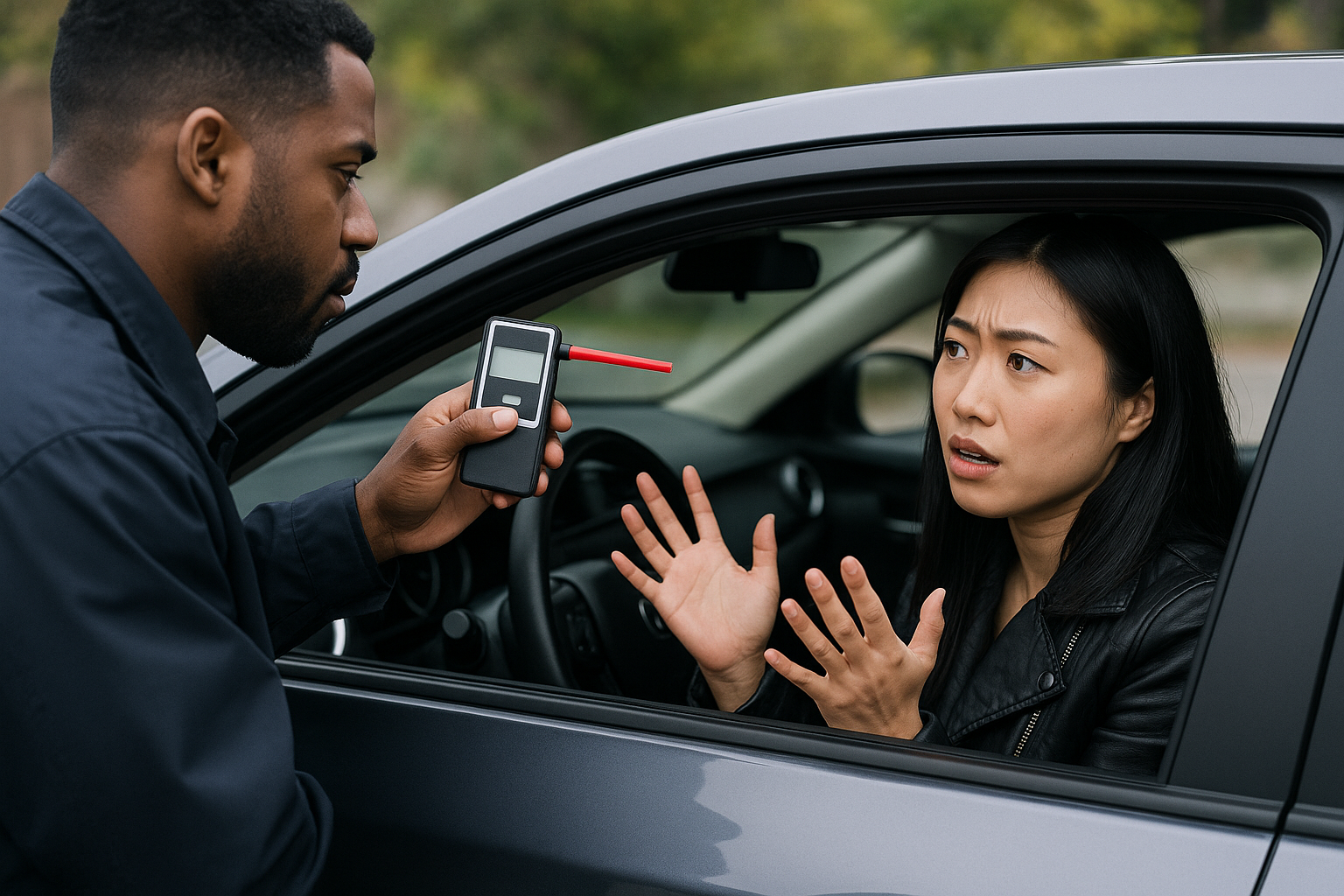
Most major carriers in Columbus won't renew after a DUI, but a handful of non-standard insurers actively write high-risk drivers with SR-22 filings — and rate spreads between them can exceed $200/month.
Which Columbus Carriers Still Write DUI Drivers
After a DUI conviction in Ohio, most standard carriers — State Farm, Nationwide, Allstate — either non-renew your policy at the next term or reclassify you into a high-risk tier with rates that make non-standard specialists cheaper. The carriers that actively write post-DUI business in Columbus fall into three categories: non-standard insurers that specialize in SR-22 filings (The General, Bristol West, Acceptance), regional carriers with dedicated high-risk divisions (Grange, Westfield), and a shrinking number of major carriers that still offer assigned-risk or substandard products (Progressive's non-standard tier, GEICO in select cases).
Non-standard carriers typically quote $180 to $350 per month for minimum liability coverage with an SR-22 filing for a 35-year-old Columbus driver with a single DUI and no other violations. That range reflects underwriting differences — some carriers weigh time since conviction heavily, others price primarily on current license status and whether you completed an alcohol treatment program. Regional carriers like Grange often fall in the middle of that range but may offer better rates if you bundle home insurance or have a long prior history with them.
The key tactical point: the carrier that quotes you first is rarely your best option. A DUI triggers non-renewal or reassignment to a high-risk subsidiary, and whichever insurer your agent calls first becomes your anchor price. Drivers who compare at least three non-standard quotes save an average of 30–40% compared to accepting the first available policy, according to Ohio Department of Insurance consumer guidance data. Ohio SR-22 requirements non-standard auto insurance
Ohio SR-22 Filing Requirements and Costs in Columbus
Ohio requires an SR-22 filing for five years following a DUI conviction, one of the longer mandatory periods in the U.S. The SR-22 itself is not insurance — it's a certificate your insurer files with the Ohio BMV confirming you carry at least the state minimum liability coverage: $25,000 per person for bodily injury, $50,000 per accident, and $25,000 for property damage. Most insurers charge a one-time filing fee of $15 to $50 to submit the SR-22, then renew it automatically each policy term at no additional fee.
The cost burden is not the filing — it's the premium increase triggered by the DUI and the SR-22 requirement. Ohio drivers with a DUI see rate increases ranging from 70% to 140% depending on the carrier, your age, and your prior insurance history. A driver paying $100/month before a DUI typically pays $170 to $240/month afterward with an SR-22, assuming no lapse and continuation with a carrier willing to retain high-risk drivers. If your prior carrier non-renews and you move to a non-standard insurer, expect quotes in the $180 to $350/month range for minimum coverage.
Columbus drivers must maintain continuous SR-22 coverage for the full five-year period. Any lapse — even one day — resets the clock and triggers a new license suspension. The BMV receives electronic notice from your insurer within 24 hours of cancellation, and your license is suspended immediately. Reinstatement after a lapse requires a new SR-22 filing, a $40 reinstatement fee, proof of insurance, and starting the five-year requirement over from day one. SR-22 insurance
Rate Recovery Timeline: What to Expect Over Five Years
DUI surcharges are not permanent, but the recovery curve is long and carrier-specific. Most insurers apply the steepest surcharge in the first three years post-conviction, then reduce it incrementally if you maintain a clean record and continuous coverage. A typical pattern: 100–130% increase in year one, 80–100% increase in year two, 60–80% increase in year three, 40–60% in year four, and 20–40% in year five. After the SR-22 filing period ends and the DUI falls outside the standard three- to five-year lookback window, rates approach your pre-conviction baseline — assuming no new violations.
Some non-standard carriers offer accident forgiveness or step-down programs that reduce your rate by 10–15% each year you remain violation-free. These programs are not automatic — you have to ask, and not all carriers offer them. Regional carriers like Grange and Westfield are more likely to offer structured step-downs if you've been a policyholder for multiple years. Non-standard specialists like The General and Acceptance typically reassess your risk profile at each renewal and adjust pricing based on time since conviction, but they don't always advertise the reduction upfront.
The highest-leverage action you can take is to re-shop your policy every 12 months. As you move further from the conviction date, you become eligible for lower-tier products within non-standard carriers or standard products from carriers with more lenient lookback periods. Drivers who re-shop annually save an average of $600 to $1,200 over the five-year SR-22 period compared to those who stay with their initial post-DUI insurer. That's not a retention discount — it's arbitrage between carriers with different underwriting calendars.
How Columbus DUI Drivers Should Shop for Coverage
Start with non-standard specialists and regional carriers that actively advertise SR-22 filings — they're underwriting for your risk profile, not trying to avoid it. Call or quote online with at least three of the following: The General, Bristol West, Acceptance, Progressive's non-standard division, GEICO (if they'll quote you), Grange, and Westfield. Do not rely on a single agent to shop for you unless that agent explicitly represents multiple non-standard carriers. Most captive agents (State Farm, Allstate, Farmers) can only quote their own company, and those companies rarely offer competitive post-DUI rates.
Provide accurate information about your DUI conviction date, BAC level if available, whether you completed a driver intervention program, and whether your license is currently valid or suspended. Underwriters price these details differently — some carriers offer lower rates if you completed treatment voluntarily, others only care about time since conviction and current license status. If your license is currently suspended, you can still get quotes and bind a policy, but the SR-22 won't be accepted by the BMV until your license is reinstated and all reinstatement fees are paid.
Ask each carrier how they handle the SR-22 filing process — some submit electronically within 24 hours, others mail paper forms that can take up to 10 business days to process. If you're buying coverage to satisfy a court order or reinstate a suspended license, electronic filing is critical. Verify that the policy start date, SR-22 filing date, and BMV processing time align with your reinstatement deadline. Missing that window by even one day can delay reinstatement by weeks and trigger additional fees.
Finally, clarify whether the quote includes the SR-22 filing fee or if it's added at binding. Some carriers bundle it into the first month's premium, others charge it separately at policy inception. A $200/month quote that includes the $25 filing fee is cheaper than a $195/month quote that adds it later. Always compare total first-month cost, not just the monthly premium.
What Happens If You Let Your Policy Lapse
A lapse in coverage while you're under an SR-22 requirement triggers automatic license suspension in Ohio, usually within 24 to 48 hours of the insurer notifying the BMV. The BMV does not send advance warning — your license is suspended the moment they receive the cancellation notice, and you're driving illegally if you get behind the wheel. If you're stopped during a suspension, you face a new charge of driving under suspension (a first-degree misdemeanor in Ohio), potential vehicle impoundment, and a mandatory court appearance.
Reinstating your license after a lapse requires purchasing a new SR-22 policy, paying a $40 reinstatement fee to the BMV, and in most cases, restarting the five-year SR-22 filing requirement from the lapse date. Ohio does not pause or credit time served before the lapse — the clock resets entirely. A driver who lapses in year three of their five-year requirement now owes five more years from the date of reinstatement. This is the single most expensive mistake DUI drivers make post-conviction.
If you're struggling to afford your premium, do not let the policy cancel. Call your insurer and ask about payment plans, reduced coverage options, or switching to a cheaper vehicle on the policy. Some non-standard carriers allow you to drop collision and comprehensive coverage mid-term to lower your premium, as long as you maintain the required liability limits. Switching to a liability-only policy can reduce your monthly cost by $50 to $100 without triggering a lapse. If that's still unaffordable, re-shop immediately — a cheaper carrier exists, and finding it is faster than recovering from a suspension.
Long-Term Strategy: Moving Back to Standard Insurance
Your goal after a DUI is not to find the cheapest high-risk insurer — it's to graduate back to standard insurance as quickly as your record allows. Most standard carriers use a three- to five-year lookback window for major violations, meaning the DUI stops affecting your eligibility once it ages past that threshold. Ohio keeps the DUI on your driving record permanently, but insurers only rate based on the lookback period specified in their underwriting guidelines.
At the three-year mark post-conviction, start requesting quotes from standard carriers even if you're still in your SR-22 filing period. Some carriers — particularly those with high-risk subsidiaries like Progressive and GEICO — may offer you a standard-tier product if you've had no violations since the DUI and have maintained continuous coverage. You'll still need the SR-22 filing through year five, but your base rate will reflect standard underwriting instead of high-risk pricing. That shift alone can save $100 to $150 per month.
Once your SR-22 requirement ends at year five and the DUI is outside the lookback window, you're eligible for the same rates as a clean-record driver — assuming you've had no violations in the interim. If you picked up a speeding ticket or at-fault accident during the SR-22 period, the lookback clock starts over from the most recent violation. This is why the second-most expensive mistake DUI drivers make is not the DUI itself — it's accumulating new violations while still in the SR-22 window, which extends high-risk pricing indefinitely.