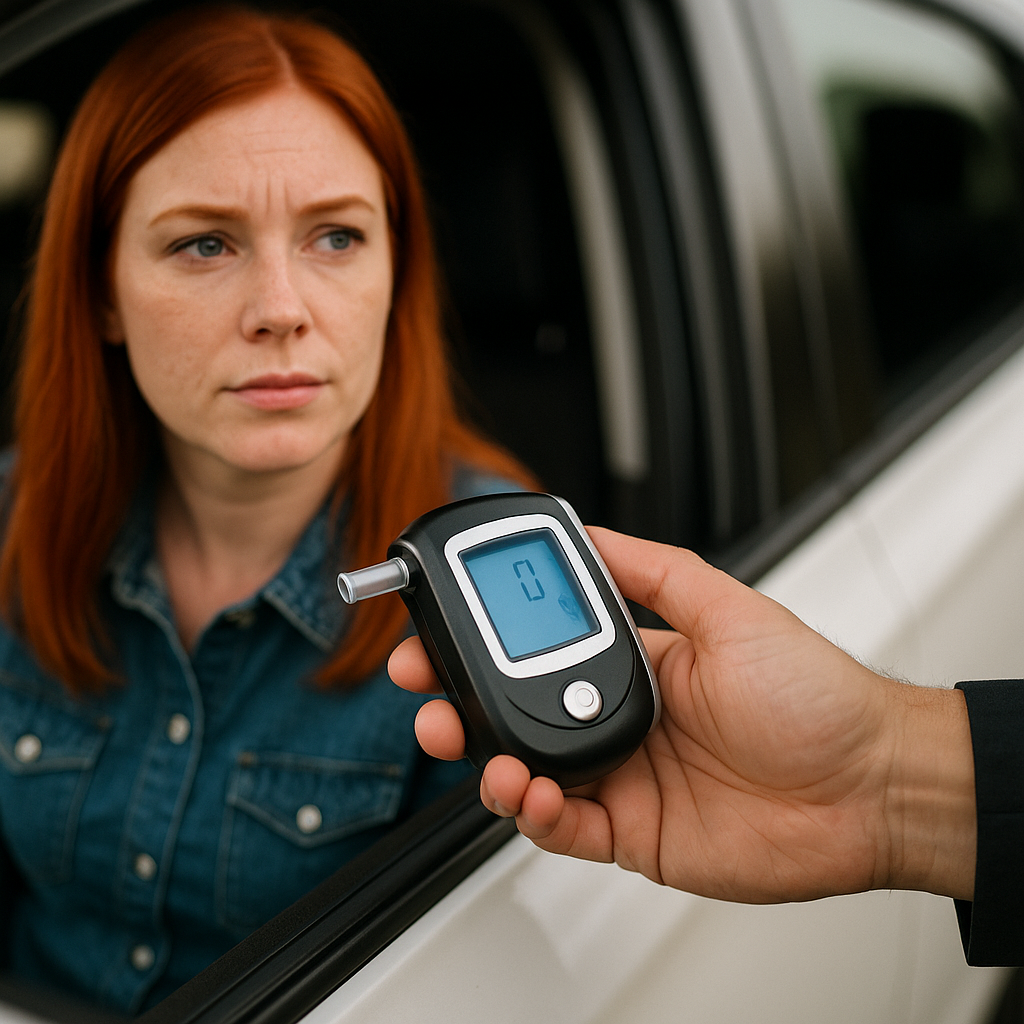
Connecticut requires SR-22 filing for 3 years after a DUI, and your premiums will increase 80–140% depending on carrier and age. Most standard carriers will non-renew you — here's who will write you a policy and what you'll pay.
What Happens to Your Insurance After a DUI in Connecticut
Connecticut law requires all DUI offenders to file an SR-22 certificate with the DMV for 3 years from your license reinstatement date, not from your conviction date. If you're suspended for 45 days and wait 2 months to reinstate, your 3-year clock doesn't start until reinstatement. Most drivers don't track this correctly and assume the clock starts at conviction.
Your current carrier will almost certainly non-renew your policy at the next renewal period. State Farm, Travelers, and Allstate — the three largest writers in Connecticut — all have explicit DUI non-renewal policies for first-time offenders. Even if they don't drop you immediately, your premium at renewal will increase by 80–140% depending on your age, location, and prior history. Drivers under 25 see the steepest increases, often exceeding 150%.
Connecticut does not require an ignition interlock device for first-time DUI offenders with a BAC below 0.15%, but if your BAC was 0.15% or higher, you'll need an IID for 1 year. Your insurance carrier will require proof of IID installation before binding coverage, and you'll pay an additional endorsement fee — typically $15–30/month — to cover the device under your policy. This is separate from your SR-22 filing fee. SR-22 insurance requirements in Connecticut
Non-Standard Carriers That Write DUI Policies in Connecticut
The non-standard market in Connecticut is smaller than in high-population states like California or Florida, but several carriers actively write post-DUI policies. The Bristol West, Dairyland, Foremost, and National General all operate in Connecticut and specialize in high-risk drivers. Bristol West and Dairyland typically offer the most competitive rates for first-time DUI offenders with otherwise clean records.
Progressive and GEICO will also write DUI policies in Connecticut, though they price them aggressively. Progressive's rates for a 35-year-old male with a DUI in Hartford average $2,400–3,200/year for minimum liability, compared to $1,200–1,600/year pre-DUI. GEICO's rates are similar but they often decline coverage entirely if you have any additional violations in the prior 3 years — even a speeding ticket can disqualify you.
SafeAuto and Acceptance Insurance are fallback options if you're declined by the carriers above. Their rates are higher — often $3,500–4,500/year for minimum liability — but they rarely decline coverage outright. Acceptance operates primarily through independent agents in Connecticut, so you won't find them on aggregator sites. If you're looking at Acceptance, call a local independent agent rather than shopping online.
Small regional carriers like Permanent General and Alliance United also write DUI policies in Connecticut, but availability varies by ZIP code. Permanent General operates primarily in New Haven and Fairfield counties, while Alliance United focuses on Hartford and Tolland counties. Both require an independent agent and won't quote you directly. non-standard auto insurance
SR-22 Filing Requirements and Lapse Consequences in Connecticut
Connecticut requires continuous SR-22 filing for 3 years, but the state handles lapses more strictly than most. If your policy lapses for any reason — non-payment, cancellation, switching carriers without overlapping coverage — the DMV receives an SR-26 cancellation notice from your insurer within 10 days. Your license is suspended immediately, and the 3-year SR-22 requirement does not pause or reset — it extends.
Most drivers assume that a lapse just means they need to refile and the clock keeps running. Connecticut's DMV does not work that way. If you lapse 18 months into your 3-year requirement, you still owe 18 more months from the new reinstatement date — but the DMV also adds a suspension period, typically 60–90 days for a first lapse. You're now filing for 3 years and 2–3 months minimum, and each additional lapse compounds the problem.
The SR-22 filing fee in Connecticut is $25–50 depending on your carrier. This is a one-time fee when you first file, and most carriers charge it again if you switch policies. Your carrier files the SR-22 electronically with the DMV, and you should receive confirmation within 3–5 business days. If you don't receive DMV confirmation, call the DMV's Financial Responsibility Unit at (860) 263-5148 — do not assume your carrier filed correctly.
If you move out of Connecticut during your SR-22 period, your filing requirement transfers to your new state if that state also requires SR-22 for DUI. If you move to a state without SR-22 requirements (like Delaware or Kentucky), Connecticut will still require you to maintain a Connecticut SR-22 filing until your 3-year period ends, even if you no longer live there. This creates a compliance nightmare — most drivers in this situation let their Connecticut SR-22 lapse and deal with a suspended Connecticut license they no longer use. how SR-22 filing works
Rate Recovery Timeline and What You'll Pay
Connecticut DUI surcharges remain on your policy for 5 years from the conviction date, even though your SR-22 requirement ends at 3 years. This means your rates will stay elevated for 2 additional years after you're done filing. The surcharge decreases each year, but the reduction is back-loaded — you'll see minimal relief in years 1–3 and more significant drops in years 4–5.
A first-time DUI with no other violations will add approximately $1,400–2,200/year to your premium for the first 3 years, depending on your age and carrier. By year 4, that surcharge drops to roughly $800–1,200/year, and by year 5 it's down to $400–600/year. After 5 years, the DUI falls off your insurance record entirely, though it remains on your DMV record for 10 years and will still appear in background checks.
If you're under 25, expect to pay $3,500–5,000/year for minimum liability coverage during your SR-22 period. Drivers over 35 with no other violations typically pay $2,200–3,200/year for the same coverage. Adding comprehensive and collision coverage will push your annual premium to $4,500–7,000/year depending on your vehicle value. Most non-standard carriers will not offer comp/collision on vehicles valued under $5,000 — they'll only write liability.
Shopping every 6–12 months is the single highest-leverage action you can take to recover your rate. Non-standard carriers re-evaluate risk differently, and a carrier that quoted you $3,200/year at month 6 may quote you $2,400/year at month 18. Bristol West, Dairyland, and Progressive all re-rate policies frequently, and switching carriers does not extend your SR-22 period as long as your new policy starts before your old policy ends.
Coverage Options and State Minimum Requirements
Connecticut requires minimum liability coverage of 25/50/25: $25,000 per person for bodily injury, $50,000 per accident for bodily injury, and $25,000 for property damage. You must also carry uninsured motorist coverage at the same limits unless you explicitly reject it in writing. Most non-standard carriers will not allow you to reject UM coverage — they require it as a condition of writing your policy.
If you're financing or leasing a vehicle, your lender will require comprehensive and collision coverage regardless of your DUI status. Expect your comp/collision deductibles to be set at $1,000 minimum — most non-standard carriers won't offer lower deductibles to DUI drivers. If you own your vehicle outright and it's worth less than $5,000, skip comp/collision entirely. You'll pay $1,200–2,000/year for coverage on a vehicle that would cost less than that to replace.
Connecticut does not require medical payments coverage or personal injury protection, but both are available as optional endorsements. MedPay typically costs $8–15/month for $5,000 in coverage and covers your medical bills regardless of fault. It's one of the few endorsements that non-standard carriers price the same for DUI drivers as they do for clean-record drivers, so it's worth adding if you don't have health insurance.
What to Do Immediately After Your DUI Conviction
Your first step is to contact the Connecticut DMV to confirm your suspension period and reinstatement requirements. The DMV's Financial Responsibility Unit can tell you exactly how long you're suspended and whether you're eligible for a work permit or special learner's permit during your suspension. For a first-time DUI, you're typically suspended 45 days, but if you refused a breathalyzer test, your suspension extends to 6 months.
While you're suspended, start shopping for SR-22 insurance. You do not need a valid license to purchase SR-22 insurance — you just need a policy that will be active on your reinstatement date. Most non-standard carriers will bind coverage 30 days in advance of your reinstatement, which gives the DMV time to process your SR-22 filing before you're eligible to drive again. Do not wait until your reinstatement date to shop — if your SR-22 isn't on file, the DMV will not reinstate your license.
Once you have a policy, your carrier will file the SR-22 electronically. You'll receive a confirmation letter from your carrier, but the DMV processes filings separately. Call the DMV 3–5 business days after your carrier files to confirm they received it. If the DMV has no record of your filing, your carrier made an error — this happens more often with smaller non-standard carriers that don't file electronically in every state.
Pay your reinstatement fee — $175 for a first-time DUI — online or in person at a DMV office. You cannot reinstate by mail. Bring proof of SR-22 filing (your carrier's confirmation letter), proof of identity, and payment. The DMV will issue a temporary license on the spot, and your permanent license arrives by mail within 10 business days.