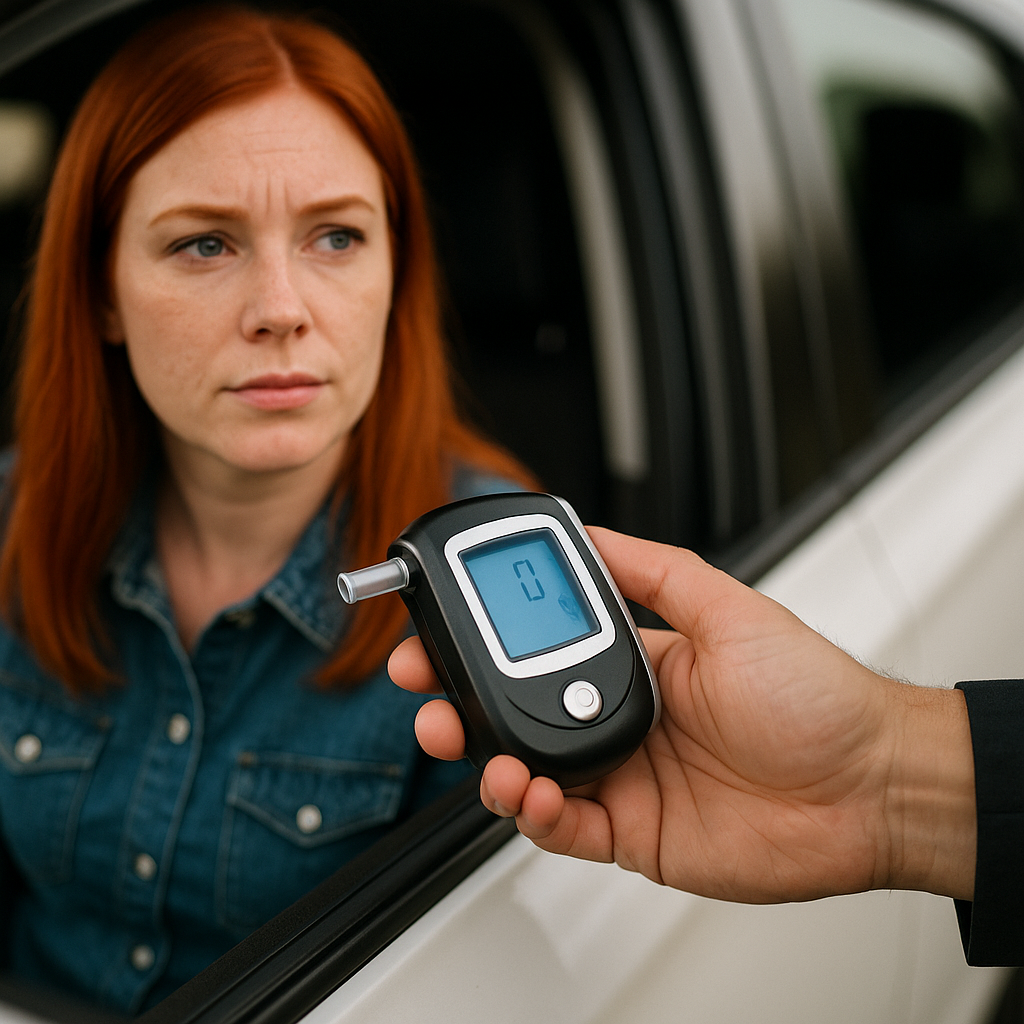
Most Dallas DUI drivers are quoted by only 2–3 carriers post-violation, while 8–10 non-standard insurers actively write high-risk policies in Texas. Knowing which carriers specialize in post-DUI coverage — not just which ones reject you — determines whether you pay $250/mo or $450/mo for the same SR-22 liability.
Which Carriers Actually Write DUI Policies in Dallas
After a DUI in Texas, your current insurer will typically non-renew your policy or increase your premium by 70–150% at renewal. Most standard carriers — State Farm, Allstate, GEICO for preferred-risk drivers — either decline to renew or price you out intentionally. That's not the problem. The problem is that most Dallas drivers with a DUI only receive quotes from 2–3 carriers, usually whoever their agent represents or whoever appears first in a Google search, and assume that's the entire market.
Texas has roughly 8–10 non-standard auto insurers that actively write post-DUI policies with SR-22 filing: The General, Acceptance Insurance, Clearcover (selectively), Bristol West, Dairyland, GAINSCO, Fiesta Auto, and Progressive's non-standard division. Not all of them operate in every Dallas ZIP code, and not all of them quote competitively for every driver profile — age, prior coverage history, and whether you own or finance your vehicle all shift which carrier offers the lowest rate. A 28-year-old with a DUI and continuous prior coverage might see Progressive quote $220/mo while The General quotes $380/mo for identical liability limits. A 52-year-old with the same violation and a prior lapse might see those positions reverse.
The carrier that writes you is not the question — nearly all of them will. The carrier that writes you at the lowest rate for your specific profile is the only variable that matters, and you will not know which one that is without collecting at least 4–5 quotes from insurers that specialize in DUI risk. Standard comparison tools often exclude non-standard carriers entirely, which is why most Dallas DUI drivers overpay by $100–$200/mo without realizing a lower option exists. SR-22 insurance coverage non-standard auto insurance
SR-22 Filing Requirements and Costs in Texas
Texas requires SR-22 filing for most DUI convictions, typically for 3 years from the date your license is reinstated, not from the date of conviction. If your license was suspended for 180 days and you waited 90 days to begin reinstatement, your 3-year SR-22 clock starts when the Texas DPS processes your reinstatement, not when you were convicted. Many Dallas drivers file SR-22 for 3.5–4 years because they misunderstand when the clock starts, or because their insurer never notified them when the requirement expired.
The SR-22 filing itself costs $15–$50 depending on the carrier — it's a one-time fee per policy period, not an annual surcharge. The rate increase comes from the DUI conviction on your record, not the SR-22 form. Your insurer files the SR-22 electronically with the Texas DPS, and you receive a paper copy for your records. If your policy lapses for any reason during the 3-year period, your insurer is required to notify the DPS immediately, which triggers an automatic license suspension. That suspension requires a new SR-22 filing and reinstatement process, which restarts your 3-year clock in many cases.
Texas does not require SR-22 for first-time DWI convictions if you were not involved in an accident and your license was not suspended — but most DUI cases in Dallas involve at least a brief administrative license suspension, which triggers the SR-22 requirement. If you refused a breathalyzer, your administrative suspension is typically longer (180 days vs. 90 days), and SR-22 is mandatory for reinstatement. The Texas DPS issues a notice specifying whether SR-22 is required in your case; if you did not receive that notice or cannot locate it, call the DPS at 512-424-2600 to confirm your filing requirement before purchasing a policy. Texas SR-22 requirements and filing rules
Rate Increases After a DUI: What Dallas Drivers Actually Pay
A DUI conviction in Texas increases your car insurance premium by an average of 70–130% depending on your carrier, age, prior coverage history, and whether you had any at-fault accidents in the 3 years prior to the DUI. A Dallas driver paying $140/mo before a DUI might see their rate jump to $240–$320/mo with the same carrier, assuming the carrier agrees to renew at all. If your carrier non-renews and you move to a non-standard insurer, expect monthly premiums in the $200–$450 range for minimum liability coverage (30/60/25 in Texas), with higher rates for drivers under 25 or over 65.
Those increases persist for 3–5 years depending on the carrier's lookback period. Texas requires insurers to surcharge DUI convictions for at least 3 years, but many carriers apply rate increases for 5 years or longer. After 5 years, most carriers stop surcharging the DUI entirely, and you become eligible for standard-rate policies again — but only if you maintained continuous coverage with no additional violations during that period. A second violation of any kind (speeding ticket, at-fault accident, lapse in coverage) can extend your high-risk classification by another 3–5 years.
Rate variation between non-standard carriers for the same Dallas driver profile can exceed $200/mo. One carrier might quote $285/mo for 30/60/25 liability with SR-22, while another quotes $460/mo for identical coverage. The difference is not coverage quality or claims-paying ability — both are writing the same policy — the difference is how each carrier's actuarial model weights your specific risk factors. Shopping 5+ non-standard carriers is the single highest-leverage action available to Dallas DUI drivers, because the savings are immediate and recurring for the entire 3–5 year period you remain classified as high-risk.
Non-Owner SR-22 Policies for Dallas Drivers Without a Vehicle
If you do not own a vehicle but need SR-22 to reinstate your Texas driver's license after a DUI, a non-owner SR-22 policy satisfies the state's financial responsibility requirement. These policies cost $25–$60/mo in Dallas and provide liability coverage when you drive a vehicle you do not own — a rental, a friend's car, or a employer's vehicle. The SR-22 filing is attached to the non-owner policy and remains active as long as you maintain the policy without lapse.
Non-owner policies do not cover a vehicle you own, lease, or have regular access to. If you live with a family member who owns a car and you drive it regularly, you cannot use a non-owner policy — you must be listed on the owner's policy or purchase your own standard auto policy with SR-22. If you plan to purchase a vehicle in the next 6–12 months, you can start with a non-owner SR-22 policy to satisfy the reinstatement requirement, then convert to a standard policy with SR-22 when you buy the car. Most carriers allow this conversion without restarting your SR-22 filing period, but confirm with your insurer before purchasing the vehicle.
Not all non-standard carriers offer non-owner SR-22 policies. In Dallas, The General, Acceptance Insurance, Dairyland, and Bristol West typically write non-owner policies with SR-22 filing. Progressive and GEICO do not offer non-owner SR-22 in most Texas markets. If you cannot find a carrier willing to quote a non-owner SR-22 policy, contact the Texas DPS at 512-424-2600 to request a list of insurers authorized to file SR-22 in your county — the list is public and updated quarterly.
License Reinstatement Process After a DUI Suspension in Dallas
Texas DPS requires four items to reinstate your license after a DUI suspension: payment of the reinstatement fee ($125 for a first DWI, $200 for subsequent offenses), completion of any court-ordered DWI education or intervention program, proof of SR-22 insurance filing, and clearance of any outstanding fines or warrants. You cannot begin the reinstatement process until your full suspension period has ended — Texas does not offer early reinstatement for DUI suspensions.
The SR-22 filing must be active and on file with the DPS before they will process your reinstatement. Purchase your SR-22 policy at least 3–5 business days before your scheduled reinstatement appointment to ensure the electronic filing has been received and processed. If you attempt to reinstate without an active SR-22 on file, the DPS will reject your application and you will need to reschedule, which can add 2–4 weeks to your timeline depending on appointment availability at the Dallas Mega Center (9015 E R L Thornton Fwy) or other DPS offices in the area.
Once reinstated, your SR-22 requirement runs for 3 years from the reinstatement date. If your policy lapses at any point during those 3 years — you miss a payment, you cancel coverage, or your insurer non-renews you and you do not replace the policy within 30 days — the DPS suspends your license again immediately. That suspension requires a new reinstatement process, new fees, and in many cases restarts your 3-year SR-22 clock. Set up automatic payments with your insurer and confirm 60 days before each renewal that your policy will renew without lapse. Most SR-22 lapses occur at renewal when a driver assumes their policy will auto-renew but the carrier has decided to non-renew and sent a notice to an old address.
Finding Coverage That Doesn't Lapse: Stability vs. Price
The cheapest SR-22 quote is not always the best option for Dallas DUI drivers. Some non-standard carriers offer low initial premiums but non-renew policies aggressively after 6–12 months, forcing you to find new coverage on short notice or risk a lapse. A lapse during your SR-22 period triggers immediate license suspension and restarts your 3-year filing requirement in most cases, which erases any savings you gained from the lower premium.
When comparing quotes, ask each carrier directly: What is your typical policy retention rate for DUI drivers in Texas? Do you non-renew policies based on claims activity, payment history, or other factors? Will my rate increase at renewal even if I have no new violations? Carriers with higher retention rates — Dairyland, Progressive's non-standard division, and Acceptance Insurance in Texas — may quote $30–$50/mo higher than the lowest option, but they are far less likely to non-renew you before your SR-22 period ends. That stability is worth more than the premium difference if it prevents a lapse and a second license suspension.
If you are quoted by a carrier you have never heard of, verify they are licensed in Texas by searching the Texas Department of Insurance company database at tdi.texas.gov. All licensed insurers appear in that database with their financial strength rating and complaint ratio. A high complaint ratio (above 2.0) or a financial strength rating below B+ suggests the carrier may have claims-paying or customer service issues that could complicate your SR-22 filing or renewal. Choose a carrier with a complaint ratio under 1.5 and a financial strength rating of B+ or higher, even if their quote is not the absolute lowest.