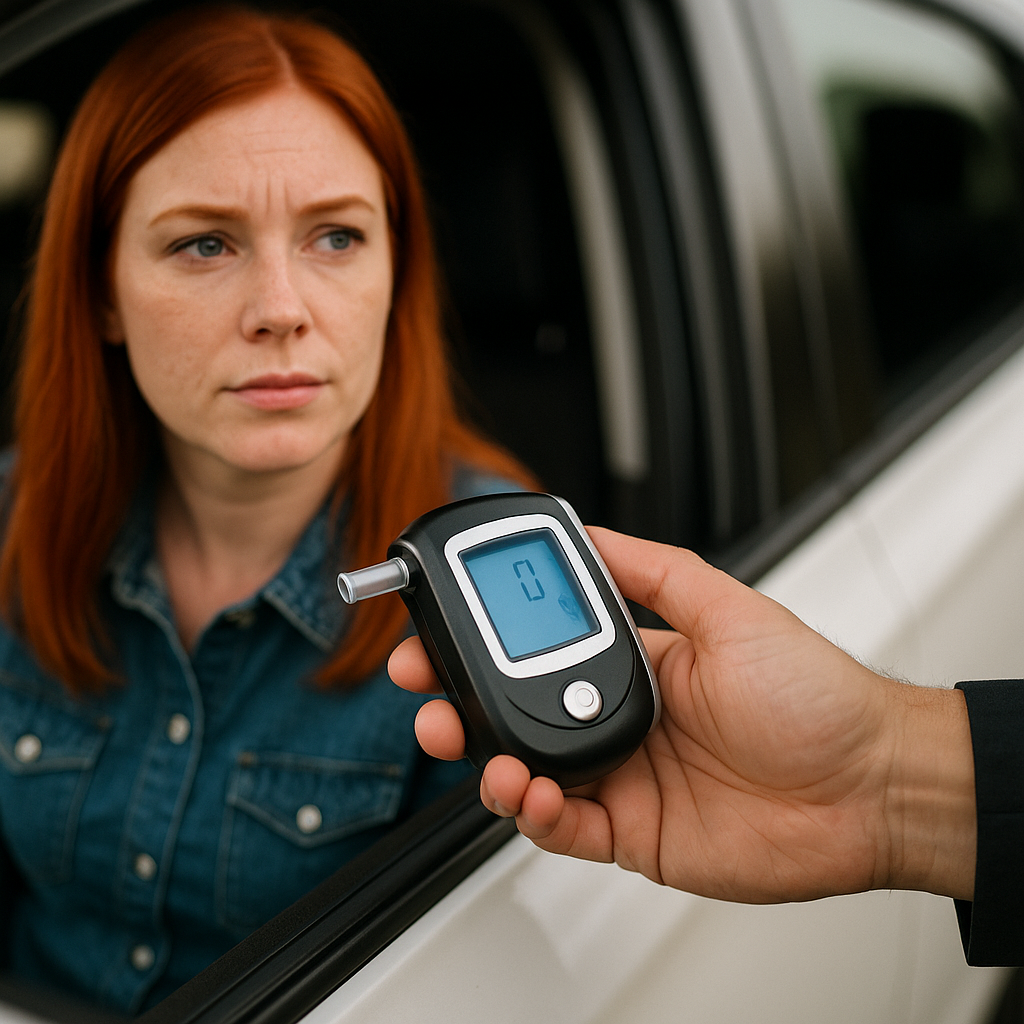
Iowa suspends your license for 180 days minimum after a first OWI, requires SR-22 for two years, and triggers rate increases of 80–140%. These non-standard carriers write post-DUI policies and what they charge.
What an OWI Does to Your Iowa License and Insurance Requirements
Iowa law defines drunk driving as OWI (Operating While Intoxicated), not DUI. A first offense with BAC 0.08% or higher triggers a 180-day license revocation, a $1,250 minimum fine, and possible jail time. Your license is not automatically reinstated after 180 days — you must apply for reinstatement, pay a $200 fee, and provide proof of SR-22 insurance filing to the Iowa DOT.
The SR-22 filing requirement lasts two years from the date of reinstatement, not from your conviction date. If you wait six months after your revocation period ends to apply for reinstatement, you're adding six months to the total time you're uninsured or driving without a valid license. The reinstatement clock starts only when the Iowa DOT processes your application and receives the SR-22 certificate from your insurer.
Iowa does not offer hardship or work permits for first-time OWI offenses during the 180-day revocation. You cannot legally drive during this period unless you are enrolled in the state's ignition interlock device program after serving at least 30 days of the suspension. The interlock waiver allows restricted driving but still requires SR-22 insurance and does not reduce the two-year SR-22 filing period. SR-22 insurance requirements in Iowa
Rate Increases After an Iowa OWI: What You'll Actually Pay
A first OWI in Iowa increases car insurance premiums by an average of 80% to 140% depending on your insurer, age, and prior driving record. If you were paying $1,200 per year before the OWI, expect $2,160 to $2,880 annually with an SR-22 filing. Younger drivers under 25 see increases closer to 150% because they already carry higher base rates.
The SR-22 certificate itself costs $25 to $50 as a one-time or annual filing fee, but this is negligible compared to the underwriting surcharge your insurer applies for the OWI conviction. Iowa insurers re-rate your policy based on your new risk classification, and most standard carriers either non-renew your policy or move you to a non-standard subsidiary with significantly higher premiums.
Your rates will remain elevated for three to five years after the OWI conviction date, even though your SR-22 filing requirement ends after two years. Insurers in Iowa typically look back three years for major violations when calculating premiums, but some carriers extend this to five years. After the lookback period ends, your OWI no longer appears in rate calculations and your premiums normalize to your current driving record.
Non-Standard Carriers Writing Post-OWI Policies in Iowa
Most major insurers — State Farm, Allstate, Nationwide — will non-renew your policy after an OWI conviction or decline to file SR-22 on your behalf. You need to move to a non-standard carrier that specializes in high-risk drivers. In Iowa, the following carriers consistently write post-OWI policies with SR-22 filings: Progressive, The General, National General, Bristol West, Acceptance Insurance, Dairyland, and Foremost.
Progressive is often the most competitive option for first-time OWI offenders in Iowa because they underwrite violations in-house rather than moving all high-risk drivers to a separate subsidiary. The General and National General have higher premiums but approve drivers with multiple violations or lapses in coverage. Bristol West and Acceptance specialize in liability-only SR-22 policies and are worth quoting if you drive an older vehicle and don't need comprehensive or collision coverage.
Not all non-standard carriers are licensed in every Iowa county, and some limit coverage availability based on ZIP code risk scores. Dairyland and Foremost have broader Iowa footprints and often write policies in rural counties where other carriers decline. You should quote at least three non-standard carriers because rate spreads for the same driver profile can exceed $1,000 annually depending on underwriting models and territory ratings. non-standard auto insurance
SR-22 Filing Process and Reinstatement Steps in Iowa
After your 180-day OWI revocation ends, you must complete the following steps to reinstate your Iowa driver's license: obtain an SR-22 certificate from a licensed Iowa insurer, pay the $200 reinstatement fee to the Iowa DOT, provide proof of completion of an OWI education program, and submit proof of substance abuse evaluation if required by the court. The Iowa DOT will not process your reinstatement until all requirements are documented.
Your insurer files the SR-22 electronically with the Iowa DOT within 24 to 48 hours of policy binding. You receive a paper copy for your records, but the state does not require you to carry it in your vehicle. The SR-22 filing must remain active and continuous for two years from your reinstatement date. If your policy lapses or cancels for any reason — non-payment, coverage change, insurer cancellation — your carrier notifies the Iowa DOT within 10 days and your license is re-suspended immediately.
Iowa does not allow you to backdate an SR-22 filing or reinstate your license retroactively. If your SR-22 policy lapses three months into the two-year requirement, your filing clock resets to zero and you must start the two-year period over from the date you file a new SR-22. This reset rule is the most common reason Iowa drivers carry SR-22 filings longer than the minimum two years. how SR-22 filings work
What Happens to Your Rates After the SR-22 Period Ends
Your two-year SR-22 filing requirement ends automatically on the anniversary date of your reinstatement. Iowa does not send a notification when your SR-22 obligation expires — you are responsible for tracking the date. Once the requirement ends, you no longer need to maintain an SR-22 certificate and can shop for standard insurance if your OWI is outside the three-year lookback window used by most insurers.
However, your OWI conviction remains on your Iowa driving record for 12 years and is visible to insurers who pull your motor vehicle record during underwriting. Most Iowa insurers only rate violations from the past three to five years, so after year three your OWI stops affecting premiums even though it remains on your abstract. Some high-tier carriers require a five-year clean record before offering standard rates, which means you may remain in the non-standard or preferred-risk market until year five.
Shopping your policy every six to twelve months after your SR-22 requirement ends is the fastest way to lower your premiums. Non-standard carriers often do not reduce rates automatically when your risk profile improves — you must re-quote with competitors to capture lower pricing. Drivers who stay with the same non-standard carrier for the full five-year post-OWI period pay an average of 30% more than drivers who actively shop and switch carriers during that window.
Iowa OWI Penalties for Second and Third Offenses
A second OWI in Iowa within 12 years triggers a one-year license revocation, $1,875 to $6,250 in fines, up to two years in jail, and mandatory ignition interlock for at least one year after reinstatement. The SR-22 filing requirement remains two years, but most insurers will not write a policy for a second OWI without a significant down payment or monthly payment plan, and annual premiums often exceed $4,000.
A third OWI is a Class D felony in Iowa, with a minimum two-year license revocation, $3,125 to $9,375 in fines, and up to five years in prison. At this point, you are effectively uninsurable in the standard or non-standard market and must seek coverage through the Iowa Automobile Insurance Plan, a state-assigned risk pool with premiums often exceeding $6,000 per year. The SR-22 requirement extends to six years for a third or subsequent OWI conviction.
Iowa counts OWI convictions within a 12-year window for penalty escalation, not the typical 10-year lookback used in most states. If your first OWI occurred 11 years ago and you receive a second conviction today, it is charged as a second offense with the enhanced penalties. This extended lookback catches many drivers by surprise and is one reason Iowa has stricter effective OWI penalties than neighboring states.