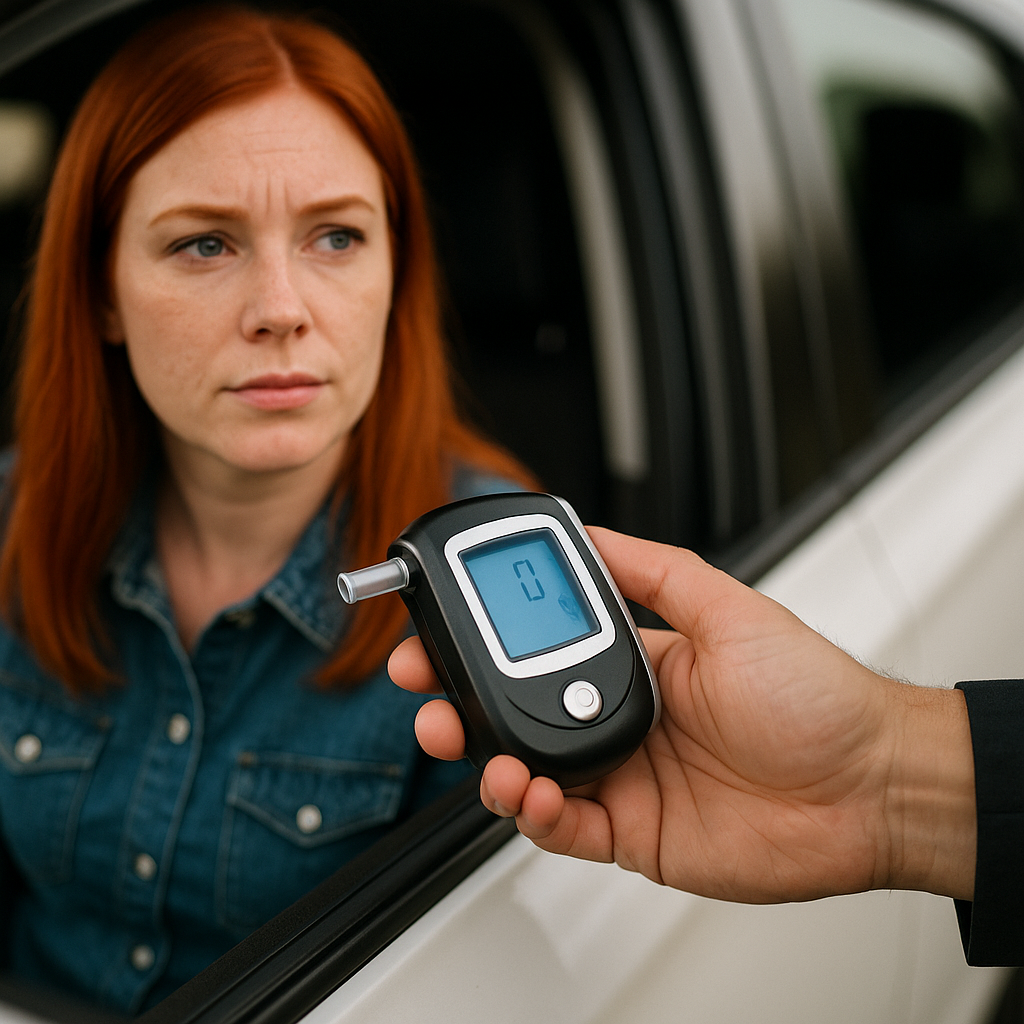
Kentucky requires SR-22 filing for most DUI convictions, typically for 3 years. Most standard carriers will non-renew you after a DUI, but non-standard carriers specialize in exactly this situation — here's what to expect for coverage and cost.
How Kentucky DUI Convictions Affect Your Insurance Status
A DUI conviction in Kentucky triggers two immediate insurance consequences: your current carrier will likely non-renew your policy at the end of your term, and the state will require you to file an SR-22 certificate to reinstate or maintain your driving privileges. Kentucky assigns six points to a DUI conviction, and these points remain on your driving record for five years from the conviction date according to Kentucky Transportation Cabinet records. The SR-22 requirement, however, is separate from the point system and typically lasts three years.
Most standard carriers — State Farm, Geico, Progressive — either refuse to renew policies after a DUI or price coverage so high that non-standard carriers become the only realistic option. Kentucky law does not require your current insurer to cancel your policy mid-term after a DUI, but they will receive notification of the conviction and can choose not to renew when your policy period ends. This gives you a window — usually 30 to 90 days — to shop for non-standard coverage before you're uninsured.
The SR-22 itself is not insurance; it's a certificate your insurer files with the Kentucky Transportation Cabinet confirming you carry at least the state minimum liability coverage: $25,000 bodily injury per person, $50,000 per accident, and $25,000 property damage. If your coverage lapses for any reason during the SR-22 period, your insurer must notify the state within 10 days, and your license will be suspended immediately. This means continuous coverage is non-negotiable for three years. Kentucky SR-22 requirements
Non-Standard Carriers Writing DUI Coverage in Kentucky
Non-standard carriers operate differently from household-name insurers. They specialize in high-risk drivers and price policies based on violation type, time since conviction, and whether you've completed court-mandated programs. In Kentucky, the primary non-standard carriers writing DUI policies include The General, Bristol West, Direct Auto, Acceptance Insurance, and National General. Regional carriers like Safeway Insurance and Freeway Insurance also write Kentucky DUI policies, though availability varies by county.
These carriers use different underwriting models. Some will quote you immediately after a DUI conviction; others require a waiting period of 30 to 90 days post-conviction. The General and Direct Auto typically have the most lenient immediate acceptance policies, while Bristol West and National General often offer better rates if you can wait 60 days and show proof of SR-22 filing and alcohol treatment completion. Acceptance Insurance frequently offers the best rates for drivers who bundle SR-22 filing with their policy purchase.
Carrier availability also depends on whether you own a vehicle. If you need non-owner SR-22 coverage — because you don't own a car but need to maintain your license or fulfill a court requirement — your options narrow significantly. The General, National General, and Acceptance Insurance all write non-owner SR-22 policies in Kentucky, but Direct Auto and Bristol West typically do not. Non-owner policies cost less than standard policies because they only provide liability coverage when you drive someone else's vehicle, but they still satisfy the state's SR-22 requirement.
One critical but rarely discussed option: some non-standard carriers in Kentucky will waive the SR-22 filing requirement if you maintain continuous coverage for 12 months without a lapse and complete a state-approved DUI education program. This isn't advertised widely, but underwriters at Acceptance Insurance and National General have discretion to remove the SR-22 after one year if you meet these conditions and your policy has been paid in full without lapses. This can save you filing fees and potentially lower your premiums for the remaining two years of what would have been your SR-22 period. SR-22 insurance coverage non-standard auto insurance
What DUI Insurance Actually Costs in Kentucky
Kentucky drivers with a DUI conviction pay an average of $215 to $340 per month for minimum liability coverage with SR-22 filing through non-standard carriers, according to 2024 rate surveys compiled by the Kentucky Department of Insurance. That's roughly 110% to 160% higher than the state average for drivers with clean records, who typically pay $80 to $100 per month for the same coverage. Your exact rate depends on your age, county, prior insurance history, and time since conviction.
Younger drivers face steeper increases. A 25-year-old with a first-time DUI in Jefferson County (Louisville) can expect to pay $290 to $380 per month through carriers like The General or Direct Auto. A 40-year-old in the same county with the same conviction typically pays $210 to $270 per month. Fayette County (Lexington) rates run slightly lower — about 8% to 12% less on average — while rural counties in eastern Kentucky often see the highest premiums due to limited carrier competition.
SR-22 filing fees in Kentucky range from $15 to $50 depending on the carrier, paid upfront and sometimes annually. The General charges $25; Bristol West charges $50; Acceptance Insurance charges $15. These fees are separate from your premium and are non-refundable even if you cancel your policy. If you switch carriers during your SR-22 period, the new carrier must file a new SR-22, which means paying the filing fee again.
Rates begin to drop after 12 months of continuous coverage with no new violations. Drivers who maintain clean records post-DUI typically see a 15% to 25% rate reduction at their first renewal, and another 10% to 20% reduction at the second renewal. After three years — once the SR-22 requirement ends — you can often move back to a standard carrier if your record is otherwise clean, which can cut your premium by 40% to 60% compared to non-standard rates.
SR-22 Filing Requirements and Duration in Kentucky
Kentucky requires SR-22 filing for most DUI convictions, but the exact duration depends on whether your license was suspended and for how long. A first-offense DUI with a license suspension of 30 to 120 days typically requires SR-22 filing for three years from the date of reinstatement, not the date of conviction. If your license was suspended for six months or more, the SR-22 period may extend to five years. The Kentucky Transportation Cabinet sets the duration based on the court order and your prior driving record.
Some DUI convictions do not trigger an SR-22 requirement if you were not convicted of refusing a breath test and your license was not suspended. This is rare but happens in cases where the court reduces the charge to reckless driving or where you completed a pretrial diversion program. If you're unsure whether you need SR-22, check your reinstatement letter from the Kentucky Transportation Cabinet or contact the Division of Driver Licensing directly.
Your SR-22 must remain active and continuous for the entire required period. A single day of lapse — whether from non-payment, policy cancellation, or switching carriers without overlapping coverage — resets the clock. Kentucky law requires your insurer to notify the state within 10 days of any lapse, and the Transportation Cabinet will suspend your license again. Reinstating after an SR-22 lapse requires paying a new reinstatement fee (typically $40 to $100) and filing a new SR-22, which restarts your three- or five-year period from zero.
Once your SR-22 period ends, your insurer is not required to notify you or the state. The responsibility is yours to track. Mark the end date clearly and verify with the Kentucky Transportation Cabinet that your SR-22 obligation has been satisfied before you consider switching carriers or dropping coverage. Some drivers continue paying for SR-22 filing months or even years after it's no longer required simply because they didn't track the end date.
How to Shop for Coverage After a Kentucky DUI
Start shopping for non-standard coverage as soon as you know your current carrier will non-renew you, which is typically 30 to 60 days before your policy expires. Waiting until the last minute leaves you with fewer options and higher rates because carriers know you're desperate. Get quotes from at least three non-standard carriers — The General, Acceptance Insurance, and Bristol West are good starting points — and ask each one directly whether they offer the 12-month SR-22 waiver option discussed earlier.
Bring documentation to every quote: your DUI conviction date, your SR-22 reinstatement letter from the Kentucky Transportation Cabinet, proof of completion of any court-ordered alcohol programs, and your current insurance declarations page. Non-standard underwriters make decisions based on documentation, not promises. If you've completed a DUI education program or installed an ignition interlock device, bring proof — both can lower your premium by 5% to 15% with some carriers.
Don't assume the lowest quote is the best deal. Compare not just the monthly premium but the SR-22 filing fee, the down payment requirement, and the cancellation policy. Some non-standard carriers require 20% to 30% down and charge steep cancellation fees if you leave before six months. Others allow monthly payments with no down payment but build the cost into higher monthly premiums. Read the policy terms carefully before signing.
Once you're insured, set up automatic payments and calendar reminders for your renewal date. A single missed payment can trigger a lapse notice to the state, and reinstatement is expensive and time-consuming. If you're struggling to afford your premium, contact your carrier immediately to discuss payment plans or coverage adjustments. Dropping your policy to save money will cost you far more in the long run.
Rate Recovery Timeline After a Kentucky DUI
Your rates will not stay at post-DUI levels forever, but recovery takes time and requires a clean record. In Kentucky, the DUI conviction remains on your driving record for five years, but its impact on your insurance rates diminishes each year you go without a new violation. Most non-standard carriers re-evaluate your risk profile annually, and drivers who maintain continuous coverage with no lapses or new tickets see measurable rate drops at each renewal.
After 12 months of clean driving post-DUI, expect a rate reduction of 15% to 25% at your first renewal. After 24 months, another 10% to 20% reduction is typical. After 36 months — when your SR-22 requirement ends — you can shop for standard carrier coverage again, and if your record is otherwise clean, you may qualify for rates 40% to 60% lower than what you were paying through a non-standard carrier. Some drivers see their premiums drop from $250 per month to $110 per month simply by moving back to a standard carrier after the SR-22 period ends.
Completing a state-approved defensive driving course can accelerate rate recovery. Kentucky allows drivers to take a defensive driving course once every five years, and many insurers offer a 5% to 10% discount for completion. This won't erase the DUI from your record, but it signals to underwriters that you're actively working to reduce risk. Some non-standard carriers also offer discounts for installing telematics devices that monitor your driving behavior.
The five-year mark is when the DUI conviction falls off your Kentucky driving record entirely. At that point, it no longer affects your insurance rates with most carriers, though it may still appear on background checks for employment or other purposes. Once the conviction is removed, you should see your rates return to near pre-DUI levels, assuming you haven't accumulated other violations in the interim.