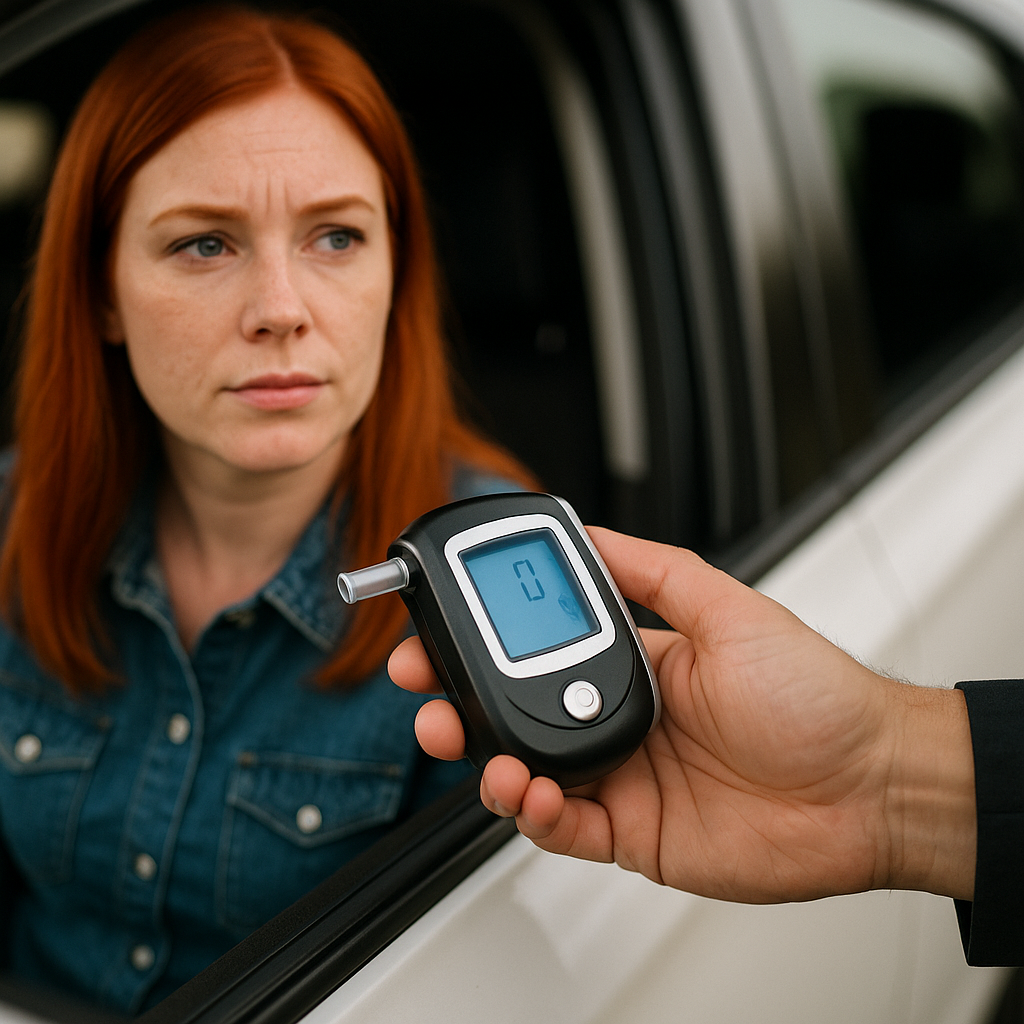
Nevada suspends your license for 185 days minimum after a first DUI and requires SR-22 for 3 years. Most major carriers drop you immediately, but a handful of non-standard insurers specialize in post-DUI risk and file SR-22 the same day.
Nevada's DUI License Suspension and SR-22 Filing Timeline
Nevada suspends your license for 185 days after a first DUI conviction, with eligibility for a restricted license after 45 days if you install an ignition interlock device and maintain SR-22 insurance. The Nevada DMV requires continuous SR-22 filing for 3 years from your reinstatement date, not your conviction date. That distinction matters because if you delay reinstatement by 6 months, your 3-year SR-22 clock starts 6 months later.
The SR-22 itself is not insurance — it is a form your insurer files with the Nevada DMV certifying you carry at least the state minimum liability coverage: $25,000 per person for bodily injury, $50,000 per accident, and $20,000 for property damage. If your policy lapses or cancels during those 3 years, your insurer notifies the DMV within 10 days and your license suspends again immediately. There is no grace period.
Most DUI drivers in Las Vegas face two parallel timelines: the criminal court process that determines fines and sentencing, and the DMV administrative process that controls your license and SR-22 requirement. The DMV timeline moves faster. You can file SR-22 and apply for restricted driving privileges before your court case concludes, and many drivers do exactly that to minimize time off the road. Nevada SR-22 requirements
Which Carriers Write Post-DUI Policies in Nevada
After a DUI conviction, expect your current insurer to non-renew your policy at the end of your term or cancel outright if your state allows it. Nevada permits cancellation for DUI within the first 60 days of a new policy, and non-renewal at any term end. Standard carriers like State Farm, Allstate, and GEICO typically exit at renewal. Progressive and The General sometimes retain DUI drivers but at significantly elevated rates.
The carriers actively writing new post-DUI policies in Nevada include non-standard specialists like Acceptance Insurance, Bristol West, Liability Insurance Administrators, and National General. These insurers underwrite high-risk drivers as their core business model and file SR-22 directly with the Nevada DMV, usually within 24-48 hours of binding coverage. If you need a restricted license in 45 days, you need SR-22 on file before your DMV hearing, which means shopping for coverage the week you are convicted, not the week before your reinstatement date.
Some agents represent multiple non-standard carriers and can shop your DUI risk across 3-4 insurers simultaneously. This matters because post-DUI rates vary wildly by carrier — one may quote you $320/month while another quotes $480/month for identical coverage. The premium difference is not tied to your DUI specifics; it reflects each carrier's appetite for Nevada DUI risk that quarter. Shopping multiple non-standard carriers is the single highest-leverage action available to you after a DUI conviction.
A handful of carriers write SR-22 policies but do not specialize in DUI risk. These include some regional mutuals and assigned-risk pools. Nevada does not operate a state-run assigned-risk program, but if no voluntary market carrier will write you, the Nevada Automobile Insurance Plan acts as the insurer of last resort. Rates here are the highest you will find — often 150-200% above standard market — but coverage is guaranteed. non-standard auto insurance
Post-DUI Rate Increases and What You Actually Pay
A first DUI in Nevada typically triggers a rate increase of 80-150% compared to your pre-DUI premium, depending on your age, prior record, and the carrier writing your new policy. If you were paying $140/month before your DUI, expect quotes in the $250-$350/month range from non-standard carriers after conviction. These are not SR-22 filing fees — the SR-22 form itself costs $15-$25 as a one-time filing fee. The rate increase reflects your new underwriting tier as a high-risk driver.
Your rate does not stay elevated forever. Most Nevada insurers reduce DUI surcharges after 3-5 years if you maintain continuous coverage and avoid new violations. The 3-year SR-22 requirement expires first, but your DUI conviction remains on your Nevada driving record for 7 years per state law. Some carriers re-tier you to standard rates once the SR-22 period ends; others wait until the 7-year mark. Shopping your policy every 6-12 months during the post-DUI period is critical because your rate with Carrier A in year 1 may be $320/month, but Carrier B may offer you $220/month in year 3 as your violation ages.
Las Vegas drivers often ask whether paying for 6 or 12 months upfront reduces the cost. It does not reduce the annual premium, but it eliminates monthly installment fees, which can add $5-$10/month. Non-standard carriers also charge policy fees, down payment requirements, and reinstatement fees that standard carriers do not. Read the full quote breakdown before binding coverage — a $280/month quote with a $200 down payment and $75 policy fee is more expensive in month 1 than a $300/month quote with $150 down.
Restricted License Eligibility and SR-22 Filing Requirements
Nevada allows DUI offenders to apply for a restricted license after serving 45 days of the 185-day suspension, provided you install an ignition interlock device, complete a DUI education program, and file SR-22 proof of insurance. The restricted license permits driving to work, school, medical appointments, and court-ordered programs. You cannot drive for rideshare, delivery, or any commercial purpose on a restricted license.
To qualify, you must request a DMV hearing within 7 days of your DUI arrest. Missing this deadline forfeits your right to a restricted license, and you serve the full 185-day suspension. At the hearing, you present proof of SR-22 filing, proof of ignition interlock installation, and proof of enrollment in a DUI education program. The DMV does not grant restricted licenses automatically — you must demonstrate hardship, typically employment-related.
The SR-22 filing must be continuous for the entire restricted license period and for 3 years after full reinstatement. If your policy lapses for even one day during this period, the DMV suspends your restricted license immediately and you start the 185-day suspension over from day one. This is the single most important compliance rule for Nevada DUI drivers: do not let your SR-22 policy lapse. Set up auto-pay, monitor your bank account, and keep your insurer updated if you move or change contact information.
Second DUI and Long-Term SR-22 Requirements in Nevada
A second DUI conviction in Nevada within 7 years triggers a 1-year license suspension with no restricted license eligibility for the first 6 months. After 6 months, you may apply for a restricted license with ignition interlock and SR-22, but the total suspension period is 1 year, and SR-22 filing is required for 3 years after full reinstatement. That means a second DUI driver in Las Vegas is looking at a minimum 4-year SR-22 obligation from the date of conviction.
Fewer carriers write second-offense DUI policies. Expect to work with assigned-risk or specialty high-risk insurers exclusively, and expect monthly premiums in the $400-$600 range for minimum liability coverage. Some non-standard carriers will write a second DUI only if the first offense is more than 5 years old. Others decline all second-offense DUI risk regardless of time elapsed.
Nevada does not offer SR-22 hardship waivers or early termination. You file for 3 years or you do not drive legally. If you move out of state during your SR-22 period, your new state may have different SR-22 rules, but Nevada's requirement does not transfer — you must satisfy Nevada's 3-year filing obligation to clear your Nevada record, even if you never return to the state.
What to Do the Week You Are Convicted
Request a DMV hearing within 7 days of your arrest to preserve restricted license eligibility. This is a separate process from your criminal court case and the deadlines do not align. Missing the 7-day DMV deadline means you serve the full 185-day suspension with no restricted driving.
Contact a non-standard insurance agent or broker who works with post-DUI drivers and request SR-22 quotes from at least 3 carriers. Provide your conviction date, BAC level if available, and prior driving record. Bind coverage and request same-day SR-22 filing if your DMV hearing is within 2 weeks. Most non-standard carriers file SR-22 electronically within 24 hours, but paper filings can take 7-10 days.
Schedule your ignition interlock installation and enroll in a Nevada-approved DUI education program before your DMV hearing. The DMV requires proof of all three — SR-22, interlock, and program enrollment — at your hearing to grant restricted license privileges. If you show up with only two of the three, your hearing is rescheduled and your suspension clock keeps running.