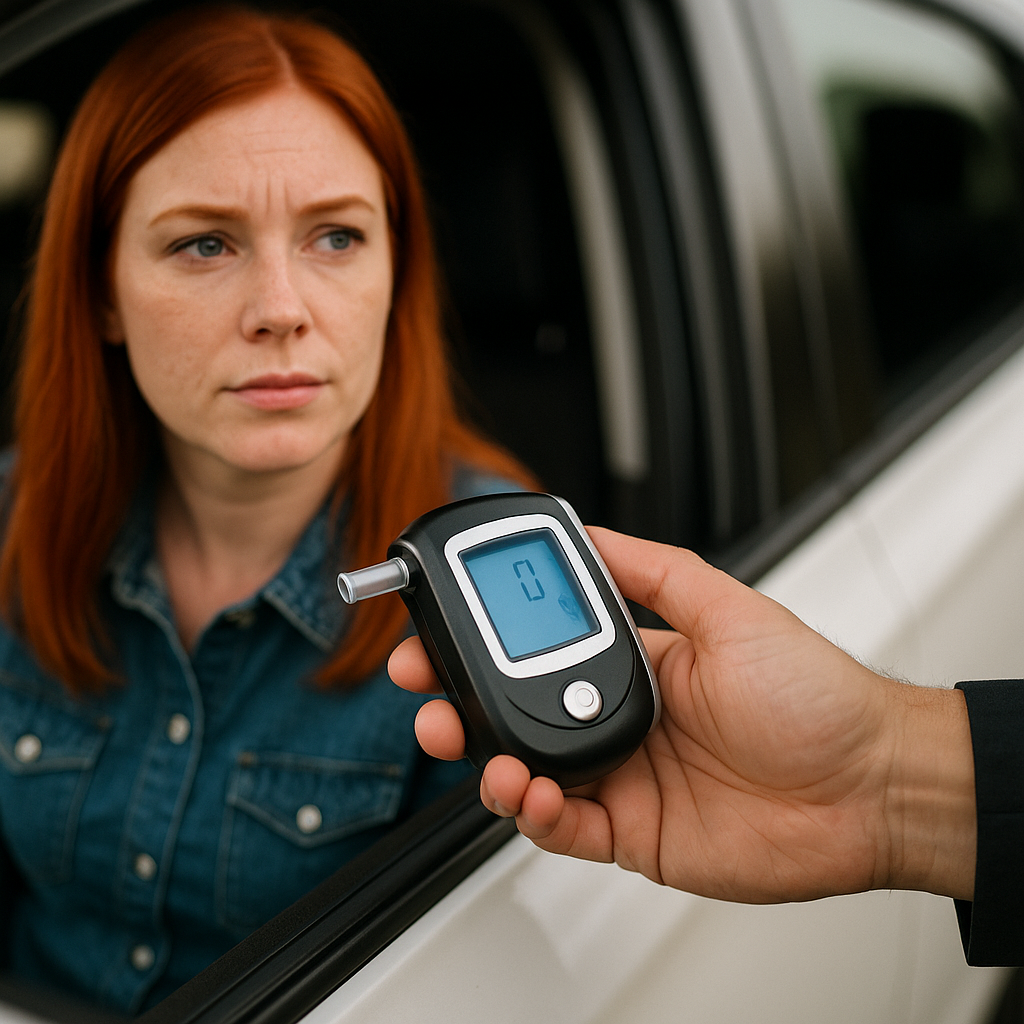
A DUI in Omaha triggers SR-22 filing for 3 years and rate increases of 80–140%, but five non-standard carriers actively write policies for convicted drivers — and Nebraska's administrative license revocation creates a second reinstatement deadline most drivers miss.
Nebraska's Dual-Track DUI System: Administrative and Criminal Timelines Run Separately
A DUI arrest in Omaha triggers two separate proceedings: the Nebraska Department of Motor Vehicles administrative license revocation (ALR) hearing and the criminal court case. The ALR process starts the day you're arrested and moves faster — your license is automatically revoked 15 days after arrest unless you request a hearing within 10 days. The criminal case determines your conviction, fines, and SR-22 requirement, but it has no direct control over the ALR revocation period.
Most Omaha drivers focus entirely on the criminal case and miss the ALR deadlines. If you don't request an ALR hearing within 10 days of your arrest, your license revokes automatically — even if your criminal case is still pending or ultimately gets reduced. The ALR revocation for a first-offense DUI is 90 days, but reinstatement requires ignition interlock installation for at least one year after the revocation ends, a separate $125 reinstatement fee, and proof of SR-22 insurance if your criminal conviction has been finalized.
The criminal conviction adds a second layer: Nebraska requires SR-22 filing for three years following any DUI conviction, and your insurance rates will reflect the conviction separately from the ALR action. If you complete your ALR revocation but haven't filed SR-22 from your conviction, you cannot legally drive. If you file SR-22 but haven't completed ignition interlock requirements from the ALR, you still cannot drive. Both timelines must be satisfied, and they rarely align. Nebraska SR-22 requirements
SR-22 Filing Requirements and Costs After an Omaha DUI
Nebraska requires SR-22 filing for three years following a DUI conviction. The SR-22 itself is not insurance — it's a certificate your insurer files with the Nebraska DMV proving you carry at least the state minimum liability coverage: $25,000 per person for bodily injury, $50,000 per accident for bodily injury, and $25,000 for property damage. The filing fee ranges from $15 to $50 depending on the carrier, but the real cost is the premium increase that comes with the DUI conviction on your record.
Omaha drivers with a DUI see rate increases between 80% and 140% compared to their pre-conviction premium. A driver paying $1,200 annually before the DUI can expect to pay $2,160 to $2,880 after conviction and SR-22 filing. The increase persists for the full three-year SR-22 period, though some carriers begin reducing rates slightly in year two if no additional violations occur. Standard carriers like State Farm and Allstate typically non-renew policies immediately following a DUI, forcing drivers into the non-standard market where premiums are higher but coverage is available.
Your SR-22 filing must remain continuous for the entire three-year period. A single lapse — even one day — resets the three-year clock to zero and triggers an immediate license suspension. If you cancel your policy, switch carriers, or let coverage lapse for nonpayment, your insurer is required to notify the Nebraska DMV within 15 days, and your license suspends automatically. Reinstatement after a lapse requires a new $125 reinstatement fee, proof of continuous coverage going forward, and the full three-year SR-22 period starts over from the date you refile.
Which Carriers Write DUI Policies in Omaha
Five non-standard carriers actively write policies for Omaha drivers with DUI convictions: The General, Bristol West, Direct Auto, Progressive's non-standard division, and Acceptance Insurance. These carriers specialize in high-risk coverage and do not non-renew based solely on a DUI conviction, though rates are higher than standard market pricing. Each carrier has different underwriting rules for how recent the conviction can be, whether they'll write a policy during an active SR-22 period, and what additional violations or lapses they'll tolerate.
The General and Bristol West typically offer the lowest premiums for first-offense DUI drivers in Omaha, with six-month policies ranging from $900 to $1,400 for state minimum liability with SR-22 filing. Direct Auto and Acceptance Insurance charge slightly more but are more lenient with drivers who have additional violations or a lapsed SR-22 period in their history. Progressive's non-standard division writes DUI policies but usually prices 15–25% higher than The General or Bristol West unless you bundle renters or add multiple vehicles to spread the risk.
Standard carriers like State Farm, Allstate, and Farmers will generally not write new policies for drivers with a DUI conviction until at least three years after the conviction date and SR-22 period ends. If you had a policy with a standard carrier at the time of your DUI, they will likely non-renew at your next renewal date — usually within 30 to 60 days of the conviction being reported to your insurer. This forces you into the non-standard market immediately, and shopping multiple non-standard carriers is the only way to find the lowest available rate since pricing varies by 30–50% between carriers for the same driver profile. non-standard auto insurance
Ignition Interlock Requirements Add a Second Layer of Cost
Nebraska's ALR process requires ignition interlock installation for most DUI offenses, and the requirement runs separately from your SR-22 filing period. For a first-offense DUI with a blood alcohol content (BAC) of 0.15% or higher, ignition interlock is mandatory for at least one year. For a second offense within 15 years, the requirement extends to two years. The device must be installed by a state-approved provider, and you're responsible for installation costs ($70–$150), monthly monitoring fees ($60–$90), and removal fees ($50–$75).
The ignition interlock requirement begins after your ALR revocation period ends. If your license was revoked for 90 days, you cannot drive during that period even with an interlock-restricted license. Once the 90 days are complete, you can apply for an ignition interlock permit, which allows you to drive only vehicles equipped with the device. Total ignition interlock costs for a one-year requirement typically run $850 to $1,200, and any failed breath test or tampering incident extends the requirement by additional months and may trigger a new violation reported to your insurer.
Your SR-22 insurance must cover you during the ignition interlock period, and some non-standard carriers charge an additional surcharge — usually $10 to $25 per month — if your policy includes an interlock restriction. Not all carriers apply this surcharge, so disclosing the interlock requirement upfront when shopping for SR-22 coverage can reveal which carriers price it into the base premium and which add it as a separate fee. The interlock requirement and SR-22 filing period do not expire on the same date, so plan to maintain SR-22 coverage even after your interlock is removed if your three-year SR-22 period has not yet ended.
How Long a DUI Affects Your Rates in Nebraska
A DUI conviction remains on your Nebraska driving record for 12 years, but insurers typically only surcharge for the conviction during the first five years. The SR-22 filing period is three years, and during that time your rates will remain elevated across all carriers. Once the SR-22 period ends and your filing is released, you can begin shopping standard carriers again, but most will still apply a surcharge for the conviction until it reaches the five-year mark.
Between years three and five after your conviction, expect rates to drop by 20–40% compared to your SR-22-period premium, assuming no additional violations. By year six, most standard carriers will quote you without applying a DUI surcharge, though the conviction still appears on your MVR and may affect eligibility for the lowest-tier pricing. After 12 years, the conviction is removed from your driving record entirely, and it no longer affects insurance eligibility or pricing at all.
The fastest path to lower rates is to maintain continuous coverage during your SR-22 period without any lapses, avoid additional violations, and shop at least three non-standard carriers every six months. Non-standard carrier pricing fluctuates based on their current book of business, and a carrier that was expensive six months ago may be the cheapest option at your next renewal. Once your SR-22 filing is released, immediately shop standard carriers — even if you've been with a non-standard carrier for the full three years, standard market pricing will almost always beat non-standard rates for a driver who's completed their SR-22 period and remained violation-free.
What Happens If You Move Out of Nebraska During Your SR-22 Period
If you move to another state while your Nebraska SR-22 filing is still active, your three-year requirement follows you. You must notify the Nebraska DMV of your move and provide proof that you've obtained SR-22 coverage in your new state of residence. Not all states use the SR-22 form — some use an FR-44 (Virginia and Florida) or other proof-of-insurance certificates — but Nebraska will accept equivalent forms as long as your new state's DMV confirms continuous coverage to Nebraska.
Failing to transfer your SR-22 filing to your new state results in an immediate suspension of your Nebraska driving privilege, and if you return to Nebraska before the three-year period ends, you'll need to pay a reinstatement fee and refile SR-22 before your license is valid again. Nebraska does not pause or shorten your SR-22 period based on time spent living in another state — the clock runs continuously from your conviction date, and any lapse resets it to zero regardless of where you're living.
If you move to a state that does not require SR-22 for DUI convictions or has a shorter filing period, you still must satisfy Nebraska's three-year requirement. Some drivers attempt to avoid this by obtaining a new state license and letting their Nebraska license expire, but Nebraska will place an administrative hold on your driving record that appears in the national NDR database, preventing you from obtaining a valid license in any state until the Nebraska SR-22 requirement is cleared. The only way to resolve it is to file SR-22 in your new state, maintain it for the remaining duration of your Nebraska requirement, and request a clearance letter from the Nebraska DMV once the period is complete.