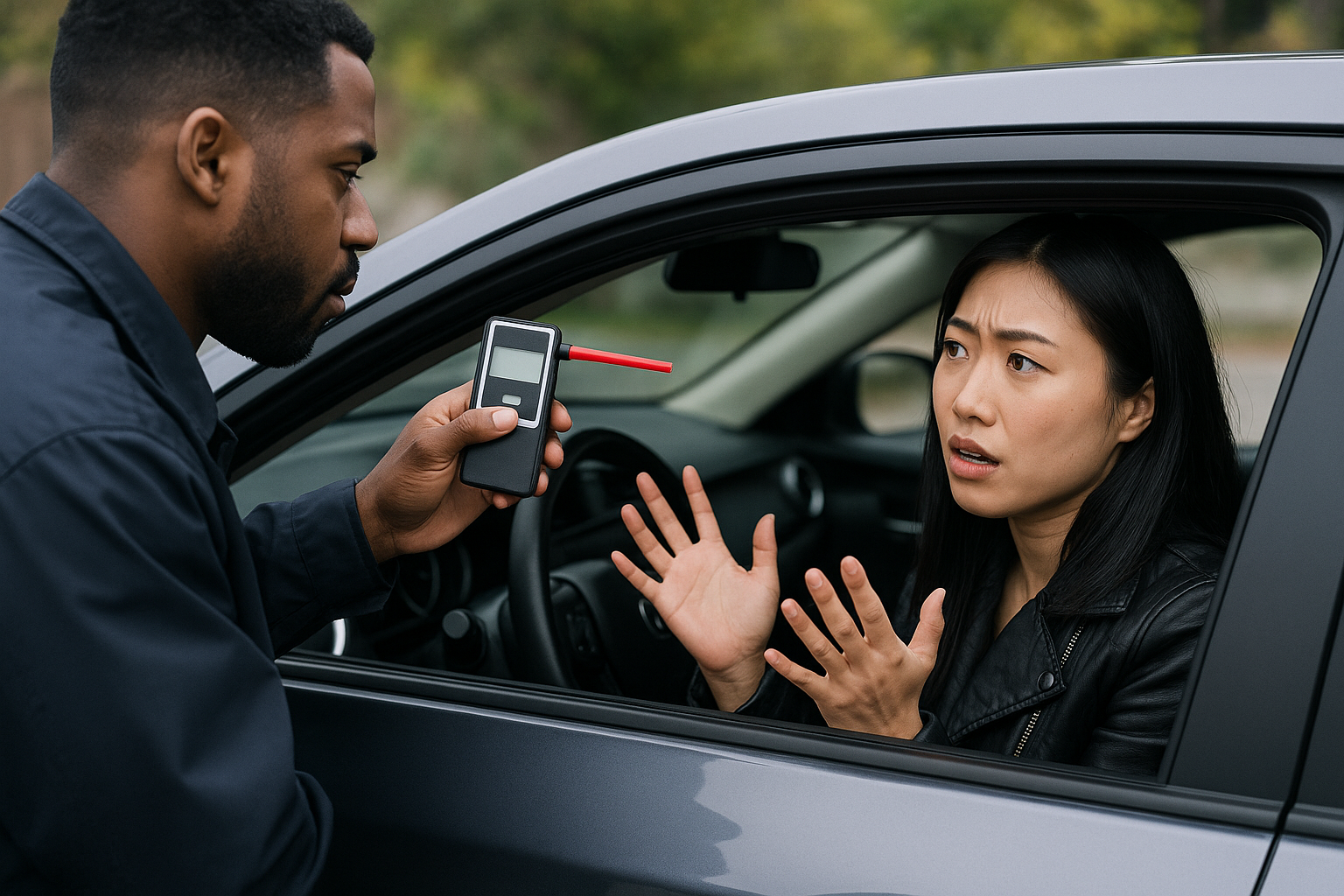
A DUI in Santa Ana doesn't mean no coverage — it means higher rates and fewer carriers. California requires SR-22 filing for 3 years, and finding the right non-standard carrier can mean the difference between $300/mo and $600/mo.
What a DUI Does to Your Insurance in Santa Ana
A DUI conviction in Santa Ana triggers an immediate shift to California's non-standard insurance market. Your current carrier will either non-renew your policy at the end of the term or move you to a high-risk subsidiary with substantially higher premiums. The California DMV suspends your license for at least 4 months on a first DUI, and reinstatement requires 3 years of continuous SR-22 filing — a certificate your insurer files with the state proving you carry at least California's minimum liability coverage of 15/30/5.
Orange County drivers already pay among the highest baseline premiums in California due to population density, traffic volume, and elevated uninsured motorist rates. The average full-coverage premium in Santa Ana for a clean-record driver runs approximately $2,200–$2,600 annually. After a DUI, that same driver typically sees premiums rise to $4,500–$7,500 annually depending on age, prior history, and the carrier's DUI surcharge model. Monthly costs for liability-only coverage with SR-22 typically start around $250–$350 for drivers in their 30s and 40s, climbing to $400–$600 for drivers under 25 or those with multiple violations.
The SR-22 filing itself costs $15–$25 as a one-time fee in California, but it's the underlying policy premium that creates the financial impact. You're not paying more because of the SR-22 certificate — you're paying more because the DUI moved you into a risk tier where only non-standard carriers will write you, and those carriers price for the statistical likelihood of future claims. The 3-year filing period starts from the date the DMV receives your SR-22, not from your conviction date or license reinstatement date, so filing promptly after your suspension ends shortens your total compliance window.
Which Carriers Still Write DUI Drivers in Santa Ana
Most standard carriers — State Farm, Allstate, Farmers, GEICO for standard policies — will not renew a policy after a DUI conviction. You'll need coverage from a non-standard or high-risk carrier, and availability in Santa Ana is broader than in many California markets due to Orange County's insurer density. National non-standard carriers actively writing DUI policies in the area include The General, Bristol West, Acceptance Insurance, Kemper, and National General. Regional carriers with a California non-standard presence include Foremost, Infinity, and Alliance United.
Not all non-standard carriers price DUI risk the same way. Some apply a flat surcharge to your base rate, others use a multiplier, and a few tier their pricing based on your blood alcohol content (BAC) at the time of arrest — higher BAC results in higher premiums. A driver with a .08 BAC may see a 70–90% rate increase, while a driver with a .15 BAC or refusal to test may see increases exceeding 120%. This variance makes shopping critical: the difference between the most expensive and least expensive non-standard quote for the same driver in Santa Ana can exceed $200/month.
Some carriers require an SR-22 filing before they'll bind coverage, others will issue the policy and file the SR-22 simultaneously. If you're still within your DMV suspension period, you can purchase a non-owner SR-22 policy — liability coverage that follows you when you drive a vehicle you don't own. This keeps your SR-22 active and prevents a compliance lapse, which would restart your 3-year filing clock. Non-owner policies in Santa Ana typically cost $40–$80/month depending on your age and violation history. SR-22 insurance coverage non-standard auto insurance
Rate Compression in Orange County and What It Means for DUI Pricing
Orange County's elevated baseline premiums create a counterintuitive dynamic for DUI drivers: the percentage surcharge you face is often lower than what drivers experience in cheaper inland markets, but your absolute premium is still higher. A driver in Riverside with a clean record might pay $1,600/year and see that jump to $3,500 after a DUI — a 119% increase. In Santa Ana, that same driver might go from $2,400/year to $4,800 — a 100% increase — but still pays $1,300 more annually than the Riverside driver.
This rate compression happens because non-standard carriers price for local claims frequency and severity, and Orange County already prices high due to dense traffic, higher medical costs, and elevated repair expenses. The DUI surcharge is additive to an already-high base, but the base accounts for much of the risk. For DUI drivers, this means Santa Ana's non-standard market is more competitive than you'd expect: carriers are already operating in a high-premium environment and have more rating flexibility than in markets where they only write high-risk policies.
The practical outcome: aggressive carrier shopping in Santa Ana can yield monthly savings of $100–$250 even within the non-standard market, because local competition drives more rate variation than in less dense markets. Drivers who accept the first non-standard quote they receive typically overpay significantly compared to those who compare at least three non-standard carriers. Orange County's insurer density makes this comparison logistically easier than in rural California counties where non-standard options are sparse.
SR-22 Filing Rules and Avoiding a Compliance Lapse
California requires continuous SR-22 coverage for 3 years from the date the DMV receives your filing. If your policy lapses for any reason — non-payment, cancellation, switching carriers without filing a new SR-22 first — your insurer notifies the DMV within 15 days, your license is suspended again, and your 3-year clock restarts from zero when you refile. This is the single most common mistake DUI drivers make: letting coverage lapse during the filing period, often because they assume they can switch carriers freely or didn't realize a canceled policy triggers an automatic DMV notification.
When switching carriers during your SR-22 period, the new carrier must file the SR-22 before your old policy cancels. Most non-standard insurers handle this transition automatically if you notify them you're under an SR-22 requirement, but you're responsible for confirming the filing went through. Request a copy of the filed SR-22 from your new carrier and verify the DMV received it by checking your driver record online through the California DMV website. A gap of even one day between filings can restart your 3-year requirement.
If your license is suspended for non-payment or another violation during your SR-22 period, the 3-year clock does not pause — it continues running as long as you maintain the filing. However, if you let the SR-22 lapse, the clock resets entirely. For a Santa Ana driver paying $350/month for SR-22 coverage, a single lapse can cost an additional $12,600 in premiums over the extended filing period. Setting up automatic payments and maintaining a 30-day payment buffer is the most effective way to avoid this outcome. California's SR-22 filing requirements
Rate Recovery Timeline After Your SR-22 Period Ends
Once your 3-year SR-22 filing period ends, the DMV sends a notice confirming you've completed the requirement. At this point, you're no longer required to carry SR-22 coverage, but the DUI conviction remains on your California driving record for 10 years. Most insurers look back 3–5 years when pricing DUI violations, meaning your rates will remain elevated even after the SR-22 period ends, but the surcharge decreases over time.
Typically, DUI surcharges drop significantly at the 3-year mark — the point where you've completed SR-22 and demonstrated 3 years of coverage without additional violations. Many carriers reduce the DUI surcharge by 40–60% at this milestone, and by year 5, some standard carriers will consider writing you again if you've maintained continuous coverage and have no other violations. A Santa Ana driver paying $400/month immediately after a DUI might see that drop to $250/month after 3 years and $180/month after 5 years, assuming no additional incidents.
Re-shopping your policy the month your SR-22 period ends is critical. You're no longer bound to non-standard carriers, and some standard carriers with high-risk divisions — Progressive, Nationwide, and Mercury in California — may offer quotes that are 20–40% cheaper than continuing with your non-standard carrier. Your driving record still shows the DUI, but you're no longer in active compliance status, which opens access to carriers with more competitive pricing tiers. Some drivers save $100–$200/month simply by re-quoting the month their SR-22 expires.
What to Do If You Need Coverage Today
If your license is currently suspended and you need coverage to reinstate, start by confirming your suspension end date and reinstatement requirements with the California DMV. Most first-offense DUI suspensions in California last 4 months, but you may also need to complete a DUI program, pay reinstatement fees, and provide proof of SR-22 filing. You cannot reinstate your license until all requirements are met, and the SR-22 filing must be active at the time you visit the DMV.
Call at least three non-standard carriers that write SR-22 policies in Orange County and request quotes for the same coverage limits — California's minimum 15/30/5 liability is the legal floor, but many drivers carry 25/50/25 or higher to reduce out-of-pocket exposure in a future accident. Provide your accurate violation history, license status, and vehicle information. Quotes usually take 10–20 minutes per carrier, and most can bind coverage and file your SR-22 the same day if you provide payment.
If you don't currently own a vehicle but need to maintain SR-22 compliance — for example, you sold your car after the DUI or you're borrowing a family member's vehicle — purchase a non-owner SR-22 policy. This maintains your filing without insuring a specific vehicle and typically costs 40–60% less than a standard SR-22 policy. Once you purchase or lease a vehicle, you'll switch to a standard policy, and your new carrier will file an updated SR-22 reflecting the change. The key is avoiding any gap: your SR-22 must remain active every day of the 3-year period, regardless of whether you own a car.