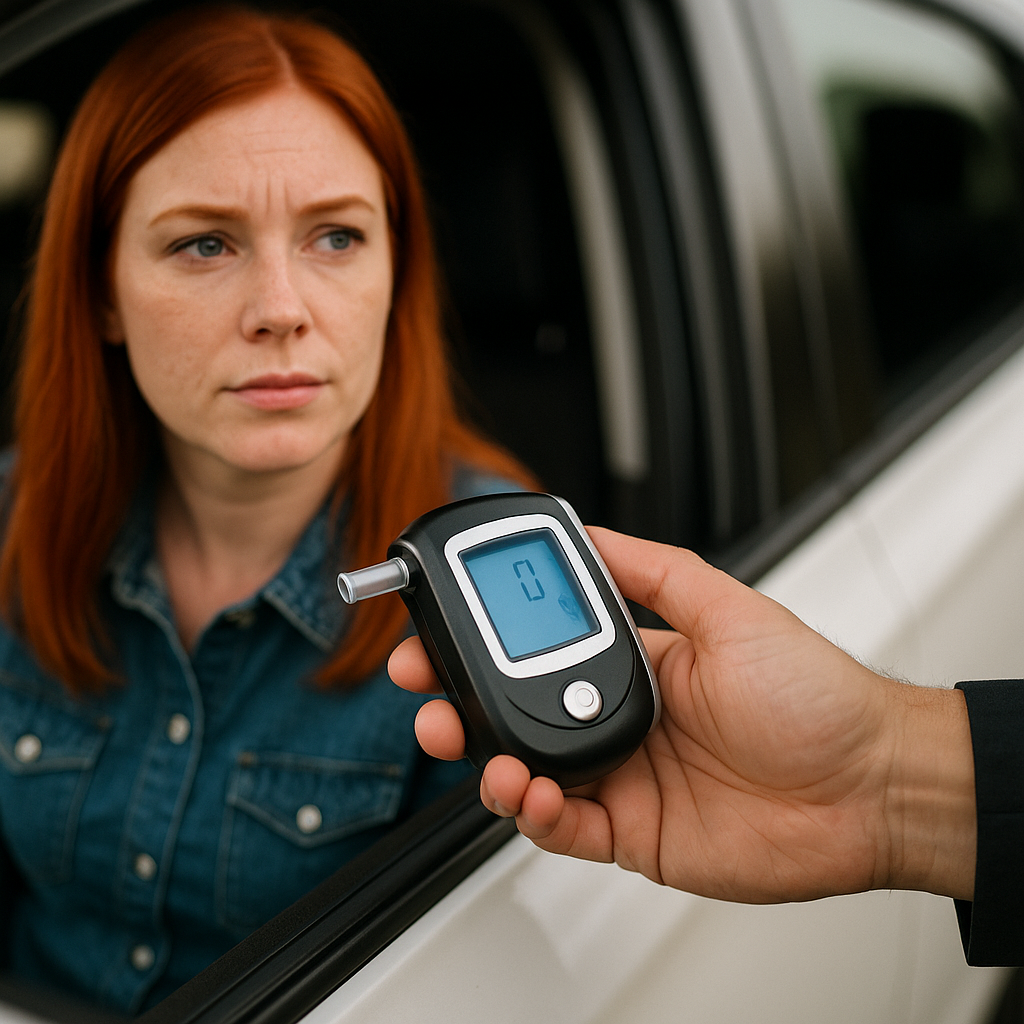
After a DUI in South Dakota, you'll face a mandatory SR-22 filing, 2-year suspension, and rate increases averaging 80–120%. Most standard carriers will non-renew you — here's which non-standard carriers will write you and what rates to expect.
South Dakota DUI License Revocation and SR-22 Timeline
A first-offense DUI in South Dakota triggers an automatic 2-year license revocation administered by the South Dakota Department of Public Safety. This is not a suspension you can shorten with good behavior — it's a fixed revocation period that begins the day your conviction is final. You are not eligible for a restricted permit during the first 30 days of this revocation, and after that 30-day period, you may apply for a restricted permit that allows driving to work, school, medical appointments, and court-ordered treatment.
Your SR-22 filing requirement begins as soon as you apply for reinstatement or a restricted permit, not at the time of conviction. The filing itself costs $25–$50 depending on your insurer, but the real cost is the premium increase tied to your DUI conviction. The SR-22 must remain active and continuous for 3 years from the date of reinstatement in South Dakota — any lapse in coverage during that period triggers a new revocation and resets the SR-22 clock.
Most drivers don't realize you can shop for SR-22 insurance during your revocation period, before you apply for the restricted permit. Locking in a policy early — even if you're not driving yet — ensures you have continuous coverage on file when you do apply, and it gives you time to compare non-standard carriers without the pressure of an immediate deadline.
Which Carriers Write Post-DUI Policies in South Dakota
Standard carriers like State Farm, Allstate, and Progressive will typically non-renew your policy at the end of your current term after a DUI conviction. Some may allow you to finish your term, but renewal is rarely offered. This forces you into the non-standard market, where carriers specialize in high-risk drivers and SR-22 filings.
The non-standard carriers most active in South Dakota for DUI policies include The General, Dairyland, Bristol West, Acceptance Insurance, and National General. The General and Dairyland consistently quote post-DUI drivers in South Dakota and process SR-22 filings in-house, which speeds up reinstatement paperwork. Bristol West and Acceptance are regional players with competitive rates for drivers who can provide proof of completion for a state-approved alcohol treatment program — South Dakota courts often mandate this as part of sentencing, and carriers view it as a risk mitigator.
National General operates through independent agents in South Dakota and will sometimes offer lower rates if you bundle a renters or secondary vehicle policy, though bundling discounts are smaller in the non-standard market than with standard carriers. Not all non-standard carriers are available in every county — Dairyland and The General have the widest South Dakota footprint, while Bristol West and Acceptance are more concentrated in Sioux Falls, Rapid City, and surrounding areas.
If you're applying for a restricted permit within the first year of your revocation, expect fewer carrier options. Some non-standard insurers will not write a policy until you have at least 6 months of sobriety documented or until you've completed court-ordered treatment. This is not a hard rule across all carriers, but it's common enough that you should plan to contact multiple insurers and compare eligibility requirements, not just rates. non-standard auto insurance
Rate Increases After a DUI in South Dakota
A DUI conviction in South Dakota typically increases your car insurance premium by 80–120% compared to your pre-violation rate. If you were paying $900/year before the DUI, expect to pay $1,620–$1,980/year with a non-standard carrier after conviction. Rates vary based on your age, county, prior driving record, and whether you're filing SR-22 for the first time or have prior violations.
Younger drivers under 25 with a DUI face steeper increases — often 100–150% — because age and violation severity compound the risk profile. Older drivers over 40 with an otherwise clean record may see increases closer to 70–90%, especially if they complete an alcohol treatment program before applying for coverage. South Dakota does not mandate rate filings by violation type, so carriers have discretion in how they price DUI risk, which is why shopping multiple non-standard insurers often produces a $400–$800 annual difference in premium for the same coverage.
The SR-22 filing fee itself is a flat $25–$50 annually and is separate from your premium. Some carriers roll this into your policy cost as a line item, while others bill it separately. Your premium will not drop significantly until the DUI conviction ages off your driving record — South Dakota keeps DUI convictions on your Motor Vehicle Report for 10 years, but most carriers re-rate your policy after 3–5 years if you maintain a clean record during that period.
Liability-only policies are the most common post-DUI coverage because non-standard carriers often refuse to write comprehensive or collision coverage for the first 1–2 years after conviction. If you own your vehicle outright and can absorb the risk of paying for repairs out-of-pocket, liability-only is the most cost-effective path forward. If you have a loan or lease, you'll need full coverage, which will increase your premium by another 40–60% on top of the DUI surcharge.
SR-22 Filing Mechanics and Reinstatement Process
The SR-22 is not a type of insurance — it's a certificate your insurer files electronically with the South Dakota Department of Public Safety confirming you carry at least the state minimum liability coverage: $25,000 per person / $50,000 per accident for bodily injury, and $25,000 for property damage. Your carrier submits the SR-22 on your behalf once you purchase a policy, and the filing is typically processed within 24–48 hours.
You cannot file an SR-22 yourself, and you cannot reinstate your license or obtain a restricted permit without an active SR-22 on file. If your policy lapses or cancels for any reason — missed payment, non-renewal, voluntary cancellation — your insurer is required to notify the state immediately, and your license is automatically re-revoked. You'll need to purchase a new policy, file a new SR-22, and restart the 3-year SR-22 requirement from the new filing date.
To apply for a restricted permit after the mandatory 30-day hard revocation, you must submit proof of SR-22 filing, proof of completion of a court-ordered alcohol evaluation and treatment program, and pay a $100 reinstatement fee to the South Dakota Department of Public Safety. The restricted permit allows you to drive for work, school, medical care, and treatment appointments, but it does not restore full driving privileges. Full reinstatement is available after the 2-year revocation period ends, assuming you've maintained continuous SR-22 coverage and completed all court requirements.
If you move out of South Dakota during your SR-22 period, your filing requirement follows you. You'll need to notify your insurer of your new state and confirm whether they can file an SR-22 in that state — not all non-standard carriers operate nationwide. If they can't, you'll need to switch carriers, which can create a coverage gap if not coordinated carefully. Always overlap your old and new policies by at least 24 hours to avoid a lapse notification. South Dakota SR-22 insurance requirements
How Long Until Your Rates Recover
Your DUI conviction will affect your insurance rates in South Dakota for a minimum of 3–5 years, even though the conviction remains on your Motor Vehicle Report for 10 years. Most non-standard carriers re-evaluate your risk profile at the 3-year mark — once you've completed your SR-22 requirement and maintained continuous coverage without new violations. At that point, you may see a 20–40% rate reduction, though you'll still pay more than a clean-record driver.
After 5 years, some drivers can transition back to standard carriers if they have no additional violations and can demonstrate stable coverage history. This is not automatic — you'll need to actively shop and apply with standard carriers, and approval is not guaranteed. Drivers who complete defensive driving courses, maintain collision-free records, and improve credit scores during the 5-year period have the best odds of re-entering the standard market.
The DUI surcharge does not disappear until the conviction ages off your record entirely, which takes 10 years in South Dakota. Even at year 7 or 8, some carriers still apply a minor surcharge, though it's typically under 10% by that point. The most impactful step you can take to accelerate rate recovery is to avoid any new violations — a single speeding ticket or at-fault accident during your SR-22 period can extend the high-risk classification by another 3 years.
Shopping your policy annually is critical during this recovery period. Non-standard carriers re-rate policies at different intervals, and you may find a better rate with a competitor even if your current insurer hasn't reduced your premium. Loyalty does not benefit high-risk drivers the way it does clean-record drivers — non-standard insurers expect churn and do not typically reward long-term customers with discounts.