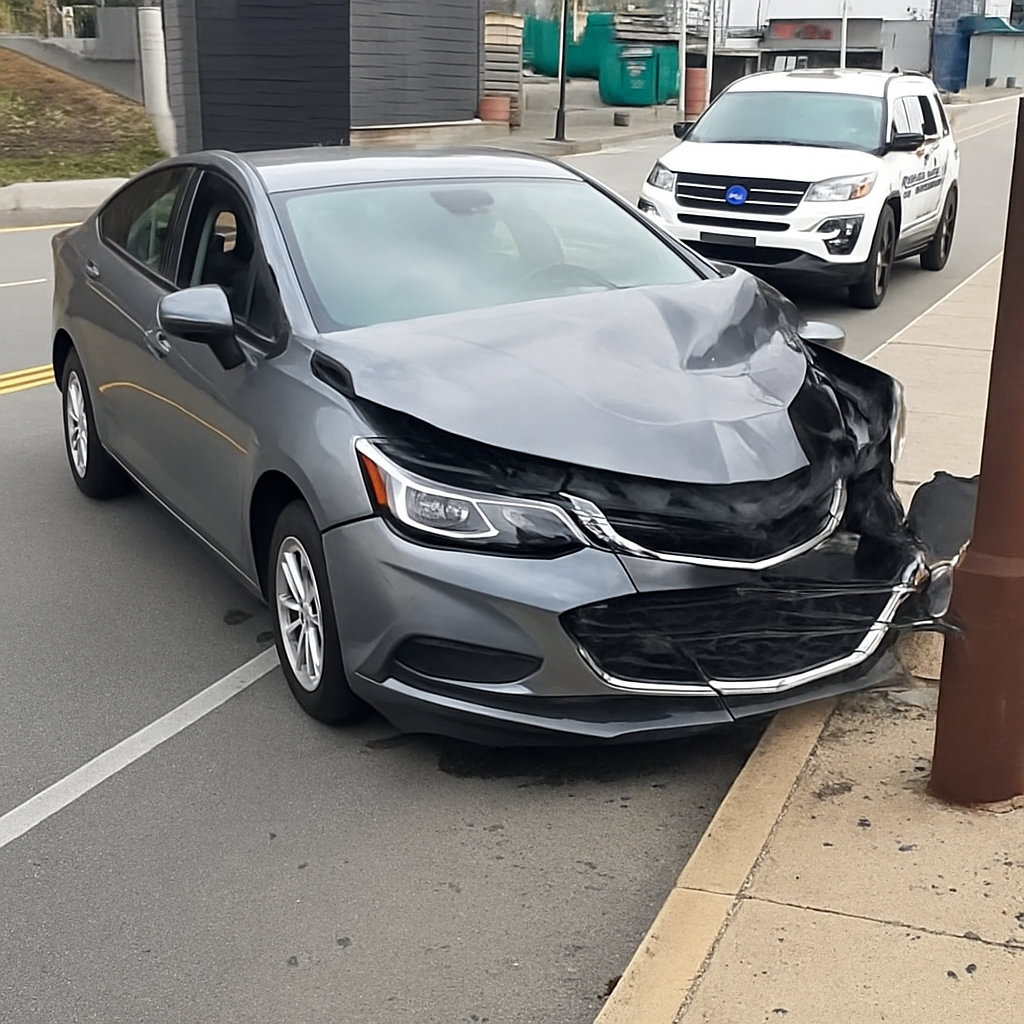
A hit and run conviction in Alabama puts you in non-standard insurance territory — most standard carriers won't renew you, and those that will are pricing for a felony-level event, not just points.
How Alabama Classifies Hit and Run and What That Means for Your Insurance
Alabama law treats leaving the scene of an accident as a criminal violation under Code § 32-10-1. If the accident involved only property damage, it's a misdemeanor. If it involved injury or death, it's a felony. Both trigger immediate insurance consequences because carriers pull conviction records in addition to MVR point data — and a hit and run conviction signals high underwriting risk regardless of whether you've accumulated points elsewhere on your record.
The Alabama point system assigns 6 points for leaving the scene of an accident, the same penalty as reckless driving or a second DUI. But the conviction itself — not the points — is what most standard carriers react to. Many will non-renew your policy at the next renewal period even if you have no other violations. Points fall off your Alabama driving record after 2 years, but the conviction remains visible to insurers for 3 to 5 years depending on the carrier's underwriting lookback period.
This distinction matters because you're not just managing a high point total. You're managing a criminal conviction on your record that standard carriers treat as disqualifying. That shifts your coverage options into the non-standard market, where pricing reflects felony or misdemeanor criminal history rather than just traffic violations. Alabama SR-22 requirements and filing rules non-standard auto insurance
Rate Increases and Carrier Availability After a Hit and Run in Alabama
Expect a rate increase between 80% and 200% after a hit and run conviction, depending on whether it was charged as a misdemeanor or felony and whether your current carrier chooses to renew you. Most standard carriers — State Farm, Allstate, GEICO, and others that write preferred-risk auto policies — will either non-renew you or move you into a non-standard subsidiary with significantly higher premiums.
If you're non-renewed, you'll need to move to a non-standard carrier. In Alabama, that typically means insurers like The General, Alliance United, Acceptance Insurance, or regional high-risk writers. Monthly premiums for non-standard liability coverage after a hit and run conviction typically range from $180 to $350 per month for state minimum limits, compared to $70 to $120 for a clean-record driver in Alabama.
Some carriers will quote you but apply surcharges every renewal period for 3 to 5 years after the conviction date. Others price the conviction into the initial premium and hold rates flat if you stay violation-free. Shopping across multiple non-standard carriers is the single highest-leverage action you can take — premium variance for the same coverage profile can exceed 40% between carriers writing high-risk policies in Alabama.
Does Alabama Require SR-22 Filing After a Hit and Run?
Alabama does not automatically require SR-22 filing after a hit and run conviction unless the incident also triggered a license suspension, you were driving uninsured at the time, or the court or DMV ordered SR-22 as part of your conviction penalty. SR-22 is a certificate your insurer files with the Alabama Law Enforcement Agency (ALEA) proving you carry at least state minimum liability coverage.
If your license was suspended following the conviction — common if you failed to appear in court, didn't pay fines, or had prior violations on your record — ALEA will require SR-22 filing for 3 years before reinstating your license. The SR-22 filing fee in Alabama is typically $15 to $25, but the real cost is the premium increase: adding SR-22 to a non-standard policy usually raises your rate another 10% to 20% on top of the conviction surcharge.
You'll need to maintain continuous SR-22 coverage for the full 3-year period. If your policy lapses or cancels, your insurer is legally required to notify ALEA, which will suspend your license again. Reinstatement after an SR-22 lapse requires paying a new reinstatement fee (currently $175 in Alabama) and restarting the 3-year SR-22 clock from zero. SR-22 insurance
License Suspension and Reinstatement After a Hit and Run in Alabama
Alabama will suspend your license if you accumulate 12 to 14 points in a 2-year period — and a hit and run conviction adds 6 points immediately. If you had any other violations in the prior 24 months (a speeding ticket adds 2 points, an at-fault accident adds 3), you're likely at or above the suspension threshold. ALEA will send a notice of suspension, and your license will be invalid 10 days after the notice date.
The suspension period depends on how many points triggered it. For a first suspension (12–14 points), you'll lose your license for 60 days minimum. A second suspension within 5 years extends to 90 days. A third extends to 6 months. If the hit and run itself triggered the suspension — not the points — the court may impose a longer suspension period as part of your sentence.
To reinstate your license after suspension, you'll need to: (1) serve the full suspension period, (2) pay the $175 reinstatement fee to ALEA, (3) provide proof of insurance or SR-22 if required, and (4) in some cases, complete a driver improvement course. If SR-22 was ordered, you'll need to maintain it for 3 years from the reinstatement date. Missing any of these steps will delay reinstatement and extend the period you're unable to drive legally.
Finding Coverage and Recovering Your Rates After a Hit and Run Conviction
Your first priority is securing non-standard coverage if your current carrier non-renews you. Most non-standard carriers in Alabama will write a policy after a hit and run conviction, but premiums will reflect the criminal conviction and elevated underwriting risk. Start shopping for quotes 45 to 60 days before your current policy's expiration or non-renewal date — applying closer to the deadline limits your options and increases the chance of a coverage gap.
Once you've placed coverage, focus on maintaining a clean record for the next 3 to 5 years. The hit and run conviction will remain on your MVR and background check for at least 5 years, but its impact on your rates declines each year you remain violation-free. Most non-standard carriers reduce conviction surcharges by 20% to 30% after the first year if you have no new claims or violations. After 3 years, some carriers will reconsider you for standard or preferred-tier policies.
Rates typically return to near-baseline levels 5 to 7 years after the conviction date, assuming no additional violations or at-fault claims. In the meantime, re-shop your policy every 12 months. Non-standard carriers price risk differently, and the carrier offering the lowest rate in year one may not be the most competitive in year two. Consistent shopping and a clean post-conviction record are the only reliable levers you have to accelerate rate recovery.