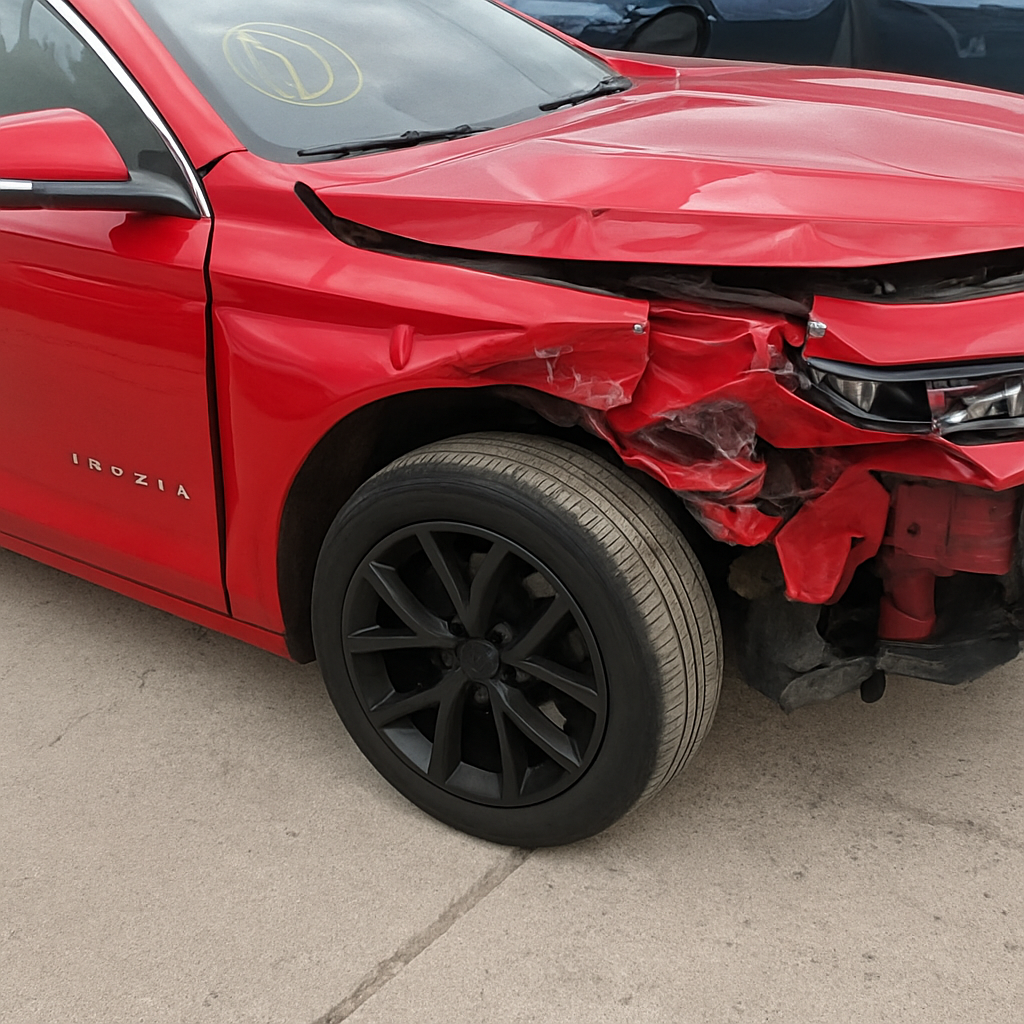
A hit and run conviction in Arkansas triggers mandatory SR-22 filing, immediate license suspension, and rate increases that typically exceed 80%. Here's what to expect and which carriers still write policies after a conviction.
Arkansas Hit and Run: Conviction Class and Insurance Consequences
Arkansas law distinguishes between Class A misdemeanor hit and run (involving injury or death) and Class B misdemeanor hit and run (property damage only), but from an insurance and licensing perspective, the consequences are functionally identical. Both trigger mandatory SR-22 filing, immediate license suspension through the Arkansas Department of Finance and Administration (DFA), and classification as a major violation by every carrier writing policies in the state. The conviction class affects your criminal penalties — Class A carries up to one year in jail and a $2,500 fine, Class B carries up to 90 days and a $1,000 fine — but your insurance carrier does not differentiate between the two when calculating your premium increase.
The Arkansas DFA requires SR-22 filing as a condition of license reinstatement following any hit and run conviction. This is not a discretionary requirement tied to your point total or prior record — the conviction itself mandates the filing. You will need continuous SR-22 coverage for a minimum of three years from your reinstatement date, not from your conviction date. If your license remains suspended for six months before you reinstate, your three-year SR-22 clock does not start until reinstatement is complete.
Rate increases following a hit and run conviction in Arkansas typically range from 80% to 140%, depending on your carrier, prior record, and whether the conviction involved injury or significant property damage. A driver paying $120/month for full coverage before a conviction can expect to pay $215 to $290/month after reinstatement with SR-22. Standard carriers like State Farm, Allstate, and USAA often non-renew policies after a hit and run conviction, which means you will need to shop non-standard carriers who specialize in high-risk drivers. The non-renewal itself does not raise your rate further, but it does narrow your carrier options significantly. Arkansas SR-22 requirements
How Long SR-22 Filing Lasts After an Arkansas Hit and Run
Arkansas mandates a three-year SR-22 filing period following a hit and run conviction, measured from the date your license is reinstated — not the date of conviction or the date you obtain SR-22 coverage. This distinction matters because many drivers delay reinstatement due to cost or court obligations, and every month of delay pushes back the start of your three-year clock. If you are convicted in January 2025 but do not reinstate your license until July 2025, your SR-22 requirement runs until July 2028.
The Arkansas DFA does not offer early termination of SR-22 filing for hit and run convictions, even if you maintain a clean record during the filing period. Unlike point-based suspensions — where points fall off after three years and can reduce your insurance impact — a hit and run conviction remains on your driving record for five years from the conviction date and continues to affect your rates even after your SR-22 requirement ends. Most carriers reduce the rate penalty incrementally over that five-year period, with the steepest increases occurring in years one and two.
If your SR-22 lapses at any point during the three-year period — because you miss a premium payment, cancel your policy, or switch carriers without ensuring continuous coverage — the Arkansas DFA will suspend your license again and restart your three-year SR-22 clock from the new reinstatement date. This is the most common reason drivers end up filing SR-22 for four or five years instead of three. Non-standard carriers that specialize in SR-22 filings typically send advance notices before policy cancellation to prevent lapses, but you are ultimately responsible for maintaining continuous coverage. SR-22 insurance
Which Arkansas Carriers Write Policies After a Hit and Run
Standard carriers like State Farm, USIC, and Farmers typically non-renew policies after a hit and run conviction, which means you will need to move into the non-standard market to obtain coverage with SR-22. Non-standard carriers who actively write hit and run policies in Arkansas include The General, Bristol West, Dairyland, Progressive (through their non-standard subsidiary), and National General. These carriers specialize in drivers with major violations and are appointed to file SR-22 directly with the Arkansas DFA on your behalf.
Non-standard policies cost more than standard policies, but the rate difference is not as extreme as many drivers expect. A full-coverage policy with SR-22 from a non-standard carrier typically runs $190 to $310/month in Arkansas for a driver with a hit and run conviction, compared to $110 to $140/month for a clean-record driver with a standard carrier. The SR-22 filing fee itself is minimal — most carriers charge $25 to $50 as a one-time fee to submit the form to the DFA — so the bulk of your rate increase comes from the conviction itself, not the SR-22 filing.
Some non-standard carriers require a 6- or 12-month policy term with no early cancellation, while others allow monthly policies. Monthly policies give you flexibility to shop for better rates as your conviction ages, but they also carry slightly higher per-month premiums due to increased lapse risk for the carrier. If you have the option, a six-month policy balances cost and flexibility better than a 12-month commitment, especially in your first year post-conviction when rate volatility is highest.
License Reinstatement Steps After a Hit and Run in Arkansas
Arkansas suspends your license immediately following a hit and run conviction. Reinstatement requires three separate actions: satisfying any court-ordered restitution or fines, paying the DFA reinstatement fee, and filing SR-22 proof of insurance. The Arkansas DFA reinstatement fee for a hit and run suspension is $150, paid directly to the DFA either online or in person at a state revenue office. You cannot reinstate your license until all three requirements are complete, and the SR-22 filing must be active at the time of reinstatement — you cannot retroactively file after reinstatement.
To file SR-22, you first need to obtain a non-standard auto insurance policy from a carrier licensed in Arkansas. Once the policy is active, your carrier files the SR-22 form electronically with the Arkansas DFA, usually within 24 to 48 hours. You do not file the SR-22 yourself. Once the DFA receives the filing, you can proceed with reinstatement by paying the $150 fee and providing proof that all court obligations are satisfied. Most drivers complete reinstatement within one week of obtaining SR-22 coverage, assuming no outstanding court holds.
If you were also convicted of other charges alongside the hit and run — such as driving on a suspended license, no insurance, or DWI — those convictions may carry separate reinstatement requirements or extend your SR-22 filing period beyond three years. The Arkansas DFA will issue a clearance letter once you satisfy all requirements, but you are responsible for confirming that no additional holds exist before beginning the reinstatement process. Calling the DFA Driver Services line at 501-682-7060 before paying any fees can prevent wasted reinstatement attempts.
How Hit and Run Affects Your Rates Long-Term in Arkansas
A hit and run conviction in Arkansas remains on your driving record for five years from the conviction date, which is two years longer than your SR-22 filing requirement. Even after your SR-22 period ends at year three, carriers will still rate you based on the conviction for the remaining two years, though the rate penalty typically decreases each year. Most carriers reduce the surcharge by 20% to 30% annually, so a driver paying $280/month in year one might see rates drop to $230/month in year three and $160/month in year five, assuming no new violations.
Your rate recovery timeline accelerates significantly if you can move back into the standard market after your SR-22 requirement ends. Some standard carriers will accept drivers three years post-conviction if no additional violations occurred during the SR-22 period, but approval is not guaranteed. Drivers who remain in the non-standard market for the full five years often see slower rate decreases because non-standard carriers assume higher baseline risk and price accordingly.
Shopping carriers every six months during your post-conviction period is the single highest-leverage action you can take to reduce your costs. Non-standard carriers price hit and run convictions very differently — one carrier might quote $310/month while another quotes $195/month for identical coverage — and your best option in year one is often not your best option in year two. Arkansas does not penalize you for switching carriers as long as you maintain continuous SR-22 coverage, so treating your policy as a six-month contract rather than a long-term relationship makes financial sense until you move back into the standard market.
What to Do If You Cannot Afford SR-22 Coverage Right Now
If the cost of SR-22 coverage is preventing you from reinstating your license, the most practical step is to obtain a liability-only policy rather than full coverage. Arkansas requires only liability coverage to satisfy SR-22 filing, and a liability-only policy with SR-22 typically costs $90 to $150/month for a driver with a hit and run conviction, compared to $190 to $310/month for full coverage. Liability-only coverage meets the legal requirement to reinstate your license and start your three-year SR-22 clock, and you can always add collision and comprehensive coverage later if your financial situation improves.
Some non-standard carriers offer payment plans that allow you to pay your first month's premium plus the SR-22 filing fee upfront — often $120 to $180 total — rather than requiring six months prepaid. Monthly payment plans carry slightly higher per-month costs due to billing fees, but they make reinstatement accessible if you cannot afford $600 to $1,000 upfront. Be aware that missing a single monthly payment will trigger an SR-22 lapse and restart your suspension, so setting up automatic payments is strongly recommended if you choose a monthly plan.
Delaying reinstatement to save money extends the time your conviction affects your rates, because your SR-22 clock does not start until reinstatement is complete. A driver who waits 12 months to reinstate will still be filing SR-22 four years after their conviction date, while a driver who reinstates immediately will finish SR-22 three years after conviction. From a long-term cost perspective, reinstating as soon as possible — even with a minimum liability-only policy — is almost always cheaper than delaying and extending your SR-22 period.