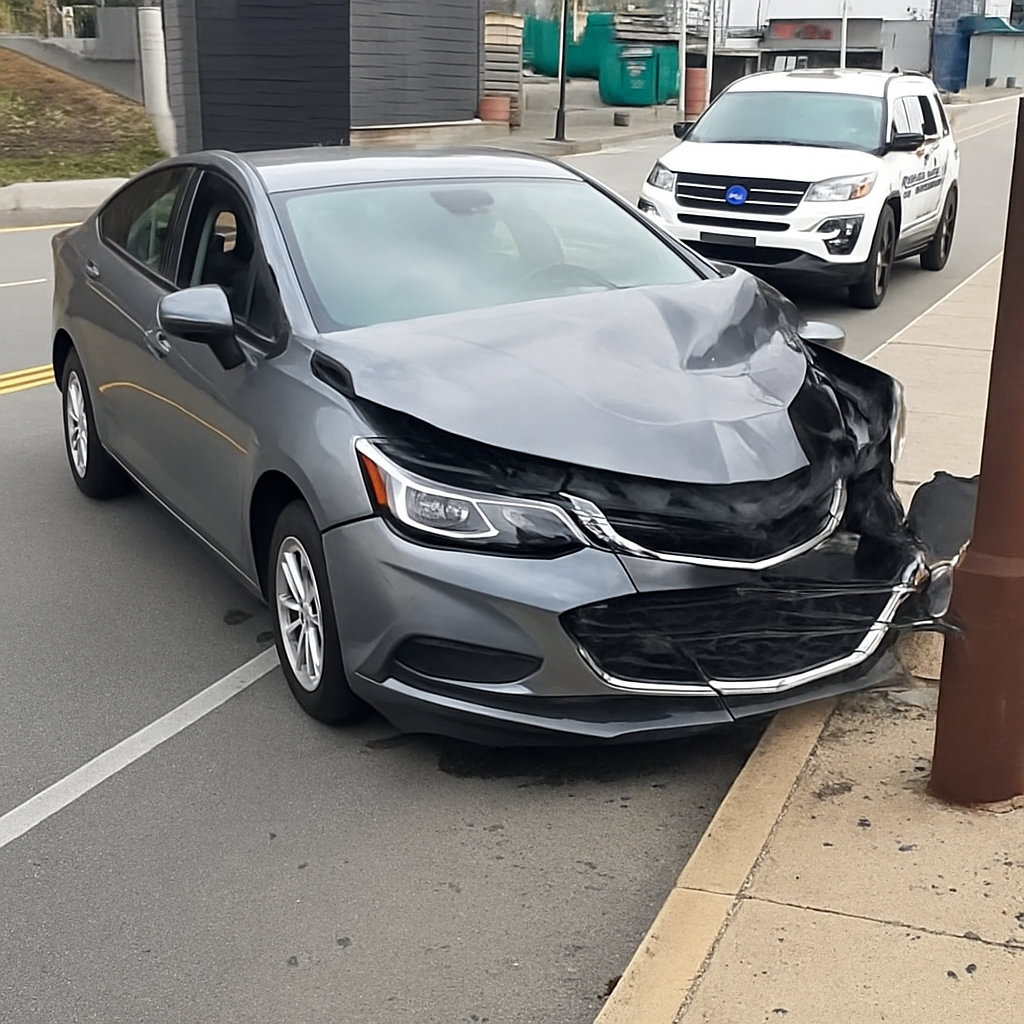
A hit and run conviction in Colorado triggers point accumulation, potential license suspension, and immediate rate increases—but most drivers won't need SR-22 unless the incident caused injury or property damage above the state threshold.
How Colorado Classifies Hit and Run Violations
Colorado law treats hit and run offenses differently based on severity. Leaving the scene of an accident involving only property damage carries 12 points under Colorado's Driver License Point System, while leaving the scene of an accident involving injury or death escalates to a class 1 traffic misdemeanor or felony depending on the harm caused. The distinction matters because it determines whether you face administrative penalties through the DMV or criminal charges that carry jail time and mandatory SR-22 filing.
Property-damage-only hit and run does not automatically trigger SR-22 requirements in Colorado. You accumulate 12 points, which puts you at the edge of the state's suspension threshold but does not mandate financial responsibility filing unless the court orders it as part of your sentence. Most drivers convicted of this offense see their rates spike immediately but can avoid the SR-22 filing requirement if no other violations or suspensions are present.
Hit and run involving injury or unattended vehicles with damages exceeding $1,000 typically results in SR-22 requirements because these incidents often involve court-ordered proof of insurance as a condition of license reinstatement. The difference is not academic—SR-22 filing adds 3 years of elevated premiums on top of the rate increase the conviction itself triggers, and many standard carriers will drop you entirely once the SR-22 appears on your record. Colorado SR-22 requirements
Point Accumulation and License Suspension Risk
Colorado suspends your license if you accumulate 12 or more points in 12 months, or 18 or more points in 24 months. A property-damage hit and run conviction hands you 12 points in a single incident, which means you are one additional minor violation away from automatic suspension if the hit and run occurred within the past year. Even a 4-point speeding ticket or failure to yield citation will push you over the threshold.
Points from a hit and run conviction remain on your Colorado driving record for 7 years, though they only count toward suspension calculations for the first 12–24 months depending on your total accumulation. This creates a dual timeline: your insurance rates reflect the conviction for the full 7-year period, but your suspension risk drops significantly after the first two years as long as you avoid new violations.
If you hit the suspension threshold, Colorado requires a reinstatement fee of $95 and proof of insurance before your license is returned. If the suspension was related to an at-fault accident or failure to provide insurance information at the scene, the DMV may also require SR-22 filing for 3 years as a condition of reinstatement, even if the original hit and run charge did not mandate it.
What Hit and Run Does to Your Insurance Rates
A hit and run conviction is classified as a major violation by most insurers, triggering rate increases between 80% and 150% depending on your carrier and prior driving history. Standard carriers often non-renew policies after a hit and run conviction even if you don't need SR-22, which forces you into the non-standard market where base rates are already 40–60% higher than standard policies.
Expect your monthly premium to increase by $120 to $300 per month in Colorado after a hit and run conviction, depending on your coverage limits and the severity of the incident. Drivers with clean records before the conviction typically see smaller percentage increases but still face non-renewal risk. Drivers with prior violations or at-fault accidents may find only a handful of carriers willing to write them at all.
The rate increase persists for the full duration the conviction remains on your motor vehicle record—7 years in Colorado. Some carriers begin to reduce surcharges after 3–5 years if no new violations occur, but the conviction never disappears early. If you were also required to file SR-22, expect the elevated rates to last at least 3 years even if you maintain a clean record during that period, because the SR-22 itself signals high-risk status to underwriters. non-standard auto insurance
When SR-22 Is Required After Hit and Run in Colorado
Colorado does not automatically require SR-22 filing for a property-damage-only hit and run conviction. SR-22 becomes mandatory when the court orders it as part of your sentence, when your license is suspended and the DMV requires proof of financial responsibility for reinstatement, or when the hit and run involved injury, death, or damages above the state's minimum insurance threshold.
If SR-22 is required, you must maintain it for 3 years from the date of filing in Colorado. Any lapse in coverage during that period—even one day—resets the 3-year clock and triggers a new suspension. The SR-22 itself costs $15 to $50 to file depending on your insurer, but the real cost is the loss of access to standard carriers and the sustained rate increases that come with being classified as high-risk.
Drivers required to file SR-22 after a hit and run conviction should expect to pay $180 to $400 per month for liability-only coverage in Colorado, with full coverage pushing premiums to $300 to $600 per month depending on age, location, and vehicle type. Non-standard carriers like The General, Bristol West, and Acceptance Insurance dominate this market, and shopping between them is the only reliable way to reduce costs during the filing period. SR-22 insurance
Finding Coverage After a Hit and Run Conviction
Standard carriers like State Farm, Allstate, and Progressive typically non-renew policies within 30 to 60 days of a hit and run conviction appearing on your record. Some will allow you to finish your current policy term but will decline renewal. A few carriers offer internal high-risk programs that keep you insured at elevated rates, but most drivers are transferred to non-standard carriers or forced to shop independently.
Non-standard carriers underwrite hit and run convictions differently. Some treat property-damage-only hit and run as equivalent to an at-fault accident, while others classify it alongside DUI or reckless driving due to the deliberate nature of leaving the scene. Rates can vary by 40–60% between non-standard carriers for the same driver and vehicle, which makes comparison shopping essential. Drivers who accept the first quote they receive often overpay by $1,000 or more per year.
If your license was suspended and you need SR-22, start the insurance shopping process before your reinstatement hearing. Colorado requires proof of insurance and SR-22 filing before the DMV will restore your license, and securing coverage can take 3 to 7 business days once you select a carrier. Waiting until after your hearing extends the period you cannot legally drive and may require you to retake written or road tests depending on the length of your suspension.
Steps to Reduce Rates and Recover Your Record
No mechanism exists in Colorado to remove a hit and run conviction from your driving record early. The 7-year lookback period is fixed, and points cannot be reduced through defensive driving courses or other remedial programs once the conviction is final. Your only path to lower rates is time, a clean driving record going forward, and aggressive carrier shopping every 6 to 12 months.
Some non-standard carriers reduce surcharges after 3 years if you maintain continuous coverage and avoid new violations. Others hold rates flat for the full 7-year period. This variability means the carrier that offered the best rate immediately after your conviction may not be the most competitive option 2 or 3 years later. Drivers who shop annually during the SR-22 filing period or conviction lookback window recover to near-standard rates 12 to 18 months faster than those who stay with the same carrier.
If you were required to file SR-22, your filing period ends 3 years from the initial filing date as long as you maintained continuous coverage. Once the SR-22 is released, you regain access to some standard carriers, though the underlying hit and run conviction will still appear on your record for another 4 years. At that point, expect rate reductions of 25–40% if you switch to a standard carrier, even with the conviction still visible.