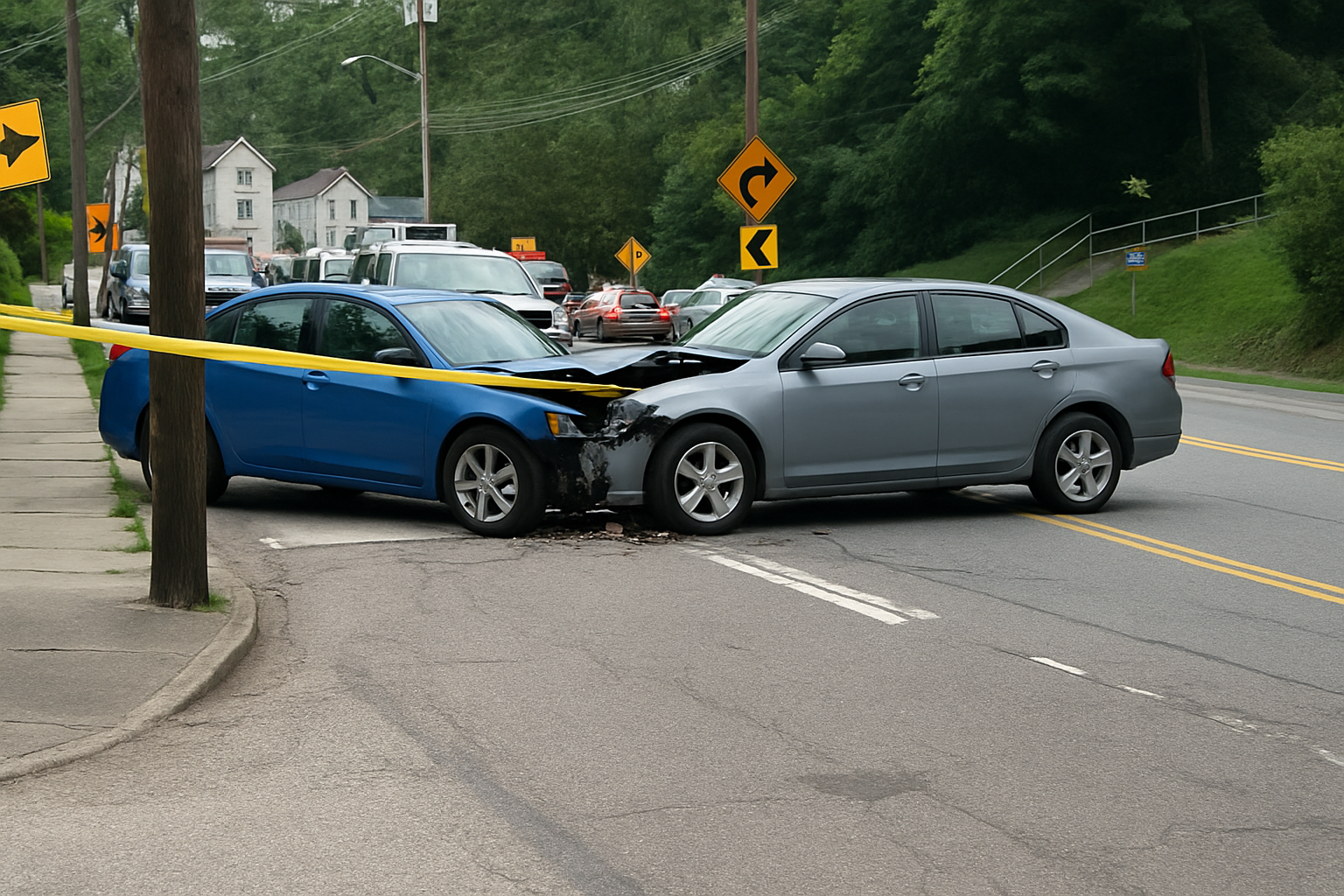
Connecticut treats leaving the scene as a serious violation that triggers license suspension, mandatory SR-22 filing, and immediate non-standard insurance placement. Here's what to expect and how to find coverage.
Connecticut's Hit and Run Penalties: Suspension, SR-22, and Reinstatement Timeline
A hit and run conviction in Connecticut — whether property damage only or involving injury — results in a 90-day license suspension minimum under Connecticut General Statutes § 14-224. If the incident involved injury or death, the suspension extends to one year. The Connecticut DMV categorizes leaving the scene as a major violation, which means you're immediately flagged for non-standard insurance placement regardless of your prior driving record.
You'll also face a mandatory SR-22 filing requirement for three years following reinstatement. Connecticut law requires you to maintain continuous SR-22 coverage without lapses — any gap triggers an immediate suspension notice and restarts your 3-year SR-22 clock. The SR-22 itself costs $25–$50 to file through your insurer, but the larger financial impact comes from the premium increase: most drivers see rates jump 60–100% after a hit and run conviction, with some non-standard carriers charging even higher multipliers.
Here's the timing advantage most drivers miss: if you obtain SR-22 coverage before your DMV hearing, you can sometimes reduce the hard suspension period to 30 days, with the remaining 60 days served as a work permit or conditional license. This requires your attorney to file a motion showing proof of SR-22 and financial responsibility before the hearing date. Not all judges grant this, but it's worth pursuing if you need to maintain employment or family obligations during the suspension period. Connecticut SR-22 requirements
What Happens to Your Current Insurance Policy
Most standard carriers — including State Farm, Geico, Allstate, and Progressive's preferred lines — will non-renew your policy immediately after a hit and run conviction appears on your driving record. You'll typically receive a non-renewal notice 30–60 days before your policy term ends, which gives you a narrow window to secure replacement coverage before you're uninsured.
If your policy is mid-term when the conviction posts, some carriers will cancel for material misrepresentation if you didn't report the incident immediately. Connecticut law allows insurers to cancel mid-term for convictions that increase risk, and leaving the scene qualifies. Expect your current carrier to either cancel within 30 days or non-renew at the next term boundary.
Once you're in the non-standard market, you'll be shopping among carriers that specialize in high-risk drivers: The General, Bristol West, Dairyland, National General, and Gainsco are active in Connecticut and write SR-22 policies. Your rate will depend on your full driving record, age, zip code, and the severity of the hit and run (property damage only vs. injury). Most non-standard carriers in Connecticut quote annual premiums between $2,400–$4,800 for state minimum liability after a hit and run conviction, compared to $1,200–$1,800 for a clean-record driver. non-standard auto insurance
SR-22 Filing Requirements and Duration in Connecticut
Connecticut requires SR-22 (officially called a Certificate of Financial Responsibility) for three years from the date of license reinstatement, not from the date of conviction. This distinction matters: if your license is suspended for 90 days, your 3-year SR-22 clock doesn't start until you reinstate. That means you're looking at roughly 3 years and 3 months of total SR-22 coverage from the date of conviction.
Your insurer files the SR-22 electronically with the Connecticut DMV. You don't handle the paperwork yourself, but you do need to request SR-22 filing when you apply for coverage. Not all carriers offer SR-22 filing, which is why you're immediately sorted into the non-standard market. If your SR-22 lapses at any point during the 3-year period — because you cancel your policy, miss a payment, or switch carriers without maintaining continuous coverage — the DMV suspends your license again within 10 days.
The SR-22 filing fee ranges from $25–$50 depending on the carrier, and it's a one-time charge per filing. If you need to refile due to a lapse or carrier switch, you'll pay the fee again. Some non-standard carriers waive the SR-22 fee if you pay your full annual premium upfront, but most assess it regardless of payment plan. SR-22 insurance coverage
How Long the Hit and Run Conviction Affects Your Rates
Connecticut maintains hit and run convictions on your driving record for 10 years, but the rate impact diminishes over time. Insurers apply their highest surcharge multipliers in the first three years following conviction, which aligns with your SR-22 filing period. After year three, you'll see gradual rate reductions as you move back toward standard or preferred carrier eligibility.
Most non-standard carriers in Connecticut apply a 60–100% surcharge for a hit and run conviction in years one through three. By year four, if you've maintained continuous coverage without additional violations, some carriers reduce the surcharge to 30–50%. By year six, you may qualify for standard carrier rates again, though the conviction still shows on your record. After 10 years, the conviction falls off your driving record entirely and no longer affects your premiums.
Your rate recovery timeline also depends on whether you pick up additional violations during the SR-22 period. A single speeding ticket or at-fault accident while you're already in the non-standard market can extend your high-risk classification by another 3–5 years. That's why most advisors recommend driving conservatively and avoiding even minor violations until you've cleared the SR-22 period and begun rebuilding your record.
Finding Coverage: Which Carriers Write Hit and Run Policies in Connecticut
Connecticut's non-standard market is active but limited compared to larger states. The carriers most likely to write you after a hit and run conviction include The General, Bristol West, Dairyland, National General, Gainsco, and Acceptance Insurance. Progressive's non-standard division also writes some high-risk policies in Connecticut, though not all agents have access to those lines.
You'll need to shop aggressively because non-standard carrier rates vary by 30–60% for the same driver profile. One carrier may quote you $3,200 per year while another quotes $4,800 for identical coverage limits. Use a broker or high-risk comparison tool that can pull quotes from multiple non-standard carriers simultaneously — this audience cannot afford to compare only two or three options.
Avoid assigned risk (Connecticut's shared market) if possible. Connecticut's assigned risk pool is the coverage option of last resort, and premiums are typically 40–80% higher than voluntary non-standard market rates. You're only placed in assigned risk if no voluntary carrier will write you, which is rare unless you have multiple major violations stacked on your record. Most hit and run convictions alone won't force you into assigned risk, but combining a hit and run with a DUI or multiple at-fault accidents might.
Steps to Reinstate Your License After a Hit and Run Suspension
Connecticut's reinstatement process after a hit and run conviction requires four steps, completed in order. First, serve your full suspension period — 90 days minimum for property damage, one year for injury-related incidents. You cannot drive on a suspended license during this period, and any attempt to do so adds another mandatory suspension on top of the original.
Second, obtain SR-22 coverage from a carrier licensed to file in Connecticut. You'll need to request SR-22 filing when you apply for the policy. The carrier files the SR-22 electronically with the DMV, usually within 24–48 hours of policy activation. Third, pay your reinstatement fee: $175 for a first suspension, $500 for a second or subsequent suspension within a 3-year period.
Fourth, visit a Connecticut DMV office in person to complete reinstatement. Bring your SR-22 confirmation (your insurer will provide a copy), proof of identity, and payment for the reinstatement fee. The DMV will verify your SR-22 filing electronically and issue your reinstated license the same day if all requirements are met. Your SR-22 requirement begins the day your license is reinstated, not the day of conviction, so your 3-year clock starts from this reinstatement date.
Rate Recovery Strategy: What You Can Do to Lower Premiums Over Time
Your best leverage for lowering premiums during the SR-22 period is shopping carriers annually. Non-standard carrier rates shift year to year based on claims experience and underwriting changes, and you're not obligated to stay with the same carrier for the full 3-year SR-22 period. When you switch, your new carrier files an updated SR-22 with the DMV, and your old carrier files a cancellation notice. As long as there's no coverage gap, your SR-22 remains active and you avoid suspension.
After your first year of continuous SR-22 coverage without new violations, shop at least three non-standard carriers to compare rates. Some drivers see savings of $600–$1,200 per year by switching from their initial post-conviction carrier to a competitor. By year two, you may also qualify for standard carriers' non-standard divisions, which often price 10–20% lower than pure non-standard specialists.
Completing a defensive driving course approved by the Connecticut DMV can reduce your premiums by 5–10% with some carriers, and the course completion stays valid for three years. The course costs $50–$100 and takes 4–8 hours to complete online or in person. Not all non-standard carriers honor defensive driving discounts, but enough do that it's worth completing the course and asking each carrier during the quote process.