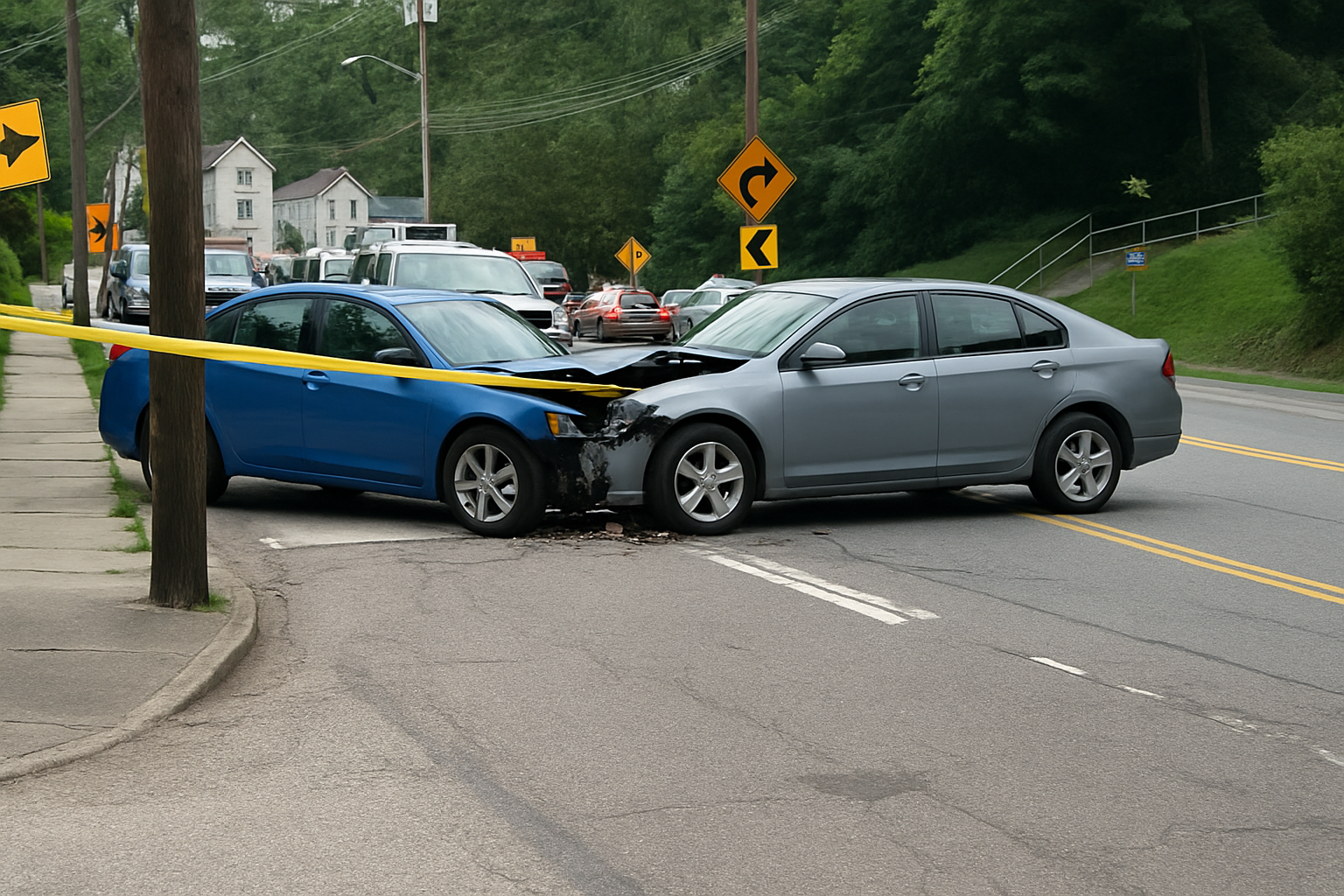
A hit and run conviction in Delaware reclassifies you as high-risk and typically triggers a 150–250% rate increase, plus mandatory SR-22 filing for three years. Here's what carriers will write you and what you'll pay.
Why Delaware Treats Hit and Run as a Criminal Traffic Offense, Not a Point Violation
Delaware does not use its point system for hit and run violations because the state classifies them as criminal traffic offenses under 21 Del. C. § 2903 and § 2904. This distinction matters because your insurance rate increase and SR-22 requirement are triggered by the conviction itself, not by accumulating points on your driving record. You will not receive points on your Delaware driving record for a hit and run, but your conviction will remain visible to insurers for 5–7 years and will be treated as a more serious violation than any point-based infraction.
Because hit and run is a criminal offense, Delaware DMV will suspend your license for a minimum of six months under first-offense guidelines, and the court or DMV will require you to file SR-22 as proof of financial responsibility before reinstatement. This is a mandatory filing, not optional, and it applies whether the hit and run involved property damage only or personal injury. The SR-22 filing requirement typically lasts three years from the date of reinstatement, not from the date of conviction, which means your clock does not start until you complete your suspension and file the SR-22 certificate.
Most drivers assume hit and run is treated like an at-fault accident with points. It is not. The criminal classification means your violation carries permanent visibility to insurers during underwriting, and you are immediately moved into the non-standard or high-risk insurance market. Standard carriers like GEICO, State Farm, and Progressive will typically non-renew your policy or deny coverage outright once the conviction is reported.
How Much Your Rates Will Increase and Which Carriers Write Hit and Run Convictions
A hit and run conviction in Delaware typically triggers a rate increase of 150–250% compared to your pre-conviction premium. If you were paying $1,200 per year before the conviction, expect to pay $3,000–$4,200 per year with SR-22 filing in the non-standard market. The SR-22 filing fee itself is $25–$50 in Delaware, but the real cost is the premium increase driven by the conviction, not the filing.
Not all carriers will write you after a hit and run conviction. Standard carriers exit immediately once the conviction is reported to the Delaware DMV. Non-standard carriers that actively write criminal traffic violations in Delaware include The General, Bristol West, Dairyland, and National General. Regional carriers like MAIF (Maryland Automobile Insurance Fund) may also offer coverage if you have ties to Maryland, though Delaware does not operate a state assigned risk pool for drivers who cannot find voluntary market coverage.
Your best rate will come from comparing quotes across at least three non-standard carriers. Rate variation for hit and run convictions can exceed 40% between carriers because each insurer weights criminal traffic offenses differently in underwriting. Some carriers treat hit and run as equivalent to DUI, while others tier it closer to reckless driving. Shopping is not optional — it is the single highest-leverage action you can take to reduce your post-conviction premium. non-standard auto insurance
SR-22 Filing Requirements and Reinstatement Timeline in Delaware
Delaware requires SR-22 filing after a hit and run conviction as a condition of license reinstatement. The SR-22 is a certificate your insurer files directly with the Delaware DMV to prove you are carrying at least the state minimum liability coverage: $25,000 per person / $50,000 per accident for bodily injury, and $10,000 for property damage. You cannot file SR-22 yourself — it must come from a licensed insurer authorized to write in Delaware.
Your SR-22 filing period begins on the date your license is reinstated, not the date of conviction or suspension. If your license is suspended for six months and you wait two months after eligibility to reinstate, your three-year SR-22 clock does not start until you complete reinstatement. This is a common timing mistake that extends your filing period unnecessarily. Once the SR-22 is filed and your reinstatement fees are paid ($200 for a first-offense suspension in Delaware), your license is restored and your three-year SR-22 compliance period begins.
If your SR-22 lapses at any point during the three-year period — because you miss a payment, switch insurers without transferring the filing, or let your policy cancel — the Delaware DMV will suspend your license again and restart your SR-22 clock from zero. This is called a compliance suspension, and it is automatic. You do not receive a grace period. Maintaining continuous coverage is not optional if you want to avoid restarting the three-year requirement. Delaware SR-22 requirements SR-22 insurance
How Long the Conviction Stays on Your Record and When Rates Recover
A hit and run conviction remains on your Delaware driving record for five years and is visible to insurers for 5–7 years depending on their lookback period during underwriting. Most non-standard carriers use a five-year lookback, but some national carriers extend to seven years for criminal traffic offenses. This means your rates will remain elevated above standard pricing for the entire visibility period, even after your SR-22 filing period ends.
Rate recovery happens in stages, not all at once. In the first three years while SR-22 is active, you will pay non-standard rates with no meaningful decrease. After your SR-22 filing period ends and the conviction reaches the three-to-four-year mark, some standard carriers may begin offering coverage again, though at elevated rates. Full rate recovery — returning to pricing equivalent to a clean-record driver — typically takes 5–7 years from the conviction date, depending on whether you incur any additional violations during that period.
The fastest way to accelerate rate recovery is to maintain a clean driving record during the SR-22 period and shop annually once your SR-22 filing ends. Completing a defensive driving course will not remove the conviction or reduce your SR-22 period in Delaware, but it may qualify you for a small premium discount with some carriers. The course discount is typically 5–10%, which is minor compared to the 150–250% increase from the conviction itself.
What to Do Immediately After a Hit and Run Conviction
Your first action after conviction is to identify which non-standard carriers are actively writing hit and run violations in Delaware. Do not wait until your suspension ends to start shopping — use the suspension period to gather quotes and select a carrier so you can file SR-22 immediately upon eligibility. Delaying SR-22 filing after your suspension ends extends the total time you are without a license and postpones the start of your three-year compliance clock.
Once you select a carrier and purchase a policy, request SR-22 filing immediately. The carrier will file the certificate electronically with the Delaware DMV, typically within 24–48 hours. You will need to pay your reinstatement fee ($200 for first-offense suspension) and provide proof of insurance to the DMV before your license is restored. Do not drive during suspension — a driving under suspension charge in Delaware is a separate criminal offense and will extend your SR-22 requirement and suspension period.
After reinstatement, set up automatic payments for your insurance premium to avoid any lapse. Even a single missed payment that triggers a policy cancellation will cause your SR-22 to lapse, which triggers an automatic license suspension and restarts your three-year filing requirement. If you need to switch carriers during your SR-22 period, coordinate the timing so your new carrier files SR-22 before your old policy cancels. There cannot be any gap in SR-22 coverage, even for one day.
Does SR-22 Ever Get Required for Violations Other Than Hit and Run in Delaware
Delaware requires SR-22 for specific violations beyond hit and run, including DUI, driving under suspension, reckless driving, and accumulating 12 or more points within a 24-month period. However, standard point violations like speeding or at-fault accidents do not trigger SR-22 requirements in Delaware unless they contribute to crossing the 12-point suspension threshold or involve additional criminal charges.
If you have a hit and run conviction, you are already in the most serious category of traffic violations for insurance purposes. Adding any additional violation during your SR-22 period — even a minor speeding ticket — will further extend your time in the non-standard market and may cause your current carrier to non-renew your policy. Non-standard carriers are more tolerant of single serious violations than they are of patterns of violations, so maintaining a clean record during SR-22 filing is critical to eventual rate recovery.
Delaware's point system runs parallel to its SR-22 system but does not interact directly with hit and run convictions because those convictions do not generate points. This means your post-conviction insurance challenge is driven entirely by the criminal conviction itself, not by point accumulation, and your path forward is to complete your SR-22 period without incident and wait for the conviction to age out of your record.