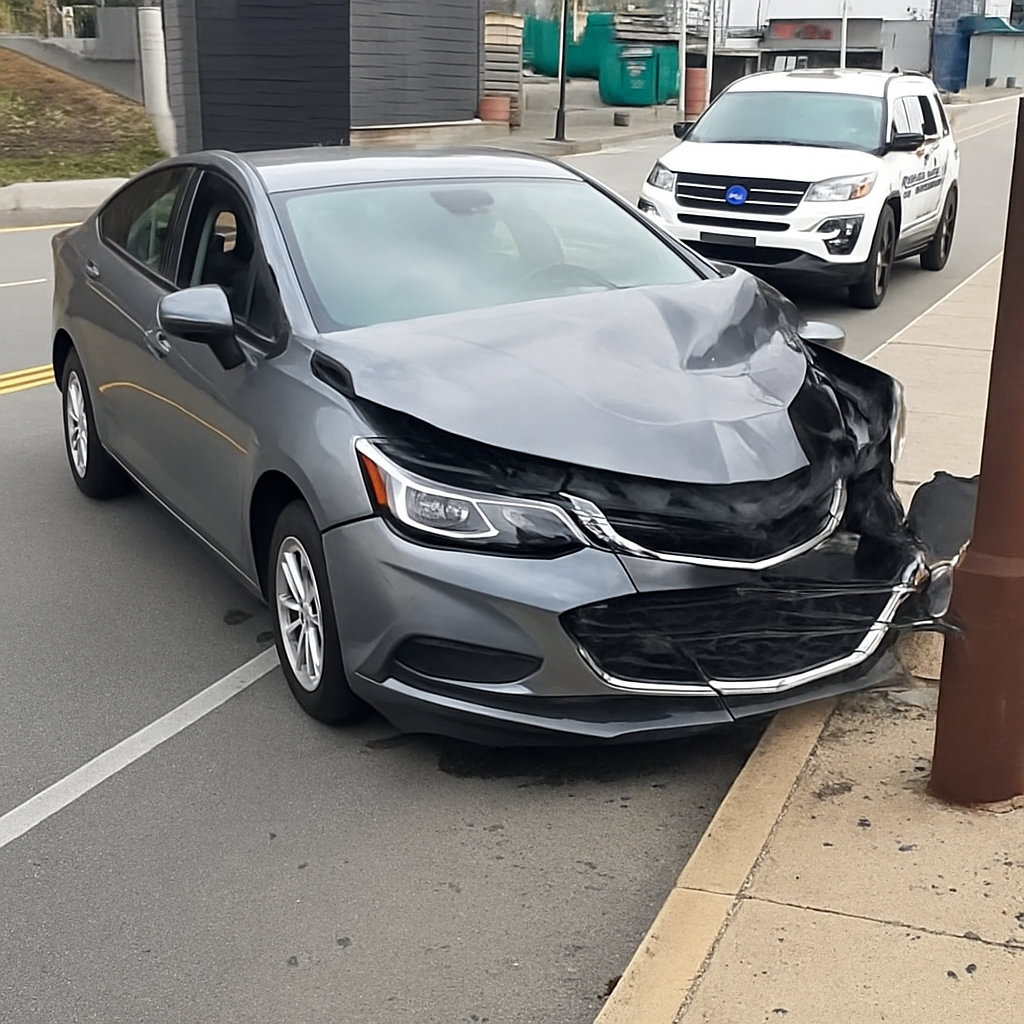
A hit and run conviction in Idaho triggers SR-22 filing, license suspension, and rate increases averaging 80–120%. Here's what happens next and which carriers will still write you.
What a Hit and Run Conviction Does to Your Idaho Driving Record
Idaho categorizes leaving the scene of an accident as a serious moving violation under Idaho Code § 49-1301 and § 49-1302. If you left the scene of a property damage crash, it's typically charged as a misdemeanor carrying up to six months in jail and a fine up to $1,000. If the crash involved injury or death, it's a felony with prison time up to five years. Both trigger automatic license suspension and SR-22 filing requirements.
The Idaho Transportation Department adds four points to your driving record for a hit and run conviction. Idaho's point system triggers a suspension at 12 points in 12 months or 18 points in 24 months, so a hit and run alone won't suspend your license on points — but the conviction itself triggers a separate suspension under Idaho's mandatory suspension laws. That suspension typically ranges from 30 to 180 days depending on the severity of the crash and whether you have prior violations.
Once convicted, you'll receive a notice from the Idaho DMV outlining your suspension period and reinstatement requirements. Reinstatement requires payment of a $75 fee, proof of SR-22 insurance filing, and completion of any court-ordered restitution or defensive driving courses. The conviction stays on your driving record for three years, and insurers see it for the entire duration. SR-22 insurance requirements in Idaho
SR-22 Filing Requirements After a Hit and Run in Idaho
Idaho mandates SR-22 filing for any hit and run conviction. The SR-22 is a certificate your insurer files with the Idaho DMV proving you carry at least the state's minimum liability coverage: $25,000 per person for bodily injury, $50,000 per accident for bodily injury, and $15,000 for property damage. The filing itself costs $15 to $25 as a one-time processing fee, but the real cost is the premium increase on your underlying policy.
You're required to maintain continuous SR-22 filing for three years from your reinstatement date — not from your conviction date. If your license is suspended for 90 days, your three-year SR-22 clock starts the day you reinstate, not the day you were convicted. Any lapse in coverage during that three-year period triggers an automatic suspension and restarts the entire SR-22filing period from zero.
Idaho allows you to reinstate your license before your suspension period ends if you complete a hearing with the DMV and prove financial responsibility through SR-22 filing. Many drivers pursue early reinstatement to avoid lost wages or job consequences, but early reinstatement does not shorten your SR-22 requirement — you still owe three years of continuous filing from the reinstatement date. how SR-22 insurance works
How Much Your Rates Will Increase in Idaho
A hit and run conviction typically increases your car insurance premiums by 80% to 120% in Idaho, on top of the SR-22 filing fee. If you were paying $1,200 per year before the conviction, expect to pay $2,160 to $2,640 annually — or $180 to $220 per month — once you add the SR-22 requirement and the conviction surcharge. The rate increase reflects both the four points added to your record and the conviction itself, which insurers treat as a major violation signal.
Rates vary significantly by carrier. Standard insurers like State Farm or Allstate may non-renew your policy outright after a hit and run conviction, forcing you into the non-standard market. Non-standard carriers like The General, Bristol West, and National General specialize in high-risk drivers and will write SR-22 policies, but their base rates start higher than standard market rates. Shopping across at least three non-standard carriers can produce rate differences of 30% to 50% for the same coverage.
Your rate increase persists for the full three years the conviction remains on your record. After three years, the conviction falls off and your rates typically drop by 40% to 60% if you maintain a clean record during that period. Points-related surcharges usually phase out after the first 12 to 24 months, but the conviction surcharge itself lasts the full three years.
Which Carriers Write SR-22 Policies After a Hit and Run
Most standard insurers will not renew your policy after a hit and run conviction. Idaho operates on a file-and-use regulatory system, meaning carriers can implement underwriting guidelines without prior state approval, and most standard carriers exclude drivers with recent hit and run convictions from eligibility. You'll need to move to the non-standard or assigned risk market.
Non-standard carriers actively writing SR-22 policies in Idaho include The General, Bristol West, National General, Dairyland, and Acceptance Insurance. These carriers specialize in drivers with violations, suspensions, and SR-22 requirements. They offer liability-only and full coverage policies, though many drivers with hit and run convictions opt for liability-only to minimize premiums during the three-year SR-22 period.
If no non-standard carrier will write you — typically only an issue if you have multiple major violations or a felony hit and run conviction — Idaho does not operate a traditional assigned risk pool. Instead, the Idaho Automobile Insurance Plan (IAIP) functions as a last-resort mechanism. Policies through the IAIP cost significantly more than non-standard market rates, often 150% to 200% of standard rates, but they fulfill your SR-22 filing requirement and allow you to reinstate your license. non-standard auto insurance
Reinstating Your License and Keeping SR-22 Active
To reinstate your Idaho driver's license after a hit and run suspension, you must complete your suspension period, pay the $75 reinstatement fee, and file SR-22 proof of insurance with the Idaho DMV. You cannot drive legally until all three steps are complete, even if you have an SR-22 on file during your suspension.
Once reinstated, your only job is to keep your SR-22 active for three years. That means maintaining continuous liability coverage without a single lapse. If your policy cancels for non-payment or you switch carriers without arranging a new SR-22 filing first, your insurer notifies the Idaho DMV within 10 days. The DMV then suspends your license immediately, and you must restart the entire three-year SR-22 requirement from scratch once you reinstate again.
Set up automatic payments and calendar reminders for your policy renewal date. If you need to switch carriers, confirm the new carrier has filed your SR-22 before canceling your old policy. Even a one-day gap triggers a suspension and restarts the clock. Many drivers lose months or even a full year of SR-22 credit simply because they didn't coordinate the transition between carriers carefully.
Long-Term Rate Recovery After a Hit and Run
Your rates begin dropping as soon as the hit and run conviction ages past the 12-month mark. Most carriers phase out the steepest surcharges after the first year, reducing your premiums by 10% to 20% even while the conviction is still on your record. After three years, the conviction falls off your driving record entirely, and you become eligible for standard market rates again if you've maintained a clean record.
Completing a defensive driving course does not remove the conviction from your record in Idaho, but it can reduce your premiums by 5% to 10% with some carriers and demonstrates responsibility to underwriters. Check with your insurer before enrolling — not all carriers honor defensive driving discounts for drivers with SR-22 filings, and some require pre-approval.
Once your three-year SR-22 period ends and the conviction falls off your record, shop aggressively. You're no longer bound to the non-standard market, and moving back to a standard carrier like Geico, Progressive, or State Farm can cut your premiums by 40% to 60% compared to your non-standard rate. Your clean three-year period is proof you've recovered, and standard carriers will compete for your business again.