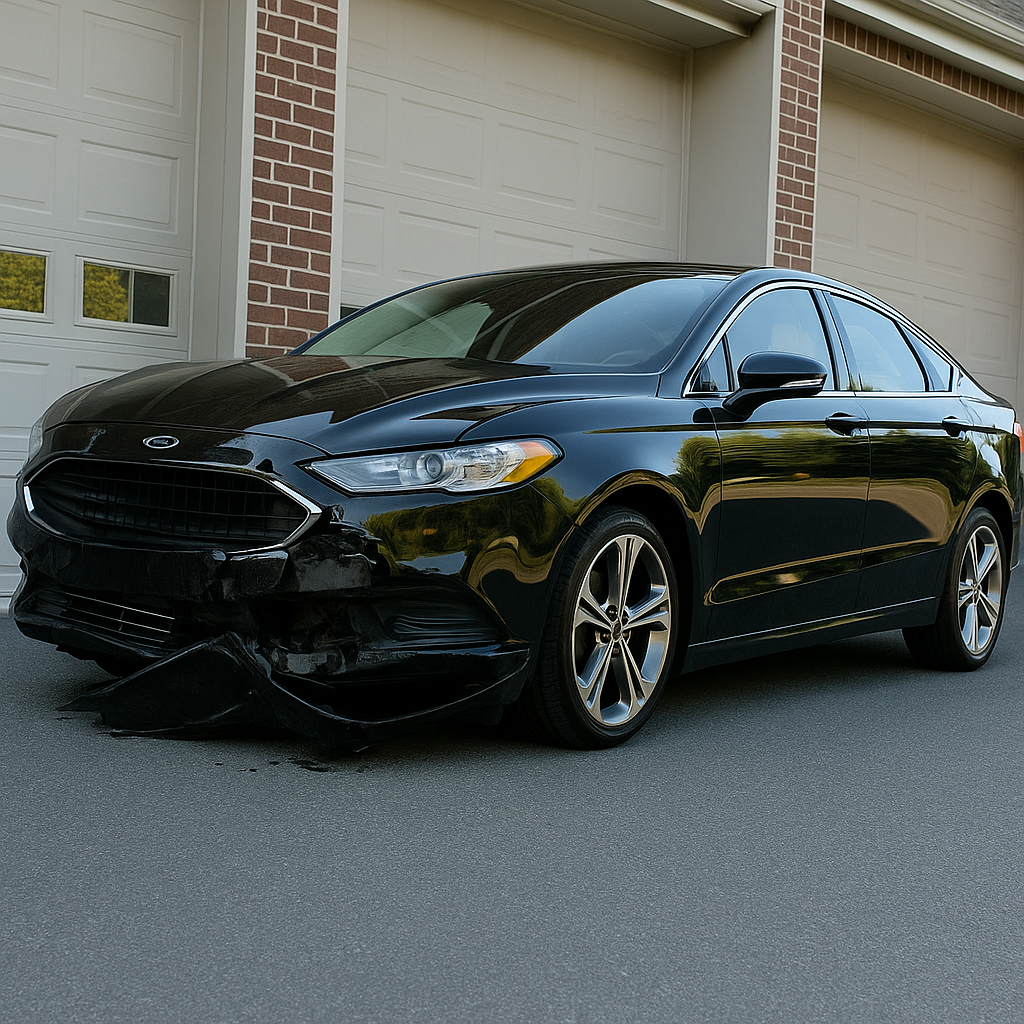
A hit and run conviction in Indiana moves you into non-standard insurance territory immediately — most standard carriers will non-renew you within 30 days of the conviction, and the drivers who find coverage fastest are the ones who start shopping before their current policy cancels.
What Happens to Your Insurance Immediately After a Hit and Run Conviction in Indiana
A hit and run conviction in Indiana adds 6 points to your license — the second-highest point penalty the state assigns to any single violation. Your current insurance carrier will receive notification of the conviction from the Indiana Bureau of Motor Vehicles within 10 to 15 days, and most standard carriers issue a non-renewal notice within 30 days of receiving that notification. Non-renewal means your policy will not automatically cancel, but it will terminate at the end of your current policy period, giving you 30 to 60 days to find replacement coverage depending on where you are in your term.
The 6-point addition puts most drivers close to or over the 18-point suspension threshold within a two-year lookback period if they have any prior violations on record. If you reach 18 points, the Indiana BMV suspends your license for 90 days for a first suspension. The suspension is separate from the insurance issue, but it compounds the problem — if your license suspends before you secure new coverage, most non-standard carriers will require you to reinstate your license and provide proof of reinstatement before they will bind a new policy.
Standard carriers — State Farm, Allstate, Progressive's standard-tier products — do not typically insure drivers with hit and run convictions on record. The conviction signals both high risk and a legal violation severe enough that underwriting guidelines exclude it outright. Non-standard carriers like The General, Direct Auto, Acceptance Insurance, and National General's non-standard divisions are the primary market for post-conviction coverage, and rates in this market run 150% to 250% higher than standard-tier pricing for clean-record drivers.
You do not need SR-22 filing in Indiana unless a court specifically orders it or the BMV requires it as a condition of license reinstatement after a suspension. A hit and run conviction alone does not automatically trigger an SR-22 requirement. If your license does suspend due to point accumulation and you need to reinstate, the BMV may require SR-22 as part of that reinstatement process, but that requirement is tied to the suspension, not the underlying hit and run conviction. Indiana SR-22 insurance requirements non-standard auto insurance
How Long the Hit and Run Conviction Affects Your Insurance Rates in Indiana
The hit and run conviction remains on your Indiana driving record for five years from the date of conviction, and carriers use that full five-year period when calculating premiums. The 6 points associated with the conviction fall off your record after two years, which means your risk of license suspension decreases after that two-year mark, but the conviction itself continues to affect your insurance pricing for the full five years.
Non-standard carriers typically apply their highest rate tiers for the first three years after a major conviction like hit and run. After year three, some carriers begin moving you into mid-tier pricing if you maintain continuous coverage without any new violations or lapses. After year five, when the conviction drops off your record entirely, you become eligible to re-enter the standard insurance market, though your premiums will still reflect any other violations or claims on your record during that period.
The rate difference between non-standard and standard coverage is significant. A driver with a clean record in Indiana pays an average of $125 to $160 per month for full coverage liability, collision, and comprehensive. A driver with a hit and run conviction in the non-standard market typically pays $315 to $550 per month for the same coverage limits, depending on the carrier, your age, location within Indiana, and whether you carry any other violations or claims on record.
Carrier shopping is the single highest-leverage action you can take to reduce your premium in the non-standard market. Rate spreads between non-standard carriers for the same driver profile can exceed $100 per month, because each carrier uses different underwriting models and assigns different weight to specific conviction types. The General may price a hit and run conviction 20% lower than Direct Auto for one driver, while Direct Auto prices the same driver 15% lower than Acceptance Insurance. You will not know which carrier offers the best rate until you request quotes from at least three to five non-standard insurers.
Which Carriers Write Post-Conviction Coverage in Indiana and What They Require
Non-standard carriers operate differently than standard insurers. Most require full payment upfront or a larger down payment — typically 20% to 40% of the six-month premium — before they will bind coverage. Some non-standard carriers require monthly electronic funds transfer rather than allowing manual payments, because lapse rates are higher in this market and automatic payments reduce administrative costs and lapse risk.
The General, Direct Auto, Acceptance Insurance, National General, and Safe Auto are the most active non-standard carriers in Indiana for drivers with major convictions. The General and Direct Auto tend to offer the lowest base rates for hit and run convictions, but they also impose stricter underwriting requirements — Direct Auto may decline coverage if you have more than two violations within the past three years, while The General may require proof of current coverage before issuing a quote if you have had a recent lapse.
National General and Safe Auto are more flexible on underwriting but charge higher premiums on average. Acceptance Insurance operates physical storefronts in Indiana and allows walk-in quoting and same-day binding, which is useful if you are within days of policy cancellation and need coverage immediately. Most non-standard carriers also offer state minimum liability-only policies, which reduce your monthly cost by 40% to 60% compared to full coverage, but leave you financially exposed if you cause another accident or your vehicle is damaged.
Some non-standard carriers will not write coverage if your license is currently suspended. If your hit and run conviction pushed you over the 18-point threshold and the BMV has already suspended your license, you must complete the suspension period and pay the $250 reinstatement fee to the Indiana BMV before most carriers will bind a new policy. If SR-22 filing is required as part of your reinstatement, expect to pay an additional $25 to $50 SR-22 filing fee, and your premium will increase by another 10% to 15% due to the SR-22 requirement. state minimum liability coverage
What to Do If Your Current Carrier Non-Renews You After the Conviction
Non-renewal is not immediate cancellation. Your current carrier must provide at least 30 days' written notice before your policy terminates, and in most cases the policy will continue through the end of your current term. If you receive a non-renewal notice, the most important action is to start shopping for replacement coverage immediately — do not wait until the last week of your policy period, because non-standard carriers often take three to five business days to process applications, run underwriting checks, and issue binder documents.
If your current policy cancels before you secure replacement coverage, you will have a lapse on your record, and that lapse will increase your non-standard premiums by another 20% to 40% on top of the rate increase from the hit and run conviction. Indiana does not impose a separate penalty for insurance lapses unless your vehicle registration is active, but most non-standard carriers treat lapses as high-risk indicators and price them accordingly.
If you cannot afford the monthly premium quoted by non-standard carriers, your options are limited but not zero. Some carriers offer liability-only policies with state minimum limits — $25,000 per person, $50,000 per accident for bodily injury, and $25,000 for property damage — for 40% to 60% less than full coverage premiums. Liability-only coverage meets Indiana's legal requirement and allows you to keep your license active, but it does not cover damage to your own vehicle and leaves you personally liable for repair costs if you cause another accident.
Another option is to reduce your coverage limits or increase your deductibles to lower your premium. Increasing your collision and comprehensive deductibles from $500 to $1,000 or $2,500 reduces your premium by 10% to 20%, though it also means you will pay more out of pocket if you file a claim. Some drivers also remove collision and comprehensive coverage entirely if their vehicle is older and has low market value — if your car is worth less than $3,000, paying $80 to $120 per month for collision and comprehensive coverage may not be cost-effective.
How to Accelerate Your Path Back to Standard-Tier Insurance
The hit and run conviction will stay on your record for five years, but you can take specific actions during that period to reduce your premiums incrementally and improve your eligibility for standard-tier coverage when the conviction finally drops off. The most impactful action is maintaining continuous coverage without any lapses — even a single lapse of three to seven days resets your perceived risk level with most carriers and adds another 12 to 18 months to your timeline for returning to standard rates.
If you accumulate no new violations or at-fault claims during the first three years after your hit and run conviction, many non-standard carriers begin offering mid-tier pricing in year three, which typically reduces your premium by 15% to 25% compared to the high-risk tier you were placed in immediately after the conviction. After five years, when the conviction drops off your record entirely, you become eligible to re-enter the standard market — but only if your record is otherwise clean during that five-year period.
Some carriers offer accident forgiveness or violation forgiveness programs, but these programs almost never apply to hit and run convictions. Forgiveness programs are typically limited to minor violations like speeding tickets under 15 mph over the limit or first at-fault accidents with no injuries. A hit and run is classified as a major violation in Indiana, and no carrier forgives major violations under standard forgiveness programs.
Defensive driving courses do not reduce points associated with a hit and run conviction in Indiana — the state only allows point reduction for voluntary defensive driving completion if you have fewer than 14 points on your record and have not completed a course within the past three years. If your hit and run conviction pushed you to 6 or more points, you remain eligible for point reduction, but the conviction itself does not disappear from your record even if the points are reduced. Some non-standard carriers offer a 5% to 10% discount for completing a defensive driving course even if it does not reduce your points, so it may still be worth completing if your carrier offers that discount.