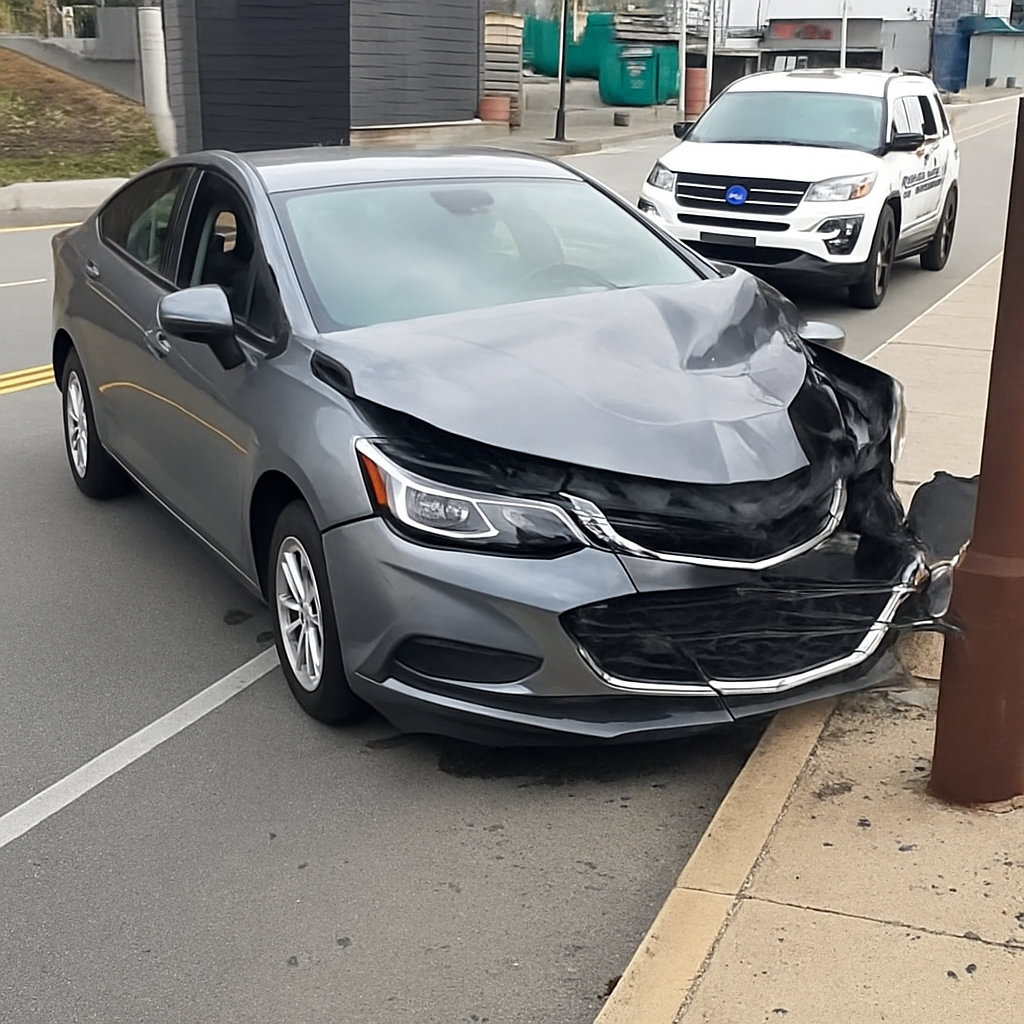
A hit and run conviction in Kansas puts points on your license and flags you as high-risk — but it doesn't always trigger an SR-22 requirement. Here's what determines your insurance path forward and what rates look like now.
Does a Hit and Run Conviction Require SR-22 in Kansas?
Not automatically. Kansas requires SR-22 filing only when your license is suspended or revoked, or when you're convicted of specific offenses like DUI, reckless driving, or driving without insurance. A hit and run conviction alone does not trigger SR-22 unless it resulted in injury, death, or property damage exceeding $1,000 and you failed to report it — circumstances that typically lead to a suspension.
If your hit and run was a minor property damage incident with no suspension, you'll face 6 points on your Kansas driving record and a sharp rate increase, but no SR-22 requirement. If the conviction did result in a suspension — common when the accident involved significant damage or failure to appear — Kansas will require you to file SR-22 for 3 years from the date your license is reinstated. The distinction matters because SR-22 itself adds $15–$50 per year in filing fees and limits your carrier options to non-standard insurers.
Most drivers researching this topic assume SR-22 is mandatory after any criminal traffic conviction. In Kansas, the DMV bases SR-22 requirements on license status and specific statutory triggers, not the severity of the violation alone. If you received a suspension notice from the Kansas Department of Revenue, SR-22 is required. If you received only a conviction notice with points, it is not. Kansas SR-22 requirements
How Kansas Points Work After a Hit and Run Conviction
Kansas assesses 6 points for leaving the scene of an accident, one of the highest point totals for a single violation in the state. Accumulating 12 or more points in a 3-year period triggers a mandatory license suspension. The conviction remains on your driving record for 3 years from the conviction date, and insurers use that full 3-year window when calculating your premium.
Points fall off your record automatically 3 years after the conviction, not the violation date. If your conviction was finalized in March 2024, the points disappear in March 2027. Your insurance rate will not normalize immediately when the points drop — most carriers reassess risk annually at renewal, so you'll see the first meaningful rate decrease at your first renewal after the 3-year mark.
You cannot remove points early in Kansas through defensive driving courses or other point reduction programs — the state does not offer point masking for major violations. The only path to accelerating rate recovery is shopping carriers aggressively and maintaining a clean record for the full 3-year lookback period.
What to Expect for Car Insurance Rates in Kansas
A hit and run conviction typically triggers a rate increase of 80–140% depending on your carrier, prior record, and coverage limits. If you were paying $1,200 per year before the conviction, expect quotes in the $2,160–$2,880 range annually, or $180–$240 per month. If the conviction included a suspension and SR-22 requirement, add another 20–30% to account for non-standard carrier pricing and filing fees.
Standard carriers like State Farm, Geico, and Progressive may non-renew your policy or decline to write you after a hit and run conviction. Most drivers with this violation end up with non-standard insurers — companies that specialize in high-risk drivers and accept major violations. In Kansas, that includes carriers like The General, Bristol West, Dairyland, and National General. These insurers price for the conviction but remain accessible even with multiple violations or a recent suspension.
Rates will remain elevated for the full 3 years the conviction is visible on your record. Year 1 premiums are the highest. By year 2, if you've maintained continuous coverage and added no new violations, some carriers will reduce rates by 10–15%. By year 3, you become eligible again for standard carrier pricing, though your premium will still reflect the conviction until it fully drops off. Shopping at every renewal during this period is the single highest-leverage action you can take — non-standard carriers vary widely in how they price hit and run convictions, and the difference between the highest and lowest quote can exceed $1,000 annually. non-standard auto insurance
What Happens If You're Required to File SR-22
If your hit and run resulted in a suspension, Kansas will mail you a suspension notice specifying the SR-22 filing requirement. You must obtain SR-22 coverage before the DMV will reinstate your license. The filing itself is a certificate your insurer submits to the Kansas Department of Revenue proving you carry at least the state minimum liability coverage: $25,000 per person / $50,000 per accident for bodily injury, and $25,000 for property damage.
The SR-22 filing period in Kansas is 3 years from the reinstatement date, not the conviction date. If your license was suspended for 90 days and you reinstated it in June 2024, your SR-22 requirement runs through June 2027. Any lapse in coverage during that period — even one day — triggers an automatic notification to the DMV, which will suspend your license again and restart the 3-year clock. Continuous coverage is non-negotiable.
SR-22 itself costs $15–$50 per year depending on your insurer, but the real cost is the restriction to non-standard carriers. Non-standard SR-22 policies in Kansas typically run 90–150% higher than standard policies for the same driver profile. That premium gap narrows as you approach the end of your filing period with no new violations. Once the 3-year SR-22 requirement is satisfied, you can shop standard carriers again, though the underlying conviction remains visible for its full 3-year term. SR-22 insurance
Which Carriers Write Coverage After a Hit and Run in Kansas
You'll need to shift to non-standard carriers. Standard insurers treat hit and run convictions as major violations — not quite at the DUI or reckless driving level, but serious enough to justify non-renewal or declination. Non-standard carriers price for the risk but remain accessible.
In Kansas, the most commonly available non-standard carriers for drivers with a hit and run conviction include The General, Bristol West, Dairyland, National General, and Acceptance Insurance. If SR-22 is required, Progressive and Geico may still write you through their non-standard divisions, though premiums will be significantly higher than their standard products. Each carrier uses different underwriting criteria — some weight points more heavily, others focus on whether the conviction involved a suspension or property damage.
Do not assume the first quote you receive is your only option. Non-standard pricing varies by 30–60% between carriers for the same driver profile. Request quotes from at least three non-standard insurers and compare not just the premium but the coverage limits, deductibles, and any reinstatement fees. If you're required to file SR-22, confirm the insurer is approved to file electronically with the Kansas Department of Revenue — most are, but smaller regional carriers sometimes require manual filing, which delays reinstatement.
How to Lower Your Premium and Recover Your Rates
There is no fast path to rate recovery after a hit and run conviction in Kansas, but the timeline is predictable. Points drop off automatically 3 years from the conviction date. Insurers reassess your risk annually at renewal. Your premium will decrease incrementally each year you maintain a clean record, with the steepest drop occurring at your first renewal after the conviction falls off.
The highest-impact action you can take now is shopping carriers at every renewal. Non-standard insurers compete on price, and their underwriting models differ enough that the same conviction can produce wildly different premiums. Request new quotes 30–45 days before each renewal and compare total annual cost, not just monthly payments. Switching carriers mid-term after a conviction rarely saves money due to cancellation fees and loss of any loyalty discounts.
Maintaining continuous coverage is critical. Even a single lapse will reset your rate recovery timeline and, if SR-22 is required, restart your filing period. Set up automatic payments if you're concerned about missing a due date. Some non-standard carriers offer small discounts — 5–10% — for bundling policies, paying in full, or completing a defensive driving course, though Kansas does not allow point reduction through coursework. These discounts are marginal but stack over time.
What If You Can't Afford Full Coverage Right Now
Kansas requires only liability coverage to legally operate a vehicle, and if SR-22 is required, you need only prove minimum liability limits. If your premium is unmanageable, dropping collision and comprehensive coverage can reduce your cost by 30–50%. This makes sense if your vehicle is older and the coverage cost exceeds the car's value, but it leaves you financially exposed if you're in another accident.
Some non-standard carriers offer payment plans that spread the premium across 6 or 12 months with minimal interest or fees. Others require a larger down payment — often 20–30% of the annual premium — which can be a barrier if cash flow is tight. If you're required to file SR-22 and cannot afford a standard policy, ask insurers about state minimum liability-only SR-22 policies. These run $80–$150 per month in Kansas for drivers with a major conviction, compared to $180–$240 for full coverage.
Do not drive uninsured or let your policy lapse to save money. Kansas penalizes uninsured driving with fines up to $1,000, license suspension, and mandatory SR-22 filing for 1 year even if your original conviction didn't require it. A lapse during an existing SR-22 period restarts the 3-year clock and adds another suspension to your record. The short-term savings are not worth the long-term cost.