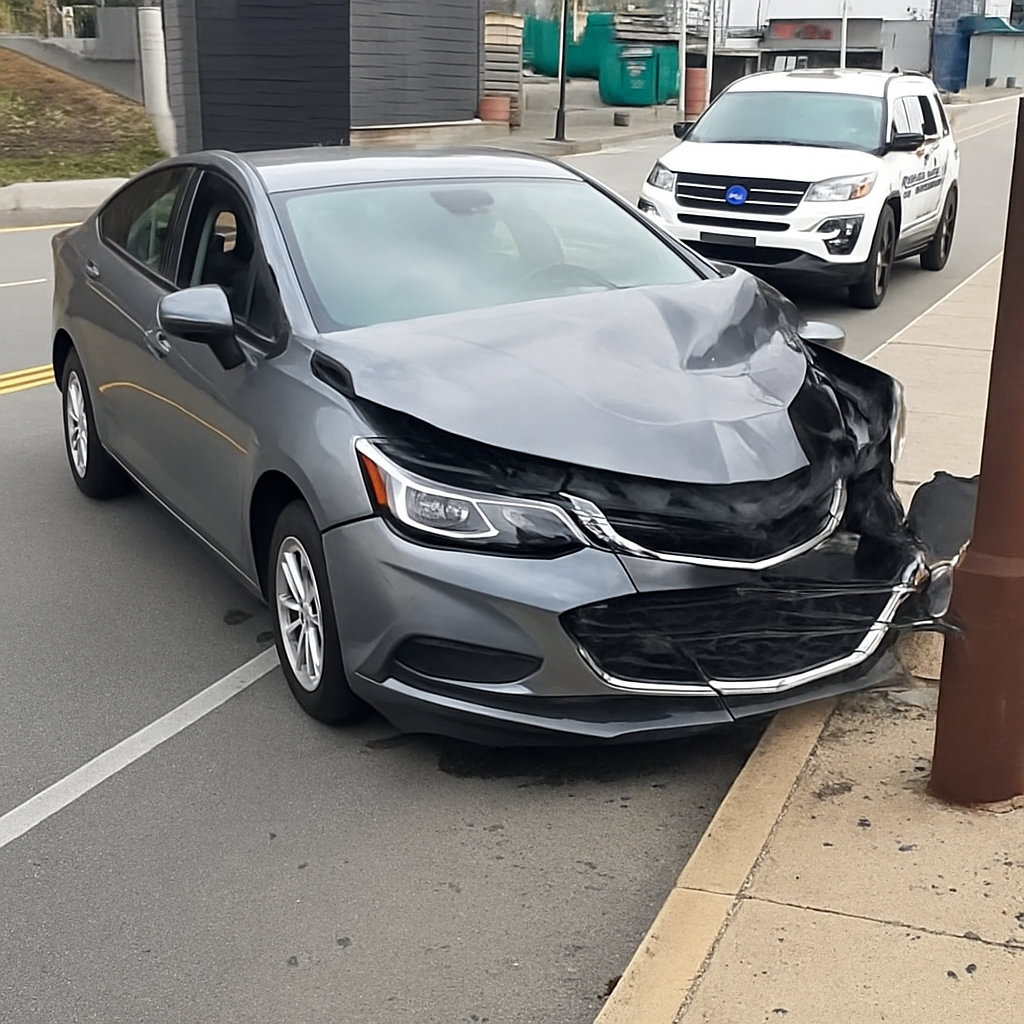
A hit and run conviction in Minnesota reclassifies you as high-risk and typically requires 3 years of SR-22 filing, but your biggest cost driver isn't the SR-22 — it's the violation itself and how carriers price felony-level convictions.
How Minnesota Classifies Hit and Run Violations and What That Means for Insurance
Minnesota Statutes Section 169.09 defines hit and run (officially termed "duty to give information and render aid") and separates violations into misdemeanor and felony categories based on whether the incident involved property damage only or bodily injury. A hit and run involving only property damage is typically charged as a misdemeanor, while a hit and run involving injury or death is a felony. This distinction matters because insurers underwrite felony convictions more aggressively than misdemeanors — you're looking at rate increases in the 150–250% range for felony hit and run versus 80–150% for misdemeanor property-damage-only cases.
The Minnesota Department of Public Safety will suspend your license following a hit and run conviction, and reinstatement requires proof of financial responsibility via SR-22 filing. The SR-22 requirement typically lasts 3 years from the date of reinstatement, not from the date of conviction. If your license was suspended for 90 days and you didn't reinstate immediately, your 3-year SR-22 clock doesn't start until you file and pay the reinstatement fee. Most drivers with hit and run convictions end up carrying SR-22 longer than 3 years simply because they delay reinstatement.
Your conviction will remain on your Minnesota driving record for 5 years under state law, but insurers can look back further when underwriting. The practical timeline for rate recovery is 3–5 years — once the conviction ages past 3 years, some standard carriers will start quoting you again, and by year 5 you're eligible for rates closer to what drivers with clean records pay. The SR-22 filing itself adds only $25–$50 annually to your premium; the conviction is what drives your cost up. Minnesota SR-22 requirements SR-22 insurance coverage
Which Carriers Write Policies After a Hit and Run Conviction in Minnesota
Standard carriers like State Farm, Allstate, and Progressive will typically non-renew your policy or decline to quote you after a hit and run conviction, especially if it's classified as a felony. You're shopping in the non-standard or high-risk market, where carriers specialize in drivers with major violations, DUIs, and felony convictions. In Minnesota, the most accessible non-standard carriers for hit and run convictions include The General, Direct Auto, Acceptance Insurance, and National General. These carriers file SR-22 forms directly with the Minnesota DVS and are accustomed to underwriting drivers with felony-level convictions.
Not every non-standard carrier prices hit and run convictions the same way. Some treat all hit and run cases as equivalent to DUI in terms of risk, while others distinguish between misdemeanor property-only cases and felony injury cases. Shopping at least three non-standard carriers is critical because rate spreads for the same driver profile can exceed $100/month. A felony hit and run conviction with SR-22 in Minnesota typically results in full-coverage premiums between $250 and $450 per month, depending on your age, location, vehicle, and other driving history.
If you're struggling to find any carrier willing to write you, Minnesota offers the Minnesota Automobile Insurance Plan (MAIP), a state-assigned risk pool that guarantees access to liability coverage for drivers who cannot obtain insurance in the voluntary market. MAIP premiums are higher than voluntary non-standard market rates, but it's a fallback option that ensures you can meet SR-22 requirements and legally reinstate your license. You apply through a licensed agent — MAIP does not sell policies directly to consumers. non-standard auto insurance
What SR-22 Filing Costs and How Long You'll Carry It in Minnesota
The SR-22 filing fee in Minnesota ranges from $25 to $50 depending on your insurer, and it's a one-time charge per filing period unless you let your policy lapse. If your policy lapses for any reason — non-payment, cancellation, or switching carriers without continuous coverage — your insurer is required to notify the Minnesota DVS immediately, and your license will be suspended again. Reinstating after an SR-22 lapse adds another reinstatement fee ($680 as of 2024) and restarts your 3-year SR-22 clock from zero. This is the most expensive mistake drivers with hit and run convictions make.
Minnesota requires SR-22 filing for 3 years following license reinstatement, but your actual duration depends on your compliance. If you maintain continuous coverage without any lapses, your SR-22 obligation ends exactly 3 years from your reinstatement date. The DVS does not send you a notification when your SR-22 period ends — it's your responsibility to track the end date. Once your 3-year period is complete, you can request that your insurer remove the SR-22 filing and shop for standard coverage if your conviction is old enough.
If you move out of Minnesota during your SR-22 period, your obligation follows you. You'll need to file SR-22 in your new state if that state requires it, and Minnesota will not release you from the filing requirement until your 3-year term is satisfied. Some states do not use SR-22 (they use FR-44 or other proof-of-insurance forms), so verify your new state's requirements before relocating.
How Your Premium Changes Over Time After a Hit and Run Conviction
Your insurance cost peaks immediately after conviction and reinstatement, then declines gradually as the violation ages. In year one, expect premiums 150–250% higher than pre-conviction rates if your hit and run was classified as a felony, and 80–150% higher for misdemeanor property-only cases. By year three, assuming no new violations, your rates typically drop 20–30% as the conviction moves out of the "recent" risk window that non-standard carriers use for pricing. After five years, the conviction falls off your Minnesota driving record entirely, and you're eligible for standard carrier rates if you've maintained continuous coverage.
Some non-standard carriers offer step-down programs that reduce your premium automatically each year you remain violation-free. Drivers who complete a defensive driving course within the first year after conviction can sometimes qualify for a 5–10% discount, though not all non-standard carriers honor this — ask your agent before paying for the course. Minnesota does not offer point reduction for defensive driving, but insurers have discretion to apply discounts for voluntary coursework.
Rate recovery also depends on your coverage selections. If you're financing a vehicle and required to carry full coverage, your premium will stay elevated longer than if you're driving an older vehicle with liability-only coverage. Many drivers with hit and run convictions switch to liability-only as soon as their loan is paid off, which can cut premiums by 30–40%. Minnesota's minimum liability limits are 30/60/10 ($30,000 bodily injury per person, $60,000 per accident, $10,000 property damage), and while SR-22 can be filed on minimum limits, carrying higher limits often signals lower risk to underwriters and can sometimes result in better overall pricing from non-standard carriers.
License Reinstatement Steps After a Hit and Run Conviction in Minnesota
Minnesota will suspend your license immediately following a hit and run conviction. The suspension period depends on whether your conviction was a first offense or repeat violation, and whether it involved injury. First-offense property-only hit and run typically results in a 30- to 90-day suspension, while felony hit and run with injury can trigger suspensions of 1 year or longer. You cannot reinstate until the suspension period is fully served, all court fines and restitution are paid, and you file SR-22 proof of insurance with the Minnesota DVS.
To reinstate, you must obtain an SR-22 policy from a licensed carrier, pay the reinstatement fee ($680 as of 2024), and submit any additional documents the DVS requires — this may include a substance abuse assessment if alcohol or drugs were involved in the incident, or proof of completed community service if ordered by the court. Your SR-22 policy must be active before you pay the reinstatement fee — the DVS will not process reinstatement until they receive electronic confirmation of SR-22 filing from your insurer, which typically takes 24–48 hours after you purchase your policy.
Once reinstated, you're required to maintain continuous SR-22 coverage for the full 3-year period. If you cancel your policy, switch carriers, or miss a payment that results in cancellation, the DVS will suspend your license again within 10 days of notification from your insurer. Avoiding lapses is the single most important compliance task during your SR-22 period — set up automatic payments, keep your insurer's contact information current, and if you need to switch carriers, make sure your new policy starts the same day your old policy ends with no gap.
How to Lower Your Premium While Carrying SR-22 After a Hit and Run
The most effective way to reduce your cost is to shop multiple non-standard carriers annually. Non-standard insurers re-evaluate risk more frequently than standard carriers, and as your conviction ages, you may qualify for better pricing with a different carrier even if you're still within your 3-year SR-22 period. Switching carriers mid-SR-22 is legal and common — just ensure your new policy starts before your old one ends to avoid a lapse and license suspension.
Increasing your deductible can lower your premium if you're carrying comprehensive and collision coverage, but make sure you can afford the out-of-pocket cost if you file a claim. Dropping full coverage entirely and carrying only liability is the biggest single cost reduction available, but only feasible if your vehicle is paid off and you can absorb the loss if it's totaled. Many drivers with hit and run convictions keep full coverage for the first year or two after reinstatement, then drop it once they've rebuilt some financial cushion.
Bundling policies, paying your premium in full up front, and maintaining continuous coverage without lapses can all unlock discounts with non-standard carriers, though availability varies. Some non-standard insurers also offer telematics programs that monitor your driving and adjust your rate based on actual behavior — if you're a cautious driver who rarely exceeds speed limits or drives late at night, telematics can reduce your premium by 10–20% even with a hit and run conviction on your record. Ask your agent which carriers in Minnesota offer usage-based programs for high-risk drivers.