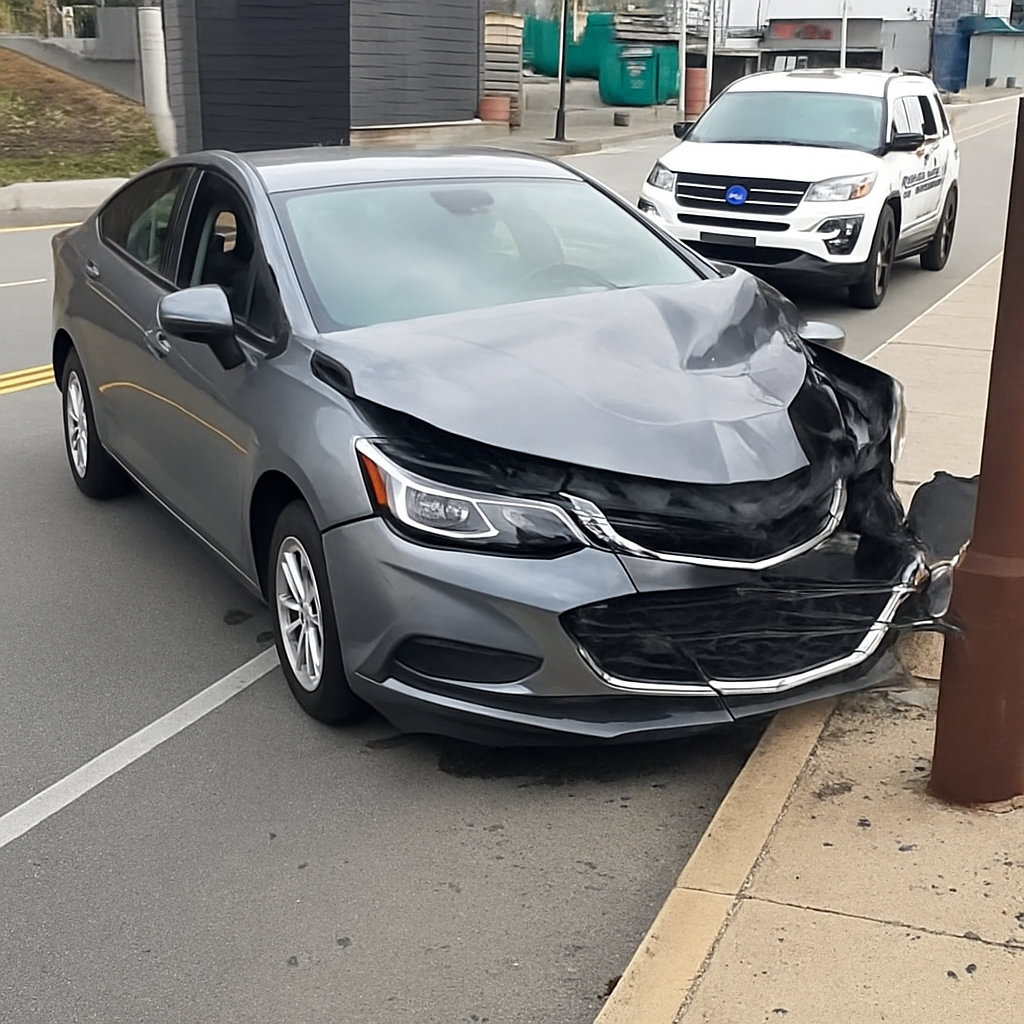
Montana treats leaving the scene as a misdemeanor or felony depending on injury severity, and most carriers will either drop you or triple your premium. Here's what to expect from rates, SR-22 requirements, and which insurers will still write you.
What a Hit and Run Conviction Does to Your Montana Driving Record
Montana law classifies leaving the scene of an accident under MCA 61-7-104. If the accident involved only property damage, it's a misdemeanor with up to six months in jail and a $500 fine. If it involved injury or death, it's a felony with up to 10 years in prison. Both result in six points added to your driving record, which remains visible to insurers for three years from the conviction date.
Montana's point threshold for license suspension is 30 points in a 36-month period, so a single hit and run won't trigger automatic suspension unless you have other violations stacked. However, the Montana Department of Justice can suspend your license administratively if you failed to stop and provide insurance information, which is a separate violation under MCA 61-6-301. This is where SR-22 becomes relevant — not from the conviction itself, but from the suspension or failure to prove financial responsibility.
Insurers treat hit and run convictions as major violations, on par with DUI or reckless driving. The conviction signals both high risk and moral hazard — you left the scene, which means the carrier assumes you'll avoid responsibility again. Expect rate increases between 150% and 300%, and many standard carriers will non-renew your policy at the end of the term rather than offer renewal at any price. Montana SR-22 requirements
When Montana Requires SR-22 After a Hit and Run
Montana does not have a blanket SR-22 requirement for hit and run convictions. The state only mandates SR-22 filing if your license is suspended, you're convicted of driving without insurance, or a court specifically orders proof of financial responsibility as part of your sentence. Most hit and run cases that involve injury or significant property damage will trigger one of these conditions, but not all.
If the court suspends your license or orders SR-22, you'll need to maintain continuous coverage with an SR-22 filing for three years from the reinstatement date. Any lapse during that period resets the clock and triggers a new suspension. The SR-22 itself costs $25 to $50 to file in Montana, but the real cost is the underlying insurance premium — non-standard carriers that accept hit and run convictions charge $200 to $400 per month for minimum liability coverage, compared to $80 to $120 per month for a clean record.
If your license was not suspended and the court did not order SR-22, you still face the carrier non-renewal problem. Most standard insurers will drop you at renewal regardless of SR-22 status, which forces you into the non-standard market anyway. The difference is you won't have the administrative burden of maintaining the filing, but your rate increase will be comparable.
Which Carriers Will Insure You After a Hit and Run in Montana
Standard carriers like State Farm, Allstate, and Progressive typically refuse to renew policies after a hit and run conviction, even if you've been a customer for years. Their underwriting guidelines treat leaving the scene as a non-renewable offense, and appealing the decision rarely succeeds unless you can prove extenuating circumstances documented in the police report.
Non-standard carriers that operate in Montana and accept hit and run convictions include The General, Bristol West, Dairyland, and National General. These insurers specialize in high-risk drivers and will write policies with SR-22 filings, but expect minimum liability limits (25/50/20 in Montana) and monthly premiums between $200 and $400 depending on your age, location, and additional violations. Some regional carriers like American Economy Insurance and Allied Insurance also write non-standard auto in Montana, though availability varies by county.
If you're assigned to the Montana Automobile Insurance Plan (MAIP), the state's residual market for drivers who cannot find coverage in the voluntary market, expect premiums 200% to 300% higher than standard rates. MAIP is the last resort and only necessary if every non-standard carrier declines you. Most hit and run convictions without additional felonies or DUIs can still find coverage in the non-standard market before needing MAIP. non-standard auto insurance
How Long Hit and Run Affects Your Montana Insurance Rates
The conviction remains on your Montana driving record for three years from the date of conviction, not the date of the incident. Insurers typically surcharge your premium for the full three-year period, though the increase may taper slightly in year three if you maintain a clean record and continuous coverage.
After three years, the conviction falls off your MVR and most insurers will no longer surcharge you for it. However, if you were convicted of a felony hit and run involving injury, some carriers check criminal background records in addition to your driving record, and a felony conviction may continue to affect your eligibility or rates beyond the three-year MVR lookback period. Misdemeanor hit and run convictions typically do not appear on standard background checks and will not affect your rates once they age off your driving record.
To minimize the rate impact during the three-year surcharge period, maintain continuous coverage with no lapses, complete any court-ordered defensive driving or traffic school, and avoid any additional violations or accidents. Each clean year reduces your perceived risk, and some non-standard carriers offer accident forgiveness or rate reduction programs after 12 or 24 months of claims-free coverage. Shop your policy every six months during this period — non-standard carrier rates vary widely and loyalty does not reduce your premium in the high-risk market.
Steps to Take After a Hit and Run Conviction in Montana
If your license is suspended, reinstate it before shopping for insurance. Montana requires you to pay all reinstatement fees, satisfy any court-ordered conditions, and file SR-22 if ordered. The reinstatement fee for a hit and run suspension is typically $200, plus any outstanding fines or restitution ordered by the court. Once reinstated, your SR-22 filing must remain active for three years without any lapse.
Shop at least three non-standard carriers before accepting the first quote. The General, Dairyland, and Bristol West all operate in Montana, but their underwriting models weight violations differently — one may offer you $250 per month while another quotes $400 for identical coverage. Use an independent agent who specializes in high-risk auto or a comparison tool that includes non-standard carriers, because most direct-to-consumer sites like Geico or USAA will decline you outright.
If the conviction involved injury or significant property damage, expect the victim or their insurer to pursue a civil judgment against you. Montana allows injured parties to recover damages through civil court regardless of your criminal sentence, and an unpaid judgment can result in additional license suspension under MCA 61-6-301. If you cannot afford to pay a judgment, consult with an attorney about payment plans or bankruptcy options — an unresolved civil judgment will prevent you from reinstating your license even if the criminal case is closed.
Montana Point System and How Hit and Run Stacks With Other Violations
Montana assigns six points for leaving the scene of an accident, which is the same point value as DUI, reckless driving, or eluding a police officer. If you accumulate 30 points within 36 months, the state suspends your license for six months. Points remain on your record for three years from the conviction date, not the violation date.
If you already have points from prior speeding tickets, at-fault accidents, or other moving violations, the hit and run conviction may push you over the 30-point threshold even if no single violation would trigger suspension on its own. For example, two prior speeding tickets (10 mph over) at three points each, plus a hit and run at six points, totals 12 points — still well under the threshold. But if you had a prior careless driving conviction (four points) and a failure to yield (three points), the hit and run brings you to 13 points, which is manageable but leaves little margin for error.
Montana does not offer a point reduction course or defensive driving option to remove points from your record, though completing a court-ordered traffic school may reduce fines or satisfy probation conditions. The only way to clear points is to wait three years from each conviction date. During that period, avoid any additional violations — even a minor speeding ticket can stack with your existing points and trigger suspension, which will require SR-22 and extend your high-risk insurance period by another three years. SR-22 insurance