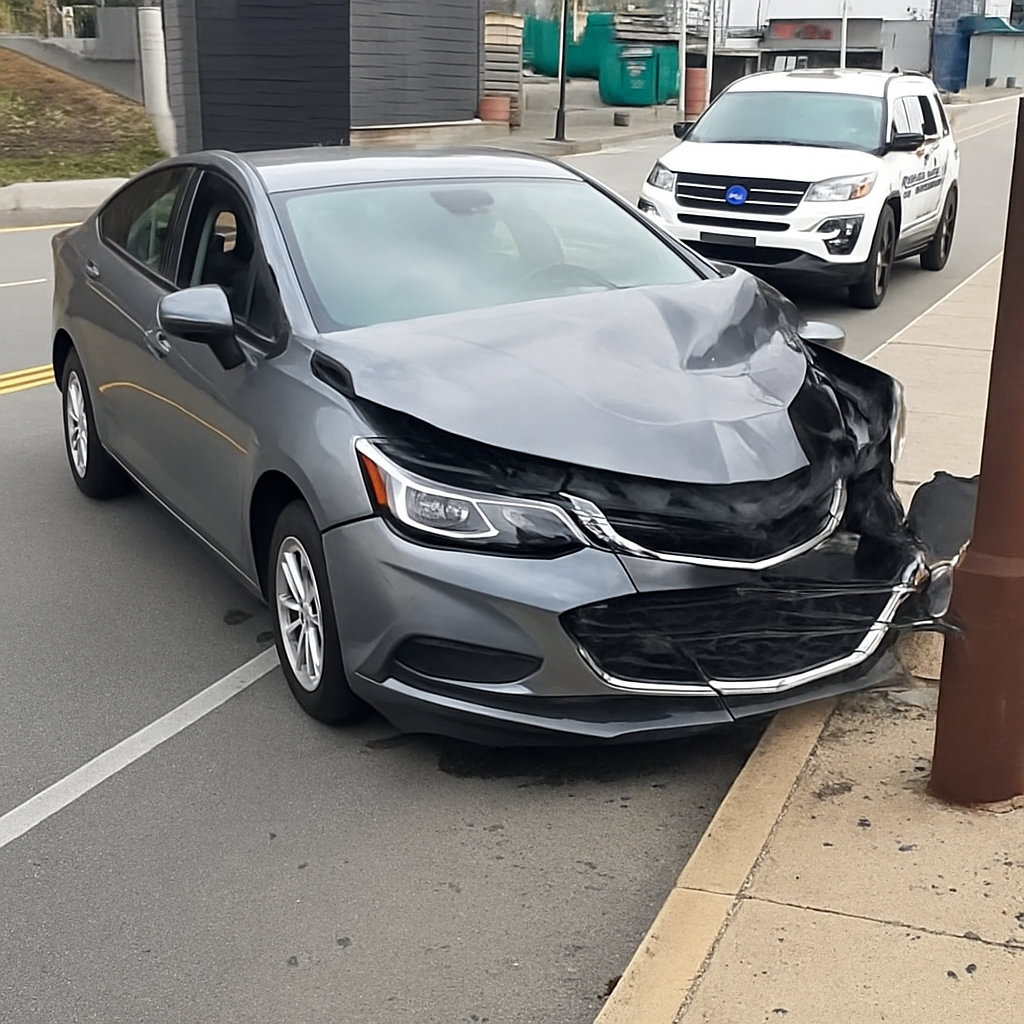
A hit and run conviction in Nebraska triggers immediate license suspension and SR-22 filing requirements — and most standard carriers will non-renew your policy. Here's what your coverage looks like now and which carriers will still write you.
What a Hit and Run Conviction Does to Your Nebraska Driving Record
Nebraska assigns either 6 or 12 points for hit and run depending on the severity. Leaving the scene of a property damage accident is a Class II misdemeanor and carries 6 points on your driving record. Leaving the scene of an accident involving injury or death is a Class I misdemeanor and assigns 12 points. Both violations trigger immediate license suspension under Nebraska's point accumulation rules — the threshold is 12 points in any 2-year period — and require SR-22 filing for reinstatement.
The Nebraska DMV suspends your license for 6 months on a first hit and run conviction involving property damage. If the hit and run involved injury or death, the suspension period extends to 1 year. A second hit and run conviction within 12 years results in mandatory license revocation for 15 years, regardless of whether injury was involved. There is no early reinstatement option for a 15-year revocation — you will not legally drive in Nebraska until that period ends.
Points from a hit and run conviction remain on your Nebraska driving record for 5 years from the date of conviction. Insurance carriers review your record for the full 5-year period when calculating premiums, which means rate increases persist even after your license is reinstated and your SR-22 filing ends. The conviction itself appears on your Nebraska driving abstract indefinitely.
SR-22 Filing Requirements After a Hit and Run in Nebraska
Nebraska requires SR-22 filing as a condition of license reinstatement following any hit and run conviction. The SR-22 is a certificate filed by your insurance carrier with the Nebraska DMV proving you carry at least the state minimum liability coverage: $25,000 bodily injury per person, $50,000 bodily injury per accident, and $25,000 property damage. You cannot reinstate your license without an active SR-22 on file.
The Nebraska DMV mandates SR-22 filing for 3 years from the date of reinstatement, not from the date of conviction. If your license is suspended for 6 months and you delay reinstatement by another 6 months, your 3-year SR-22 clock does not start until you file the SR-22 and pay reinstatement fees. Any lapse in coverage during the 3-year period — even a single day — resets the SR-22 filing requirement back to day one. Your carrier must notify the DMV within 30 days of any policy cancellation or lapse, and the DMV will immediately suspend your license again.
The SR-22 filing fee in Nebraska is typically $25 to $50, paid once at the time your carrier submits the certificate to the DMV. This is separate from your reinstatement fee, which is $125 for a first hit and run suspension. You pay the SR-22 fee to your insurance carrier, not to the DMV. Most non-standard carriers include the SR-22 filing fee in your first month's premium or bill it separately at policy inception. Nebraska SR-22 insurance requirements
How Much Your Insurance Rates Increase After a Hit and Run Conviction
A hit and run conviction typically triggers a 150% to 250% rate increase in Nebraska, depending on the carrier and whether injury was involved. Standard carriers treat hit and run as a major violation equivalent to DUI or reckless driving because it demonstrates both at-fault accident risk and deliberate evasion. Most standard carriers — State Farm, Allstate, Progressive, Geico — will non-renew your policy at the end of your current term rather than offer renewal at the elevated rate.
Non-standard carriers that specialize in high-risk drivers — The General, Direct Auto, Bristol West, Acceptance Insurance — will write policies for drivers with hit and run convictions, but expect monthly premiums in the $200 to $400 range for state minimum liability coverage. If you add SR-22 filing and require full coverage to satisfy a lien holder, monthly premiums can exceed $500. Non-standard carriers price based on the severity of your violation, your points total, and the time elapsed since conviction. A driver 6 months post-conviction pays significantly more than a driver 3 years post-conviction, even with the same points on record.
Rate recovery begins after 3 years but accelerates after 5 years once the points fall off your driving record. Expect to pay elevated premiums for the full 5-year period the conviction remains on your abstract. Some carriers will reclassify you to standard or preferred tiers after 5 years if you maintain a clean record during that time, which can reduce your premium by 40% to 60% compared to non-standard pricing.
Which Nebraska Carriers Will Still Insure You
Standard carriers in Nebraska will not write new policies for drivers with an active hit and run conviction on their record. If you currently hold a policy with a standard carrier, expect a non-renewal notice at the end of your term. State Farm, Allstate, and Farmers typically non-renew within 30 to 60 days of receiving notice of the conviction from the DMV. Progressive and Geico may allow you to complete your current 6-month term but will not offer renewal.
Non-standard carriers that actively write policies for Nebraska drivers with hit and run convictions include The General, Direct Auto, Bristol West, Acceptance Insurance, and Dairyland. These carriers specialize in SR-22 filings and major violations and will quote you immediately after conviction. Availability varies by county — The General and Direct Auto have the broadest footprint in Nebraska, while Bristol West and Acceptance Insurance are more selective in rural areas.
You must shop at least 3 to 5 non-standard carriers to find competitive pricing after a hit and run conviction. Rate variation among non-standard carriers can exceed 50% for the same coverage limits and driver profile. A driver in Omaha with a 6-point hit and run conviction might receive quotes ranging from $210/month to $425/month for state minimum liability with SR-22. The lowest quote is not always the best option — verify the carrier files SR-22 electronically with the Nebraska DMV and confirm the policy effective date aligns with your reinstatement timeline. non-standard auto insurance
License Reinstatement Process After Hit and Run in Nebraska
You cannot reinstate your Nebraska license until you complete your suspension period, obtain SR-22 insurance, and pay the $125 reinstatement fee. The Nebraska DMV does not allow early reinstatement for hit and run suspensions — you must serve the full 6-month or 1-year suspension period. Driving on a suspended license during this period is a Class IV misdemeanor and adds 6 points to your record, which extends your suspension and SR-22 filing requirement.
Once your suspension period ends, you must purchase an SR-22 insurance policy before visiting the DMV. Your carrier files the SR-22 certificate electronically with the DMV, typically within 24 to 48 hours of policy purchase. You can verify SR-22 filing status by calling the Nebraska DMV Driver Records Division at 402-471-3918 or checking your status online through the Nebraska DMV website. Do not attempt to reinstate your license until the DMV confirms your SR-22 is on file — the reinstatement clerk will not process your application without an active SR-22.
After SR-22 filing is confirmed, visit any Nebraska DMV office with proof of identity, proof of residency, and the $125 reinstatement fee. The DMV issues your license the same day if all requirements are met. Your 3-year SR-22 filing period begins on the date of reinstatement, not the date you purchased the policy. If you delay reinstatement by 6 months after your suspension ends, you still owe 3 full years of SR-22 filing from the reinstatement date.
What Happens If You Let Your SR-22 Policy Lapse
Any lapse in SR-22 coverage during your 3-year filing period — even one day — triggers automatic license suspension in Nebraska. Your insurance carrier is legally required to notify the Nebraska DMV within 30 days of policy cancellation, non-payment, or lapse. The DMV suspends your license immediately upon receiving the lapse notice and does not send advance warning. You will not know your license is suspended until you are pulled over or attempt to renew your registration.
Reinstating your license after an SR-22 lapse requires purchasing a new SR-22 policy, paying a new $125 reinstatement fee, and restarting your 3-year SR-22 filing requirement from day one. If you were 2 years into your 3-year filing period and your policy lapsed, you now owe 3 additional years starting from your new reinstatement date. There are no exceptions or hardship waivers — the Nebraska DMV enforces the reset rule uniformly.
To avoid SR-22 lapses, set up automatic payment with your carrier and verify coverage renews automatically at the end of each term. Most non-standard carriers offer month-to-month policies that renew automatically as long as payment clears. If you plan to switch carriers during your SR-22 period, ensure the new policy effective date overlaps with your old policy end date by at least one day. A gap of even 24 hours counts as a lapse and resets your filing requirement.
How Long Before You Can Get Standard Coverage Again
Most Nebraska standard carriers will not consider you for a standard policy until 5 years after your hit and run conviction, once the points fall off your driving record. Some carriers require a full 5-year period with no additional violations, at-fault accidents, or lapses before offering standard rates. A second moving violation or at-fault accident during the 5-year recovery period extends the timeline — most carriers restart the clock from the date of the most recent incident.
You may qualify for preferred or standard-tier pricing with select carriers after 3 years if you complete the SR-22 requirement without lapses and maintain continuous coverage during that time. Progressive and Nationwide occasionally reclassify drivers to standard tiers at the 3-year mark if no additional violations appear on the record. Expect to shop aggressively at the 3-year and 5-year marks — standard carriers do not automatically reclassify you, and your current non-standard carrier has no incentive to lower your rate if you remain with them.
The fastest path to rate recovery is maintaining continuous coverage, completing your SR-22 period without lapses, and shopping at least 5 carriers at the 3-year mark. A Nebraska driver with a clean record after 3 years post-hit-and-run can reduce monthly premiums from $300+ in the non-standard market to $120 to $180 with a standard carrier. The savings justify the time spent shopping — request quotes 60 days before your 3-year SR-22 anniversary so new coverage is in place the day your SR-22 requirement ends.