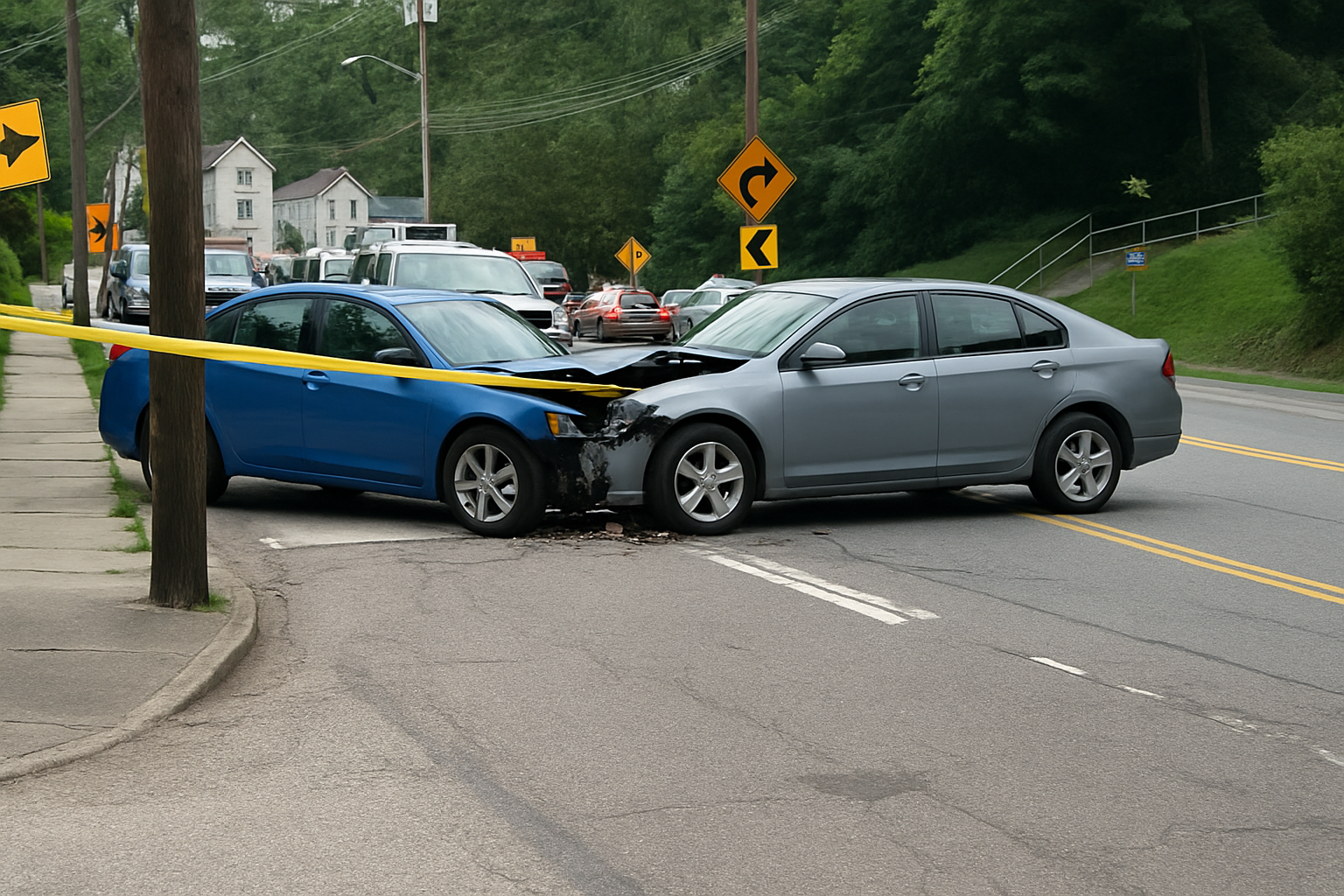
A hit and run conviction in New Hampshire adds 6 points to your license and triggers significant rate increases. Here's what to expect with coverage, costs, and your driving record — and how to get insured after the conviction.
How a Hit and Run Conviction Affects Your NH Driving Record
A hit and run conviction in New Hampshire adds 6 points to your license, regardless of whether the incident involved property damage or injury. New Hampshire's point system triggers a license suspension at 12 points within a 12-month period, which means a single hit and run puts you halfway to suspension. If you have any other violations on your record — even a speeding ticket worth 3 or 4 points — you're at immediate risk of losing your license.
Points from a hit and run conviction remain on your New Hampshire driving record for three years from the date of conviction. Insurance companies typically look back three to five years when calculating rates, so the financial impact will persist even after the points drop off your DMV record. The conviction itself remains visible on your driving record for longer, and carriers will see it during underwriting.
Unlike DUI or reckless driving convictions, New Hampshire does not require SR-22 filing for a hit and run. This distinguishes hit and run from most other serious violations that would otherwise be treated as high-risk by the state. You will not need to file proof of insurance with the DMV unless your license is separately suspended or you were driving uninsured at the time of the offense.
What Hit and Run Does to Your Insurance Rates in New Hampshire
A hit and run conviction typically triggers a rate increase of 70% to 100% with most standard carriers, though the exact increase depends on your insurer, prior driving history, and whether the incident involved an at-fault accident. If you were already carrying violations or points, the cumulative effect can push increases above 100%. Drivers with clean records before the conviction will see smaller percentage increases but still face steep dollar-amount jumps.
Many standard and preferred carriers will non-renew your policy at the end of your current term rather than immediately cancel. This gives you time to shop, but it also means you're now shopping as a high-risk driver. Expect to be moved into a carrier's non-standard division or declined entirely by companies like Plymouth Rock, Concord Group, or other New Hampshire-based standard carriers. Non-standard carriers like The General, Bristol West, and National General write New Hampshire policies for drivers with point violations and convictions.
If you had an at-fault accident in addition to the hit and run charge — which is common — you're dealing with both the conviction penalty and the at-fault accident surcharge. These stack. The at-fault accident alone can increase rates by 40% to 60%, and the hit and run adds its own separate penalty. Drivers in this situation often see their premiums double or more.
Finding Coverage After a Hit and Run Conviction in NH
You do not need SR-22 insurance unless you were specifically ordered to file it by the court or DMV — most hit and run convictions in New Hampshire do not trigger this requirement. Your focus should be on finding a carrier willing to write a non-standard policy at a rate you can sustain. Standard carriers may decline to renew you, but non-standard carriers specialize in exactly this profile.
Start shopping immediately after the conviction, even if your current policy hasn't been cancelled. Rates vary significantly across non-standard carriers, and the difference between the highest and lowest quote can exceed $100 per month for the same coverage. Companies like Progressive, Dairyland, and Foremost write non-standard auto policies in New Hampshire and are accustomed to point violations and convictions. Do not assume your current carrier's non-standard division offers the best rate — they often don't.
If you're assigned to the New Hampshire Joint Underwriting Association (JUA), you're in the state's insurer of last resort program. This is rare for a hit and run conviction alone unless you have other violations or a suspended license. JUA rates are expensive — often 150% to 200% of standard market rates — so exhaust all non-standard carrier options before accepting JUA placement. Most drivers with a hit and run and no other major violations can avoid JUA entirely. New Hampshire SR-22 requirements non-standard auto insurance
Point Removal and Rate Recovery Timeline
The 6 points from your hit and run conviction will drop off your New Hampshire driving record three years from the date of conviction, not the date of the incident. If your case took months to resolve, that delays your point removal date. Once the points fall off, your rates won't automatically drop — you'll need to shop again and present your updated driving record to carriers.
Insurance companies apply their own lookback periods, typically three to five years for major convictions. Even after the points drop off your DMV record, the conviction itself remains visible for longer and carriers will continue to rate for it during that window. Expect to see meaningful rate relief around the three-year mark, with full recovery closer to five years if you maintain a clean record during that period.
New Hampshire allows drivers to reduce points by completing a state-approved defensive driving course, but hit and run convictions are not eligible for point reduction through this program. The 6 points stay on your record for the full three-year period. Your only path to rate recovery is time and clean driving. Every additional violation during this period compounds your rate and brings you closer to the 12-point suspension threshold.
What Happens If You Reach 12 Points While the Hit and Run Is Active
If you accumulate 6 more points within 12 months of your hit and run conviction, New Hampshire will suspend your license. A single speeding ticket 21+ mph over the limit is worth 4 points. An at-fault accident is 3 points. Reckless driving is 6 points. Any combination that brings you to 12 triggers an automatic suspension, typically for 30 to 90 days depending on your total violations and whether it's a first suspension.
During a suspension, your insurance carrier will either cancel your policy or significantly increase your rates when you reinstate. Once you're eligible to reinstate, New Hampshire may require you to file SR-22 as part of the reinstatement process if the suspension involved certain violations or if you were uninsured. This is the most common scenario in which a hit and run conviction leads to SR-22 — not the conviction itself, but the suspension that follows if you accumulate more points.
If you're facing suspension or have already been suspended, expect to need non-standard coverage with SR-22 filing upon reinstatement. SR-22 filing in New Hampshire costs $25 to $50 as a one-time fee, but the rate increase from the suspension and SR-22 requirement can add 80% to 150% to your premium. Your best path forward is to avoid the suspension entirely by driving extremely conservatively during the three years the hit and run points are active.