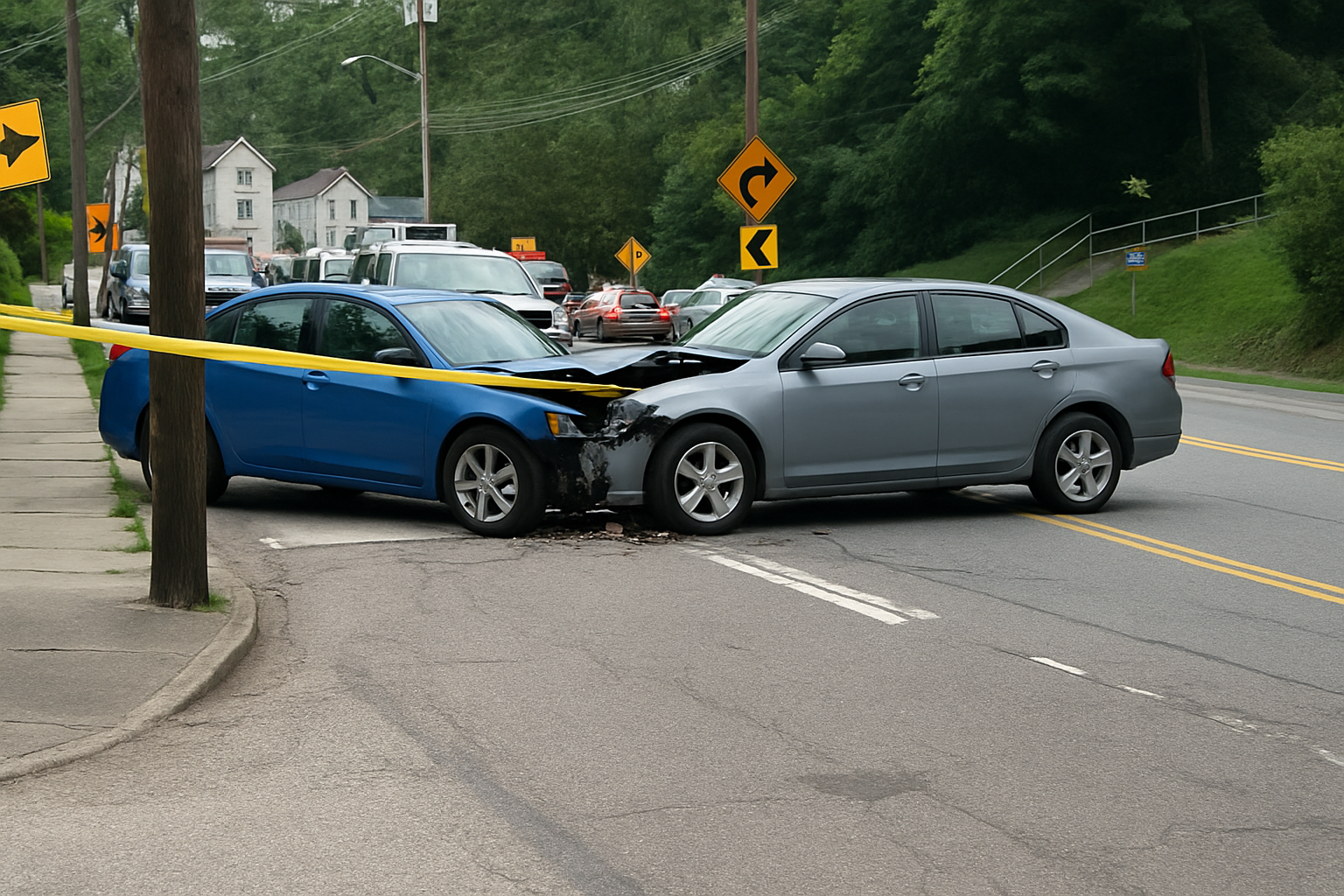
A hit and run conviction in New Jersey adds 8 points to your license and typically doubles your insurance premium — but carriers treat leaving the scene differently than other point violations, and finding coverage requires knowing which insurers will still write you.
How New Jersey Treats Hit and Run Convictions on Your Driving Record
A hit and run conviction in New Jersey carries 8 points on your license under N.J.S.A. 39:4-129, the same point penalty as reckless driving or racing. If you accumulate 12 or more points total, the New Jersey Motor Vehicle Commission (NJMVC) suspends your license. The 8-point hit adds to any existing violations on your record, so if you already have 4 or more points, you may face immediate suspension.
The conviction stays on your driving record for 5 years from the date of conviction, not the date of the incident. Points begin to reduce after 3 years if you remain violation-free, dropping by 3 points per year. New Jersey does not allow point reduction courses to remove hit and run points — only the Defensive Driving Course can reduce up to 2 points, and only if you have not taken the course in the past 5 years.
Unlike standard speeding tickets or minor violations, a hit and run conviction is a criminal offense in New Jersey if it involves property damage over $500 or any injury. Leaving the scene of an accident with injury is a third-degree crime carrying potential jail time, while property-damage-only hit and runs are typically disorderly persons offenses. Insurance carriers access both your motor vehicle record and criminal background during underwriting, so the conviction appears in both databases. New Jersey point system and insurance requirements non-standard auto insurance liability insurance
Insurance Rate Increases After a Hit and Run in New Jersey
A hit and run conviction typically triggers a 100–150% rate increase in New Jersey, significantly higher than the 20–40% increase for a standard speeding ticket or the 40–60% increase for an at-fault accident. The premium impact reflects both the point penalty and the underwriting classification: carriers view leaving the scene as an indicator of future claim avoidance or non-cooperation, not just driver error.
New Jersey's average annual premium for drivers with a clean record is approximately $1,400 according to NAIC data. After a hit and run conviction, expect to pay $2,800–3,500 per year, or $233–291 per month. If you already carry points or have a prior violation, total costs may exceed $4,000 annually. These rates assume minimum liability coverage of 25/50/25 — the state-mandated minimum. Comprehensive and collision coverage will add significantly more if you finance a vehicle.
The rate increase persists for the full 5 years the conviction remains on your record, though some carriers begin reducing surcharges after 3 years if you remain violation-free. New Jersey is one of 13 states that allow insurers to surcharge based on points, so every point on your record contributes to your premium calculation. Removing those 8 points through clean driving is the only path to premium recovery — no course or filing can accelerate it.
Which Carriers Will Insure You After a Hit and Run Conviction
Standard carriers like State Farm, Allstate, and Progressive typically decline new applications from drivers with hit and run convictions, even if your total points remain under 12. The conviction triggers automatic underwriting declines at most preferred and standard-market insurers, regardless of how long you have been insured or your prior claims history. If you are already insured when convicted, your current carrier may non-renew your policy at the next renewal period rather than immediately cancel — but expect a steep surcharge if they do renew.
Non-standard carriers that specialize in high-point drivers — including Bristol West, The General, Acceptance Insurance, and CURE Auto Insurance — write policies for hit and run convictions, but not all non-standard insurers accept them. The distinction matters: a carrier that writes drivers with 8 points for speeding may still decline an 8-point hit and run because the violation involves leaving the scene. When shopping, you need to disclose the specific statute (N.J.S.A. 39:4-129) and ask explicitly whether the carrier writes hit and run convictions, not just high-point drivers.
CURE Auto Insurance operates in New Jersey and uses a model that reduces emphasis on driving record in favor of other factors, making them a viable option for drivers with hit and run convictions who have otherwise stable profiles. Dairyland and National General also write non-standard auto in New Jersey and accept hit and run convictions, though rates vary widely. Expect to receive 3–5 quotes that differ by $100–200 per month depending on the carrier's appetite for this specific violation. Shopping multiple non-standard carriers is not optional — it is the only way to avoid overpaying by $1,000+ annually.
SR-22 Requirements and License Reinstatement in New Jersey
New Jersey does not use SR-22 certificates. Instead, the state requires insurers to electronically file proof of insurance directly with the NJMVC through the FS-1 system. If your license is suspended due to accumulating 12 or more points (including the 8 from the hit and run), you must maintain continuous coverage and pay a $100 restoration fee to reinstate your license. The NJMVC monitors your insurance status in real time — any lapse triggers an immediate suspension notice.
If the hit and run involved property damage or injury and you were uninsured at the time, New Jersey may require you to carry liability coverage for 3 years and impose additional surcharges through the New Jersey Automobile Insurance Plan (NJAIP), a state-administered assigned risk pool. NJAIP premiums are significantly higher than voluntary non-standard market rates, often 50–100% more expensive, so avoiding assignment to NJAIP by securing voluntary market coverage is critical.
Reinstatement after a point suspension requires paying all fines, completing any court-ordered requirements (such as community service or restitution if the hit and run involved a criminal charge), and providing proof of insurance. The NJMVC does not reduce the suspension period for completing a defensive driving course — the suspension runs its full term. Once reinstated, the 8 points remain on your record for 5 years, and any additional violation during that period may trigger another suspension at a lower point threshold.
Steps to Find Coverage and Reduce Long-Term Costs
Start by requesting quotes from at least 4–5 non-standard carriers that explicitly write hit and run convictions in New Jersey. Do not rely on online quote tools that feed into standard-market carriers — they will decline you automatically. Contact agents who specialize in high-risk placements or use a comparison tool that includes non-standard insurers. Provide your full motor vehicle record and the conviction details upfront to avoid wasting time on carriers who will decline you after underwriting.
Consider raising your liability limits beyond the state minimum if you can afford it. New Jersey's 25/50/25 minimums leave you exposed to significant out-of-pocket liability in a serious accident, and a second claim or violation while already carrying a hit and run conviction may make you uninsurable. Higher limits (100/300/100) add cost but reduce the risk of a coverage gap that forces you into NJAIP. If you finance a vehicle, your lender will require comprehensive and collision coverage — shop those coverages separately, as some non-standard carriers offer competitive liability rates but charge heavily for physical damage coverage.
Avoid any additional violations or claims for the next 3 years. A single speeding ticket or at-fault accident on top of the hit and run conviction may push you over the 12-point suspension threshold or cause your insurer to non-renew your policy, forcing you into NJAIP. Once 3 years pass, your points begin to reduce, and some carriers will start lowering surcharges. After 5 years, the conviction falls off your record entirely, and you can re-enter the standard insurance market. Until then, shopping annually and maintaining continuous coverage are the only tools you have to manage costs.
New Jersey-Specific Considerations for Hit and Run Convictions
New Jersey is a no-fault insurance state, meaning your own Personal Injury Protection (PIP) coverage pays for your medical expenses regardless of who caused the accident. If you left the scene of an accident you caused, the injured party's PIP will cover their immediate medical costs, but they can still pursue a civil lawsuit against you for damages exceeding the PIP threshold. A judgment against you will appear on your driving and credit records, further complicating insurance placement.
The state also operates a Special Automobile Insurance Policy (SAIP) for low-income drivers, offering $15,000 in PIP coverage and $10,000 in property damage liability for approximately $365 per year. SAIP does not cover collision or comprehensive, and it does not satisfy lender requirements if you finance a vehicle. If you qualify based on income (Medicaid or other state assistance), SAIP can serve as a bridge to maintain legal coverage while you work to resolve the conviction's impact on your record.
New Jersey law requires insurers to offer a Defensive Driving Course credit of up to 5% on your premium if you complete an approved course, but this credit does not reduce points or remove the hit and run conviction from your record. The credit applies to the base rate before surcharges, so the dollar savings are modest — typically $50–100 per year. Prioritize finding the lowest base rate among non-standard carriers before considering course discounts.