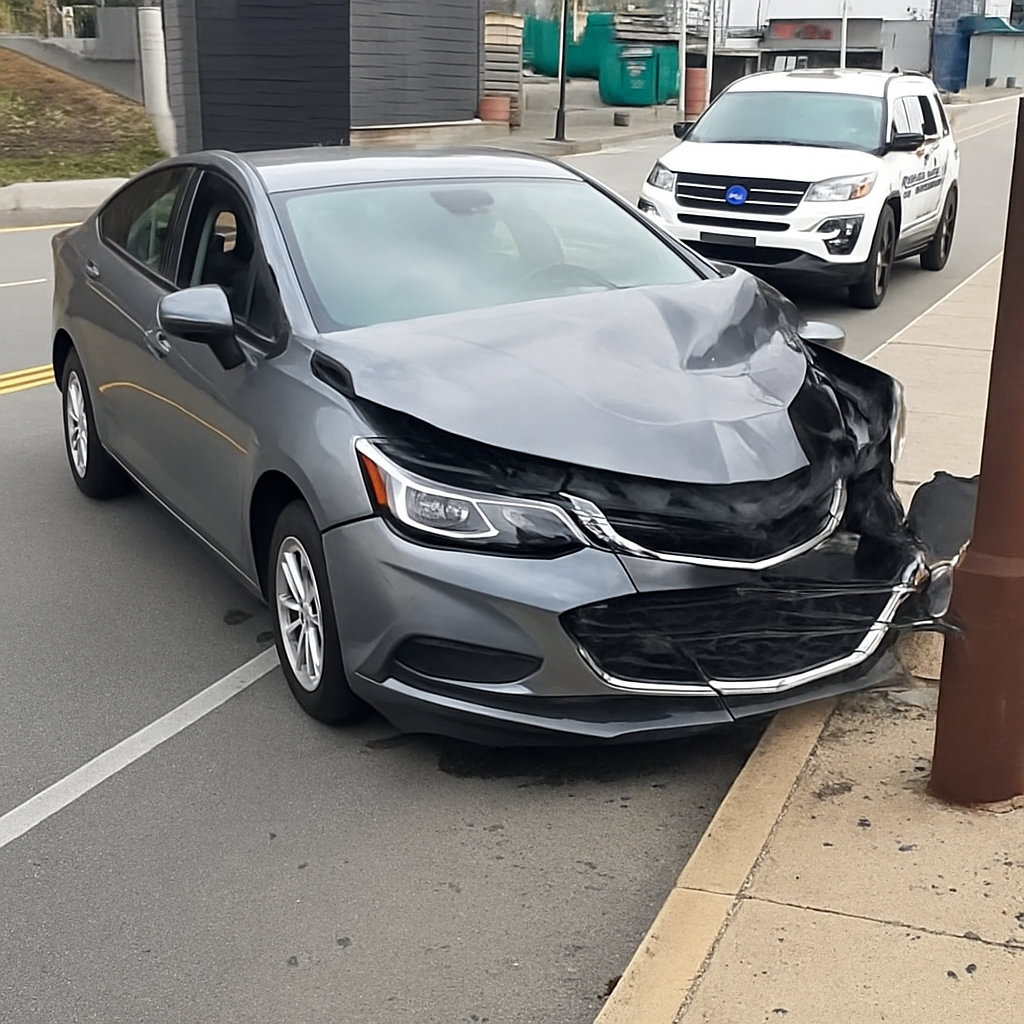
A hit and run conviction in Oklahoma triggers points, a possible license suspension, and immediate insurance consequences — most carriers will non-renew you, and those who remain will raise your rates 50–150%. Here's what to expect and where to find coverage.
How Oklahoma Classifies Hit and Run on Your Driving Record
Oklahoma assigns 3 points to your driving record for leaving the scene of an accident, whether it involved property damage or injury. The conviction remains on your Oklahoma driving record for 3 years from the date of conviction, though the criminal misdemeanor stays on your background indefinitely. If you accumulate 10 or more points within any 5-year period, the Oklahoma Department of Public Safety will suspend your license — so a hit and run conviction alone puts you 30% of the way to suspension before factoring in any other violations.
The legal consequences depend on the severity. Leaving the scene of an accident involving only property damage is a misdemeanor punishable by up to 1 year in jail and fines up to $500. If the accident involved injury or death, the charge escalates to a felony with prison time up to 5 years. Either classification triggers mandatory SR-22 filing if your license is suspended as a result of the conviction or if the court orders it as part of your sentencing.
Most carriers do not wait for the state to act. Once the conviction posts to your motor vehicle record — typically within 30 to 60 days of your court date — your current insurer receives notice during the next policy review cycle. That's when non-renewal notices begin arriving.
What Happens to Your Current Insurance Policy
Your insurer will likely non-renew your policy at the next renewal date rather than cancel it mid-term. Oklahoma law requires 30 days' written notice for non-renewal, so you'll have a window to find replacement coverage before your policy lapses. Some carriers may cancel mid-term if the hit and run involved fraud, false reporting, or if you failed to report the conviction as required under your policy terms.
If your insurer chooses to keep you — usually only if you've been with them for many years or hold multiple policies — expect a rate increase between 50% and 150% at your next renewal. The surcharge reflects two separate risk factors: the at-fault accident component (which typically raises rates 40–70%) and the conviction itself, which signals to underwriters a willingness to evade responsibility. That second factor is what moves you from standard to non-standard risk classification.
Your policy may also be reclassified from a preferred or standard tier to a non-standard or assigned risk product within the same company, which carries higher base rates even before the surcharge is applied. This internal reclassification often costs more than switching to a competitor who already specializes in non-standard risk.
Where to Find Coverage After a Hit and Run Conviction
Standard carriers like State Farm, Allstate, and Progressive typically will not write new policies for drivers with a hit and run conviction on record. Non-standard carriers — including The General, Acceptance Insurance, Dairyland, and National General — do underwrite hit and run convictions, but they evaluate each case individually. A property-damage-only hit and run with no injuries is more likely to be accepted than one involving bodily harm or a felony charge.
You may also need to access Oklahoma's assigned risk pool, though this is uncommon unless you also have a suspended license, multiple DUIs, or other serious violations stacked with the hit and run. The assigned risk program guarantees coverage but at significantly higher rates — often 2 to 3 times the cost of voluntary non-standard market policies. Most drivers with only a hit and run conviction can find coverage in the voluntary market if they shop aggressively.
Brokers who specialize in high-risk placements are often more effective than calling carriers directly. They have access to regional non-standard carriers that don't advertise publicly and can pre-screen your application before submission, which avoids multiple declinations that make you appear even riskier to the next underwriter. non-standard auto insurance
How Long the Conviction Affects Your Rates
The 3 points from your hit and run conviction remain on your Oklahoma driving record for 3 years from the conviction date. Most insurers apply surcharges based on violations visible in the past 3 years, so your rates will reflect the conviction for that full period. After 3 years, the points fall off your state record and the conviction no longer counts toward license suspension thresholds.
However, insurers often track claims and convictions in their own internal databases for 5 years or longer, and some will continue to apply reduced surcharges even after the state removes the points. The conviction itself remains on your criminal record permanently, which means carriers who pull background checks — common for non-standard underwriting — will see it indefinitely. That said, the rate impact diminishes significantly after year three as long as you maintain continuous coverage and avoid new violations.
Your best path to rate recovery is staying with the same carrier for the full 3-year period if possible. Switching carriers while the conviction is still on your record often resets the clock on surcharges, as new insurers treat the conviction as a fresh risk factor rather than acknowledging the time you've already served without incident.
SR-22 Filing Requirements After a Hit and Run in Oklahoma
Oklahoma does not automatically require SR-22 filing for a hit and run conviction unless your license is suspended or the court orders it as a condition of probation or license reinstatement. If the DPS suspends your license due to point accumulation or as part of the criminal penalty, you'll need to file an SR-22 to prove financial responsibility before reinstatement is granted.
The SR-22 filing itself costs $15 to $50 depending on your insurer, but the real cost is the insurance policy behind it — non-standard carriers who file SR-22s typically charge 30–50% more than non-SR-22 policies due to the elevated risk profile of drivers who need them. You must maintain the SR-22 for the period specified by the court or DPS, typically 3 years for a first offense. Any lapse in coverage during that period triggers an automatic license suspension and restarts the SR-22 clock.
If you're not required to file an SR-22, do not volunteer to do so. Some drivers mistakenly believe filing an SR-22 will help them find coverage faster, but it actually limits your carrier options and increases your premiums. Only file if the state or court explicitly requires it. Oklahoma-specific point system and SR-22 rules what SR-22 insurance actually costs
Actions That Reduce Your Insurance Cost Now
Shop at least 5 non-standard carriers within 30 days of your conviction posting. Rate variation for hit and run convictions is extreme — quotes can differ by $100 to $200 per month between carriers for identical coverage. Non-standard insurers use proprietary underwriting models, so one carrier may weight the criminal aspect heavily while another focuses primarily on the accident component.
Complete a state-approved defensive driving course if Oklahoma allows it to reduce points or mitigate surcharges. Oklahoma does not automatically remove points for course completion, but some insurers offer discounts — typically 5–10% — for drivers who complete approved courses voluntarily. Check with your insurer before enrolling to confirm the discount applies to non-standard policies.
Raise your deductibles to $1,000 or higher if you can afford the out-of-pocket risk. This reduces your premium by 15–25% and signals to underwriters that you're willing to retain more risk yourself, which can offset some of the conviction surcharge. Consider dropping collision and comprehensive coverage entirely if you drive an older vehicle worth less than $5,000 — the premium savings often exceed the potential payout.
What to Expect When You Shop for Coverage
Expect multiple declinations before you find a willing carrier. Non-standard insurers often require additional underwriting documentation for hit and run convictions, including a letter of explanation, court disposition paperwork, and proof of any restitution payments if the accident involved property damage claims. Have these documents ready before you start the application process to avoid delays.
Some carriers will quote you but exclude collision coverage or impose higher liability limits as a condition of writing the policy. This is common when the hit and run involved significant property damage or bodily injury — the insurer is willing to provide state-minimum liability but unwilling to cover your own vehicle until you've demonstrated safer driving behavior for 12 to 24 months.
Be honest on every application. Failing to disclose a hit and run conviction is material misrepresentation and gives the insurer grounds to cancel your policy retroactively or deny future claims. Every carrier will pull your motor vehicle record before binding coverage, so omissions are always discovered and always make your situation worse.