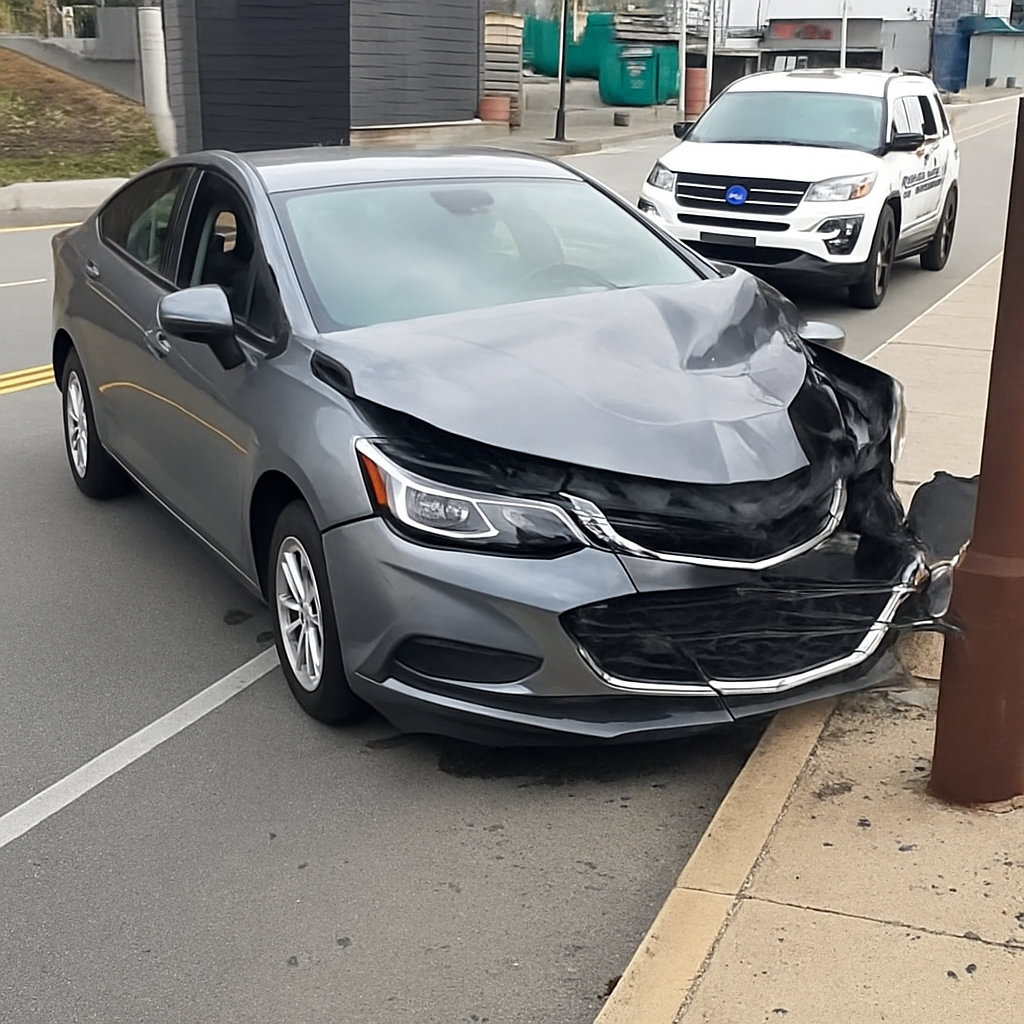
A hit and run conviction in Pennsylvania triggers mandatory SR-22 filing, license suspension, and rate increases averaging 80–120%. Here's what to expect and which carriers will still write your policy.
What a Hit and Run Conviction Does to Your Pennsylvania Driving Record
Pennsylvania categorizes leaving the scene of an accident as a first-degree misdemeanor under 75 Pa.C.S. § 3742 and 3743. A conviction results in a mandatory one-year license suspension, six points added to your driving record, and a requirement to file SR-22 proof of financial responsibility for three years following license restoration. The suspension begins on your conviction date, not your arrest date, which means the legal resolution timeline directly affects when you can start the reinstatement process.
The six-point hit adds to any existing violations on your record. Pennsylvania triggers a 15-day suspension notice at six points for first-time offenders, though the hit and run conviction itself already mandates the one-year suspension. If you have additional violations — speeding tickets, at-fault accidents, or other moving violations — your total point count may extend your suspension or complicate reinstatement. Points from the hit and run stay on your record for three years from the conviction date, even after the suspension ends.
Pennsylvania PennDOT requires completion of a driver improvement course, payment of a $500 restoration fee, and proof of SR-22 insurance coverage before you can apply for reinstatement. The SR-22 filing itself costs $50–$75 with most carriers, but it's the premium increase behind that filing that creates the financial impact. Expect your annual insurance cost to rise from a pre-conviction baseline of roughly $1,400/year for full coverage to $2,500–$3,100/year with the SR-22 requirement and conviction on record. Pennsylvania SR-22 requirements
SR-22 Filing Requirements and Duration in Pennsylvania
Pennsylvania does not use the term "SR-22" in its statutes — the state calls it a Certificate of Financial Responsibility — but insurers and drivers universally refer to it as SR-22. Your carrier files this certificate electronically with PennDOT to prove you carry at least the state-minimum liability coverage: $15,000 bodily injury per person, $30,000 per accident, and $5,000 property damage. These minimums are among the lowest in the country, but most hit and run offenders should carry higher limits because the conviction already signals elevated risk to other drivers and their insurers.
You must maintain continuous SR-22 coverage for three years from your license reinstatement date, not from your conviction date. If your license is suspended for one year and you wait an additional six months before completing reinstatement requirements, your three-year SR-22 clock starts when PennDOT restores your license. Any lapse in coverage during that three-year period — even one day — triggers an automatic suspension, a restart of the three-year SR-22requirement, and a $70 reinstatement fee to PennDOT. Your insurer is legally required to notify PennDOT within 15 days if your policy cancels or lapses.
Some drivers attempt to satisfy the SR-22 requirement by purchasing a non-owner SR-22 policy if they don't own a vehicle. This option costs $400–$800/year and covers you when driving borrowed or rental vehicles, but it does not satisfy the requirement if you own a registered vehicle in Pennsylvania or live in a household with registered vehicles. PennDOT cross-references vehicle registrations, and a mismatch between your SR-22 filing and your vehicle ownership status will delay or block reinstatement.
How Hit and Run Convictions Affect Insurance Rates in Pennsylvania
A hit and run conviction in Pennsylvania increases your insurance premium by 80–120% on average, according to rate filings analyzed across major carriers operating in the state. If you were paying $1,400/year for full coverage before the conviction, expect to pay $2,500–$3,080/year after reinstatement with SR-22 filing. The rate increase stems from two factors: the conviction itself, which signals to insurers that you present elevated risk, and the SR-22 filing requirement, which categorizes you as a high-risk driver requiring proof of continuous coverage.
Rate increases vary significantly by carrier. Standard carriers like State Farm, Nationwide, and Erie often non-renew policies after a hit and run conviction rather than offering renewal at a higher rate. Non-standard carriers that specialize in high-risk drivers — including The General, Direct Auto, and regional carriers like Dairyland and National General — typically offer the most competitive rates for SR-22 filers with convictions. Monthly premiums with these carriers range from $210/month to $380/month for state-minimum SR-22 coverage, and $250/month to $450/month for 50/100/50 liability limits with comprehensive and collision.
Your rate will remain elevated for the full three-year SR-22 period, but most carriers begin reducing premiums after the first year if you maintain continuous coverage with no new violations. After the SR-22 requirement ends and the conviction reaches its three-year point anniversary, you can shop standard carriers again. Drivers who complete the three-year period with no additional violations typically see their premiums drop 30–50% in year four, though the conviction remains visible on your motor vehicle record for up to ten years and may still affect underwriting decisions with some carriers.
Occupational Limited License Eligibility After Hit and Run Suspension
Pennsylvania allows drivers suspended for hit and run convictions to apply for an Occupational Limited License (OLL) after serving 60 days of the one-year suspension. An OLL permits you to drive for work, school, medical appointments, and court-ordered obligations, but it does not restore full driving privileges. You must prove to PennDOT that the suspension creates a significant hardship — unemployment or job loss, inability to attend medical treatment, or inability to fulfill parenting responsibilities — and you must carry SR-22 insurance for the duration of the OLL period.
The OLL application requires a $50 filing fee, completion of a PennDOT DL-15 form, supporting documentation proving hardship, and proof of SR-22 coverage filed with PennDOT. Most drivers submit employment verification letters, medical appointment records, or school enrollment documentation. PennDOT typically processes OLL applications within 10–15 business days, though approval is not automatic. If your hit and run involved injury or property damage exceeding $1,000, or if you have prior serious violations, PennDOT may deny the OLL application or impose additional restrictions.
An OLL does not reduce your insurance premium. You still pay the full elevated rate associated with the SR-22 filing and conviction, because insurers view an OLL as confirmation of the underlying suspension rather than evidence of reduced risk. However, maintaining continuous SR-22 coverage during the OLL period counts toward your three-year requirement, which means the SR-22 clock runs concurrently with your suspension period if you obtain an OLL and keep coverage active.
Which Carriers Write SR-22 Policies After Hit and Run Convictions in Pennsylvania
Not all carriers in Pennsylvania will write a policy for a driver with a hit and run conviction. Standard carriers like Erie, Allstate, and GEICO either decline to quote or offer rates so high they're functionally unaffordable. Your best options are non-standard carriers that specialize in SR-22 filings and high-risk drivers: The General, Progressive, Dairyland, National General, Direct Auto, and Acceptance Insurance all actively write policies in Pennsylvania for hit and run convictions.
The General and Direct Auto typically offer the lowest monthly premiums for state-minimum SR-22 coverage — $210–$280/month — but their policies often include higher down payments (30–50% of the six-month premium) and offer limited coverage options. Progressive and Dairyland quote higher monthly premiums ($260–$340/month for state minimums), but they allow lower down payments and offer more flexible payment plans, which matters if you're managing reinstatement costs and legal fees simultaneously. National General and Acceptance Insurance fall in the middle, with rates around $250–$320/month and moderate down payment requirements.
Shopping multiple non-standard carriers is critical because rate spreads for the same driver profile can exceed $100/month. A 35-year-old male in Philadelphia with a hit and run conviction might receive quotes ranging from $285/month to $425/month for identical 50/100/50 liability coverage with SR-22 filing. Using a high-risk insurance comparison tool or working with an independent agent who represents multiple non-standard carriers typically surfaces the lowest available rate, because not all carriers quote online and some require broker submission for SR-22 policies.
Steps to Reinstate Your License and Secure SR-22 Coverage
License reinstatement in Pennsylvania after a hit and run conviction follows a specific sequence. First, serve the mandatory one-year suspension period or obtain an Occupational Limited License after 60 days. Second, complete a PennDOT-approved driver improvement course, which costs $75–$125 depending on the provider. Third, purchase SR-22 insurance from a carrier licensed in Pennsylvania — your insurer files the SR-22 electronically with PennDOT within 24–48 hours. Fourth, pay the $500 license restoration fee to PennDOT and submit proof of course completion.
PennDOT does not reinstate your license automatically. You must visit a PennDOT Driver License Center with proof of SR-22 filing, your course completion certificate, and payment confirmation for the restoration fee. PennDOT verifies your SR-22 is active in their system before processing reinstatement, so confirm with your insurer that the filing has been transmitted and accepted before scheduling your reinstatement appointment. Processing time at the Driver License Center is typically same-day, and you'll receive a reinstatement letter confirming your three-year SR-22 requirement period.
After reinstatement, your priority is maintaining continuous coverage. Set up automatic payments with your insurer to prevent accidental lapses, and confirm your policy renews before each six-month or 12-month term ends. If you need to switch carriers during the three-year SR-22period — for a lower rate or better payment terms — coordinate the transition so your new carrier files the SR-22 before your old policy cancels. Even a one-day gap triggers a suspension and restarts your three-year clock.