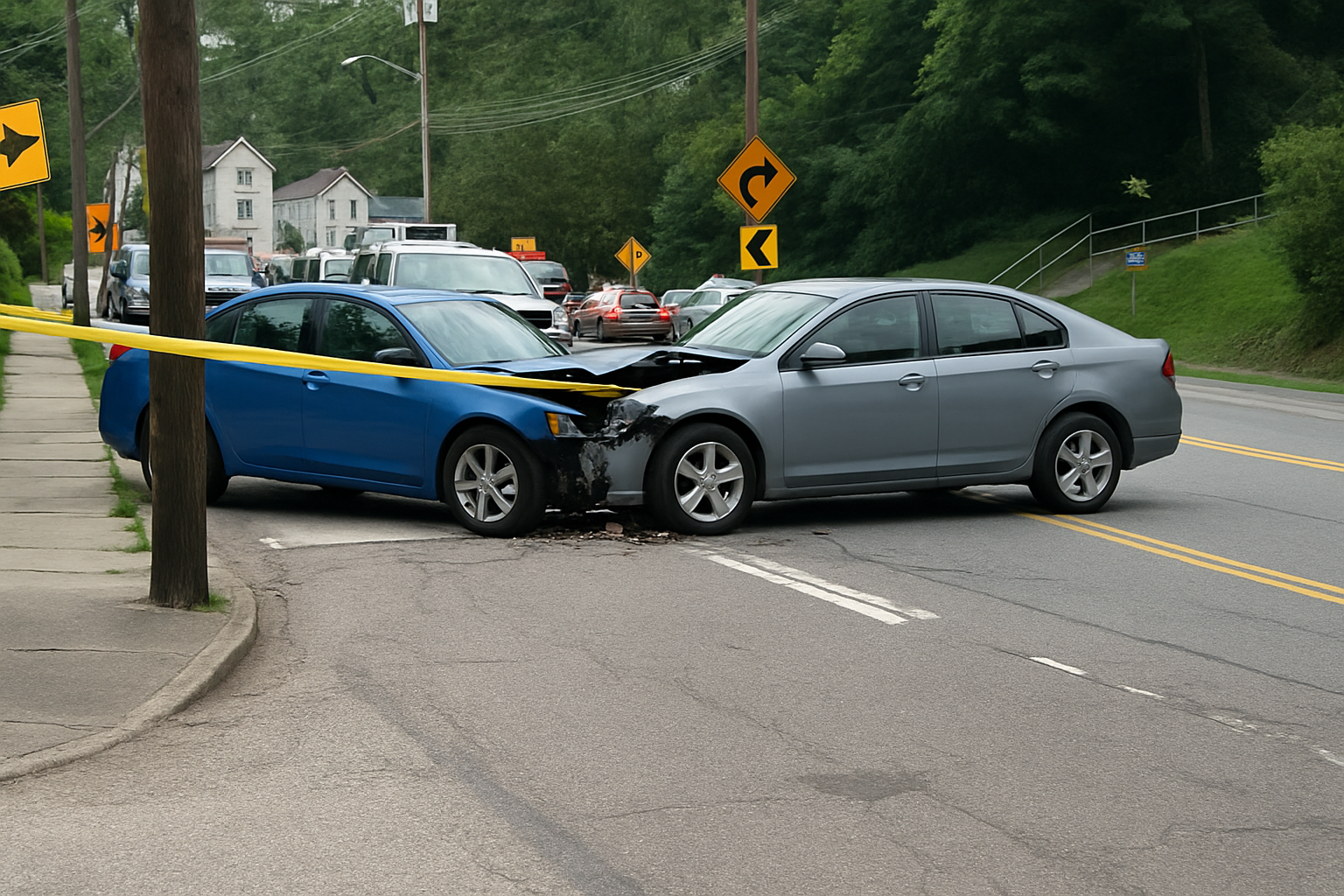
A hit and run conviction in Rhode Island puts you in the state's highest-risk tier — most standard carriers will drop you immediately, and those who don't will raise your rates 150–250%. Here's what to expect and which carriers still write coverage.
What a Hit and Run Conviction Does to Your Rhode Island Driving Record
Rhode Island treats leaving the scene of an accident — whether injury or property damage — as a major violation under R.I. Gen. Laws § 31-26-1. A conviction adds 5 points to your license and remains on your driving record for five years from the date of conviction. If the hit and run involved injury or death, the Rhode Island DMV will suspend your license for a minimum of one year, and you'll be required to file an SR-22 before reinstatement.
Even if your license isn't suspended, the conviction itself moves you into the state's high-risk classification. Rhode Island uses a point threshold of 12 points in any 18-month period to trigger automatic suspension, so a hit and run conviction alone brings you nearly halfway there. Most standard carriers — including the regional and national companies that dominate Rhode Island's market — will non-renew your policy at the next renewal cycle or cancel outright if the violation allows it under state law.
The financial hit is immediate. Drivers with a hit and run conviction see rate increases between 150% and 250% compared to their pre-conviction premium. A driver paying $1,400 per year for full coverage before the conviction can expect to pay $3,500 to $4,900 annually afterward, and that's if they can find a voluntary market carrier willing to write them at all. Many are pushed directly into Rhode Island's assigned-risk pool, where rates are significantly higher and coverage options are limited to state minimums.
SR-22 Filing Requirements and Duration in Rhode Island
If your hit and run conviction results in license suspension — or if the court orders SR-22 as a condition of sentencing — you'll need to maintain continuous SR-22 coverage for a minimum of three years from the date of reinstatement. Rhode Island requires the SR-22 filing fee, typically $25 to $50 depending on the insurer, to be paid at the time your carrier submits the form to the DMV.
The SR-22 is not insurance — it's a certificate filed by your insurer proving you carry at least the state minimum liability limits of 25/50/25 ($25,000 bodily injury per person, $50,000 per accident, $25,000 property damage). Any lapse in coverage, even for a single day, triggers an automatic notification to the DMV, which will suspend your license again and restart the three-year SR-22 clock from zero.
Most Rhode Island drivers are unaware that the three-year period begins only after your license is reinstated, not from the date of conviction. If your license was suspended for 12 months and you wait an additional six months before completing reinstatement requirements, you're adding 18 months to the total time you'll be carrying SR-22. The faster you reinstate, the sooner the clock starts, and the sooner you can return to the standard market. Rhode Island SR-22 requirements SR-22 insurance
Which Carriers Will Insure You After a Hit and Run in Rhode Island
Standard carriers — including Amica, USAA, Geico, and Progressive — typically refuse to write new policies for drivers with a hit and run conviction on record, and will non-renew existing policies at the first allowable opportunity. Rhode Island law allows insurers to non-renew for any reason with 45 days' notice, and a major violation like hit and run qualifies.
Your coverage options fall into two categories: non-standard carriers and the residual market. Non-standard carriers operating in Rhode Island include Dairyland, The General, Bristol West, and National General. These companies specialize in high-risk drivers and will write SR-22 policies, but their rates are significantly higher than standard market pricing. Expect to pay between $250 and $450 per month for minimum liability coverage with SR-22 filing, depending on your age, prior insurance history, and whether you have additional violations.
If no non-standard carrier will write you — or if the quotes you receive are unaffordable — you'll be placed in Rhode Island's assigned-risk pool, administered through the Rhode Island Automobile Insurance Plan (RIAIP). The RIAIP assigns you to a carrier that must provide coverage, but premiums are the highest in the state. Assigned-risk drivers typically pay 200–300% more than voluntary market rates for the same coverage. You remain eligible for assigned-risk coverage for a minimum of three years, but you should re-shop the voluntary market annually — many drivers qualify to exit the residual pool before the full three-year period ends if they maintain clean driving during that time. non-standard auto insurance
How Long the Rate Impact Lasts and When You Can Re-Enter the Standard Market
The hit and run conviction stays on your Rhode Island driving record for five years, but its impact on your insurance rates diminishes over time. Most carriers assign the heaviest surcharge in the first three years following the conviction — this is when your rates will be at their peak. After three years, you become eligible to re-enter the voluntary market even while the conviction is still visible, provided you've maintained continuous coverage and avoided new violations.
Your SR-22 requirement ends after three years of continuous filing, but that doesn't automatically lower your rates. Many drivers continue paying high-risk premiums for months or even years after their SR-22 period ends because they don't re-shop or don't realize they're now eligible for standard carriers again. The day your SR-22 period ends, you should request quotes from at least three standard carriers — this is the single highest-leverage moment to recover your rates.
After the five-year mark, the conviction falls off your driving record entirely, and you're treated as a clean-risk driver by most insurers. Drivers who re-enter the standard market at year three typically see rates drop by 40–60% compared to their peak high-risk premiums. Those who wait until year five see an additional 20–30% reduction as the conviction disappears completely. The difference between proactive re-shopping and passive policy renewal can be $1,500 to $2,500 per year.
Steps to Take Immediately After a Hit and Run Conviction
If your license was suspended, complete all reinstatement requirements immediately — pay fines, complete any court-ordered programs, and request SR-22 filing from a carrier before scheduling your DMV reinstatement appointment. Delaying reinstatement by even a few months extends the total time you'll be in the high-risk market.
Once reinstated, do not let your SR-22 coverage lapse for any reason. Set up automatic payments, confirm your policy renewal dates annually, and notify your carrier immediately if you plan to switch insurers — the new carrier must file the SR-22 before the old policy cancels, or the DMV will suspend your license again. Many drivers assume switching carriers is too risky during the SR-22 period, but it's both legal and often financially necessary — just ensure the handoff is seamless.
Re-shop your coverage every 12 months, even if you're still in the SR-22 period. Non-standard carriers re-evaluate risk annually, and your rates should decrease each year you remain violation-free. Request quotes from at least three carriers, and don't assume the company that wrote you in year one is still the most competitive in year two. After your SR-22 period ends, immediately contact standard carriers — Progressive, Geico, and National General all re-enter the picture at this stage for drivers with isolated major violations who've demonstrated three years of clean driving.