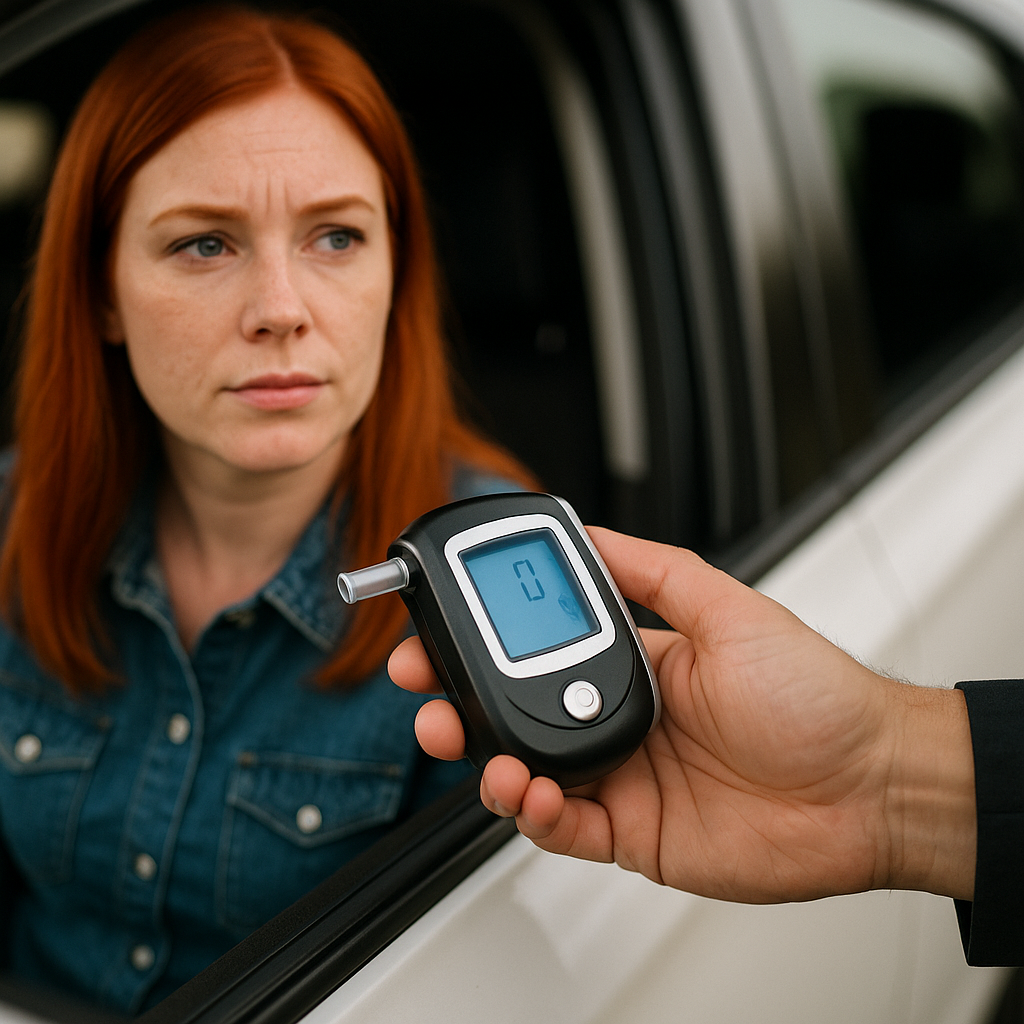
Colorado imposes a 90-day license suspension and requires SR-22 filing for driving uninsured. Here's how to reinstate your license and find coverage that writes drivers coming off a lapse.
What Happens When Colorado Catches You Driving Uninsured
Colorado law requires continuous liability coverage on all registered vehicles. If you're caught driving without insurance — whether by citation during a traffic stop, after an at-fault accident, or through an electronic verification sweep — the DMV suspends your license for 90 days minimum and adds 4 points to your driving record. The suspension is administrative, meaning it happens automatically once the DMV receives notice of the violation. You don't get a grace period to buy coverage retroactively.
The 4-point assessment stays on your Colorado driving record for 7 years. While it won't trigger a suspension on its own (Colorado's threshold is 12 points in 12 months for adult drivers), it compounds with any future violations and immediately flags you as high-risk to insurers. Carriers view uninsured driving as a strong predictor of future claims risk, which translates directly into higher premiums or outright declinations once you reapply for coverage.
Colorado also requires SR-22 filing for 3 years following reinstatement after an uninsured driving suspension. The SR-22 is a certificate your insurer files with the DMV to prove you're carrying at least the state minimum liability limits: $25,000 bodily injury per person, $50,000 per accident, and $15,000 property damage. If your SR-22 lapses at any point during the 3-year period — even for a single day — the DMV re-suspends your license and you restart the entire SR-22 clock from zero. Colorado SR-22 insurance requirements
Your Reinstatement Timeline and What It Costs
You cannot reinstate your Colorado license until the full 90-day suspension period ends. The DMV does not offer early reinstatement for first-time uninsured violations, and attending a driver improvement class does not reduce the suspension duration. You must wait out the full 90 days, during which you cannot legally drive in Colorado or any other state that honors Colorado's suspension reciprocity agreements.
Once the suspension period ends, reinstatement requires three steps in this order: pay the $95 reinstatement fee to the DMV, obtain SR-22 insurance from a Colorado-licensed carrier, and have your insurer file the SR-22 certificate electronically with the DMV. Most insurers file SR-22 certificates within 24 hours of policy activation, but the DMV may take an additional 3–5 business days to process the filing and clear your suspension hold. You cannot drive legally until the DMV confirms your license is reinstated, even if you've already paid the fee and purchased coverage.
Budget for the full cost sequence: $95 reinstatement fee, $15–$35 SR-22 filing fee (one-time, charged by your insurer), and your first month's premium. For a driver coming off an uninsured violation with an SR-22 requirement, expect monthly premiums between $180 and $320 depending on your age, location, and whether you have additional violations on record. These rates reflect non-standard carriers willing to write post-suspension drivers — standard carriers like State Farm or USAA typically decline drivers with active or recent uninsured violations.
Which Carriers Write Post-Suspension Drivers in Colorado
Most standard insurers will not write a new policy for a Colorado driver with a recent uninsured driving violation. State Farm, Allstate, GEICO, and Progressive either automatically decline drivers with suspensions in the past 12–24 months or assign them to high-risk subsidiary companies with significantly higher rates. You'll need to target non-standard or SR-22 specialty carriers that underwrite post-suspension risk as part of their core business model.
Carriers that consistently write Colorado drivers with uninsured violations include The General, Direct Auto, Bristol West, Acceptance Insurance, and National General. These companies specialize in state-minimum liability policies with SR-22 filing and typically offer monthly payment plans without requiring full prepayment. Rates vary widely by carrier — some quote 40–50% higher than others for identical coverage — which makes comparison shopping the single highest-leverage step you can take to reduce your premium.
Do not wait until day 90 of your suspension to start shopping. Many carriers allow you to obtain quotes and bind coverage 7–14 days before your reinstatement date, which means your SR-22 can be filed and processed the same day your suspension ends. This eliminates the gap between reinstatement eligibility and legal driving status. If you wait until after your suspension ends to start shopping, you may face an additional week without a car while you wait for quotes, policy activation, and SR-22 processing. non-standard auto insurance
How Long the Violation Affects Your Rates and What Changes After Year One
The 4-point uninsured driving violation stays on your Colorado driving record for 7 years, but its impact on your insurance rates decreases significantly after the first 3 years. Most non-standard carriers surcharge uninsured violations at the highest level for the first 12–36 months, then reduce the surcharge incrementally as the violation ages. After 3 years, some carriers reclassify you from non-standard to standard risk if you've maintained continuous coverage and avoided new violations.
Your SR-22 requirement lasts exactly 3 years from your reinstatement date. Once the 3-year period ends, you can request that your insurer cancel the SR-22 filing — this typically reduces your premium by $15–$35 per year (the cost of the filing itself) but does not remove the underlying violation from your record. The larger rate drop comes from switching carriers once the SR-22 requirement ends, because standard carriers become available to you again and their base rates for drivers with older violations are significantly lower than non-standard carrier rates.
Expect your rates to drop in three stages: first at year 3 when your SR-22 ends, second at year 5 when the violation ages beyond most carriers' lookback windows for major surcharges, and third at year 7 when the violation fully drops off your Colorado driving record. The total premium difference between year 1 and year 7 is typically 60–75% for drivers who maintain clean records during the recovery period. Any new violations during this window reset the surcharge clock and extend your time in the non-standard market.
State-Minimum Liability vs. Full Coverage After Reinstatement
Colorado only requires you to carry liability coverage to satisfy SR-22 filing requirements: $25,000/$50,000/$15,000. You are not legally required to carry collision or comprehensive coverage, even if you have an auto loan or lease. However, your lender may require full coverage as a condition of your financing agreement, which creates a conflict between the minimum you need to reinstate your license and the minimum your lender requires to avoid repossession.
If you own your vehicle outright, state-minimum liability is almost always the most cost-effective option during your SR-22 period. Non-standard carriers charge disproportionately high premiums for collision and comprehensive coverage on post-suspension drivers — often $150–$250 per month on top of your liability premium — because they view you as high-risk for both at-fault accidents and claims frequency. Dropping collision and comprehensive can cut your total premium by 50–60%, which frees up cash flow to maintain continuous coverage and avoid a lapse.
If your lender requires full coverage, ask your non-standard carrier for the highest deductible they offer — typically $1,000 or $2,500 — to reduce your premium. The deductible is what you pay out of pocket before insurance covers a claim, so a higher deductible means a lower monthly cost. For a driver with a recent suspension, the probability of needing to file a collision claim is lower than the probability of lapsing coverage due to unaffordable premiums, which makes the high-deductible strategy the safer financial choice during your first SR-22 year.
What Happens If You Lapse Again During Your SR-22 Period
If your insurance lapses for any reason during your 3-year SR-22 requirement — missed payment, policy cancellation, switching carriers without maintaining continuous coverage — your insurer notifies the Colorado DMV within 24 hours and the DMV immediately re-suspends your license. There is no grace period. The suspension remains in effect until you obtain new SR-22 coverage and your new insurer files a replacement certificate with the DMV.
Worse, the DMV restarts your 3-year SR-22 clock from the date of reinstatement after the lapse. If you lapse in month 20 of your original 3-year requirement, you do not resume from month 20 after reinstatement — you start a brand-new 3-year period from day one. This means a single lapse can extend your SR-22 requirement by multiple years and keep you locked into non-standard carrier rates for significantly longer than the original violation required.
To avoid lapses, set up automatic payments through your insurer or bank, and if you need to switch carriers for a better rate, overlap your policies by at least 48 hours to ensure there's no coverage gap. Most non-standard carriers allow you to cancel mid-term and receive a prorated refund, so the financial cost of a 2-day overlap is negligible compared to the cost of a new suspension and extended SR-22 period. If you're facing cancellation due to nonpayment, contact your carrier immediately — many offer payment extensions or reinstatement within 30 days without triggering an SR-22 lapse notification to the DMV.