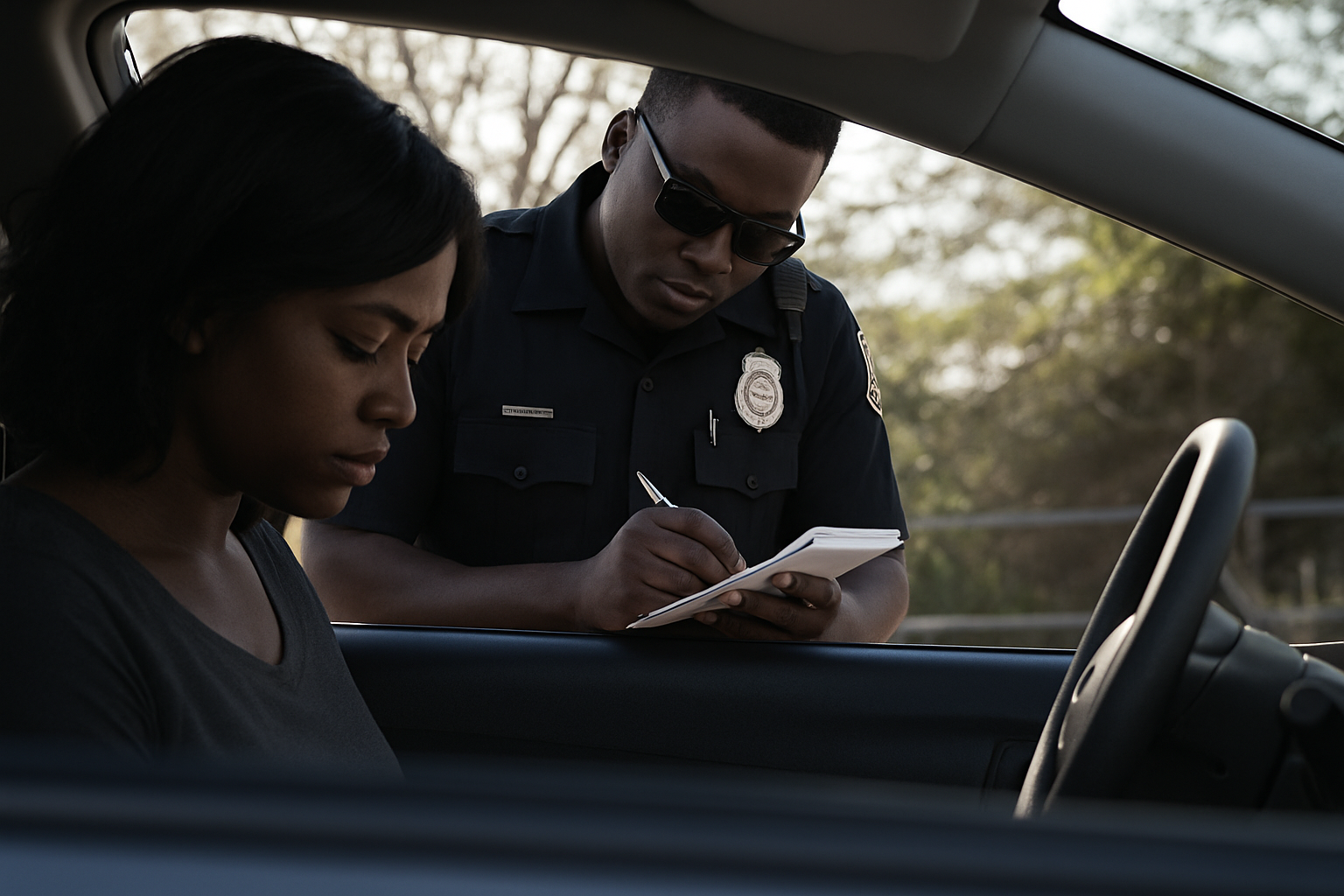
Utah charges a $400 reinstatement fee after an uninsured driving citation and requires 3 years of SR-22 filing. Here's how to get legal and find coverage again after a lapse.
What Utah Charges After Driving Without Insurance
Utah classifies driving without insurance as a Class B misdemeanor. The standard penalty is a $400 reinstatement fee paid to the Utah Driver License Division, plus court fines that typically range from $700 to $1,000 depending on the county. If you were involved in an accident while uninsured, the DMV may also suspend your license and registration until you provide proof of insurance and financial responsibility.
You'll also face a mandatory SR-22 filing requirement. Utah mandates 3 years of continuous SR-22 coverage following an uninsured driving citation. The SR-22 itself costs $15–$25 to file with the state through your insurer, but the larger cost is the premium increase: drivers with an SR-22 requirement in Utah typically see rates increase by 45–75% compared to standard liability coverage.
The 3-year SR-22 period does not begin until you file. If you delay reinstating your license or securing coverage, your SR-22 obligation extends into the future. Every month without filing adds a month to the back end of your required coverage period. Utah SR-22 requirements
How Utah's Point System Treats Uninsured Driving
Utah's point system does not directly assign points for driving without insurance — the violation is handled as a misdemeanor with a separate reinstatement process. However, if your license is suspended for driving uninsured and you continue to drive, you can accumulate points for driving on a suspended license, which carries 75 points and triggers an additional suspension.
Utah suspends your license after accumulating 200 points in a 3-year period. While the uninsured driving citation itself doesn't add points, the suspension and SR-22 requirement create a compliance chain that, if ignored, compounds into point-based suspensions. Most drivers face a 90-day suspension for the initial uninsured driving offense, but this can extend to 6 months or more if there are prior violations on your record.
Points from other violations remain active during your SR-22 period. If you receive a speeding ticket or at-fault accident citation while carrying SR-22 coverage, those points add to your existing total and increase your insurance rates further. Clearing your record requires maintaining a clean driving history for the full 3-year SR-22 period plus the time it takes for prior points to age off your record.
Which Carriers Write SR-22 Policies in Utah After a Lapse
Most standard carriers — State Farm, Allstate, GEICO — either decline SR-22 applications from drivers with recent uninsured citations or price them prohibitively high. Non-standard carriers specialize in high-risk policies and are typically the only option for affordable SR-22 coverage after a lapse. In Utah, the most accessible non-standard carriers include The General, Direct Auto, Bristol West, and Acceptance Insurance.
Monthly premiums for SR-22 liability coverage after an uninsured driving citation in Utah range from $85 to $160 per month for minimum state limits (25/65/15). This is roughly 50–80% higher than the state average for clean-record drivers, which sits around $55 per month for liability-only coverage. If you need full coverage due to a financed vehicle, expect premiums to rise to $180–$300 per month depending on your vehicle value and prior driving history.
Shopping multiple non-standard carriers is critical. Rate spreads between carriers can exceed 40% for the same coverage. One carrier may quote $120 per month while another offers $85 for identical limits. Non-standard insurers use proprietary underwriting models, so a lapse that disqualifies you at one company may be priced competitively at another. Use a comparison tool that includes non-standard carriers — many consumer-facing platforms exclude them entirely. SR-22 insurance non-standard auto insurance
How to Reinstate Your License and File SR-22 in Utah
Reinstatement after an uninsured driving suspension requires four steps. First, satisfy all court fines and fees associated with your citation. Second, pay the $400 reinstatement fee to the Utah Driver License Division either online, by mail, or in person at a DMV office. Third, purchase an SR-22 liability policy from an insurer licensed to file in Utah. Fourth, confirm the insurer has electronically filed the SR-22 certificate with the state — most carriers file within 24 hours, but you should verify directly with the DMV.
You cannot drive legally until all four steps are complete. Utah does not issue restricted or hardship licenses for uninsured driving violations, which means you must complete the full reinstatement process before operating a vehicle. If you're caught driving on a suspended license during this period, you face an additional 75-point violation and extended suspension.
Once your SR-22 is filed and your license is reinstated, you must maintain continuous coverage for 3 years without any lapses. If your policy cancels or lapses for non-payment, your insurer is required to notify the state, which triggers an immediate suspension. Reinstating after an SR-22 lapse adds another $400 fee and resets the 3-year SR-22 clock from the date you refile.
What a Lapse Does to Your Rates Long-Term in Utah
An uninsured driving citation stays on your Utah motor vehicle record for 3 years from the date of conviction. Insurers review your driving record at policy renewal and application, which means the violation affects your rates for the full 3-year period even after your SR-22 requirement ends. Rate increases typically peak in the first year following the citation, with premiums declining gradually as the violation ages.
Most non-standard carriers allow you to transition back to standard coverage after completing your 3-year SR-22 requirement and maintaining a clean record during that time. Standard carriers may still decline you if the lapse is within 3 years, but some will offer coverage with a surcharge that ranges from 20–40% above base rates. After the violation falls off your record entirely, you regain access to standard carrier pricing assuming no new violations have occurred.
Rate recovery accelerates if you complete a defensive driving course during your SR-22 period. Utah allows you to reduce up to 50 points from your record by completing an approved course, and some insurers offer a 5–10% discount for course completion even if the original violation didn't carry points. Bundling policies, maintaining continuous coverage, and avoiding any new citations during the SR-22 period are the most effective strategies for minimizing long-term rate impact.
When You Can Drop SR-22 and What Happens Next
You can request SR-22 removal after maintaining continuous coverage for 3 years from the date the state received your initial SR-22 filing. Contact your insurer to request cancellation of the SR-22 endorsement — they will file an SR-26 form with the state notifying Utah that the requirement has been satisfied. The state does not automatically remove the SR-22 requirement; you or your insurer must initiate the removal.
Once the SR-22 is dropped, your rates typically decrease by 20–50% depending on your carrier and driving record during the SR-22 period. If you maintained a clean record with no additional violations, you may qualify for standard carrier coverage at this point. If you accumulated points or had additional citations during the SR-22 period, you may remain in the non-standard market for an additional 1–2 years.
Do not cancel your policy immediately after the 3-year mark. Some drivers assume they can drop coverage once the SR-22 requirement ends, but doing so creates a new lapse that resets the compliance cycle. Maintain continuous coverage even after SR-22 removal to preserve your eligibility for standard carrier rates and avoid triggering a new uninsured driving penalty.
Your Best Path Forward After a Utah Uninsured Driving Citation
Start by securing an SR-22 policy from a non-standard carrier as soon as possible. Every day without filing extends your 3-year SR-22 obligation and delays your license reinstatement. Request quotes from at least three non-standard carriers to ensure you're not overpaying — rate spreads are widest in the high-risk market, and the first quote you receive is rarely the best.
Once coverage is active and your SR-22 is filed, pay the $400 reinstatement fee and satisfy any outstanding court fines. Confirm with the Utah DMV that your license is reinstated before driving. Set up automatic payments for your policy to avoid lapses, and consider enrolling in a defensive driving course to reduce points and qualify for insurer discounts.
Your rates will normalize over time if you avoid new violations. The 3-year SR-22 period is also your rate recovery window — maintain clean driving, shop your policy annually, and transition back to standard coverage once the requirement lifts. Utah's SR-22 rules are strict, but your eligibility for standard rates returns once you've demonstrated 3 years of continuous, compliant coverage.