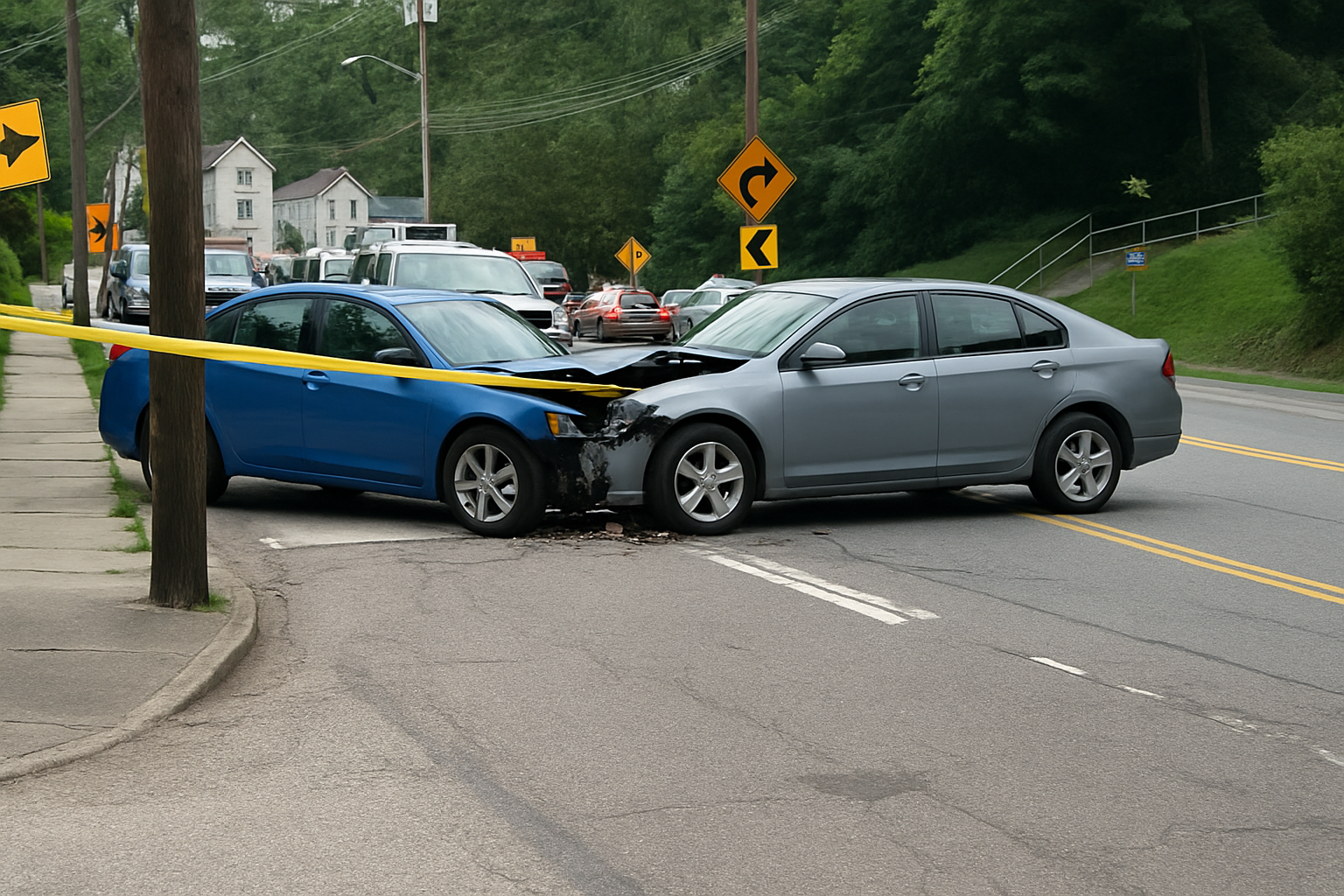
Connecticut treats reckless driving as a motor vehicle violation, not a criminal offense — but your insurance company will still raise your rate 30–70% and you'll carry 4 points for two years. Here's what that actually costs and which carriers will still cover you.
How Connecticut Defines and Penalizes Reckless Driving
Connecticut General Statutes § 14-222 defines reckless driving as operating a vehicle "at an unreasonably fast speed" or "in a careless, reckless manner, having regard to the width, traffic, use and usual rules of such highway, road or parking area." Unlike DUI or criminal offenses, reckless driving in Connecticut is classified as a motor vehicle violation — not a misdemeanor — and does not appear on your criminal record. You face a fine of $100 to $300 for a first offense, with escalating penalties for subsequent convictions within three years.
The DMV assigns 4 points to your driving record for a reckless driving conviction. These points remain on your record for two years from the date of conviction and count toward the state's point suspension threshold. Connecticut suspends your license if you accumulate 10 or more points in 24 months, which means a single reckless driving ticket puts you nearly halfway to suspension before any additional violations.
Many reckless driving citations in Connecticut are negotiated down during plea discussions. Prosecutors frequently offer reductions to unsafe operation (CGS § 14-222a), which carries 3 points, or following too closely (CGS § 14-240), which carries 4 points but is viewed less harshly by insurers. If you have already been convicted of reckless driving and accepted the charge without negotiation, your insurance consequences are already locked in — the focus now is managing your rate and finding coverage that doesn't require you to overpay for the next three to five years. Connecticut SR-22 requirements SR-22 insurance
What Reckless Driving Does to Your Insurance Rate in Connecticut
Connecticut allows insurers to use your driving record when setting premiums, and a reckless driving conviction typically triggers a rate increase of 30% to 70% depending on your carrier, coverage level, and prior claims history. If you were paying $1,800 per year before the violation, expect your annual premium to rise to somewhere between $2,340 and $3,060. The increase is not a flat surcharge — it's applied as a rating factor multiplier that affects your base premium across all coverage types.
The rate increase stays in effect for three to five years in most cases, even though the points themselves fall off your record after two years. Insurers in Connecticut typically look back three years when calculating your premium, and some carriers extend that window to five years for major violations. This means your reckless driving conviction will affect your rate through at least two renewal cycles and possibly three, depending on when your policy renews and how your carrier structures its lookback period.
Not all carriers apply the same surcharge. Standard carriers like Travelers, The Hartford, and Amica typically apply higher surcharges for reckless driving because they price for lower-risk drivers and penalize outliers more heavily. Non-standard carriers like Dairyland, National General, and Bristol West already price for drivers with violations and often apply lower percentage increases — but their base rates are higher to begin with. The net result is that shopping your rate after a reckless driving conviction is the single most effective way to reduce your cost, because the spread between the highest and lowest quotes for the same driver can exceed $1,000 per year.
SR-22 Requirements and What Connecticut Actually Requires
Connecticut does not require SR-22 filings for reckless driving convictions. The state uses SR-22 certificates — technically called Certificate of Insurance form SR-1D in Connecticut — only for specific violations: DUI, driving without insurance, repeated uninsured motorist violations, or license reinstatement after a suspension for accumulating too many points. A standalone reckless driving ticket, even with 4 points, does not trigger an SR-22 requirement unless it results in a license suspension.
If your reckless driving conviction was your second or third violation in a short window and you accumulated 10 or more points, Connecticut will suspend your license. Once suspended, you will need to file an SR-1D certificate when you apply for reinstatement, and you must maintain that filing for three years from the reinstatement date. The SR-1D itself costs around $25 to $50 to file, but the bigger cost is the insurance premium increase that comes with being classified as an SR-22 driver — typically another 20% to 40% on top of the surcharge you're already paying for the reckless driving conviction.
Most drivers convicted of reckless driving in Connecticut do not need SR-22. If you received a reckless driving ticket and your license was not suspended, you do not need to file an SR-1D and your carrier will not require it. Your rate will still increase because of the conviction and the points, but you remain in the standard or preferred market depending on your overall record. Clarifying this distinction matters because many drivers assume any serious violation requires SR-22, which leads them to overpay for coverage they don't legally need.
Which Carriers Write Policies After Reckless Driving in Connecticut
Standard carriers in Connecticut will generally continue to cover you after a reckless driving conviction, but they will apply a surcharge and may non-renew you if you pick up additional violations during your policy term. Travelers, The Hartford, Amica, and Liberty Mutual all write policies for drivers with single major violations, but their pricing becomes less competitive as your point total rises. If you have only the reckless driving conviction and no other violations in the past three years, you can still qualify for standard market coverage — you will just pay more for it.
Non-standard carriers often provide better value once you cross into multiple violations or higher point totals. Dairyland, National General, Bristol West, and Acceptance Insurance specialize in drivers with points and violations and price their policies with that risk already factored in. This means their base rates are higher than standard carriers, but their surcharges for individual violations are lower. For a driver with reckless driving and one or two other tickets, a non-standard carrier quote is often $500 to $1,200 per year cheaper than renewing with a standard carrier that has surcharged your policy heavily.
Connecticut also has an assigned risk plan — the Connecticut Automobile Insurance Plan (CAIP) — for drivers who cannot find coverage in the voluntary market. CAIP is a last-resort option and typically costs 50% to 100% more than non-standard voluntary market coverage. You should only consider CAIP if you have been declined by at least three standard or non-standard carriers. Most drivers with a single reckless driving conviction will not need assigned risk coverage unless they also have a recent DUI, multiple at-fault accidents, or a lengthy suspension history. non-standard auto insurance
How Long the Conviction Affects Your Record and Rate
Connecticut keeps reckless driving convictions on your public driving record for two years from the date of conviction, and the 4 points assigned to the violation remain active during that period. After two years, the points fall off and no longer count toward the 10-point suspension threshold. However, the conviction itself remains visible on your motor vehicle record for longer — typically three to five years depending on how far back an insurer or employer looks when pulling your record.
Insurers in Connecticut generally apply surcharges based on a three-year lookback period. This means your reckless driving conviction will affect your premium at renewal for three years, even though the points themselves expire after two. Some carriers extend the lookback to five years for major violations, which means you could see a surcharge for up to five years depending on your carrier's underwriting guidelines. Once the conviction falls outside your carrier's lookback window, your rate will normalize to reflect your current driving record without the reckless driving charge.
The fastest way to reduce your rate is to shop your policy annually and complete a state-approved defensive driving course. Connecticut allows drivers to reduce their insurance premium by completing a DMV-approved Operator Retraining Program, which can result in a discount of up to 10% for two years. The course does not remove points from your record, but it does qualify you for a premium reduction that offsets part of the reckless driving surcharge. Combined with annual comparison shopping across standard and non-standard carriers, most drivers can recover 40% to 60% of their rate increase within 12 to 18 months.
What to Do Right Now If You Have a Reckless Driving Conviction
If you have already been convicted, your first step is to confirm your current point total and license status. You can request a copy of your driving record from the Connecticut DMV online or by mail for $20. Your record will show all active points, the date each violation occurred, and whether any suspensions are pending. If you are close to the 10-point threshold, avoid any additional violations — even minor speeding tickets — until older points expire.
Next, request quotes from at least three to five carriers, including both standard and non-standard insurers. Do not assume your current carrier is offering you the best rate after a violation. Dairyland, National General, Bristol West, and Acceptance should all be on your quote list, along with any standard carrier you have not tried. Provide the same coverage limits and deductibles to each carrier so you can compare quotes directly. The difference between the highest and lowest quote will often exceed $1,000 per year for the same driver with the same violation.
Finally, enroll in a DMV-approved defensive driving course to qualify for the premium reduction. The course costs around $50 to $100 and can be completed online in most cases. Once you finish, submit your completion certificate to your insurer to apply the discount. This discount stacks with any multi-policy, good student, or vehicle safety discounts you already receive, and it remains in effect for two years from the date you complete the course. Combined with shopping your rate annually, the defensive driving discount is one of the highest-return actions you can take to manage your premium after a reckless driving conviction.