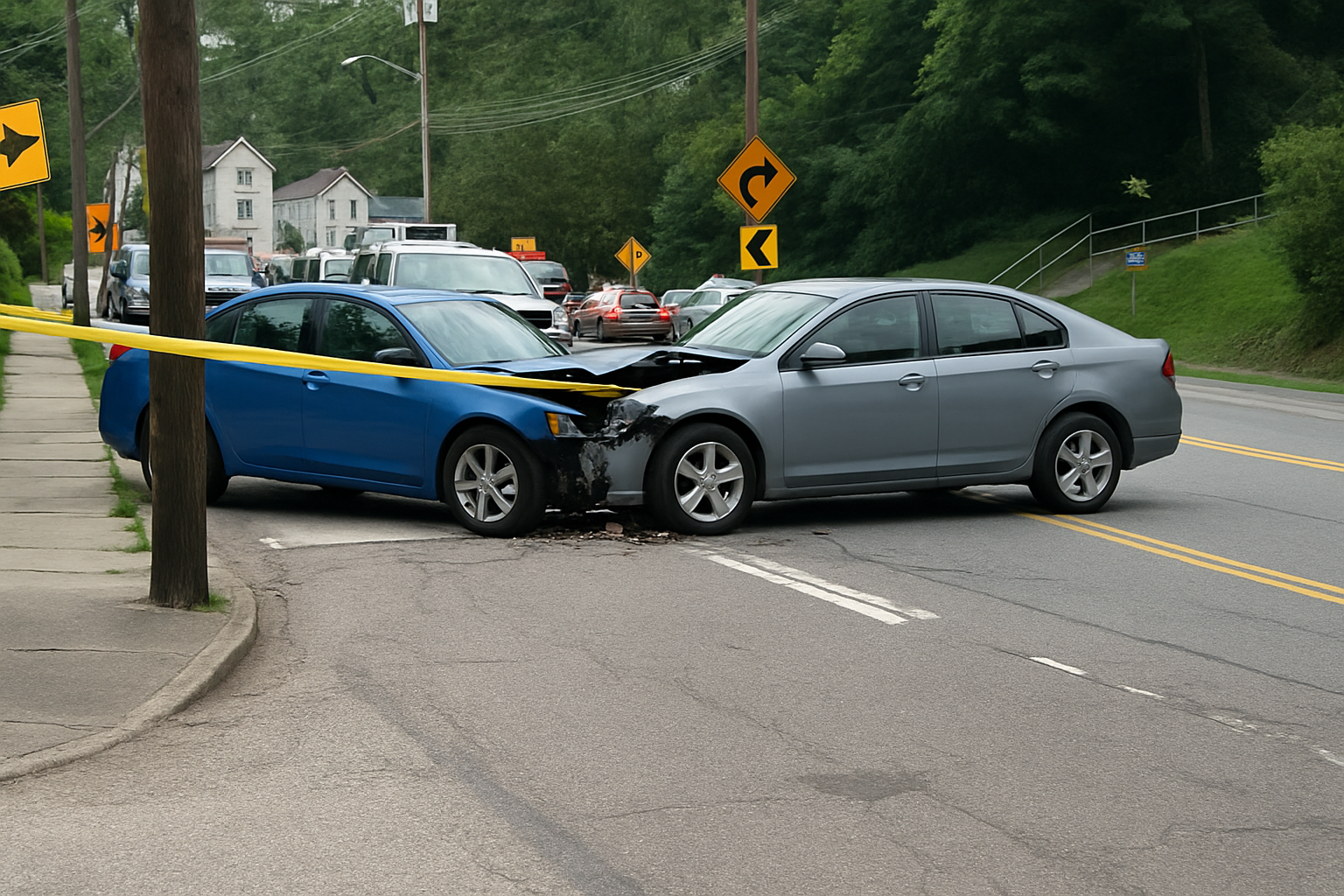
A reckless driving conviction in Nebraska adds 6 points to your license and typically triggers a 75–110% rate increase. Here's what that looks like in monthly cost, how long it lasts, and which carriers still write policies after a reckless citation.
What a Reckless Driving Conviction Does to Your Nebraska Driving Record
Nebraska assigns 6 points for a reckless driving conviction under Neb. Rev. Stat. § 60-6,213, which defines reckless driving as operating a vehicle in willful or wanton disregard for the safety of persons or property. That's half the 12-point threshold that triggers an automatic license suspension in Nebraska, so a single reckless conviction on an otherwise clean record will not suspend your license or require SR-22 filing. You can legally drive and insure yourself the day after your conviction.
Those 6 points remain on your Nebraska driving record for 5 years from the date of conviction, not from the date of the violation. Insurers in Nebraska can see and rate for the conviction during that entire period, though most carriers reduce the surcharge after 3 years if no additional violations occur. The Nebraska Department of Motor Vehicles does not offer point reduction through defensive driving courses for reckless driving — the 6 points stay until the 5-year mark.
If you accumulate 12 or more points within a 2-year period, Nebraska suspends your license and requires reinstatement through the DMV, which includes proof of future financial responsibility — typically an SR-22 filing. A second reckless conviction within 2 years of the first, or a reckless charge combined with speeding violations or at-fault accidents, can push you over that threshold. Until then, your main problem is cost, not compliance. Nebraska SR-22 requirements non-standard auto insurance
How Much Reckless Driving Increases Your Rate in Nebraska
A reckless driving conviction in Nebraska typically increases your car insurance premium by 75% to 110% compared to your pre-conviction rate, depending on your carrier, coverage limits, and county. If you were paying $140/month before the conviction, expect to see quotes between $245/month and $295/month immediately after. Carriers treat reckless driving as a major violation — comparable to DUI in risk classification — because it signals high-risk behavior that statistically correlates with future claims.
The increase is steepest in the first policy period following conviction. Most carriers apply a flat surcharge for the first 3 years, then begin reducing it if your record remains clean. After 3 years with no additional violations, you may see your rate drop by 30–50% from the peak surcharge, though you will not return to clean-record rates until the conviction ages off at the 5-year mark. Some carriers drop the surcharge entirely after 3 years; others maintain a smaller penalty until year 5.
Carrier variation is significant. State Farm, Farmers, and Progressive often maintain coverage for drivers with a single reckless conviction but apply steep surcharges. Non-standard carriers like The General, Acceptance, and Bristol West may quote lower rates for the same violation because their entire book is priced for drivers with points. Monthly cost differences between the highest and lowest quote can exceed $120/month for identical coverage, which is why shopping after a reckless conviction is the highest-leverage action you can take right now.
Do You Need SR-22 After Reckless Driving in Nebraska?
Nebraska does not require SR-22 filing for a single reckless driving conviction unless the conviction triggered a license suspension or the court ordered SR-22 as a condition of probation. SR-22 is typically required only after license suspension, DUI conviction, accumulating 12 or more points, driving uninsured, or specific court orders. If your license remains valid and you were not ordered to file SR-22 by the DMV or a judge, you do not need it.
If your reckless conviction was part of a larger incident — for example, reckless driving combined with leaving the scene of an accident, or reckless driving while uninsured — the DMV may suspend your license and require SR-22 to reinstate. In that case, you'll receive a suspension notice from the Nebraska DMV specifying the reinstatement requirements, including the duration of SR-22 filing, which is typically 3 years in Nebraska. You cannot assume you need SR-22; the DMV or court must explicitly require it.
SR-22 is a certificate your insurer files with the state proving you carry at least Nebraska's minimum liability coverage: 25/50/25 ($25,000 bodily injury per person, $50,000 per accident, $25,000 property damage). The certificate itself costs $15–$50 to file, but the associated rate increase from being classified as an SR-22 driver — on top of the reckless driving surcharge — can add another 20–40% to your premium. If you're not required to file SR-22, do not volunteer for it; it only increases your cost and extends the time you're flagged as high-risk.
Which Carriers Write Policies After Reckless Driving in Nebraska
Most major carriers in Nebraska will still write a policy after a single reckless driving conviction, but expect to be moved to a non-standard or high-risk tier within that carrier, which carries significantly higher premiums. State Farm, Farmers, Nationwide, and Progressive maintain separate underwriting tiers for drivers with major violations and typically do not non-renew after a first reckless conviction unless you also missed payments or filed multiple claims. If you're already insured with one of these carriers, your policy will renew, but your rate will increase sharply at the next renewal.
Non-standard carriers often quote lower premiums for drivers with reckless convictions than standard carriers in their high-risk tiers. The General, Acceptance Insurance, Bristol West, Dairyland, and Gainsco specialize in insuring drivers with points and major violations. These carriers price their entire book for elevated risk, so they don't apply the same steep surcharges that standard carriers use to discourage high-risk applicants. Monthly savings can range from $80 to $150 compared to staying with a standard carrier after a reckless conviction.
Some carriers will decline to write new policies for drivers with recent reckless convictions, even if they would renew an existing policyholder. Geico, USAA (for eligible military members), and smaller regional carriers often have underwriting rules that exclude applicants with major violations in the past 3 years. You will not know which carriers will write you until you request quotes, which is why comparing at least 4–6 carriers after a reckless conviction is essential. Loyalty to your prior carrier after a major violation typically costs you money — carriers do not reward tenure when your risk profile changes.
Rate Recovery Timeline and What Accelerates It
Your rate will remain elevated for at least 3 years after a reckless driving conviction in Nebraska, with the steepest surcharge in years 1 and 2. Most carriers begin reducing the surcharge at the 3-year mark if you maintain a clean record — no new violations, no at-fault accidents, no lapses in coverage. The conviction remains visible and rateable on your driving record for 5 years, but the financial penalty typically diminishes after year 3. By year 5, when the conviction ages off your record entirely, your rate should return to near-clean-record levels if no other violations have occurred.
Nothing you do will remove the reckless conviction from your Nebraska driving record before the 5-year mark. Nebraska does not allow point reduction courses for reckless driving, and the DMV does not expunge major moving violations. The conviction is permanent for insurance rating purposes until it ages off. What you can control is your behavior over the next 3–5 years: every additional violation or claim resets the surcharge clock and signals continued high risk to insurers. A single speeding ticket in year 2 can extend your elevated rate by another 3 years.
The fastest path to lower rates is switching carriers, not waiting. Because non-standard carriers price their entire book for drivers with violations, they often quote significantly lower premiums than standard carriers — even in year 1 after your conviction. Shopping again at each annual renewal is also critical, as some carriers reduce surcharges faster than others, and new carriers enter the non-standard market regularly. Drivers who shop at every renewal after a reckless conviction save an average of 25–35% compared to those who stay with the same carrier for the full 5-year period, according to rate studies from the National Association of Insurance Commissioners.
What to Do Right Now If You Have a Reckless Conviction
First, confirm your license status and whether SR-22 is required. Log into the Nebraska DMV driver portal or call (402) 471-3918 to verify your current point total, license status, and any reinstatement requirements. If your license is valid and you were not ordered to file SR-22, you can shop for standard coverage immediately. If SR-22 is required, you need to find a carrier that offers SR-22 filing in Nebraska before you can legally drive.
Second, request quotes from at least 4–6 carriers, including both standard and non-standard insurers. Do not assume your current carrier offers the best rate after a reckless conviction — they almost never do. Focus on carriers that specialize in non-standard risk: The General, Acceptance, Bristol West, Dairyland, and Progressive's non-standard division. Provide accurate information about your conviction date and any other violations on your record; misrepresenting your driving history will result in policy cancellation and even higher rates when you reapply.
Third, commit to a clean record for the next 3 years. Every additional violation or at-fault accident extends your elevated rate and increases the likelihood of non-renewal or suspension. Set phone reminders for insurance renewal dates so you never lapse — a coverage gap after a reckless conviction can add another 10–30% to your premium and limit which carriers will write you. Most drivers with a single reckless conviction see their rates drop significantly by year 4 if they avoid additional violations; those who accumulate more points remain in high-risk pricing for 5+ years.