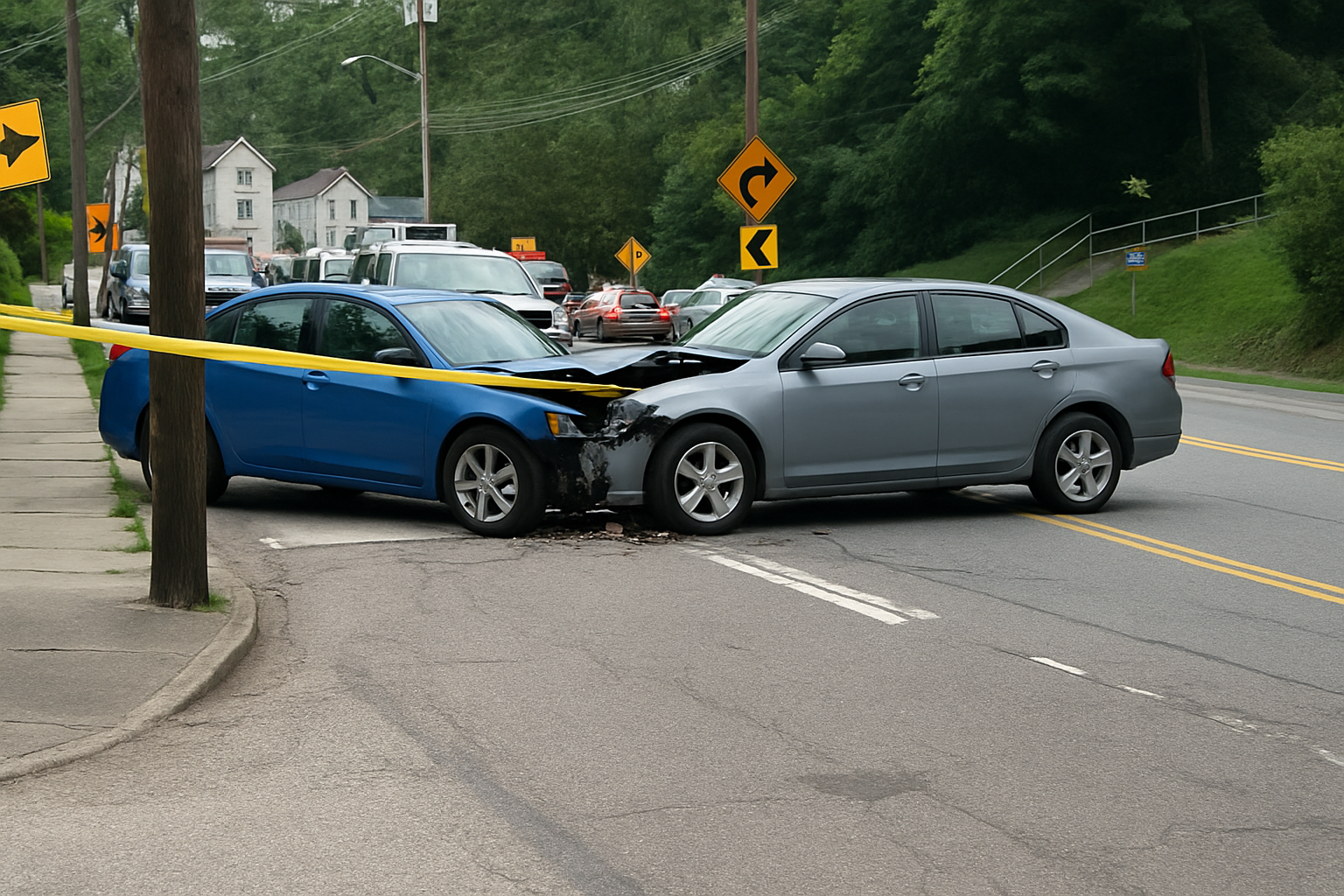
Points from speeding tickets, at-fault accidents, or moving violations can double your Durham auto insurance rates. Here's how to find affordable coverage while your record recovers and when those points finally drop off.
How North Carolina's Dual Point Systems Affect Your Durham Rates
North Carolina operates two separate point systems that both affect Durham drivers with violations. The DMV assigns license points for convictions — 12 points in three years triggers a suspension. But your insurer uses a completely separate insurance points system maintained by the North Carolina Rate Bureau, and insurance points determine your premium surcharge, not your license points. A single speeding ticket 10 mph over the limit adds 2 insurance points and typically increases your premium 30–45% for three years, even though it only adds 3 DMV license points.
Most Durham drivers with points don't realize these systems are distinct. You can have zero risk of license suspension but face a massive insurance surcharge because insurance points accumulate differently and trigger rate increases independent of DMV actions. A speeding conviction at 15 mph over adds 2 insurance points. An at-fault accident adds 1 insurance point. Reckless driving adds 4 insurance points and creates a 340% rate surcharge under North Carolina's Safe Driver Incentive Plan. The insurance points stay on your record for three years from the conviction date, not the violation date.
This dual system creates a critical opportunity: carriers in Durham price insurance points with enormous variation. State Farm might surcharge you 80% for 2 insurance points while Progressive surcharges 35% for the same violation. The North Carolina Rate Bureau sets baseline surcharges, but each carrier applies its own underwriting rules on top of that foundation. Shopping carriers after a violation isn't optional — it's the difference between $180/month and $95/month for the same driver with the same violation. North Carolina's SR-22 requirements
What Durham Drivers With Points Actually Pay: Rate Data by Violation Type
A clean-record driver in Durham pays approximately $110–$140/month for full coverage. After a single speeding ticket (10–14 mph over), that climbs to $145–$200/month depending on the carrier — a 30–45% increase. An at-fault accident with a property damage claim typically triggers a 40–60% increase, pushing monthly premiums to $155–$225. Reckless driving, which assigns 4 insurance points, can spike rates 80–120%, landing Durham drivers at $200–$310/month.
These are not worst-case scenarios — they reflect the standard Safe Driver Incentive Plan surcharges applied by North Carolina carriers. The variation within each range comes from two factors: your base rate before the violation (which varies widely by carrier) and how aggressively each carrier surcharges insurance points beyond the state minimum. GEICO and Progressive often land on the lower end for drivers with 1–2 insurance points. State Farm and Nationwide tend to price higher after violations. Regional carriers like North Carolina Farm Bureau sometimes offer competitive rates for drivers with a single violation but tighten underwriting after multiple points.
Durham drivers with 3 or more insurance points — typically from multiple violations within three years or a single serious conviction like reckless driving or DUI — move into non-standard territory. Monthly premiums in this tier range from $220–$450 depending on age, coverage limits, and vehicle. At this stage, standard carriers either non-renew your policy or price you into voluntary exit. Non-standard carriers like Acceptance, Direct Auto, and The General specialize in insuring drivers with points and often beat standard carrier renewal quotes by 25–40%. non-standard auto insurance
When Durham Violations Require SR-22 Filing (And When They Don't)
Most Durham drivers with points on their license do not need SR-22 insurance. North Carolina requires SR-22 filing only in specific circumstances: driving while impaired (DWI), driving while license revoked (DWLR), certain repeat serious violations, or reinstatement after a suspension triggered by failure to pay child support or failure to appear in court. A standard speeding ticket, even 15+ mph over, does not require SR-22. An at-fault accident does not require SR-22. Even reckless driving typically does not require SR-22 unless it triggers a license suspension.
SR-22 is a certificate of financial responsibility filed by your insurer with the North Carolina DMV proving you carry at least the state minimum liability coverage: 30/60/25 ($30,000 bodily injury per person, $60,000 per accident, $25,000 property damage). The SR-22 itself costs $15–$50 to file, but the real cost is the underlying violation that triggered the requirement. A DWI in Durham adds 12 DMV license points, 4 insurance points, and requires SR-22 filing for three years. The SR-22 filing period starts when your license is reinstated, not when the violation occurred — many Durham drivers mistakenly believe the three-year clock starts at conviction.
If you do need SR-22, you cannot let your policy lapse during the filing period. A lapse triggers an automatic notice to the DMV, your license is re-suspended, and you restart the entire SR-22 filing clock from zero. Continuous coverage is non-negotiable during SR-22 filing. Carriers that specialize in SR-22 filings in Durham include Progressive, GEICO (through select agents), Acceptance, Direct Auto, and National General. Monthly costs for SR-22 coverage after a DWI typically run $250–$400 in Durham depending on age and vehicle, but the premium reflects the DWI violation, not the SR-22 filing itself.
How Long Points Stay on Your Record and When Rates Recover
Insurance points remain on your North Carolina driving record for three years from the conviction date. Once the three-year mark passes, the insurance points drop off and your carrier must remove the associated surcharge at your next renewal. DMV license points expire on a different schedule — most violations drop off after three years, but serious violations like DWI remain on your record for seven years for insurance rating purposes even though the license points may clear sooner.
Your premium does not drop immediately when points fall off. Most carriers apply the change at your next policy renewal after the three-year anniversary. If your conviction date was March 10, 2022, your insurance points expire March 10, 2025. If your policy renews April 1, 2025, you'll see the rate reduction then. If your policy renews February 1, 2025, you'll still carry the surcharge for one more term. This renewal timing can cost Durham drivers an extra $200–$400 if they don't proactively shop carriers as their points approach expiration.
Shopping carriers 30–60 days before your points expire is the single most effective rate recovery tactic available. Some carriers will quote you at clean-record rates once your points are within 30 days of expiring. Others require the points to be fully expired. Either way, you're comparing a renewal quote that still includes the surcharge against new quotes that don't — the savings typically run 25–50%. Durham drivers who stay with the same carrier after points expire often see only a partial rate reduction because their base rate has drifted higher over time. New carrier quotes reset that base.
Which Carriers in Durham Write Drivers With Points and What They Actually Cost
Standard carriers willing to write Durham drivers with 1–2 insurance points include Progressive, GEICO, Nationwide, and State Farm, though pricing varies dramatically. Progressive and GEICO typically offer the most competitive rates for single-violation drivers, with monthly premiums in the $140–$190 range for full coverage after a speeding ticket. State Farm and Nationwide often price 15–25% higher for the same driver. All four will generally write drivers with up to 3 insurance points, but above that threshold most either decline new business or non-renew existing policies.
Non-standard carriers become essential for Durham drivers with 3+ insurance points or multiple violations within three years. Acceptance Insurance operates physical locations in Durham and specializes in non-standard risk — monthly premiums typically range $200–$350 for drivers with multiple points, depending on violation severity. Direct Auto, The General, and National General all write high-point drivers in North Carolina and often beat standard carrier renewal quotes by $50–$120/month. Bristol West and Gainsco also serve this market but tend to price higher in Durham compared to other North Carolina cities.
Regional carriers like North Carolina Farm Bureau and State Farm (through select agents) sometimes offer surprisingly competitive rates for drivers with a single violation and no prior claims, particularly if you bundle home and auto. Erie Insurance operates in Durham and occasionally underwrites drivers with points if they have a long prior relationship or other favorable risk factors. The key insight: no single carrier dominates the Durham high-point market. The cheapest carrier for a driver with one speeding ticket is often the most expensive for a driver with reckless driving and an at-fault accident. You must compare at least four quotes to find the genuine low price.
Defensive Driving and Other Tactics to Reduce Points or Lower Rates
North Carolina allows drivers to reduce insurance points by completing a state-approved defensive driving course, but the rules are strict. You can take the course once every three years to earn a 10% premium reduction for the next three years. The course does not remove existing insurance points — it creates a separate 10% discount applied on top of your current rate, including any surcharges. For a Durham driver paying $180/month after a violation, the defensive driving discount saves approximately $18/month or $216/year. The course costs $25–$65 depending on the provider and takes 8 hours to complete online or in person.
The defensive driving discount is most valuable immediately after a violation when your rates are highest. If you take the course within 60 days of your conviction, you maximize the savings over the three-year surcharge period. Taking the course in year two or three of your surcharge period still provides value, but the total savings shrink because you have fewer months remaining before the points expire. Some carriers automatically apply the discount once you submit your completion certificate; others require you to request it explicitly at renewal.
Other rate reduction tactics include raising your deductibles (increasing from $500 to $1,000 saves 10–15% on collision and comprehensive premiums), dropping collision and comprehensive coverage on older vehicles worth under $4,000, and bundling auto with renters or homeowners insurance for an additional 10–20% discount. Durham drivers with points should also verify their mileage reporting — if you're driving under 7,500 miles annually, many carriers offer a low-mileage discount worth 5–10%. None of these tactics remove insurance points, but they reduce the base premium that the surcharge is applied to, which compounds the savings.
What to Do Right Now: Rate Shopping and Next Steps for Durham Drivers With Points
If you have points on your license and you're facing a renewal increase or already paying elevated rates, your first action is to compare quotes from at least four carriers within the next 14 days. Your current renewal quote is not a negotiation starting point — it's one data point in a market where carriers price your violation with 40–60% variance. Request quotes from Progressive, GEICO, Acceptance, and one regional carrier like North Carolina Farm Bureau. Provide identical coverage limits and deductibles to each so you're comparing equivalent policies.
When requesting quotes, be precise about your conviction date and violation type. Carriers pull your motor vehicle report (MVR) during underwriting, so omitting a violation or misstating the date only delays the accurate quote and wastes time. Ask each carrier how they calculate the insurance points for your specific violation and when the surcharge expires. Some carriers use the conviction date, others use the violation date — this can shift your rate recovery timeline by 3–6 months.
Check North Carolina's requirements for your specific situation to confirm whether you need SR-22 filing or if you're simply dealing with insurance points and rate surcharges. Most Durham drivers with speeding tickets, at-fault accidents, or single moving violations do not need SR-22. If you do need SR-22, factor the filing period into your carrier comparison — you need a carrier willing to maintain your policy without lapses for the entire three-year filing period. If you don't need SR-22, your options are broader and your rates will be lower. Either way, comparing quotes now — not at renewal — gives you the leverage to switch before your current carrier locks in another six or twelve months of inflated premiums.