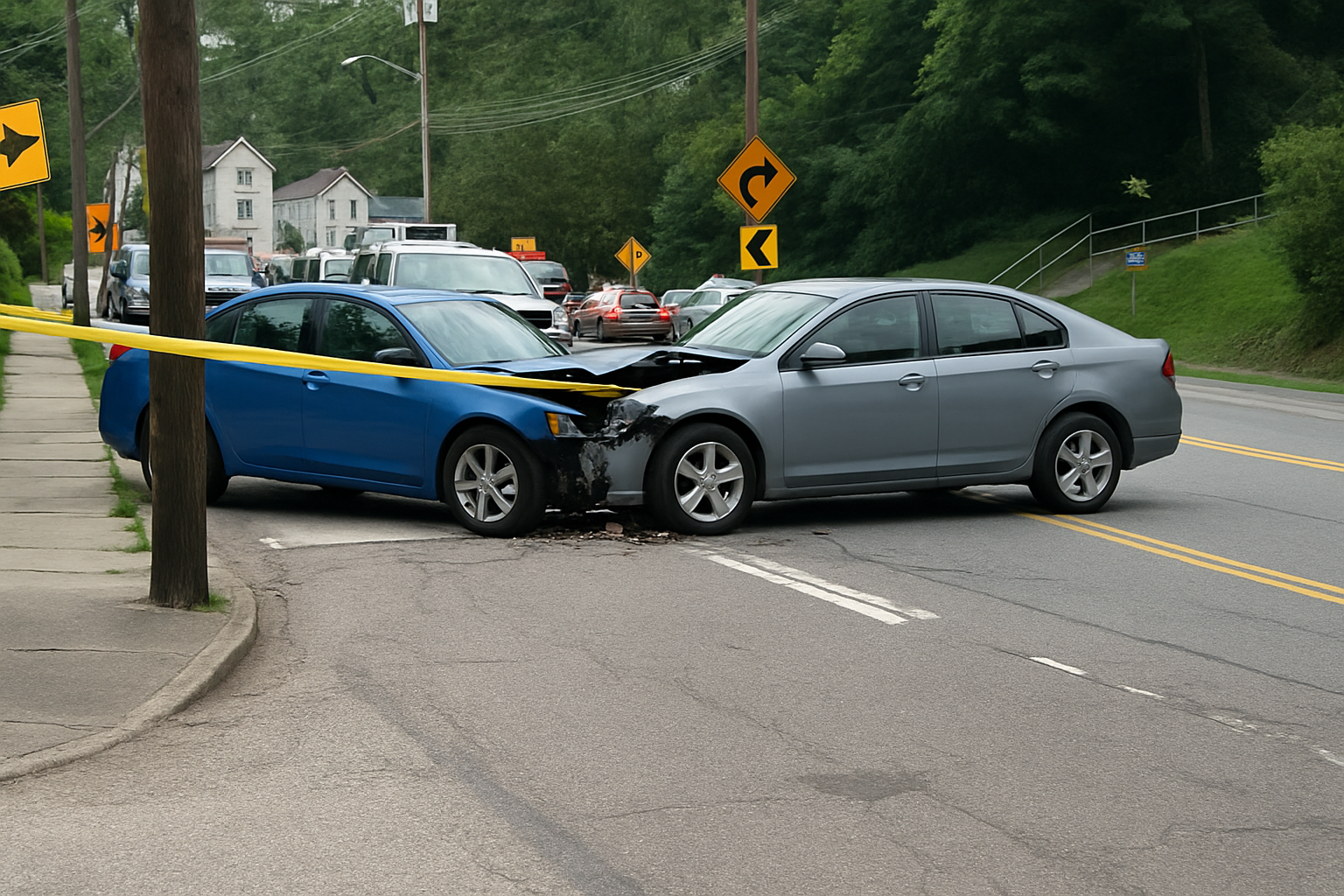
Points from speeding tickets, at-fault accidents, or moving violations can double your insurance rate in Fresno. The good news: California's point system doesn't require SR-22 for most violations, and carrier shopping can cut your premium by 30–50% even with points on your record.
How Points Affect Your Insurance Rate in Fresno
California assigns points through the DMV, but insurance companies set their own rate increase formulas based on those points. A single speeding ticket (1 point) typically increases your rate by 20–40% in Fresno, while an at-fault accident (1 point) can trigger a 30–50% hike. A more serious violation like reckless driving (2 points) often doubles your premium or pushes you into the non-standard market entirely.
The key detail most Fresno drivers miss: insurers don't treat all 1-point violations the same. Some carriers penalize speeding tickets more heavily than at-fault accidents; others do the opposite. This means the carrier that offered you the best rate with a clean record is unlikely to remain the cheapest option once points appear. Shopping multiple carriers is not optional — it's the single highest-leverage action you can take to lower your cost.
California's point system keeps violations on your DMV record for 3 years from the violation date, but insurers typically only surcharge for 3 years as well. Your rate will begin to recover as the violation ages, and most carriers drop the surcharge entirely once the 3-year mark passes. Until then, you're shopping in a narrower market where carrier choice matters more than coverage tweaks. non-standard auto insurance liability insurance
Do You Need SR-22 in California With Points on Your License?
Most point violations in California — speeding tickets, at-fault accidents, failure to yield, following too closely — do not trigger an SR-22 requirement. SR-22 is a certificate of financial responsibility filed by your insurer to prove you carry the state-mandated minimum coverage, and it's only required in specific situations: DUI conviction, driving without insurance, multiple at-fault accidents in a short period, reckless driving with injury, or a license suspension for accumulated negligent operator points.
California designates you a negligent operator if you accumulate 4 points in 12 months, 6 points in 24 months, or 8 points in 36 months. At that threshold, the DMV may suspend your license, and reinstatement typically requires SR-22 filing. But if you have 1–3 points from routine violations, you are not in SR-22 territory — you're simply paying higher premiums in the standard or preferred-risk market.
This distinction matters because SR-22 filing adds $15–$25 per year to your policy cost and limits your carrier options significantly. If you don't need SR-22, don't shop as though you do. You have access to far more carriers and better rates than drivers who require the certificate. Confirm your exact point total and license status with the California DMV before assuming you need non-standard coverage. California SR-22 requirements
Cheapest Carriers in Fresno for Drivers With Points
The cheapest carrier for a driver with points is rarely Geico, State Farm, or Progressive — the brands that dominate clean-record advertising. Instead, Fresno drivers with 1–2 points often find the lowest rates with Mercury, CSAA, or Wawanesa, regional carriers that compete aggressively in California's non-standard and tier-2 markets. Drivers with 3+ points or multiple violations may need to quote with Bristol West, Acceptance, or Dairyland, which specialize in higher-risk profiles.
Rate differences are extreme. A 35-year-old Fresno driver with a single speeding ticket might pay $180/month with one carrier and $110/month with another for identical liability limits. The gap widens with more points: a driver with 2 points could see quotes ranging from $140/month to $270/month depending on carrier. This variance exists because each insurer uses proprietary formulas to weigh violation type, age of the violation, and your overall profile.
You cannot predict which carrier will be cheapest without quoting. Mercury may offer the best rate for a speeding ticket but penalize an at-fault accident heavily. CSAA may be forgiving on accidents but strict on reckless driving citations. The only way to identify your lowest-cost option is to compare at least 3–5 carriers that actively write policies for drivers with points in Fresno. Do not assume your current carrier is offering you a competitive rate — loyalty rarely translates to savings in the non-standard market.
What You Can Do Right Now to Lower Your Rate
The fastest way to reduce your premium is to shop carriers — ideally within 30 days of your rate increase. If your insurer notifies you of a surcharge, that's your trigger to start quoting. Rates vary so widely among carriers that switching can save you $50–$150/month even with points on your record. This is not a one-time exercise: re-shop every 6–12 months as your violation ages and your risk profile improves.
California allows you to mask one eligible point every 18 months by completing a DMV-approved traffic school course, but only if the violation was a moving violation, you weren't driving a commercial vehicle, and you haven't attended traffic school for another ticket in the past 18 months. Completing traffic school prevents the point from appearing on your public driving record, which means insurers won't see it when they pull your record at renewal. If you're eligible, enroll immediately — the cost is $20–$50 and the savings can be $500–$1,200 per year.
Beyond that, adjust your coverage only where it makes financial sense. Dropping collision or comprehensive on an older car can cut your premium by 20–30%, but don't reduce liability limits below 100/300/100 to save $15/month — the risk isn't worth it. Ask every carrier you quote about good driver discounts that phase back in as your violation ages, or defensive driving course discounts that apply even with points on your record. Some carriers offer these; most don't advertise them.
How Long Until Your Rate Recovers in California
California insurers typically surcharge a point violation for 3 years from the violation date, not the conviction date or payment date. After 3 years, the violation falls off your insurance record even though it remains on your DMV record for the same duration. Your rate will drop at your next renewal once the 3-year mark passes, assuming you haven't accumulated additional violations in the interim.
Most drivers see partial rate recovery before the 3-year mark. After 1 year, some carriers reduce the surcharge by 25–30%; after 2 years, the penalty often drops by 50% or more. This is why re-shopping annually matters — a carrier that penalized you heavily at renewal 1 may offer a competitive rate at renewal 2 as your violation ages. The non-standard market is not static.
If you accumulate a second violation before the first one expires, expect compounding surcharges. A driver with 2 active points will not pay double the surcharge of a driver with 1 point — they'll pay significantly more, often 70–100% above base rate. The best financial move you can make after a violation is to drive cleanly for 3 years. No trick, discount, or coverage adjustment saves you more money than avoiding a second ticket.
When You Cross Into Non-Standard or High-Risk Territory
If you accumulate 3+ points, cause multiple at-fault accidents in 2–3 years, or receive a serious moving violation like reckless driving or hit-and-run, standard carriers may non-renew your policy or decline to quote you entirely. At that point, you'll need coverage from a non-standard or high-risk insurer — carriers that specialize in profiles most standard insurers won't write.
Non-standard coverage costs 50–150% more than standard coverage for the same liability limits, but it's not a permanent classification. Once your points fall off and you maintain a clean record for 6–12 months, you can re-enter the standard market. Think of non-standard insurance as a bridge, not a destination. Your goal is to fulfill your coverage requirement, avoid any new violations, and re-shop aggressively as soon as your record improves.
Fresno drivers in this category should focus on carriers like Acceptance, Bristol West, Dairyland, or The General — brands that write policies other insurers won't touch. Rates will be high, but coverage is available. If you're dropped by a standard carrier, do not let your policy lapse. A coverage gap adds another violation to your record and extends your time in the high-risk market by 1–2 years. Continuous coverage is more important than finding the absolute lowest rate when you're rebuilding insurability.