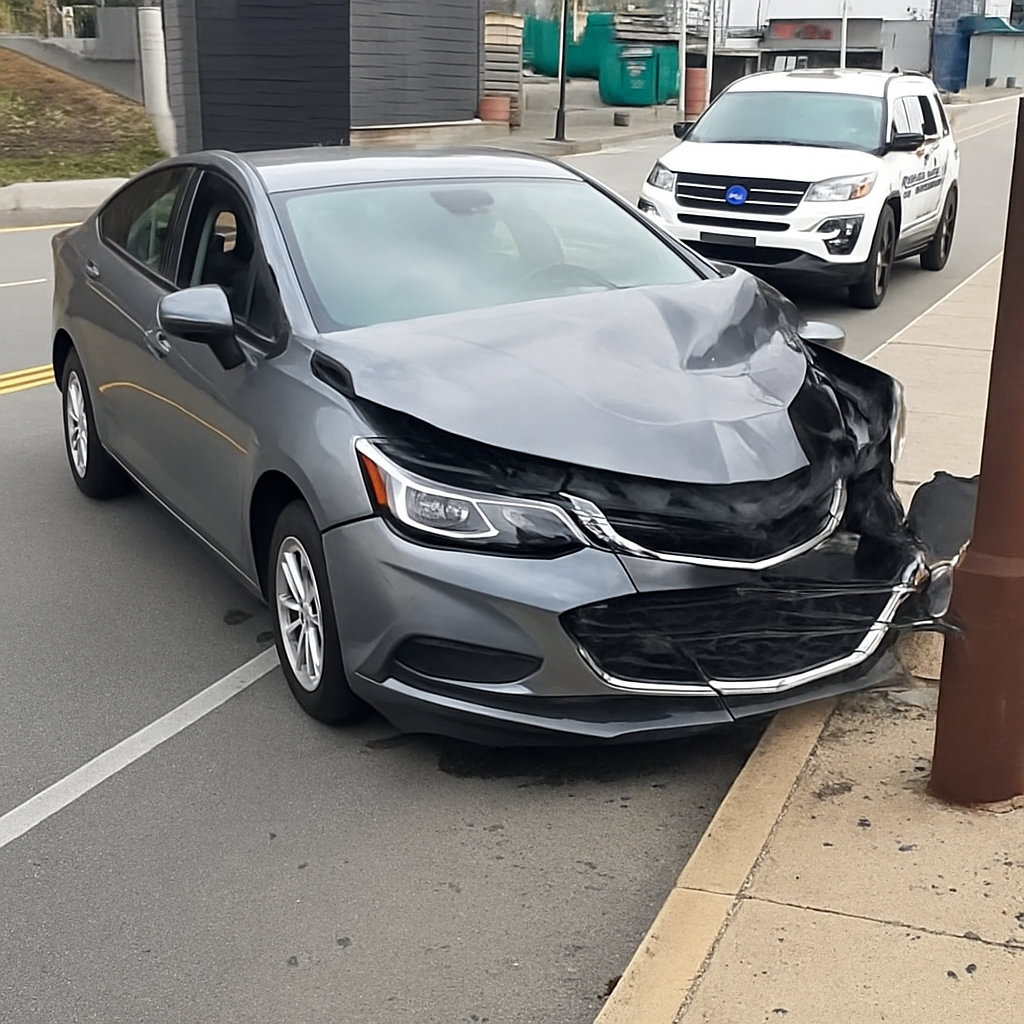
If you have points on your Florida license from tickets or accidents, Hialeah's highest-volume carriers won't always offer the lowest rates — smaller non-standard insurers often beat them by 20–40% for drivers with violations.
How Points Affect Your Insurance Rates in Hialeah
Florida operates on a point system where violations accumulate on your driving record and trigger rate increases at renewal. A single speeding ticket (3–4 points) typically raises your premium by 15–25%, while an at-fault accident (3–6 points depending on severity) can increase rates by 30–50%. If you accumulate 12 points within 12 months, Florida suspends your license for 30 days. Reach 18 points in 18 months and the suspension extends to 3 months. Most Hialeah drivers facing rate increases are nowhere near suspension — they have 3–9 points from one or two violations and their insurer either non-renewed them or doubled their premium at renewal.
Points stay on your Florida driving record for 3–5 years depending on the violation type, but insurers typically only surcharge for the first 3 years. A speeding ticket from 2021 will still appear on your MVR in 2024, but most carriers stop applying the rate penalty after 36 months. This creates a window: if your violation is 2–3 years old, shopping now can often recover 40–60% of the rate increase even before the points officially drop off. Hialeah's competitive non-standard market rewards this timing — carriers weigh violations differently, and a 30-month-old ticket may not trigger a surcharge at all with certain insurers.
Florida does not require SR-22 for standard point violations like speeding, running a red light, or a single at-fault accident. SR-22 is reserved for DUI, driving without insurance, multiple major violations, or court-ordered filings. If you have points but no SR-22 requirement, you are shopping in the non-standard or assigned-risk market, not the SR-22 market — and that distinction matters because it opens access to more carriers and typically lower rates than true high-risk filings.
The rate recovery timeline in Hialeah follows a predictable curve: expect the highest premium in year one after the violation, a 10–20% improvement in year two as you establish a clean period, and a return to near-standard rates by year four if no new violations occur. Defensive driving courses can remove 3–5 points in Florida and may reduce your premium by 5–10%, but only if your insurer offers the discount — not all non-standard carriers do. Florida's SR-22 requirements and filing process
Cheapest Carriers for Drivers With Points in Hialeah
The lowest rates for Hialeah drivers with points typically come from non-standard carriers that specialize in impaired records, not the major names you see advertised. Dairyland, National General, Bristol West, Acceptance Insurance, and Direct Auto consistently quote 20–40% below standard carriers for drivers with 3–9 points. These insurers build their pricing models around violations and at-fault accidents — they don't treat a speeding ticket as an exception, they price it as expected risk. A Hialeah driver with two speeding tickets might pay $210–$280/month with a non-standard carrier versus $350–$450/month with a standard insurer that reluctantly offers coverage.
Progressive and GEICO also write non-standard policies in Florida and can be competitive for drivers with minor violations, but their rates swing widely based on how recent the points are and whether you have a prior lapse. Progressive's Snapshot telematics program sometimes offsets a violation surcharge if you demonstrate safe driving behavior over 60–90 days, which can reduce your premium by 10–15% after the monitoring period. GEICO tends to be more forgiving of a single speeding ticket than multiple violations, making them worth quoting if you have one recent offense.
Local and regional Florida carriers like Sunshine State Insurance and United Automobile Insurance Company (UAIC) write heavily in Hialeah and offer state-minimum liability policies starting around $180–$240/month for drivers with points. These policies meet Florida's 10/20/10 minimum requirements but carry higher out-of-pocket risk if you cause another accident — you're covered for $10,000 per person and $20,000 per accident in bodily injury, which exhausts quickly in a serious collision. If your budget allows, increasing liability limits to 25/50/25 or 50/100/50 adds $30–$60/month but reduces your exposure significantly.
Shopping matters more for this audience than any other action. Non-standard carriers do not all appear on comparison sites, and quoting directly with 4–6 insurers often surfaces a rate 30–50% lower than the first quote you receive. Hialeah's density and competitive market mean carriers are pricing aggressively for volume — a driver with 6 points might see quotes ranging from $195/month to $420/month for identical coverage, depending entirely on which insurers they contact. non-standard auto insurance
What Coverage You Actually Need With Points on Your License
Florida requires only liability coverage (10/20/10 bodily injury and $10,000 property damage), and if you own your car outright and are focused purely on cost, state minimums will give you the lowest premium. A Hialeah driver with points paying $220/month for minimum liability versus $340/month for full coverage is saving $1,440/year — meaningful if your vehicle is worth under $5,000 and you can absorb the loss if it's totaled. Minimum liability does not cover your own vehicle, your own injuries, or anything beyond the statutory caps if you cause an accident, so this trade-off is financial, not legal.
If you're financing or leasing, your lender requires comprehensive and collision coverage, which increases your premium by 40–70% over liability-only. Drivers with points should increase their deductibles to $1,000 or $1,500 on comp/collision to reduce the monthly cost — this typically saves 15–25% versus a $500 deductible. You're already paying a violation surcharge; the deductible adjustment recovers some of that without dropping necessary coverage.
Uninsured/underinsured motorist (UM/UIM) coverage is optional in Florida but highly recommended in Hialeah, where an estimated 20–26% of drivers carry no insurance. UM/UIM covers your injuries and vehicle damage if you're hit by an uninsured driver, and it costs $8–$20/month to add. Given that you already have points and another at-fault accident would compound your rate increase severely, protecting yourself from uninsured drivers is one of the highest-value coverage upgrades available.
Medical payments coverage (MedPay) and personal injury protection (PIP) are often bundled in Florida policies. PIP is required at $10,000 and covers your medical bills and lost wages regardless of fault. MedPay is optional and adds secondary coverage — useful if you have high-deductible health insurance, but not essential if your budget is tight. Dropping optional coverages like rental reimbursement and roadside assistance can save $10–$25/month without increasing your legal or financial risk materially. liability insurance requirements
How Long Rate Increases Last and What Speeds Recovery
The surcharge period for a point violation in Florida is typically 3 years from the date of the ticket, not the conviction date or the date points were assessed. If you received a speeding ticket on March 15, 2022, most insurers will stop applying the violation surcharge at your renewal after March 15, 2025, even though the points remain on your MVR until 2025 or 2027 depending on the offense. This timing matters when shopping: if your violation is 30–36 months old, some carriers will already treat you as a clean driver, while others may still apply a reduced surcharge.
Re-shopping every 12 months is the highest-leverage action available to drivers with points. Carriers re-evaluate risk annually, and a violation that triggered a 40% increase at your last renewal may only justify a 15–20% surcharge at the next if you've maintained continuous coverage and added no new violations. Non-standard insurers also compete aggressively for drivers approaching the end of their surcharge period — you represent near-standard risk at a higher premium, which is profitable business for them.
Completing a Florida-approved traffic school or defensive driving course removes up to 5 points once every 12 months and may qualify you for a discount with your insurer. Not all non-standard carriers offer this discount, but Progressive, GEICO, and State Farm typically reduce premiums by 5–10% for course completion. The course costs $15–$30 and takes 4–6 hours online, making it one of the fastest ROI actions available if your insurer honors the discount. Confirm eligibility before enrolling — some carriers require the course within 90 days of the violation, while others accept it anytime.
Maintaining continuous coverage without lapses is critical for rate recovery. A lapse of even 1–30 days can add another 10–30% surcharge on top of your violation penalty, and it restarts the clock on proving reliability to insurers. If you're struggling to afford your premium, reducing coverage or increasing deductibles is preferable to letting the policy cancel — a lapse compounds your risk profile more than any single violation.
Where to Get Quotes in Hialeah With Points
Start with non-standard specialists: contact Dairyland, National General, Bristol West, Acceptance Insurance, and Direct Auto directly or through an independent agent who writes multiple non-standard carriers. These insurers do not always appear on consumer comparison sites like The Zebra or Insurify, and their rates are often 20–40% lower than the quotes those aggregators surface for drivers with violations. Independent agents in Hialeah who specialize in non-standard risk can quote 5–8 carriers in a single session, which is faster and more comprehensive than quoting each carrier individually.
Progressive and GEICO should be in every quote set for drivers with points — both write non-standard policies in Florida and can be surprisingly competitive, especially if your violation is 18+ months old or you qualify for telematics discounts. Their online quoting tools allow you to adjust coverage and deductibles in real time, which helps you identify the lowest-cost configuration without waiting for an agent callback.
Local Florida carriers like Sunshine State Insurance, United Automobile Insurance Company (UAIC), and Skyward Specialty operate heavily in Hialeah and often offer the lowest state-minimum liability rates for drivers with points. These policies are bare-bones but legal, and they solve the immediate problem: getting insured at a price you can sustain while your points age off. Expect quotes in the $180–$260/month range for liability-only coverage with 3–9 points.
Avoid quoting only your current insurer. Loyalty pricing does not benefit drivers with violations — insurers typically apply the full surcharge to existing customers and offer better rates to new customers with identical records to win market share. Shopping breaks this pattern. A Hialeah driver paying $380/month after a ticket might find the same coverage for $240/month with a competitor, simply because the new insurer is pricing acquisition more aggressively than retention.