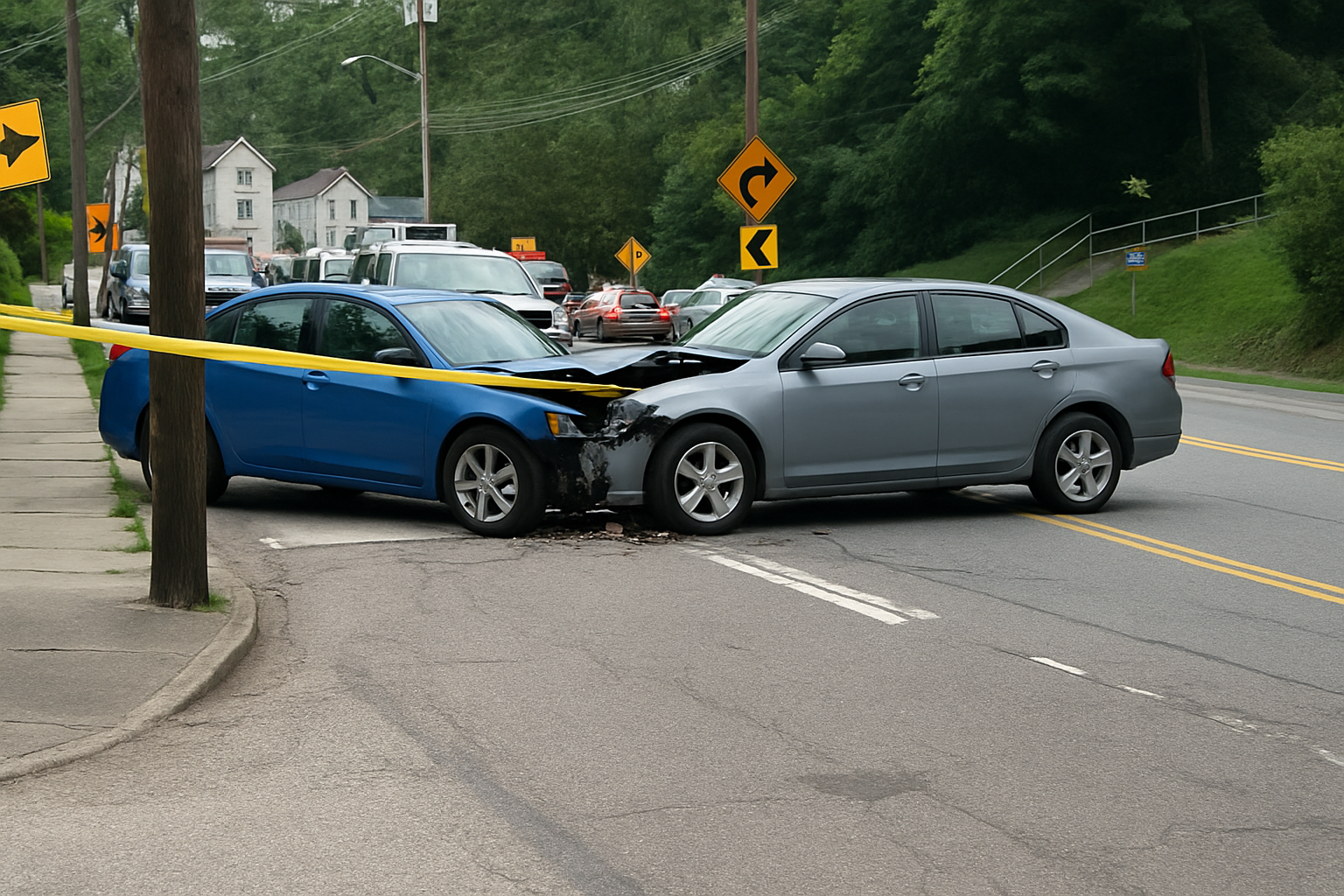
You have points on your California driving record and your Los Angeles insurance rates just doubled or tripled. Here's how to find carriers who will still cover you affordably, how long those points stick, and what you can do right now to bring premiums down.
How the California Point System Affects Your Los Angeles Insurance Rates
California assigns one point for most moving violations — speeding tickets, rolling stops, unsafe lane changes — and two points for at-fault accidents, reckless driving, or DUI convictions. Your license faces suspension at four points in 12 months, six points in 24 months, or eight points in 36 months. Most Los Angeles drivers with one or two points are nowhere near suspension, but they are seeing rate increases of 20% to 50% per point depending on the violation type and carrier.
Points remain on your California driving record for 36 months from the violation date, not the date you paid the ticket or went to court. That timeline matters because some drivers assume the clock starts when they resolve the citation. Insurance carriers in Los Angeles pull your DMV record and price based on what they see — and what they see can differ from what the DMV still counts against your license. Many carriers maintain internal lookback periods of five years for violations, which means you may continue paying elevated rates even after the DMV clears the points.
The gap between DMV point removal and insurance rate normalization is why switching carriers after 36 months often produces immediate savings. If your current carrier is still pricing you based on a four-year-old speeding ticket that fell off your DMV record a year ago, a new carrier quoting you today will see a cleaner record and price accordingly. This is not a loophole — it is how underwriting timelines work, and LA drivers with points leave money on the table by staying loyal to a carrier that locked in elevated pricing years ago. California SR-22 requirements SR-22 insurance
Which Los Angeles Carriers Write Policies for Drivers with Points
Standard carriers like State Farm, Farmers, and Allstate will generally keep you as an existing customer if you add one or two points, but they will raise your rates. New applicants with points face tighter underwriting and often get declined or quoted at significantly higher premiums. Non-standard carriers that specialize in imperfect driving records — including Bristol West, Acceptance, Infinity, Mercury, and GEICO's non-standard division — operate specifically to serve this market and often offer better pricing than standard carriers once you have a violation on your record.
Mercury and GEICO have strong Los Angeles market share and competitive non-standard programs. Mercury in particular prices aggressively for California drivers with one or two points and does not automatically move you to a high-risk tier for a single speeding ticket. Acceptance and Infinity focus exclusively on non-standard risk and quote drivers that standard carriers decline outright. Bristol West operates in California and provides coverage for drivers with multiple violations or lapses, though rates run higher than Mercury or GEICO.
You should request quotes from at least three carriers after a violation. Standard carriers price points differently — one may add 25% to your premium while another adds 45% for the same ticket. Non-standard specialists often beat inflated standard carrier renewals by 30% or more. The Los Angeles market is competitive enough that shopping every 12 months after a violation consistently produces savings as your driving record ages and carriers adjust their risk models.
When You Need SR-22 in California and When You Don't
Most point violations in California — speeding tickets, rolling stops, cell phone use, at-fault accidents — do not require SR-22 filing. SR-22 is a certificate of financial responsibility filed by your insurance carrier to prove continuous coverage to the DMV. California mandates SR-22 only for specific situations: DUI or DWI convictions, reckless driving convictions, driving without insurance, license suspension for too many points, or court-ordered filing after an at-fault accident where you were uninsured.
If you received a speeding ticket or were in a minor at-fault accident and had valid insurance at the time, you do not need SR-22. Your rates will increase because of the points, but you are not in a compliance filing situation. Conflating point violations with SR-22 requirements creates unnecessary alarm — SR-22 is a legal filing for specific violations, not a general consequence of having points on your record.
If you do need SR-22 in California, expect to pay a one-time filing fee of $15 to $25 through your carrier, plus significantly higher premiums. California requires SR-22 filing for three years from the date the DMV notifies you. Any lapse in coverage during that period triggers a suspension and restarts the three-year clock. Carriers that write SR-22 in Los Angeles include GEICO, Progressive, Bristol West, Acceptance, and Infinity. Standard carriers like State Farm and Allstate will file SR-22 for existing customers but often decline new SR-22 applicants.
What Los Angeles Drivers with Points Pay in Monthly Premiums
A clean-record driver in Los Angeles pays approximately $180 to $240 per month for full coverage auto insurance. One point from a speeding ticket typically increases that premium by 20% to 40%, bringing monthly costs to $215 to $335. Two points push rates 40% to 70% higher, landing most drivers in the $250 to $410 per month range. An at-fault accident with two points can increase premiums by 50% to 80%, especially if the accident involved a significant payout.
These ranges vary widely by carrier, ZIP code within Los Angeles, and the specific violation type. A speeding ticket for 15 over the limit prices lower than reckless driving. A minor fender-bender with $2,000 in damage prices lower than a $15,000 injury claim. Age and coverage limits also matter — a 22-year-old driver with one point will see steeper increases than a 45-year-old with the same violation.
Non-standard carriers often quote 20% to 40% below standard carrier renewal rates for drivers with points. A State Farm renewal at $320 per month after a speeding ticket might price at $240 per month with Mercury or $215 per month with GEICO's non-standard program. The difference compounds over the 36 months those points remain on your record — switching carriers could save $3,000 to $5,000 over three years. The highest-leverage action available to LA drivers with points is requesting quotes from at least three carriers within 30 days of a rate increase.
How to Reduce Points and Recover Your Rates in California
California allows drivers to mask one point every 18 months by completing a DMV-licensed traffic school course. The violation remains on your public driving record, but the point does not count toward the suspension threshold and insurers cannot see it when they pull your record. You must request traffic school eligibility from the court before your ticket due date, complete the course within the court-ordered timeframe, and ensure the completion certificate reaches the DMV. Not all violations are eligible — speeding over 25 mph above the limit, commercial vehicle violations, and certain reckless driving citations do not qualify.
Traffic school does not remove the violation from your record or shorten the 36-month timeline, but it prevents the point from appearing to insurance carriers. That distinction matters because it stops the rate increase before it starts. If you already have points on your record and did not use traffic school, those points will fall off automatically after 36 months from the violation date. You cannot retroactively mask a point after the conviction is finalized.
Once points fall off your DMV record, request quotes from new carriers immediately. Your current carrier may continue pricing you based on outdated information or internal risk scoring that lags behind DMV point removal. A new carrier quoting you today sees only what is on your current DMV record, which gives you a clean pricing slate. Drivers who switch carriers within 60 days of a point falling off consistently see larger rate reductions than drivers who wait for their current carrier to adjust pricing at renewal.
Where to Get Quotes in Los Angeles After a Violation
Start with non-standard specialists that operate in California: Mercury, GEICO, Progressive, Acceptance, Infinity, and Bristol West. Request quotes online or by phone and provide accurate violation details — the date, type of ticket, and whether you completed traffic school. Inaccurate information delays quotes and can void coverage if the carrier discovers a mismatch after binding the policy.
Independent agents who represent multiple carriers can streamline the process by quoting several non-standard carriers at once. Agents specializing in high-risk or non-standard auto insurance are common in Los Angeles and typically represent Acceptance, Bristol West, Infinity, and regional carriers not available direct-to-consumer. They do not charge drivers for quotes — they earn commission from the carrier when you bind coverage.
Compare quotes on identical coverage limits and deductibles. A $200 per month quote with $100,000/$300,000 liability and a $1,000 deductible is not comparable to a $180 per month quote with state minimum liability and a $2,500 deductible. Los Angeles drivers with points should maintain at least $100,000/$300,000 liability limits — a second at-fault accident while underinsured can trigger license suspension and steeper rate increases than the first violation.