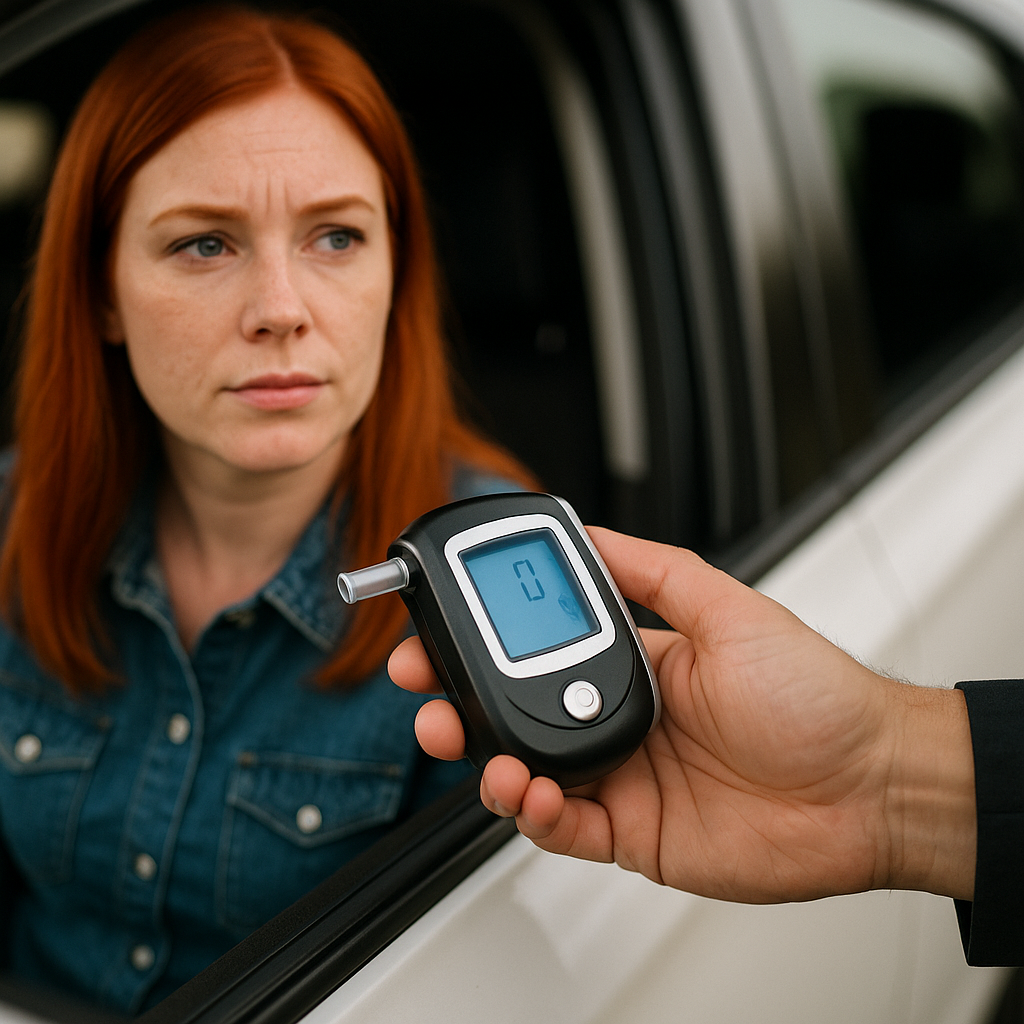
You have points on your Virginia license from tickets or accidents, and Richmond carriers just quoted you $200+ per month. Here's how Richmond's point system works, which local and regional carriers still write policies for drivers with violations, and what you'll actually pay.
How Virginia's Point System Affects Your Richmond Insurance Rates
Virginia assigns demerit points for violations, and those points stay on your DMV record permanently — but insurance carriers in Richmond don't price based on your total point count. They price based on the violations themselves and how recently they occurred. A speeding ticket 15 mph over adds 4 demerit points and typically raises your premium 20–30% for three years. An at-fault accident adds 4 points and triggers a 30–50% increase. Reckless driving — anything 20+ mph over or 80+ mph regardless of speed limit — adds 6 points and is treated as a criminal misdemeanor in Virginia, which means rate increases of 60–90% and potential policy non-renewal.
Virginia DMV will suspend your license if you accumulate 18 demerit points in 12 months or 24 points in 24 months. Most Richmond drivers with one or two violations are nowhere near that threshold, but the rate impact begins immediately after your first conviction. The key timeline: most carriers in Richmond use a 3-year lookback for standard violations like speeding or failure to yield, and a 5-year lookback for serious violations like reckless driving or DUI. After that window closes, the violation no longer affects your premium — even though the points remain on your Virginia DMV record.
Virginia also awards safe driving points: +1 point for every full calendar year you drive without a violation or suspension, up to +5 points maximum. These positive points can offset demerit points on your record, but they do not reduce your insurance premium. Carriers price based on violations and claims, not your net point balance with DMV. If you have 8 demerit points and 5 safe points, your DMV record shows 3 net points — but your insurer still sees the underlying violations. Virginia's SR-22 requirements liability insurance
Richmond Carriers That Write Policies for Drivers with Points
Not all carriers in Richmond treat points violations the same way. National carriers like State Farm, Allstate, and Geico will usually renew your policy after a single speeding ticket or at-fault accident, but their rate increases are often steep — expect 25–40% higher premiums for a standard violation. These carriers typically non-renew after two or more violations within three years, or after a single reckless driving conviction.
Regional and non-standard carriers operating in Richmond are more tolerant of violations and often price more competitively for drivers with points. The General specializes in non-standard risk and will write policies for drivers with multiple violations or recent at-fault accidents, though coverage options may be limited to state minimum liability. Dairyland and Bristol West also write policies in Virginia for drivers with two or more violations. National General and Progressive have dedicated non-standard divisions that will quote drivers with up to four violations in three years, and they often allow higher liability limits than pure non-standard carriers.
If you have a reckless driving conviction — which Virginia treats as a Class 1 misdemeanor — many standard carriers will non-renew at your next policy period. Reckless driving is prosecuted in criminal court, not traffic court, and it stays on your Virginia driving record for 11 years. Carriers like Dairyland and The General will still write coverage, but expect monthly premiums in the $180–$280 range for minimum liability. If your reckless charge was reduced to improper driving (a traffic infraction), you'll have access to more carriers and lower rates.
SR-22 is not required in Virginia for standard point violations like speeding tickets or at-fault accidents. You only need SR-22 if your license was suspended for DUI, driving without insurance, or accumulating too many points and then reinstating. If you're shopping because your rates went up after a ticket — not because DMV required SR-22 — you have access to the full non-standard market without the added SR-22 filing requirement. non-standard auto insurance
What You'll Actually Pay in Richmond with Points on Your License
Richmond drivers with one speeding violation (10–14 mph over) typically pay $145–$210 per month for full coverage, compared to $110–$140 for clean-record drivers. One at-fault accident raises that range to $160–$240 per month. If you have both a violation and an at-fault accident within three years, expect quotes in the $200–$320 per month range. These figures assume a 35-year-old driver with a 2015 sedan, 100/300/100 liability limits, and $500 collision and comprehensive deductibles.
Reckless driving convictions trigger the steepest increases. Richmond drivers with a reckless conviction on record see full coverage quotes in the $250–$380 per month range, and many are forced into liability-only policies at $140–$220 per month. If you were convicted of reckless by speed (20+ mph over or 80+ mph), some carriers will treat it similarly to DUI for underwriting purposes, which means limited options and high premiums for three to five years.
Dropping to Virginia's state minimum liability — 25/50/20 — can reduce your monthly cost by 30–45%, but it leaves you exposed. If you cause an accident that injures another driver or damages their vehicle beyond $25,000, you are personally liable for the excess. Given Richmond's average household income and vehicle values, minimum limits are risky unless you have no assets to protect. Most non-standard carriers in Richmond will allow you to raise liability limits to 50/100/50 or 100/300/50 for an additional $20–$40 per month, which is a cost-effective way to reduce financial exposure without paying for full coverage.
Your rate will normalize over time as violations age off your record. After three years from your conviction date, most carriers will reprice your policy as if the violation never occurred. If you maintain a clean record during that period, you may also qualify for a safe driver discount, which can reduce your premium by an additional 10–15%. Completing a Virginia DMV-approved driver improvement clinic can subtract up to 5 demerit points from your record and may qualify you for a discount with some carriers, though the rate benefit varies by insurer.
Steps to Lower Your Premium in Richmond Right Now
Shopping carriers is the single highest-leverage action you can take. Richmond drivers with violations who compare quotes across at least three non-standard carriers save an average of $60–$110 per month compared to staying with their current carrier. The rate spread between the highest and lowest quote for the same driver and coverage can exceed $150 per month. Non-standard carriers like The General, Dairyland, and National General often quote 20–40% lower than national carriers for drivers with two or more violations.
Enroll in a Virginia DMV-approved driver improvement course. Completing an 8-hour clinic allows you to subtract 5 safe driving points from your record, which can prevent a suspension if you're near the 18-point threshold. Some carriers — including Geico and State Farm — offer a discount of 5–10% for completing the course, though not all insurers recognize it. The course costs $50–$90 and can be completed online. You can take it once every 24 months, and the safe points remain on your record for five years.
Raise your deductibles if you're carrying collision and comprehensive coverage. Increasing your collision deductible from $500 to $1,000 typically reduces your premium by $15–$25 per month. If your vehicle is worth less than $5,000, dropping collision and comprehensive entirely and carrying only liability can cut your cost by 40–50%. This makes sense if the annual cost of full coverage exceeds 15–20% of your vehicle's value.
Ask about usage-based insurance programs. Progressive's Snapshot, Nationwide's SmartRide, and Allstate's Drivewise allow you to earn discounts based on your actual driving behavior — mileage, braking, speed, and time of day. Richmond drivers with violations who drive fewer than 8,000 miles per year and avoid late-night driving can earn discounts of 10–25%, which partially offsets the violation surcharge. These programs require you to install a plug-in device or mobile app that tracks your driving for 90–180 days.
When Points Fall Off and Your Rates Recover
Virginia demerit points remain on your DMV record permanently, but insurance carriers in Richmond only look back three years for most violations and five years for serious violations like reckless driving. Once your violation passes that lookback window, it no longer affects your premium — even if the points still appear on your DMV record. For example, a speeding ticket from June 2021 will stop affecting your rate in June 2024, assuming no additional violations.
If you accumulated multiple violations within a short period, your rate will not recover all at once. Each violation has its own three-year or five-year clock. A driver with a speeding ticket in January 2022 and an at-fault accident in July 2022 will see a partial rate decrease in January 2025 when the speeding ticket ages off, and a further decrease in July 2025 when the accident falls outside the lookback period. Most carriers reprice your policy at each renewal, so you may see the reduction as soon as your policy renews after the violation exits the lookback window.
Virginia does allow you to request a DMV transcript to verify which violations are on your record and when they occurred. You can order a copy online from the Virginia DMV website for $9, or request it by mail for $13. If you're shopping for insurance and want to confirm what carriers will see, pull your transcript before requesting quotes. Some older violations may have been purged from your record, or a conviction date you thought was older may actually be more recent based on the court disposition date.
Rate recovery is not automatic — you need to shop. Even after your violations age off, your current carrier may not reprice your policy aggressively. Richmond drivers who switch carriers immediately after their violation lookback period ends often save 25–40% compared to staying with their current insurer, because new carriers are competing for your business and your current carrier has already priced you as a renewal.