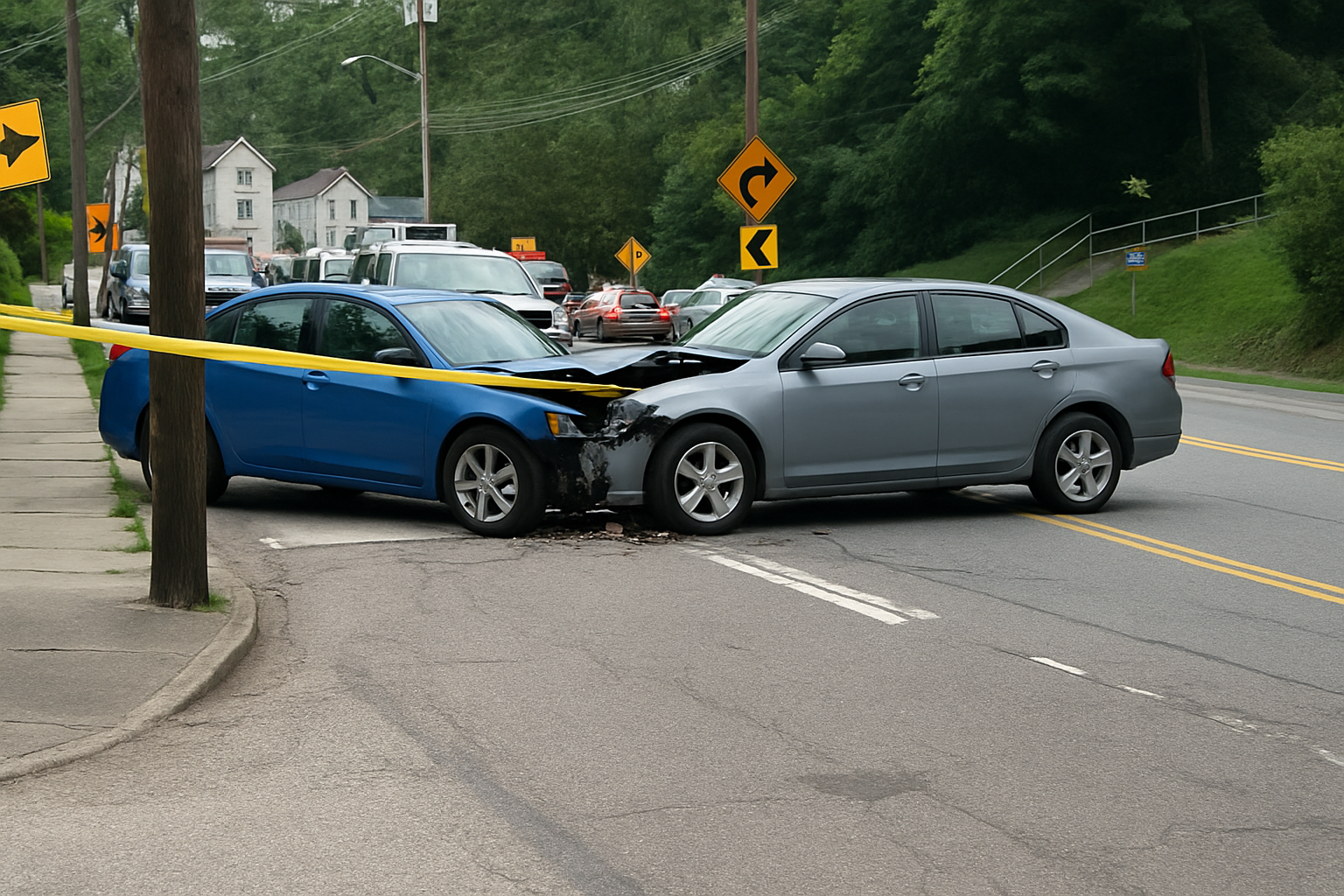
Points from speeding tickets, moving violations, or at-fault accidents can raise your Stockton auto insurance rates 20–50%. Here's how to find the cheapest coverage while points are still on your California driving record.
How Points Affect Insurance Rates in Stockton
California assigns points to your driving record through the DMV, but insurance companies set rates based on your full motor vehicle report, which includes both pointed and non-pointed violations. A single one-point violation — like speeding 1–15 mph over the limit — typically raises rates 15–30% in Stockton, while a two-point violation such as reckless driving or an at-fault accident can spike premiums 40–70%. The rate increase depends more on your carrier's underwriting model than the point value itself.
Points stay on your California driving record for different periods depending on the violation type. Most one-point violations remain for 36 months from the violation date, while two-point violations like DUI or hit-and-run stay for 10 years. However, insurance companies typically only review the past three to five years of your record during renewal, which means older violations beyond that window often stop affecting your rates even if the points are still technically on file with the DMV.
Stockton drivers face a suspension if they accumulate four points in 12 months, six points in 24 months, or eight points in 36 months. Most drivers with one or two violations are nowhere near this threshold, but the insurance cost spike happens immediately after the first ticket. The key financial question is not whether you will lose your license — it is how long you will pay elevated premiums and which carriers will offer you the lowest rate during that period. California SR-22 requirements non-standard auto insurance
Cheapest Auto Insurance Companies for Drivers With Points in Stockton
Not all carriers penalize points violations equally. National carriers like State Farm, Geico, and Progressive dominate the California market, but their rate increases after a violation vary widely. State Farm historically applies smaller surcharges for first-time speeding tickets — often 10–20% — while Geico and Progressive may raise rates 25–40% for the same violation. Mercury Insurance and CSAA (AAA) also write policies in Stockton and often compete on price for drivers with one or two points.
Non-standard carriers like Bristol West, Acceptance Insurance, and Freeway Insurance specialize in higher-risk profiles and may quote lower rates than standard carriers once you have two or more violations on record. These companies expect imperfect driving histories and build that into their base pricing, which means they penalize additional violations less severely than standard carriers do. The tradeoff is often higher base rates for clean drivers, but better pricing once you have points.
The single most effective action you can take after getting a ticket in Stockton is to request quotes from at least four carriers within 30 days of the violation appearing on your record. Rates for the same driver with the same violation can vary by $80–$150 per month across carriers. Loyalty does not lower rates after a violation — shopping does. Target a mix of standard carriers like State Farm and non-standard specialists like Bristol West to find the floor price for your profile.
Traffic School and Point Masking in California
California allows drivers to attend traffic school once every 18 months to mask a one-point violation from their DMV record, but the ticket itself still appears on your motor vehicle report for three years. This creates a critical distinction: the DMV will not count the point toward suspension, but your insurance company will still see the violation when they pull your record. Some carriers ignore traffic school completions and rate you as if the point exists; others give partial or full credit for completing the course.
If you received a speeding ticket for 1–15 mph over the limit or a similar one-point violation, completing traffic school prevents the point from appearing on your public driving record and keeps you eligible for good driver discounts with many carriers. However, not all insurers honor traffic school masking — some pull the full court abstract and rate based on the conviction itself, not the point assignment. Before paying for traffic school, ask your current insurer whether they will reduce your rate if you complete it. If they will not, compare quotes from carriers that do.
Traffic school does not apply to two-point violations like reckless driving, DUI, or at-fault accidents involving injury. For those violations, the points remain on your record and your only path to lower rates is shopping carriers that specialize in non-standard risk or waiting for the violation to age beyond the carrier's lookback period.
When SR-22 Filing Is Required in California
Most point violations in Stockton do not trigger an SR-22 requirement. California mandates SR-22 filing only for specific legal situations: DUI convictions, driving without insurance, multiple at-fault accidents within a short period, or a court-ordered requirement following a serious violation. A standard speeding ticket, even one that assigns two points, does not require SR-22 unless the court or DMV explicitly orders it.
If you do need SR-22 in California, the filing itself costs $15–$25, but the insurance rate increase is substantial. SR-22 drivers typically pay 50–80% more than drivers with equivalent violations who do not require filing. The SR-22 requirement lasts for three years in most cases, and any lapse in coverage during that period restarts the clock. Carriers like Progressive, The General, and Bristol West specialize in SR-22 policies and often quote lower rates than standard carriers for this profile.
If you received a ticket but were not ordered to file SR-22, do not confuse high-risk insurance with SR-22 insurance. You are paying more because of the violation, not because of a compliance requirement. Your goal is to find the carrier that penalizes your specific violation least, not to navigate a legal filing process.
How Long Rate Increases Last After a Violation
Insurance companies in California typically surcharge violations for three to five years from the date of the ticket, even though the point may remain on your DMV record longer. Most carriers review your motor vehicle report at renewal, which means your rate will stay elevated until the violation ages beyond their lookback period. A one-point speeding ticket from 2022 will likely stop affecting your rates by 2025 or 2026, depending on the carrier.
Some non-standard carriers use shorter lookback periods — 36 months instead of 60 — which means they may offer lower rates sooner after a violation than standard carriers. If your violation is approaching the three-year mark, request quotes from carriers like Mercury, Bristol West, and CSAA to see if you qualify for standard pricing again. Switching carriers at the three-year mark often delivers a 30–50% rate drop compared to staying with your current insurer.
Rate recovery is not automatic. You must shop actively and request quotes as violations age off your record. Carriers do not notify you when a surcharge period ends — they simply continue charging the elevated rate until you leave. Set a calendar reminder for 36 months after each violation and re-shop your policy at that point. This is the single most effective way to recover your pre-violation rate.
Stockton-Specific Rate Factors for Drivers With Points
Stockton's ZIP codes — particularly 95204, 95205, and 95207 — carry higher base insurance rates due to elevated theft, vandalism, and uninsured motorist claims. A driver with one point in Stockton will pay more than a driver with the same violation in suburban Sacramento or Modesto, even with the same carrier. This ZIP code penalty stacks on top of the violation surcharge, which makes shopping even more critical for Stockton residents.
Carriers weight ZIP code risk differently. State Farm and Geico may apply steep surcharges for Stockton addresses, while regional carriers like Mercury and CSAA price more competitively in San Joaquin County. If you live in a high-cost ZIP code and have points on your record, prioritize carriers with strong Central Valley market share — they have better loss data for the area and price more accurately.
If you work in Stockton but live in a nearby city like Lodi or Tracy, make sure your policy reflects your actual garaging address. Insurers base rates on where the car is parked overnight, not where you commute. A Lodi address may lower your premium 10–15% compared to a central Stockton ZIP, even with the same violation history.
Next Steps: Finding Coverage With Points on Your Record
Start by requesting quotes from at least four carriers within 30 days of your violation or renewal date. Include one non-standard specialist like Bristol West or Acceptance Insurance even if you only have one point — their pricing models often outperform standard carriers once any violation appears on your record. Provide the exact violation date and description to get accurate quotes; estimates based on incomplete information will not reflect your true cost.
If your current carrier raised your rate after a ticket, do not assume that is the market price. Loyalty penalties are real, and drivers who stay with the same carrier after a violation pay 15–25% more on average than drivers who switch to the lowest available quote. Shopping is not optional after a violation — it is the only reliable way to control your cost.
California allows you to mask one violation every 18 months with traffic school, so if you are eligible, complete the course before your renewal date and confirm with your insurer that they will apply the discount. If they will not, switch to a carrier that does. Your driving record will improve over time, but your rates will only recover if you take action at each milestone — completion of traffic school, the three-year mark, and the five-year mark. Track these dates and re-shop your policy at each one.