
How to Apply for a Defensive Driving Course in California
Free to compare
What California's Point Masking System Actually Does for Your Insurance Rate
California allows drivers to attend traffic school once every 18 months to mask a single point violation from their public driving record, preventing the point from appearing to insurance carriers during routine underwriting checks. The course keeps the conviction on your DMV record but marks it confidential. Your insurance company cannot see it during renewals or rate reviews.
Most carriers apply a surcharge of 20-40% after a first moving violation, sustained for three years from the conviction date. Masking the point through traffic school prevents that surcharge from ever appearing, saving $300-$900 annually depending on your base premium. The advantage expires if you receive a second violation within 18 months of completing the course, because California restricts eligibility to one masked violation per 18-month period.
The gap: completing traffic school does not automatically notify your insurance carrier or trigger a rate recalculation. If you completed the course after your last renewal, your carrier may still be applying a surcharge based on the original conviction record. You must contact your carrier directly and request re-rating once the DMV updates your record to show the masked status, typically 4-8 weeks after course completion.

Who Qualifies for Traffic School in California and When You Must Apply
California Traffic Court offers traffic school eligibility to drivers with a valid license who receive a moving violation citation for an infraction, not a misdemeanor. Eligible violations include speeding up to 25 mph over the posted limit, failure to yield, unsafe lane changes, and following too closely. Excluded violations include DUI, reckless driving, speeding over 100 mph, commercial vehicle violations, and any collision resulting in injury or death.
You must request traffic school at or before your court appearance date, or within the timeframe printed on your courtesy notice if you do not appear in court. Most California counties allow online requests through the court's traffic division website. Missing this window forfeits eligibility even if the violation type qualifies. If you plead guilty or no contest and pay the fine without requesting traffic school, the point posts to your record immediately and cannot be masked retroactively.
Drivers with a prior traffic school completion in the past 18 months do not qualify, measured from the violation date of the previous offense, not the completion date of the prior course. California does not allow stacking or deferring eligibility.

How to Enroll in a California DMV-Approved Defensive Driving Course
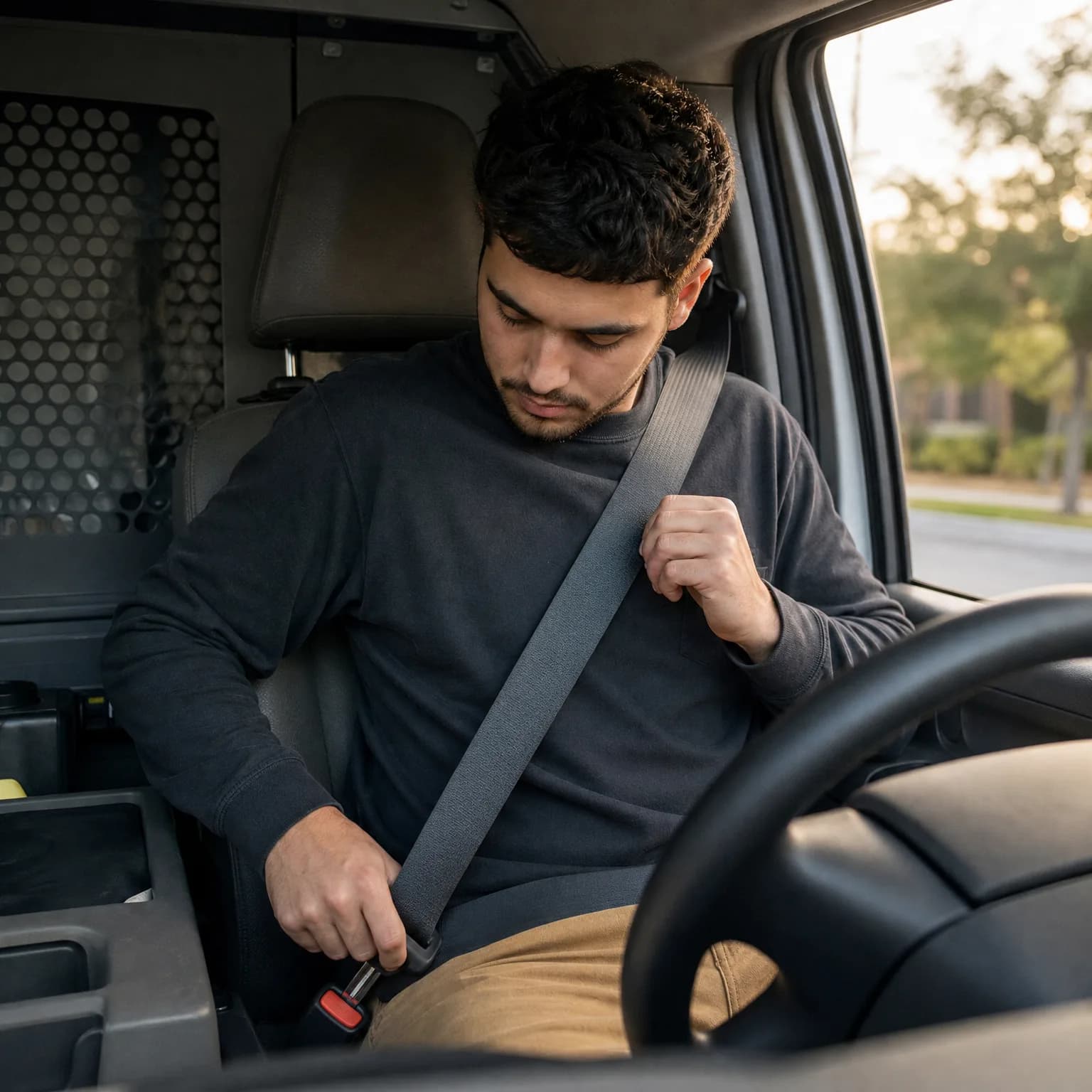
California requires traffic school completion through a DMV-licensed provider, identifiable by a unique provider number issued by the state. The court assigns a completion deadline, typically 60-90 days from your court date, printed on your traffic school order or accessible through your county's online case portal. You select the provider, format, and schedule as long as the provider holds current DMV approval.
Online courses dominate the California traffic school market and cost $20-$50 including the DMV processing fee. Approved providers include TrafficSchool.com, MyImprov, Aceable, and GoToTrafficSchool. Each course delivers the same DMV-mandated curriculum covering collision avoidance, California Vehicle Code updates, defensive driving techniques, and impairment recognition. Course length runs 8 hours of content, with most platforms allowing self-paced progression over multiple sessions.
In-person classroom courses remain available in most California counties for drivers who prefer live instruction, costing $40-$75 and requiring a single-day Saturday session. Upon completion, the provider electronically reports your certificate to the DMV and the issuing court within 5-10 business days. You receive a completion certificate for your records but do not need to file it separately with the DMV or your insurance carrier.
When the Point Actually Disappears from Your Insurance Record and How to Verify It
The DMV updates your driving record to show confidential status for the masked violation 4-8 weeks after your traffic school provider submits your completion certificate electronically. Insurance carriers pull driving records during renewal underwriting, typically 30-45 days before your policy expiration date. If your masked status posts before that pull, the violation does not appear and no surcharge applies.
If your renewal processed before the DMV updated the record, your carrier applies the surcharge based on the original conviction. You must request manual re-rating once the update completes. Call your carrier's underwriting or customer service line, reference the violation date and traffic school completion date, and ask them to re-pull your MVR. Most carriers process the correction within 5-10 business days and issue a refund or credit for overcharged premiums, but some require you to wait until the next renewal cycle to see the adjustment.
Order your own driving record from the California DMV online for $5 to confirm masked status before contacting your carrier. The record will show the conviction with a confidential notation if the masking succeeded. If the notation does not appear 8 weeks after course completion, contact the traffic school provider first to verify they submitted your certificate, then escalate to the DMV if needed.

Find the Insurers That Still Want Your Business
See Carriers That Cover You
What Happens If You Miss the Traffic School Deadline or Fail to Complete the Course
Missing the court-assigned traffic school deadline results in automatic forfeiture of your eligibility and immediate posting of the point to your DMV record. California courts do not grant extensions except for documented medical emergencies or military deployment. The fine remains paid, the conviction stands, and your insurance carrier sees the violation at the next renewal.
A one-point moving violation in California stays on your DMV record for 39 months from the violation date. Insurance carriers typically surcharge for three years from the conviction date, which may extend slightly beyond the DMV removal window depending on your renewal timing. After three years, most carriers drop the surcharge automatically even if the conviction still appears on your record, but you should verify this at renewal rather than assume it.
If you accumulate four points in 12 months, six points in 24 months, or eight points in 36 months, California DMV suspends your license for six months under current negligent operator rules. Traffic school masking prevents the violation from counting toward this threshold, but only if you complete the course before the deadline. Once suspended, reinstatement requires proof of insurance, a $55 reissue fee, and completion of any required driver improvement programs.

How to Request the Insurance Discount After Completing Traffic School
Most California insurance carriers do not automatically re-rate policies mid-term when a traffic school completion posts to your DMV record. You must initiate the request. Call your carrier's customer service or underwriting department, provide your policy number and the violation date, and state that you completed court-ordered traffic school and the DMV record now shows confidential status.
The carrier will order a new MVR pull to verify the update. If the masked status appears, they recalculate your premium retroactive to the date the DMV posted the update, not the date you completed the course. Some carriers issue a refund check for the difference if you overpaid during the interim period. Others apply a credit to future premium installments. A few carriers require you to wait until the next policy renewal to see the adjustment, effectively costing you 6-12 months of surcharge savings despite completing traffic school on time.
If your carrier refuses mid-term re-rating, document the refusal and shop your policy at renewal. Competing carriers will pull your current MVR showing masked status and quote you at a clean-record rate. Switching carriers after completing traffic school often delivers larger savings than waiting for your current carrier to drop the surcharge, particularly if you carry a multi-point record or hold a non-standard policy.
Whether Traffic School Affects Existing Rate Increases or Only Future Violations
Traffic school eligibility applies only to the specific violation cited on your traffic court order. If your insurance rate already increased due to a prior violation outside the current 18-month eligibility window, completing traffic school for a new violation does not retroactively remove the earlier surcharge. Each violation surcharge runs independently for three years from its own conviction date.
Some drivers mistakenly believe completing traffic school resets their entire driving record or removes multiple points. California's confidential status applies exclusively to the single masked violation. If you carry two points from separate violations and complete traffic school for one, your insurance carrier still sees the unmasked point and applies the corresponding surcharge.
The strategic value of traffic school increases if you currently hold a clean record or if completing the course keeps you under a carrier's multi-point declination threshold. Preferred carriers like State Farm, Farmers, and Allstate often decline to renew policies once a driver reaches three points in 36 months. Masking a second violation keeps you at one visible point and preserves access to preferred-market pricing, saving $600-$1,200 annually compared to forced placement in the non-standard market.
Frequently Asked Questions
Does completing traffic school in California automatically lower my insurance rate?
No. Completing traffic school masks the point from your DMV record, but your insurance carrier will not know about the change until they pull an updated MVR, which typically happens at your next renewal. You must contact your carrier and request manual re-rating if you want the discount applied before your renewal date.
How long does it take for traffic school completion to show on my California driving record?
The DMV updates your record to show confidential status 4-8 weeks after your traffic school provider submits your completion certificate electronically. You can verify the update by ordering your own driving record from the California DMV website for $5.
Can I take traffic school for a speeding ticket if I already completed a course last year?
Only if more than 18 months have passed since the violation date of your previous traffic school-eligible offense. California restricts eligibility to one masked violation every 18 months, measured from violation date to violation date, not completion date to completion date.
What happens to my insurance rate if I miss the traffic school deadline?
The point posts to your DMV record immediately and your insurance carrier will see it at your next renewal, typically resulting in a 20-40% surcharge that lasts three years. California courts do not grant deadline extensions except for documented emergencies, and you cannot complete traffic school retroactively.
Will my insurance company tell me when they remove the surcharge after I complete traffic school?
Most carriers do not send proactive notifications when a surcharge drops off. You should verify at each renewal that the surcharge has been removed, particularly three years after the conviction date when most carriers stop applying the penalty even if the violation technically remains on your record for 39 months.
Related Articles

CA Defensive Driving Credit: 1.5-Point Reduction Guide
5/17/2026

Best Car Insurance for CA Drivers with Points
5/15/2026
Speeding 1-15 Over CA: Points, Rate Impact & Recovery
5/17/2026

CA Speeding + Red Light: Combined Points & Insurance
5/17/2026

When Points Fall Off in California: 36-Month Timeline
5/17/2026
Two Points From Suspension CA: What Insurers See First
5/17/2026