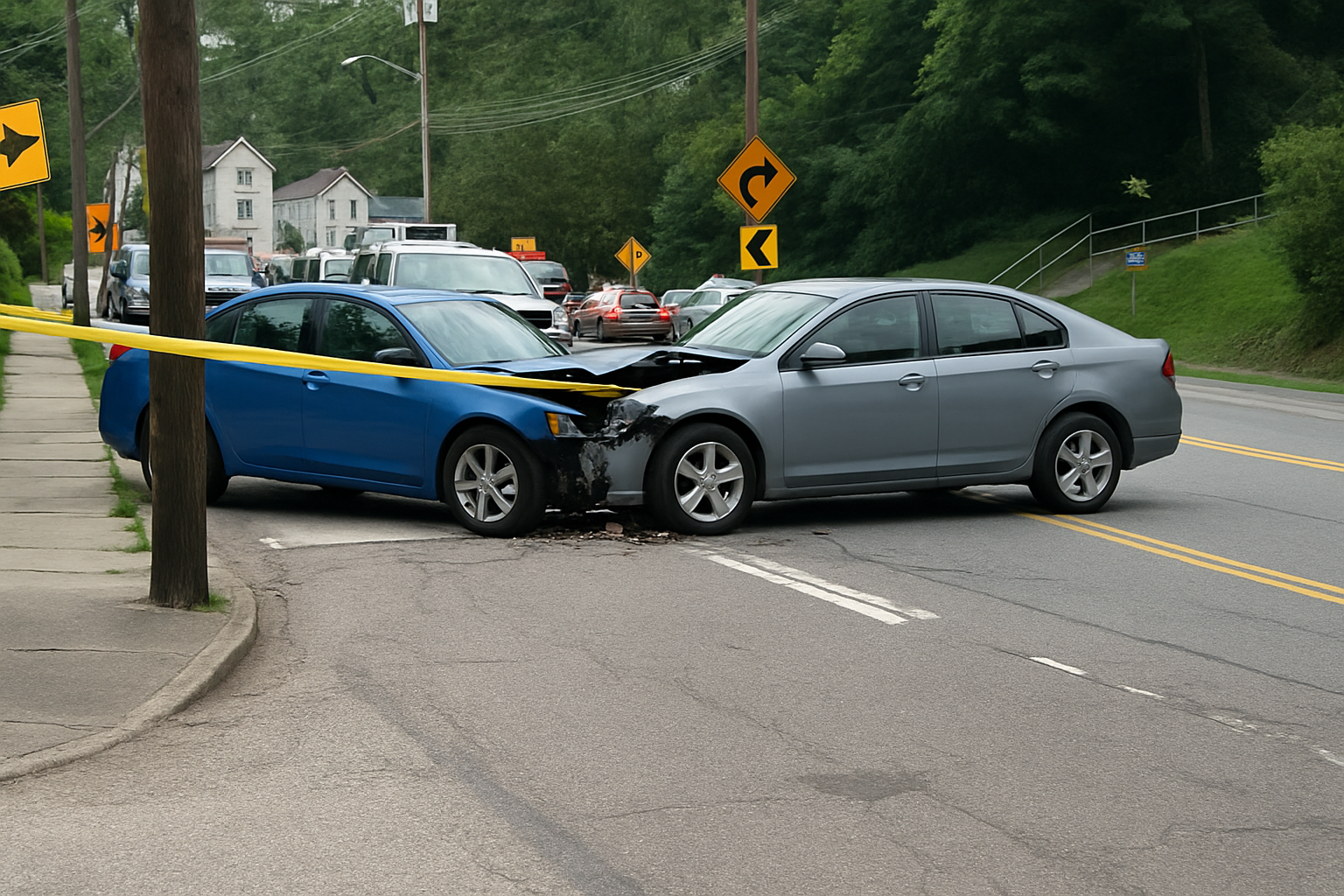
You got a ticket or had an accident in Anaheim, and your insurance premium jumped. Here's the timeline for points falling off in California, what carriers specialize in post-violation coverage, and exactly how long it takes for rates to recover.
How California's Point System Works and When Your DMV Record Clears
California assigns 1 point for most moving violations like speeding or running a red light, and 2 points for at-fault accidents or more serious violations like reckless driving. If you accumulate 4 points in 12 months, 6 points in 24 months, or 8 points in 36 months, the DMV suspends your license. Most Anaheim drivers with a single speeding ticket or at-fault accident are nowhere near suspension threshold — but they still see rate increases.
Points from a moving violation stay on your California DMV record for 39 months from the violation date, not the conviction date. Points from an at-fault accident or DUI remain for 13 years for DMV purposes, though negligent operator treatment only applies for the first 36 months for accidents and 10 years for DUIs. The DMV uses these timelines to determine license eligibility, not insurance rates.
Your insurance company does not rely on DMV point totals to set your premium. Insurers pull your full driving history from the DMV and rate based on the actual violations they see, not the point count. A speeding ticket from 38 months ago still shows on your record and can still affect your rate even if it no longer carries a point. This distinction matters because most Anaheim drivers assume once points fall off, their rates automatically drop — they do not. California SR-22 requirements and filing rules
How Long Insurers in Anaheim Look Back at Your Record
California insurers typically review 3 to 5 years of driving history when calculating your premium, regardless of when points expire. Mercury, CSAA, and Progressive — three of the most active carriers for post-violation drivers in Orange County — all use a 3-year lookback for most moving violations and a 5-year lookback for at-fault accidents. State Farm and Farmers typically use 5 years across the board.
A single speeding ticket in Anaheim triggers an average rate increase of 20% to 30% at renewal. An at-fault accident typically increases premiums by 40% to 60%, depending on the severity and your carrier. A DUI or reckless driving citation can double or triple your premium, and many standard carriers will non-renew your policy entirely. These increases persist for the full lookback period the carrier uses, not just until points fall off your DMV record.
Some carriers — particularly non-standard insurers like Bristol West, Acceptance, and Infinity — specialize in post-violation coverage and use shorter lookback windows or more forgiving rating algorithms. These carriers often deliver lower premiums than your current insurer even if your violation is still fresh, because they underwrite specifically for drivers with points. Shopping carriers immediately after a violation is almost always more effective than waiting for time to pass. non-standard auto insurance carriers
The Realistic Rate Recovery Timeline in Anaheim
If you stay with your current carrier after a violation, expect the rate increase to persist for 3 to 5 years depending on the carrier's lookback period. Most Anaheim drivers see a partial rate reduction at the 3-year mark if they remain claim- and violation-free, and return to near-baseline rates by year 5. Carriers do not automatically drop the surcharge the moment a violation falls off — they re-rate you at renewal, which may be months after the violation expires from their lookback window.
Drivers who shop carriers immediately after a violation can often cut their premium increase in half within the first year. A Mercury customer surcharged 30% after a speeding ticket might find a 15% increase at Bristol West or Acceptance because those carriers weight recent violations differently. A CSAA customer facing non-renewal after a DUI might find coverage at Kemper or Infinity at rates 20% to 40% lower than a standard market SR-22 endorsement.
California also allows insurers to offer good driver discounts after 3 years of claim- and violation-free driving. If you had a single speeding ticket in 2021, you may qualify for good driver pricing again in 2024 even if the violation still appears on your record. Not all carriers apply this discount automatically — some require you to request it or shop your policy to trigger re-rating.
Does a Violation in Anaheim Require SR-22 Filing?
Most point violations in California — speeding tickets, at-fault accidents, running a red light — do not require SR-22 filing. SR-22 is mandated by the DMV only in specific situations: DUI or wet reckless conviction, driving without insurance, multiple violations leading to suspension, or court-ordered proof of financial responsibility. If you received a ticket and your license was not suspended, you almost certainly do not need SR-22.
If you do need SR-22 in California, the filing must remain active for 3 years from the violation date, and any lapse in coverage during that period resets the clock. The SR-22 itself costs $15 to $25 to file, but the associated insurance rate increase — typically 30% to 80% depending on the underlying violation — is what drives up total cost. Not all carriers offer SR-22 filing, so drivers who need it are limited to non-standard insurers or high-risk specialists.
If you are unsure whether you need SR-22, check the suspension notice or court order you received. The DMV does not send SR-22 requirements as a surprise — they always follow a specific triggering event. Anaheim drivers with a single speeding ticket or at-fault accident who still hold a valid license do not need SR-22 and should not shop SR-22 specialists unless explicitly required.
Which Carriers in Anaheim Offer the Best Post-Violation Rates
Mercury and CSAA are often the most competitive for Anaheim drivers with a single minor violation like a speeding ticket or lane change citation. Both carriers remain in the standard market and offer good driver discounts after 3 years of clean driving. If you have one violation and no accidents, start with these two carriers before moving to non-standard options.
For drivers with multiple violations, an at-fault accident, or a reckless driving citation, non-standard carriers like Bristol West, Acceptance, Infinity, and Kemper typically offer lower premiums than standard market carriers. These insurers specialize in post-violation coverage and do not automatically non-renew policies after a second ticket. They also use pricing models that weight recent violations less heavily than standard carriers.
If you have a DUI or need SR-22 filing, your options narrow further to high-risk specialists. Progressive, Kemper, and Acceptance all write SR-22 policies in California and maintain active underwriting in Orange County. Rates for DUI coverage in Anaheim typically range from $180 to $350 per month depending on age, vehicle, and coverage limits, but shopping multiple carriers can cut that cost by 20% to 40%. Never assume your current carrier offers the best post-violation rate — fewer than 30% of Anaheim drivers with violations shop their policy, and those who do save an average of $600 to $1,200 per year.
What You Can Do Right Now to Lower Your Premium
Shop at least three carriers within 30 days of your renewal notice. Post-violation rates vary more between carriers than between coverage levels, so comparing quotes is the single highest-leverage action you can take. Use the same coverage limits and deductibles for each quote to make apples-to-apples comparisons. If one carrier quotes $220/month and another quotes $140/month for identical coverage, the difference is underwriting philosophy, not coverage quality.
Complete a California DMV-approved traffic school course if you are eligible. California allows drivers to mask one violation every 18 months by completing traffic school, which prevents the violation from appearing on your driving record for insurance purposes. You must request traffic school before your court date or pay-by date, and you must not have completed traffic school in the prior 18 months. If eligible, this is the fastest way to avoid a rate increase entirely.
Increase your deductible from $500 to $1,000 if you currently carry comprehensive and collision coverage. This typically reduces your premium by 10% to 15%, and the savings compound over multiple years. For Anaheim drivers paying $200/month after a violation, a deductible increase can save $20 to $30 per month — $240 to $360 per year — which offsets most of the violation surcharge. If you can afford the higher out-of-pocket cost in the event of a claim, this is one of the simplest ways to lower your monthly payment without reducing liability protection. compare high-risk quotes