Buffalo drivers with points from speeding tickets or at-fault accidents typically see premiums drop 15–25% once violations age past three years. Here's how long New York keeps violations on your record and what you can do to accelerate rate recovery.
How Long Violations Affect Your Insurance Rates in New York
New York operates two parallel timelines for violations: one that governs your license status, and one that determines your insurance premium. The New York DMV assigns points to violations and uses an 18-month lookback period to calculate whether you've hit the 11-point suspension threshold. But insurers typically rate violations for 3 years from the conviction date — and some carriers extend that to 5 years for serious violations like reckless driving or DUI.
A speeding ticket (3–8 points depending on speed) will remain on your DMV record for 18 months for point calculation purposes, but insurers in Buffalo will continue pricing that ticket into your premium for at least 36 months. This creates a gap: your record may be point-free for DMV purposes while still triggering surcharges from your carrier. Most drivers stop checking for better rates once their points expire for license purposes, but that's exactly when shopping delivers the biggest savings.
In Buffalo, a single speeding violation (15–25 mph over) typically raises premiums 20–30% at renewal. Two violations within three years can double your rate or push you into the non-standard market. The average Buffalo driver with a clean record pays approximately $1,400/year for full coverage; add one speeding ticket and that climbs to $1,680–$1,820. The rate increase persists until the violation ages past the carrier's rating window — which varies by insurer. liability insurance at minimum state limits
New York's Point System and When Violations Fall Off Your Record
New York assigns points based on violation type: 3 points for most speeding violations under 20 mph over the limit, 4–8 points for speeding 21–40 mph over, 5 points for reckless driving, and 3 points for most cell phone or texting violations. Points remain on your DMV record for 18 months from the date of conviction, not the date of the ticket. If you accumulate 11 points within 18 months, the DMV suspends your license.
But insurance carriers do not follow the DMV's 18-month rule. Insurers typically rate violations based on the conviction date and keep them in their pricing models for 3–5 years. A speeding ticket from 2022 may have zero DMV points attached in 2024, but your carrier is still pricing it into your premium. This is why many Buffalo drivers see no rate relief at renewal even after points expire — their insurer is using a longer lookback window.
Violations fall off your official driving record — the Motor Vehicle Report (MVR) insurers pull — after 3 years in New York for most moving violations. Serious violations like DUI remain visible for 10 years. Once a violation ages past your carrier's rating window, you become eligible for standard rates again — but only if you shop. Most insurers do not automatically reduce your premium when a violation ages off; you need to request a re-rating or move to a new carrier.
What Actions Accelerate Rate Recovery for Buffalo Drivers
The most immediate action you can take is shopping for coverage the moment a violation appears on your record. Carriers price violations differently: one Buffalo insurer may surcharge a speeding ticket 40%, while another adds only 15%. The rate spread widens significantly for drivers with points, which means staying with your current carrier after a violation is almost always the most expensive option.
New York allows drivers to reduce their point total by completing a New York DMV-approved Point and Insurance Reduction Program (PIRP), a 6-hour defensive driving course. Completing the course reduces your active point total by up to 4 points and can lower your base premium by up to 10% for three years, depending on your carrier. The course costs $25–$50 online and must be completed within the point assessment period to affect your license status. Not all insurers honor the PIRP discount automatically — you must submit the certificate and request the reduction.
Maintaining continuous coverage without lapses is critical. A lapse of even one day after a violation can push you into the high-risk market and trigger SR-22 or FR-44 filing requirements if you're caught driving uninsured. Buffalo drivers with violations should prioritize keeping active liability coverage at minimum state limits ($25,000/$50,000/$10,000) even if they drop comprehensive or collision to manage costs. Gaps compound rate increases; uninterrupted coverage signals stability to underwriters.
Re-shopping your policy every 6–12 months delivers measurable savings for drivers with points. Carriers adjust their risk appetite and pricing models quarterly. An insurer that declined you or quoted $2,400/year six months ago may now offer $1,600 after the violation ages another six months. Buffalo has access to both standard carriers (State Farm, Geico, Progressive) and non-standard specialists (The General, Acceptance, Bristol West) — the latter often price violations more competitively in the first 12–24 months post-conviction. New York's SR-22 and FS-1 filing requirements
Rate Recovery Timeline by Violation Type in Buffalo
For a single speeding ticket (3–4 points), expect premiums to remain elevated for 36 months from the conviction date. Most carriers begin reducing the surcharge after 24 months, and by month 36 the violation typically falls off your rate entirely. Buffalo drivers with one speeding ticket should see their premium drop 15–25% at the three-year mark if they re-shop or request re-rating from their current insurer.
Multiple violations within 36 months extend the recovery timeline significantly. Two speeding tickets or one at-fault accident plus one moving violation will keep you in elevated-risk pricing for 48–60 months. Carriers view frequency as a stronger predictor of future claims than severity, so two minor violations often cost more than one moderate violation. If you're carrying 6+ points, expect to remain in non-standard pricing until at least two of those violations age past 36 months.
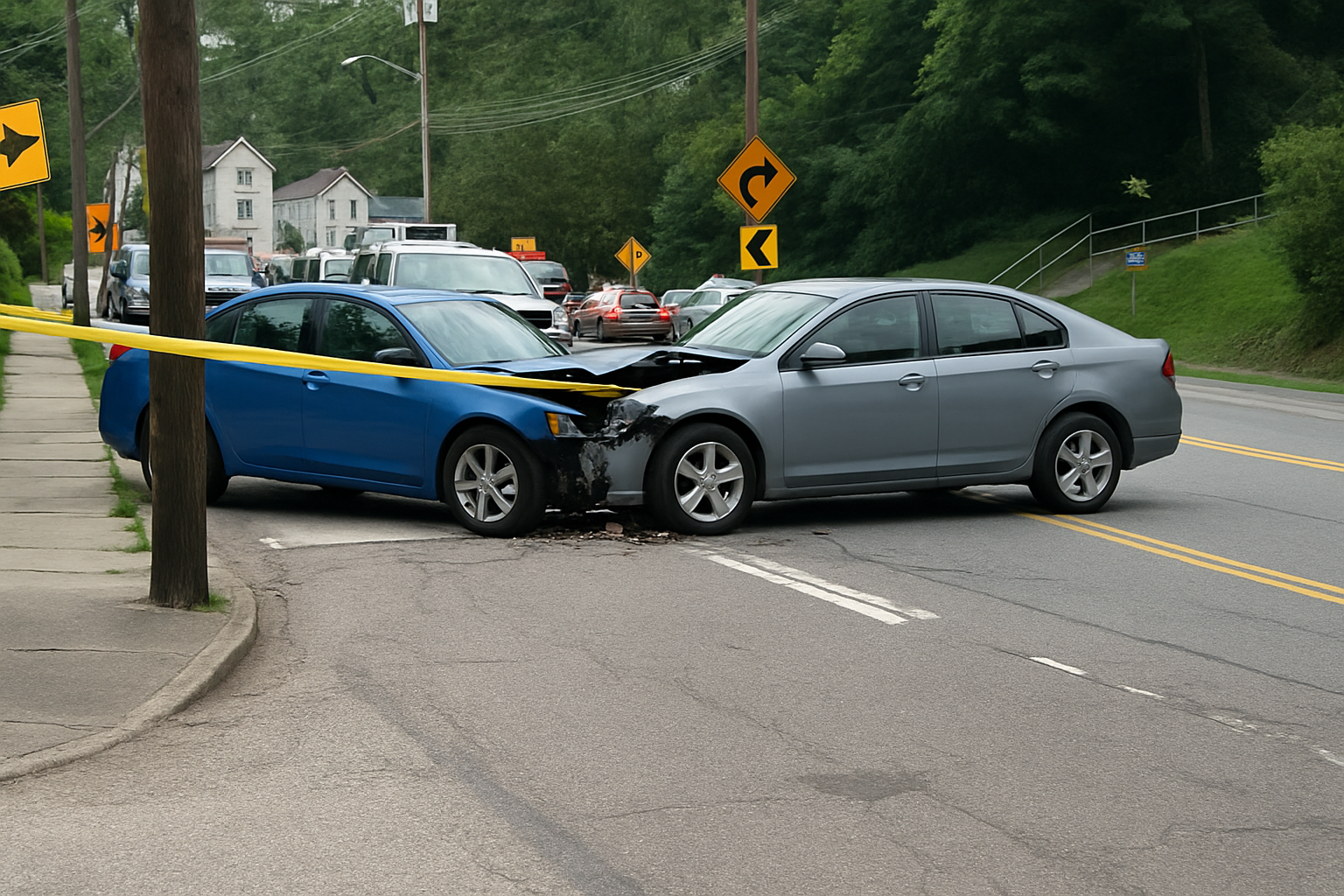
At-fault accidents with property damage or injury claims remain on your record and affect rates for 3–5 years in New York. The average rate increase after an at-fault accident in Buffalo is 40–60%, with some carriers doubling premiums. You will not return to standard pricing until the accident ages past the carrier's lookback window and you demonstrate 36 consecutive months of violation-free driving post-accident. Bundling policies, increasing deductibles, or switching to usage-based insurance programs can offset some of the increase during the recovery period.
Reckless driving, DUI, or license suspension violations trigger the longest recovery timelines. A DUI in New York requires SR-22 filing for 3 years, remains on your MVR for 10 years, and typically raises premiums 80–150%. Buffalo drivers with DUI convictions often remain in the high-risk market for 5–7 years before qualifying for standard rates again. Reckless driving (5 points) is rated similarly to DUI by many carriers and extends the recovery timeline to 5 years even without SR-22 requirements.
When Buffalo Drivers Need SR-22 Filing vs. Standard Non-Standard Coverage
Most Buffalo drivers with points from speeding tickets or minor at-fault accidents do not need SR-22 filing. New York does not require SR-22 for standard point violations like speeding, cell phone use, or failure to yield. SR-22 is required only after specific events: DUI conviction, driving without insurance, license suspension for accumulating 11+ points, or a court order mandating proof of financial responsibility.
If you've received a letter from the DMV requiring you to file an FS-1 form (New York's equivalent to SR-22 in other states), you'll need to purchase a policy from a carrier authorized to file on your behalf. The FS-1 filing itself costs $0–$50 depending on the insurer, but the underlying premium increase is significant — expect to pay 60–120% more than standard rates. The filing period in New York is typically 3 years from the triggering event, and any lapse during that period restarts the clock.
Drivers with points who do not need SR-22 should focus on non-standard auto insurance, which serves drivers with violations but does not involve state filings or compliance tracking. Non-standard policies are priced higher than standard policies but significantly lower than SR-22-required coverage. Buffalo has access to non-standard carriers like Progressive, The General, Acceptance, and Dairyland — all of which write policies for drivers with 3–10 points without requiring SR-22.
The key distinction: SR-22 is a legal compliance tool required by the state. Non-standard insurance is a pricing category used by insurers to serve drivers with imperfect records. If the DMV has not explicitly required you to file proof of insurance, you do not need SR-22 — you need a carrier willing to write a competitive non-standard policy. Confusing the two often leads Buffalo drivers to overpay or assume they cannot get coverage when standard non-standard policies are readily available.
Which Carriers Write Competitive Policies for Buffalo Drivers with Points
Buffalo drivers with violations should prioritize carriers that specialize in non-standard risk rather than staying with name-brand standard insurers. Progressive, Geico, and State Farm all write policies for drivers with points, but their pricing becomes less competitive as point totals increase. Once you cross 6 points or have two violations within 36 months, non-standard specialists often deliver better rates.
The General, Acceptance Insurance, and Bristol West are three non-standard carriers with strong presence in New York and competitive pricing for Buffalo drivers with 3–8 points. These carriers underwrite risk differently than standard insurers: they expect violations and price them into their base models rather than applying steep surcharges. A speeding ticket that triggers a 40% increase at Geico may result in only a 10–15% increase at The General because their entire book is non-standard.
Dairyland and National General also write non-standard policies in Buffalo and often offer usage-based insurance programs that allow drivers with points to earn discounts by demonstrating safe driving behavior post-violation. These telematics programs track braking, speed, and mileage; drivers who score well can reduce premiums by 10–20% even with active violations on record. This is one of the few ways to lower your rate before a violation ages off.
Shop at least three non-standard carriers every 6–12 months if you're carrying points. Rate competitiveness shifts as violations age and as carriers adjust their appetite for specific violation types. A carrier that quoted you $2,200/year at month 6 post-violation may quote $1,500 at month 18. Buffalo drivers who treat shopping as a recurring task rather than a one-time event save an average of $600–$900 annually during the violation rating period.
How to Check Your New York Driving Record and Plan Your Rate Recovery
Order your official Motor Vehicle Report (MVR) from the New York DMV to confirm exactly what violations appear on your record and when they were convicted. The DMV offers online, mail, and in-person requests; online reports cost $7 and arrive within 2–3 business days. Your MVR lists every violation, the conviction date, the point value, and the date the violation will no longer count toward your point total.
Use the conviction dates on your MVR to map your rate recovery timeline. If a speeding ticket shows a conviction date of March 2022, that violation will stop affecting your insurance premium in March 2025 (36 months post-conviction for most carriers). Mark that date and plan to re-shop your policy 30–60 days before the violation ages off — this gives you time to compare quotes and switch carriers at renewal without a gap.
If you've completed a defensive driving course (PIRP), confirm that the 4-point reduction appears on your MVR. The DMV updates records within 4–6 weeks of course completion, but errors occur. If the reduction is missing, contact the course provider for your certificate and submit it directly to the DMV. You can also send the certificate to your insurer to request the up-to-10% premium discount that New York law requires carriers to offer PIRP graduates.
Buffalo drivers should check their MVR annually during the rate recovery period. Insurance companies occasionally pull outdated or inaccurate data, and disputing errors on your MVR can result in immediate rate reductions if a violation is listed incorrectly or remains on file past its expiration date. The New York DMV provides a dispute process on its website; corrections typically take 30–60 days but can save hundreds per year if a violation is removed.