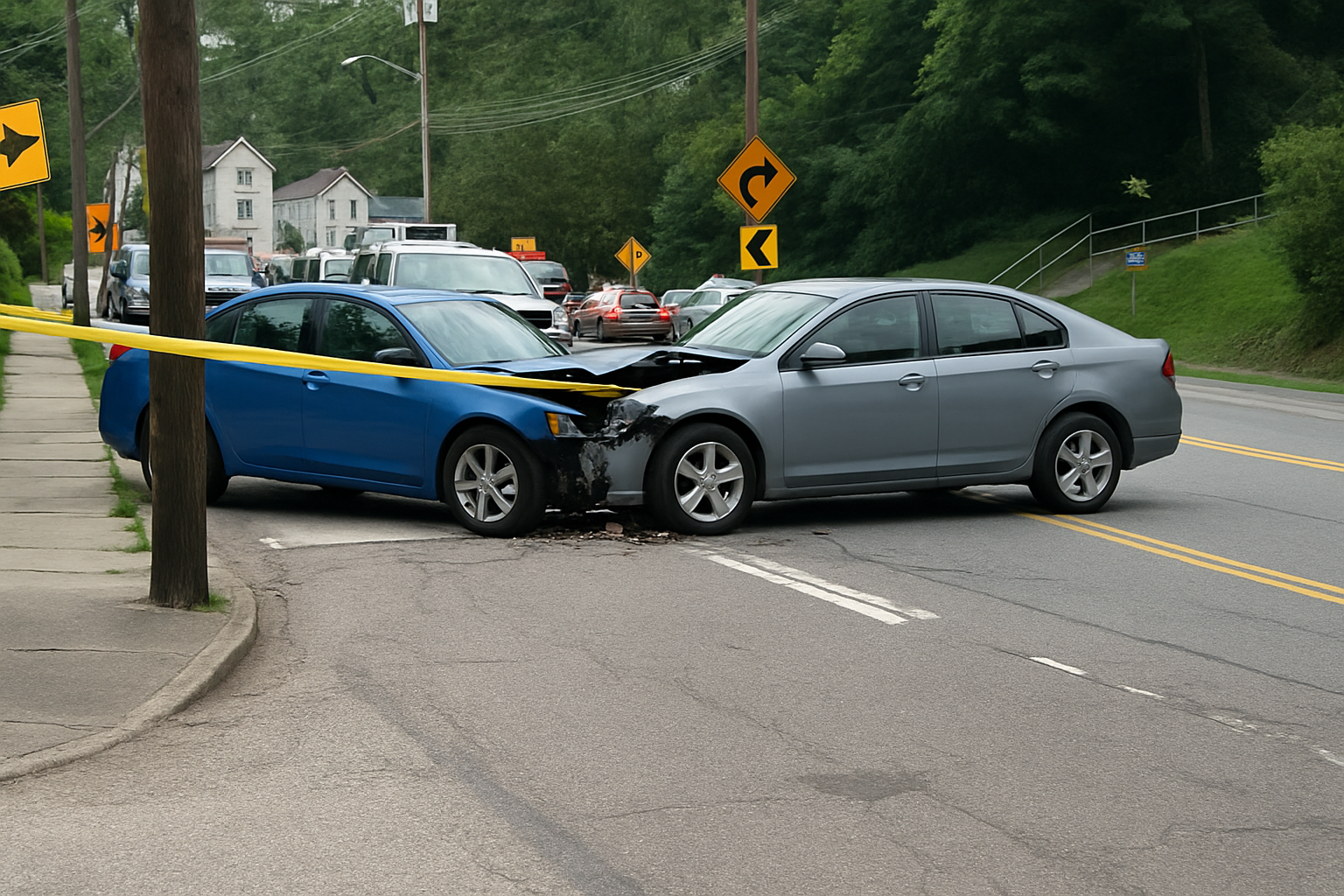
You've picked up a ticket or at-fault accident in Chesapeake, and your car insurance rate just spiked. Here's the exact timeline for rate recovery in Virginia, what drops points fastest, and which carriers write drivers with violations at competitive prices.
Virginia's Point System and What Triggers Rate Increases in Chesapeake
Virginia assigns demerit points for moving violations, and those points stay on your driving record for two years from the conviction date. A standard speeding ticket (1–9 mph over) adds 3 points. Reckless driving — defined as 20+ mph over the limit or driving over 85 mph regardless of the posted speed — adds 6 points and is a criminal misdemeanor. An at-fault accident with property damage or injury adds 3 or 4 points depending on severity.
Insurance carriers in Chesapeake don't use Virginia's demerit point totals directly. They track convictions on your Motor Vehicle Record (MVR) and apply their own surcharge schedules. A single speeding ticket typically increases your premium by 20–30%, while reckless driving or an at-fault accident can trigger a 40–70% increase. These surcharges apply at your next policy renewal and remain in effect for 3–5 years from the conviction date, not from when the points fall off your DMV record.
Virginia does not require SR-22 for standard point violations like speeding or at-fault accidents. SR-22 filing is reserved for DUI convictions, driving without insurance, or repeat serious offenses that result in license suspension. If your license was suspended for point accumulation (reaching 18 points in 12 months or 24 points in 24 months), you will not need SR-22 to reinstate unless the suspension was accompanied by one of those specific violations. Virginia's SR-22 requirements and filing process liability insurance minimums in Virginia
The Safe Driver Improvement Clinic: Immediate Point Reduction
Virginia allows drivers to complete a DMV-approved Safe Driver Improvement Clinic once every 24 months to reduce their demerit point balance by 5 points. The reduction is applied immediately upon completion — you don't wait for the points to age off naturally. The clinic is an 8-hour course available online or in person, costs $50–$75 depending on the provider, and must be completed within 90 days of your conviction to prevent the insurance surcharge from appearing on your MVR at renewal.
This is the single fastest mechanism to mitigate rate increases in Virginia. If you receive a 3-point speeding ticket and complete the clinic before your insurer pulls your MVR for renewal, the conviction may still appear but your point balance will be reduced or zeroed, which many carriers treat more favorably than an active point accumulation. Some insurers will still apply a surcharge for the underlying conviction, but the surcharge is often lower than it would be with active points on record.
You can also complete the clinic voluntarily — without a court order — to drop points from older violations still within the 2-year window. If you have 6 points from two tickets issued 18 months ago, completing the clinic now reduces your balance to 1 point and may lower your premium at your next renewal. Check your current point total at dmv.virginia.gov before enrolling.
Rate Recovery Timeline: When Chesapeake Premiums Normalize
Insurance surcharges for violations do not disappear when points fall off your DMV record. Carriers in Virginia typically apply surcharges for 3 years from the conviction date for minor violations (speeding, failure to yield) and 5 years for major violations (reckless driving, at-fault accidents with injury). After that lookback period ends, the conviction no longer affects your rate — even if it remains on your public driving record.
Most Chesapeake drivers see their premiums return to pre-violation levels 3–4 years after a single ticket, assuming no additional violations occur during that window. If you receive a second ticket during the surcharge period for the first, both violations stack and extend the total recovery timeline. A driver with two speeding tickets 18 months apart will carry surcharges for roughly 4.5 years from the date of the first ticket.
The fastest path to lower premiums during the surcharge window is to shop carriers aggressively. Non-standard and regional insurers in Virginia — including GEICO, Progressive, Nationwide, and Virginia Farm Bureau — have different tolerance levels for point violations. A driver surcharged 35% by one carrier may find a 15% increase or no surcharge at all with another. Rate differences of $600–$1,200 annually are common for drivers with a single violation when comparing five or more quotes.
Which Carriers Write Drivers with Points in Chesapeake
Not all carriers treat violations equally. GEICO and Progressive are the two largest writers of non-standard auto insurance in Virginia and typically offer competitive rates for drivers with one or two minor violations. Both use tiered underwriting, meaning a single speeding ticket may not move you out of their preferred pricing tier if your other factors — credit, coverage history, mileage — are strong.
Virginia Farm Bureau and Erie Insurance are regional carriers with significant market share in Chesapeake and surrounding cities. Both have appetite for drivers with points and may offer lower rates than national carriers for drivers with longer tenure in Virginia. State Farm and Allstate are less forgiving — drivers with even one reckless driving conviction or two violations within 36 months are often declined or moved to a non-preferred subsidiary with 50%+ higher premiums.
If you've been declined by two or more standard carriers, you're likely being quoted by assigned-risk or surplus-lines insurers. These are last-resort options and typically cost 2–3x the standard market rate. Before accepting assigned-risk coverage, request quotes from non-standard specialists like The General, Acceptance Insurance, or Direct Auto. These carriers write high-risk drivers at lower premiums than assigned-risk pools and do not require SR-22 unless mandated by the state for your specific violation. non-standard auto insurance options
Actions That Accelerate Rate Recovery in Virginia
Beyond the Safe Driver Improvement Clinic, three actions materially lower your premium during the surcharge window. First, increase your deductibles. Raising your collision and comprehensive deductibles from $500 to $1,000 reduces your premium by 10–15% and signals lower claim frequency to underwriters. If you're carrying a violation surcharge, this adjustment can offset 30–50% of that increase.
Second, remove coverage you don't need. If you're financing a vehicle, collision and comprehensive are required by your lender. If you own your car outright and its value is under $5,000, dropping both coverages can cut your premium by 40–60%. Virginia requires liability minimums of 25/50/20 ($25,000 bodily injury per person, $50,000 per accident, $20,000 property damage), but you are not required to carry collision or comprehensive unless mandated by a lienholder.
Third, bundle policies or increase your policy term commitment. Multi-car discounts, homeowner or renter policy bundling, and 6-month or 12-month paid-in-full discounts stack even when you have points on your record. Drivers with violations who bundle auto and renters insurance save an average of 15–20% compared to standalone auto policies, and the discount applies to the post-surcharge premium — not the base rate.
Chesapeake-Specific Considerations: Local Courts and License Reinstatement
If you received your ticket in Chesapeake General District Court, you have the option to attend a driver improvement clinic as part of a plea agreement before conviction. Some judges will reduce a reckless driving charge to improper driving (a non-moving violation with no points) if you complete the clinic proactively and show proof at your hearing. This prevents the conviction from appearing on your MVR entirely and avoids the insurance surcharge.
If your license was suspended for point accumulation, you must wait until the suspension period ends, pay a $145 reinstatement fee to the Virginia DMV, and provide proof of insurance (FR-44 if required, standard proof if not). Virginia does not require SR-22 for point-based suspensions unless the suspension was tied to a DUI, refusal to submit to a chemical test, or driving without insurance. Reinstatement timelines in Virginia are non-negotiable — you cannot shorten a suspension period by completing the Safe Driver Improvement Clinic or paying fines early.
Once reinstated, expect your first post-suspension quote to be 50–90% higher than your pre-violation rate. This premium reflects both the underlying violations and the coverage lapse. Maintaining continuous coverage for 6–12 months without additional violations will lower your rate at each subsequent renewal, even if your points have not yet aged off your record.