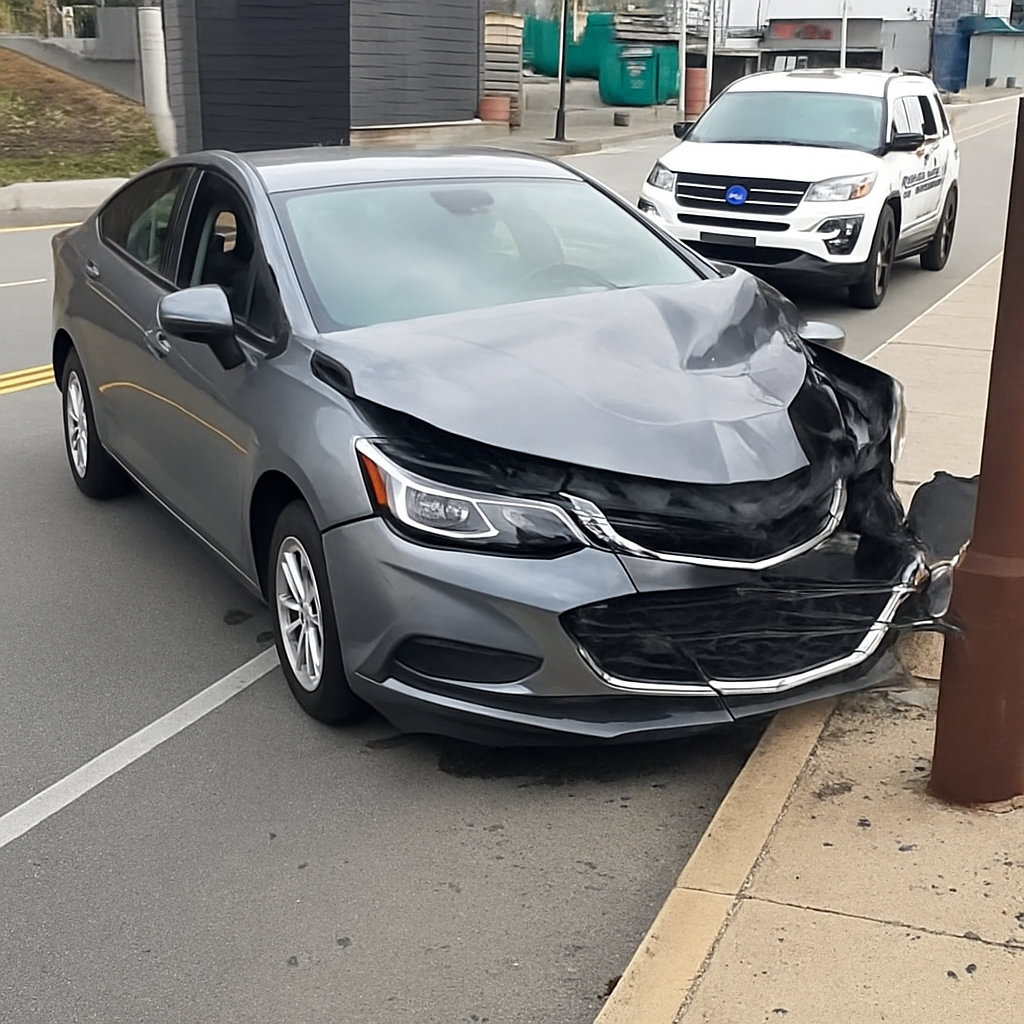
Chicago drivers with violations face some of the highest rate increases in Illinois — up to 40% for a single speeding ticket. But rates drop predictably as violations age, and most carriers recalculate pricing at policy renewal, not when points fall off your record.
When Chicago Violation Rates Start to Drop
Illinois keeps moving violations on your driving record for 4 to 5 years from the conviction date, depending on the severity. But your insurance rates do not wait that long to improve. Most carriers recalculate premiums at each annual renewal based on how much time has passed since the violation, not whether the points are still technically on your record. A speeding ticket from 18 months ago costs you less than one from 6 months ago, even though both appear on your Motor Vehicle Record.
In Chicago, a single speeding ticket (15+ mph over) typically triggers a 25-40% rate increase at the first renewal after the conviction. That same violation, if it remains your only incident, usually costs 15-20% more than a clean record at the 24-month mark, and drops to near-baseline rates by year three. Carriers treat the violation as progressively less predictive of future claims as it ages. This means your next renewal — not the point expiration date — is the milestone that matters for rate recovery.
Chicago's location in Cook County adds a compounding factor: base rates are already high due to dense traffic, theft rates, and repair costs. A driver with one speeding ticket in Chicago pays more in absolute dollars than a driver with the same ticket in Peoria, even if the percentage increase is identical. The path to lower premiums is the same regardless of geography, but the starting point is higher.
Illinois Point Thresholds and What Triggers Rate Changes
Illinois uses a point system to track moving violations, and the Secretary of State suspends your license if you accumulate 3 convictions within 12 months. Points themselves do not trigger suspension — the number of separate convictions does. A single speeding ticket is one conviction. Two tickets in 11 months is two convictions. Three in a year means a suspension hearing and potential loss of driving privileges.
Insurance companies do not use the state point system directly. They track convictions on your Motor Vehicle Record and apply their own internal risk scoring. A 20-over speeding ticket and a failure-to-yield citation both count as one conviction for suspension purposes, but carriers weigh them differently for pricing. Speeding violations 15+ mph over the limit, reckless driving, and at-fault accidents generate the steepest rate increases — typically 30-50% at the first renewal. Minor speeding tickets under 15 mph over often trigger 15-25% increases.
Most Chicago drivers with one or two violations do not need SR-22 insurance. Illinois reserves SR-22 requirements for specific situations: DUI convictions, driving without insurance, license suspensions for serious violations, or multiple at-fault accidents in a short period. If your violation did not involve alcohol, a suspension, or a lapse in coverage, you are shopping for standard or non-standard auto insurance, not SR-22. The confusion between points and SR-22 creates unnecessary alarm — the two are separate systems. Illinois SR-22 requirements
Which Carriers Write Chicago Drivers With Points
Not all carriers respond to violations the same way, and this is where shopping matters most. A driver with one speeding ticket might see a 40% increase with Carrier A and a 22% increase with Carrier B, even though both companies reviewed the same Motor Vehicle Record. Carriers use different models to price violation risk, and some specialize in non-standard policies for drivers with points.
In Chicago, carriers known for competitive rates after violations include The General, Dairyland, Bristol West, National General, and Progressive. These companies write policies for drivers with 1-3 recent violations and often deliver lower premiums than continuing with a standard carrier after a rate hike. Standard carriers like State Farm, Allstate, and Geico typically raise rates more aggressively after a first violation, though they may offer accident forgiveness programs that waive the first at-fault incident if you qualify before the violation occurs.
The highest-leverage action available to a Chicago driver with a recent violation is to request quotes from at least three non-standard carriers at your next renewal. Loyalty does not reduce violation surcharges — shopping does. Carriers assume most drivers will not switch after a rate increase, which is why the same violation can generate quotes that differ by $600-$1,200 annually depending on which insurer prices the risk.
Defensive Driving and Rate Reduction Tools in Illinois
Illinois allows drivers to attend a state-approved defensive driving course to prevent a conviction from appearing on their Motor Vehicle Record, but only under specific conditions. If you receive court supervision — a form of probation that dismisses the ticket if you meet all conditions — completing a defensive driving course is often mandatory. Once you finish supervision without additional violations, the original ticket does not appear as a conviction, which means insurers never see it.
This process only works if the court grants supervision and you complete it successfully. It is not available for all violations — DUI, reckless driving, and some speeding offenses over 25 mph are typically excluded. If the ticket has already converted to a conviction on your record, a defensive driving course will not remove it retroactively. But many insurance carriers offer a separate defensive driving discount — usually 5-10% off your premium — if you voluntarily complete an approved course, even with existing violations on your record. This discount stacks with the natural rate improvement that occurs as the violation ages.
Chicago drivers with violations should confirm whether their current carrier offers a defensive driving discount and whether the course must be taken before or after the ticket. Some insurers require enrollment within a specific window. The discount applies for 3 years in most cases, which provides modest savings while you wait for the violation to lose its pricing impact.
Timeline to Baseline Rates After a Chicago Violation
The full rate recovery timeline for a single moving violation in Illinois follows a predictable curve. At the first renewal after the conviction, expect a 25-40% increase for speeding 15+ mph over, 15-25% for minor speeding, and 40-60% for reckless driving or at-fault accidents. At the 12-month mark, most carriers reduce the surcharge by 20-30% of the original increase if no additional violations occur. By 24 months, the surcharge typically drops to 10-20% above your baseline rate. By 36 months, you are usually back to near-clean-record pricing, even though the violation remains visible on your Motor Vehicle Record.
This timeline assumes you remain violation-free and maintain continuous coverage. A second violation resets the clock and compounds the surcharge — two speeding tickets within 24 months can double your premium or push you into non-standard territory where fewer carriers compete for your business. Chicago drivers should treat the first 24 months post-violation as the critical window: no lapses, no additional tickets, and active shopping at each renewal.
If you accumulate three or more violations, expect the timeline to extend. Carriers typically require 3-5 years of clean driving after multiple incidents before offering standard rates again. Non-standard insurers remain the most accessible option during this period, and their rates drop incrementally as violations age off, though not as steeply as standard carriers.
When to Expect Your Next Rate Drop
Your next opportunity for a lower premium is your policy renewal date, not the date your points expire. Most carriers recalculate rates annually, and the single most effective action is to request quotes from competing insurers 30-45 days before renewal. Staying with your current carrier after a violation rarely delivers the lowest available rate — even if they reduce your surcharge slightly, a competitor pricing the same risk may start lower.
Chicago drivers should also monitor their Motor Vehicle Record annually through the Illinois Secretary of State. Errors appear more often than most drivers expect — incorrect conviction dates, duplicate entries, or violations attributed to the wrong driver. If your MVR shows inaccuracies, correcting them before your next renewal can prevent incorrectly inflated premiums. You can request a copy of your driving record online through the Illinois SOS website for a small fee.
If you have one violation and are approaching the 12-month or 24-month anniversary, begin shopping 60 days early. Rates drop in steps, not smoothly, and the timing of your quote request relative to the conviction date can shift you into a lower risk tier with some carriers. The difference between 23 months and 25 months post-violation can be meaningful in terms of available pricing. check your state's point system