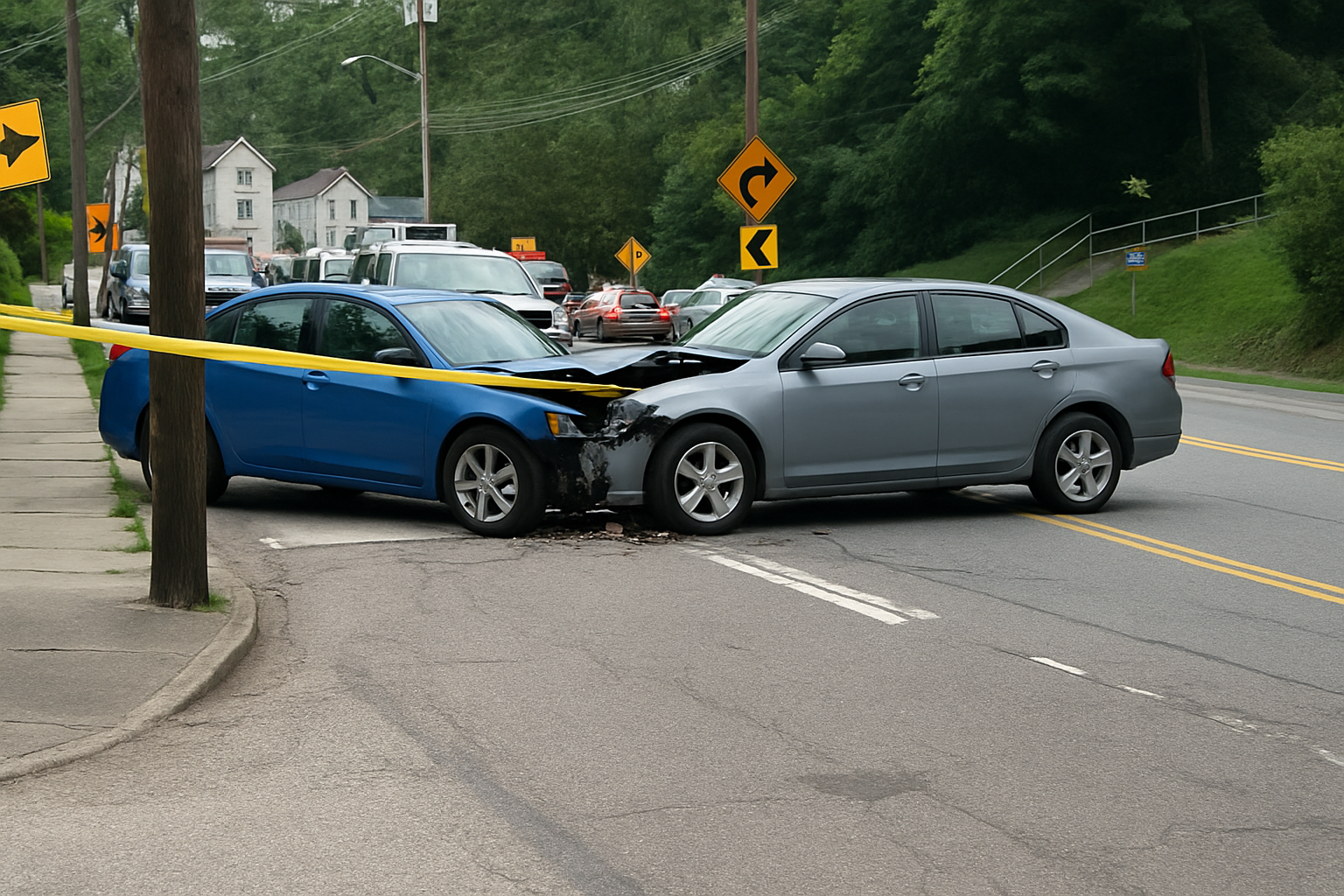
Your violation triggered a premium spike in Columbus — but Ohio's point system and carrier competition give you more control over your recovery timeline than you think. Here's what actually moves your rate down.
What a Violation Does to Your Rate in Columbus
A single speeding ticket in Columbus typically increases your premium by 20–30% at your next renewal. An at-fault accident pushes that to 40–60%. A reckless driving citation or DUI can double or triple your rate — and in those cases, you may also face an SR-22 filing requirement, which adds another layer of cost and compliance. The spike is immediate, tied to your next renewal date, and applies whether you're insured through a standard carrier or already in the non-standard market.
Ohio insurers pull your Motor Vehicle Record (MVR) at renewal and apply surcharges based on what appears. Columbus-based carriers like Grange, Westfield, and Progressive all operate under this model. The severity of the violation dictates the surcharge: a minor speeding ticket (10 mph over) adds 2 points and triggers a lower surcharge than a failure to yield (2 points) or a DUI (6 points). But the insurance impact is not strictly proportional to your point total — a single high-severity violation can cost you more in premiums than three minor tickets.
Most Columbus drivers don't realize that the rate increase is not permanent. Carriers re-evaluate your risk profile at each renewal, and many begin reducing surcharges after 12 months of no new violations — even though Ohio keeps points on your record for 2 years and violations visible for up to 5 years. This mismatch between state record-keeping and carrier underwriting is what creates your recovery window. Ohio's SR-22 requirements and filing rules non-standard auto insurance
How Ohio's Point System Affects Your Coverage Timeline
Ohio assigns points for moving violations: 2 points for most speeding and moving violations, 4 points for certain high-risk offenses like street racing, and 6 points for DUI or refusal to submit to a chemical test. If you accumulate 12 points within 2 years, the Ohio BMV suspends your license for 6 months. Points remain on your driving record for 2 years from the date of the violation, not the conviction date.
But insurance carriers look further back. Ohio law allows insurers to consider violations for up to 5 years when setting your rate. That means a speeding ticket from 3 years ago won't add points to your BMV record, but it can still justify a surcharge on your policy. This distinction matters in Columbus because it means your recovery timeline has two phases: BMV point expiration (2 years) and insurance surcharge phase-out (typically 3–5 years, depending on the carrier and violation severity).
For most Columbus drivers, the practical recovery milestone is 12 months clean. Carriers like State Farm, Nationwide, and Allstate often reduce or remove first-offense surcharges at the first renewal following a 12-month violation-free period. This is not a legal requirement — it's an underwriting practice — but it's widespread enough that shopping at the 1-year mark often yields significantly better offers than sitting with your current carrier. SR-22 insurance
Which Violations Require SR-22 in Columbus and Which Don't
Most point violations in Ohio do not require SR-22 filing. A speeding ticket, failure to yield, or even an at-fault accident will raise your rates and add points, but they do not trigger a state-mandated SR-22 unless your license is suspended as a result. SR-22 is required in Columbus for DUI convictions, driving under suspension, accumulating 12 points in 2 years, refusing a chemical test, or certain repeat violations within a defined period.
If you do need SR-22, the filing itself costs $25–$50 in Ohio, but the real cost is the insurance premium. SR-22 drivers in Columbus typically pay $150–$300/month for minimum liability coverage, compared to $70–$120/month for a driver with points but no SR-22 requirement. The SR-22 filing must remain active for 3 years in Ohio, and any lapse triggers an automatic license suspension and restarts the 3-year clock.
If your violation did not result in a suspension or DUI, you do not need SR-22 — but you will still face higher premiums. The key difference is carrier availability. Drivers with points but no SR-22 can still access standard and preferred carriers if they shop aggressively. Drivers with SR-22 are typically limited to non-standard carriers like The General, Bristol West, or Acceptance Insurance, all of which operate in Columbus but charge higher base rates.
What Actually Lowers Your Rate After a Violation
Time is the primary factor. Every renewal without a new violation reduces your surcharge incrementally. Carriers recalculate your risk profile at each renewal based on your most recent 3- to 5-year driving history, weighted toward recent years. A violation from 36 months ago carries less weight than one from 12 months ago, and many carriers phase out surcharges entirely after 3 years for minor violations.
But waiting is not your only option. Completing a defensive driving course can reduce your surcharge with some carriers in Columbus. Ohio does not mandate a point reduction for completing such a course, but individual insurers may offer a discount — typically 5–10% — for drivers who voluntarily complete an approved program. Check with your carrier before enrolling; not all recognize the same courses, and the discount must be applied manually at renewal.
Shopping carriers is the single highest-leverage action available to Columbus drivers with points. Rate increases after violations are not uniform across insurers. One carrier may surcharge a speeding ticket at 25% while another applies only 15%. Drivers who compare quotes within 60 days of a violation-related rate increase save an average of $40–$80/month by switching to a carrier with more favorable underwriting for their specific violation type. Columbus has robust competition among both standard carriers (State Farm, Progressive, Nationwide) and non-standard specialists (The General, Dairyland, Bristol West), which gives you negotiating leverage even with points on your record.
When to Expect Your Rate to Normalize
For a single minor violation — speeding 10–15 mph over, failure to signal, or similar 2-point offense — expect your rate to drop noticeably at your first renewal after 12 months clean. Many Columbus carriers reduce the surcharge by 50% or more at that milestone, and phase it out entirely by the 24- or 36-month mark.
For a major violation — reckless driving, DUI, or an at-fault accident with injury — the timeline extends to 3–5 years. Ohio insurers are legally allowed to consider a DUI for up to 5 years, and most do. Your rate will decrease incrementally at each renewal, but expect to pay elevated premiums for at least 3 years. If you also have an SR-22 requirement, your rate begins normalizing after the 3-year filing period ends, assuming no new violations during that time.
The best indicator of your specific recovery timeline is your carrier's underwriting tier. If your violation moved you from a preferred tier to standard or non-standard, you'll need to qualify for re-tiering — which typically requires 2–3 years of clean driving plus shopping for a carrier willing to re-underwrite you. Columbus drivers who stay with the same carrier after a violation often pay elevated rates longer than those who shop aggressively at the 12- and 24-month marks.
Columbus-Specific Carrier Options for Drivers with Points
Columbus has a deep bench of both standard and non-standard carriers, which gives you options even with points on your record. If you have a single minor violation and no SR-22 requirement, you're still in the standard market — shop State Farm, Nationwide, Progressive, Grange, and Erie. All write policies in Franklin County and compete on rate.
If you have multiple violations, an at-fault accident, or points from a high-severity offense, you may need to move into the non-standard market. The General, Bristol West, Acceptance Insurance, and Dairyland all operate in Columbus and specialize in drivers with imperfect records. These carriers price risk differently than standard insurers — they may weigh your current insurance score or payment history more heavily than your driving record, which can work in your favor if you've been continuously insured despite your violations.
If you need SR-22, your carrier pool narrows further. The General, Progressive (non-standard division), and Acceptance are the most active SR-22 writers in Columbus. Expect to provide proof of continuous coverage and pay higher monthly premiums, but also expect your rate to drop noticeably once your SR-22 filing period ends and you can re-shop the standard market.