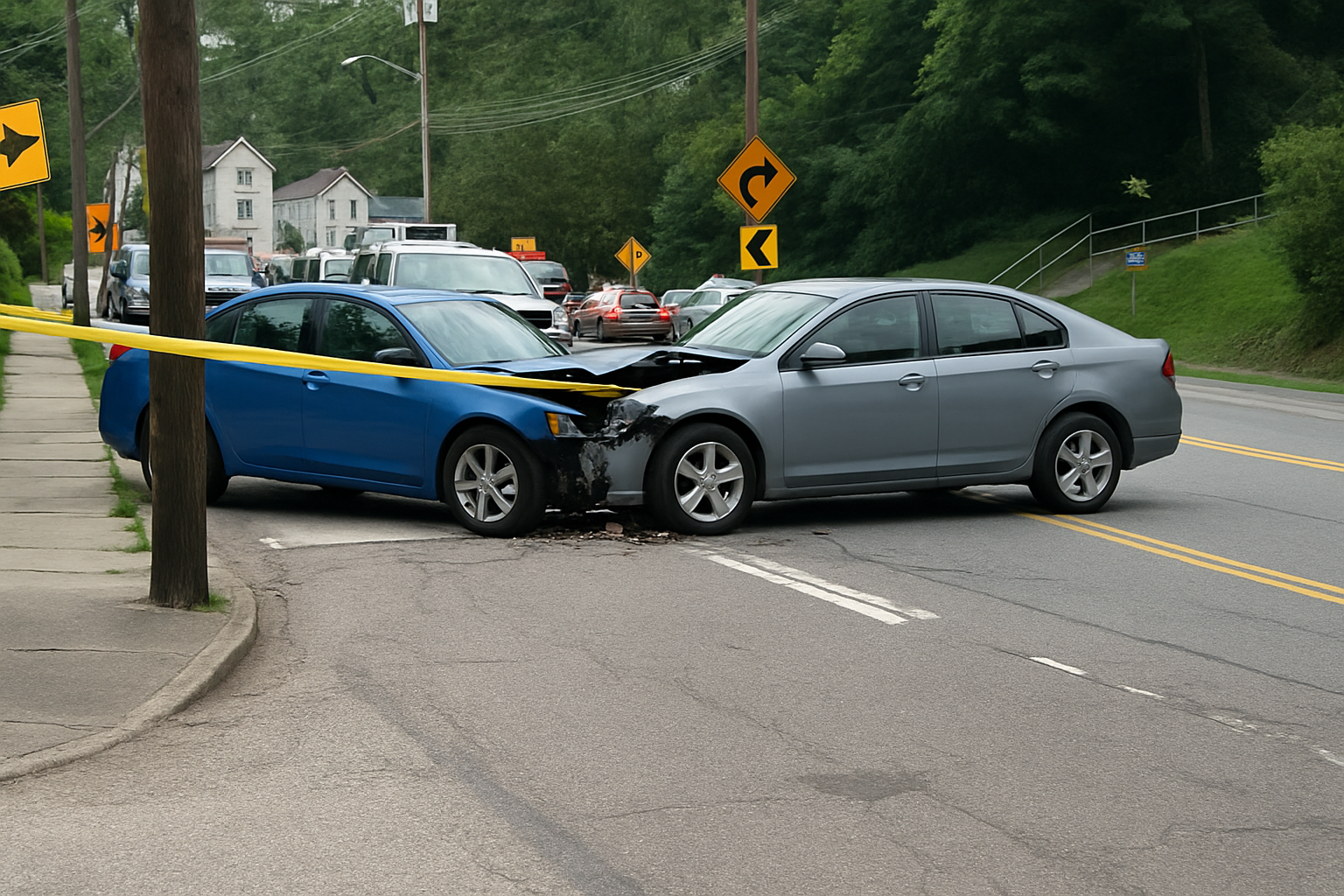
Denver drivers with points from speeding tickets, at-fault accidents, or moving violations typically see 20–40% rate increases that peak in year one and decline over three years. Here's the timeline and what you can do now to accelerate your rate recovery.
What Violations Do to Your Rates in Denver — and When They Peak
A single speeding ticket in Denver typically raises your insurance premium by 20–30% at renewal, while an at-fault accident triggers increases of 30–50% depending on the damage amount and your carrier. DUI violations in Colorado generate the steepest penalty: 70–130% rate increases that persist for five years on your driving record and three years of mandatory SR-22 filing. Most Denver drivers see their highest premium in the first 12 months after the violation posts to their Motor Vehicle Report.
Colorado uses a point system administered by the DMV: speeding 1–4 mph over earns 1 point, 5–9 mph over earns 4 points, and 10–19 mph over earns 6 points. An at-fault accident adds 4 points. Accumulating 12 or more points in 12 months triggers a license suspension in Colorado, but insurance carriers often begin applying surcharges at lower thresholds — typically after the first 3–4 points post. Points remain on your Colorado driving record for seven years, but most insurers only surcharge for the first three to five years depending on violation severity.
Denver's high traffic density means violation frequency is higher than the state average, and carriers price Denver ZIP codes accordingly. A speeding ticket issued on I-25 or I-70 during rush hour carries the same point value as one issued in rural Colorado, but Denver-based drivers already face higher base rates due to accident frequency and theft rates in the metro area. That means your post-violation premium reflects both the violation surcharge and the underlying urban risk pool you're already part of. non-standard auto insurance
The Three-Year Recovery Timeline — What Changes and When
Most violations follow a predictable rate recovery curve tied to how long they remain surchargeable on your record. For a standard speeding ticket or at-fault accident in Denver, expect the surcharge to remain at full strength for the first three years from the violation date, then decline or disappear entirely depending on your carrier's underwriting guidelines. Some carriers drop the surcharge after three years; others taper it gradually in years four and five.
Reckless driving, careless driving, and DUI violations stay surchargeable longer. Colorado law requires SR-22 filing for three years following a DUI, and most carriers maintain elevated premiums for the full five-year period the conviction remains on your MVR. That means a DUI issued in 2023 will affect your rates through at least 2028, even though the SR-22 requirement ends in 2026. After five years, the DUI no longer appears on your record for insurance rating purposes, and you can shop as a standard-risk driver again.
The timeline accelerates if you take action. Completing a Colorado-approved defensive driving course can remove up to 4 points from your record if you're eligible — Colorado allows one point reduction course every 12 months. That doesn't erase the violation from your MVR, but it lowers your active point total and can reduce the surcharge some carriers apply. More importantly, shopping your rate with non-standard carriers after a violation often delivers immediate savings that exceed what you'd gain by waiting three years with your current insurer.
Which Carriers Write Denver Drivers With Points — and What They Charge
After a violation posts, your current carrier may non-renew your policy or raise your rate to a level that makes shopping essential. Not all carriers in Colorado write drivers with recent violations, and those that do segment risk differently. Non-standard carriers like The General, Bristol West, and Acceptance specialize in drivers with points, lapses, or SR-22 requirements and often deliver lower premiums than keeping coverage with a standard carrier that's already surcharged you.
Denver drivers with 4–8 points on their record typically see monthly premiums between $180–$320/mo for minimum liability coverage with non-standard carriers, compared to $250–$450/mo if they stay with a standard carrier that's applied a violation surcharge. The gap widens further for drivers with multiple violations or an at-fault accident combined with a speeding ticket. Full coverage after a violation in Denver typically runs $300–$550/mo depending on your vehicle value, deductible, and the number of recent incidents.
SR-22 filings add $15–$25 to your total premium in Colorado — that's the one-time or annual filing fee the carrier charges to submit the SR-22 certificate to the DMV. The larger cost driver is the underlying violation that triggered the SR-22 requirement, not the filing itself. If you need SR-22 coverage in Denver due to a DUI, license suspension, or driving uninsured, you'll need a carrier licensed to file SR-22 in Colorado. Not all non-standard carriers offer SR-22 filings, so confirm eligibility before switching. Colorado SR-22 requirements
Immediate Actions That Lower Your Premium Now
The fastest way to reduce your premium after a Denver violation is to compare quotes from at least three non-standard carriers within 30 days of your current renewal. Standard carriers apply surcharges based on internal underwriting models that assume you'll stay with them; non-standard carriers price competitively because they expect to win business from drivers leaving standard markets. That competitive dynamic means shopping delivers bigger savings after a violation than at any other point in your coverage history.
Raising your deductible from $500 to $1,000 can lower your collision and comprehensive premiums by 15–25%, which partially offsets the violation surcharge if you carry full coverage. Dropping collision and comprehensive entirely — if your vehicle is older and paid off — eliminates the most expensive components of your policy and leaves you with liability-only coverage at a significantly lower monthly cost. Colorado requires minimum liability limits of 25/50/15, and maintaining only those minimums after a violation keeps you legal while reducing your exposure to high premiums.
Enrolling in a Colorado Level II Driver Awareness Program removes up to 4 points from your record if you haven't taken a point-reduction course in the past 12 months. The course costs $50–$90 and takes 4–8 hours online or in-person. While the violation itself stays on your MVR for seven years, reducing your active point count can lower the surcharge some carriers apply and moves you further from the 12-point suspension threshold. Not all carriers recognize point-reduction courses immediately, so confirm with your insurer before enrolling if your goal is a rate reduction at next renewal. liability insurance
When SR-22 Is Required in Colorado — and When It's Not
Most Denver drivers with points from speeding tickets or at-fault accidents do not need SR-22 filings. Colorado requires SR-22 only for specific violations: DUI or DWAI convictions, driving without insurance, accumulating excessive points that result in license suspension, refusing a chemical test, or committing certain repeat offenses within a short period. A single speeding ticket, even one that adds 6 points, does not trigger an SR-22 requirement.
If you do need SR-22 in Colorado, you must maintain it for three years from the date of reinstatement without any lapses. A lapse of even one day restarts the three-year clock and can result in a new suspension. The Colorado DMV sends the SR-22 requirement notice by mail, and you're responsible for ensuring your carrier files the certificate electronically with the state. If you switch carriers during your SR-22 period, your new insurer must file a new SR-22 and your old insurer must file an SR-26 termination notice — any gap between those filings counts as a lapse.
SR-22 filings do not raise your rate by themselves; the violation that triggered the SR-22 requirement is what drives the premium increase. The filing fee is minimal, and most carriers that write non-standard risk also provide SR-22 services. Confusing SR-22 with high-risk coverage is common, but they're separate: SR-22 is a compliance document, not a type of insurance. You still purchase liability, collision, and comprehensive coverage the same way — SR-22 is just the state's proof that you're carrying it.
How Colorado's Point System Affects Your Long-Term Rate Recovery
Colorado's 12-point suspension threshold is higher than many states, which gives Denver drivers more room to accumulate minor violations before facing a suspension. But insurance carriers don't wait for suspension to apply surcharges — most begin increasing premiums as soon as 3–4 points post. Points remain on your Colorado MVR for seven years, but insurers typically only look back three to five years when calculating your premium, depending on the violation type and carrier underwriting rules.
Speeding violations under 10 mph over the limit and minor moving violations like failing to signal are surcharged for three years by most carriers, while reckless driving, DUI, and hit-and-run violations remain surchargeable for five years or longer. After that window closes, the violation still appears on your MVR if anyone pulls your full driving record, but it no longer factors into your insurance premium calculation. That's why rate recovery accelerates sharply in year four for drivers with a single moderate violation — the surcharge drops off entirely, and you return to standard-risk pricing if no new violations occur.
Staying violation-free for three consecutive years after your most recent incident is the most reliable path back to standard rates. Carriers reward clean driving with good-driver discounts that can reduce your base premium by 10–20%, and you regain access to standard-market carriers that don't write drivers with recent violations. For Denver drivers with multiple violations, the recovery timeline extends — each new ticket or accident resets the clock, and carriers treat repeat violators as persistently high-risk until a longer clean period is established.