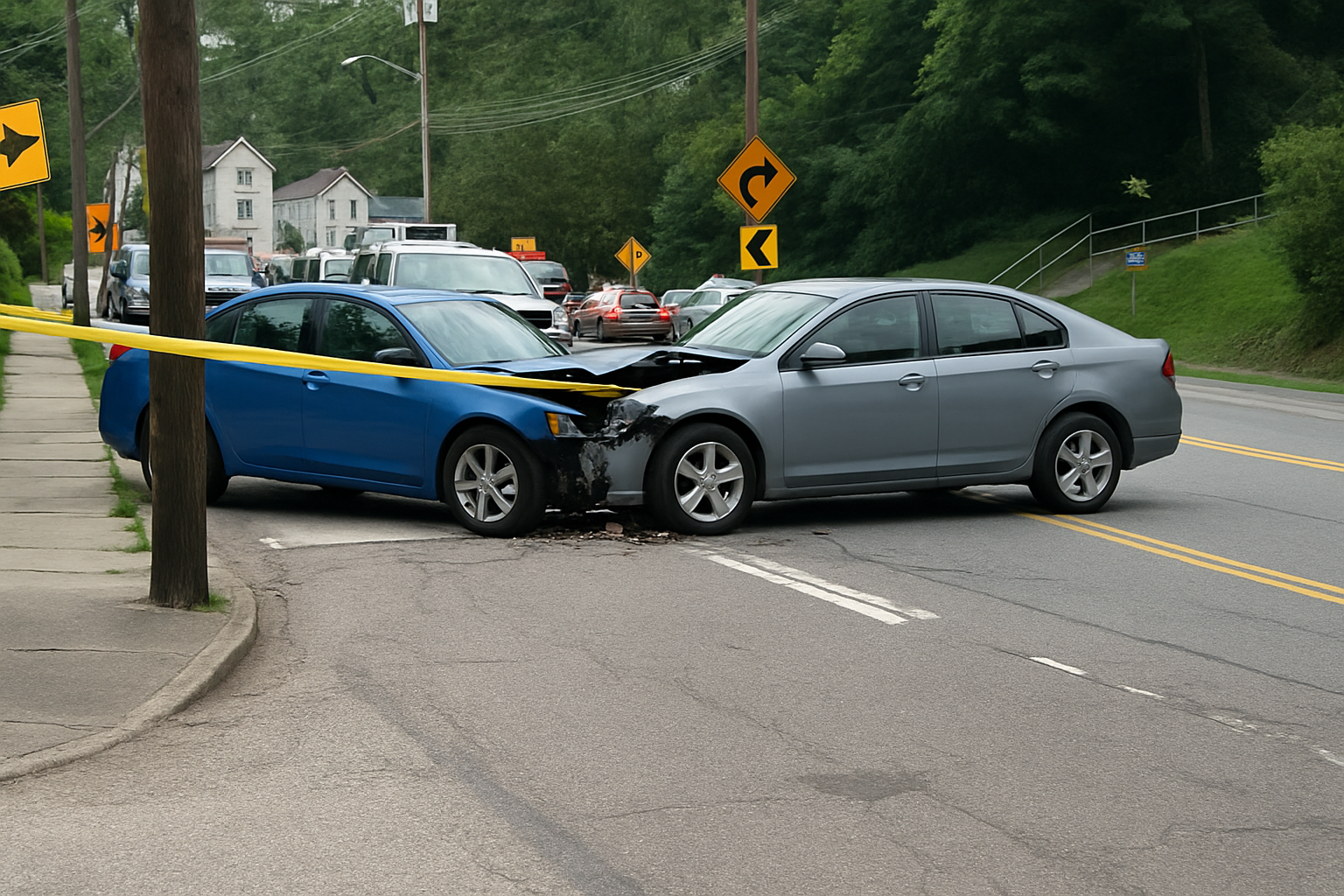
Points from tickets or at-fault accidents in Durham can raise your rates 20–70%, but most carriers recalculate premiums every 6–12 months — meaning your next renewal is your first opportunity to recover. Here's the timeline and what to do now.
How Points Affect Your Rates in Durham and When Carriers Recalculate
North Carolina uses a point system where violations add 1–5 points to your license, and 8 points in 3 years triggers a suspension. A speeding ticket 10+ mph over adds 2 points, an at-fault accident adds 3, and reckless driving adds 4. Durham drivers are subject to the same statewide thresholds, but your insurance rate increase depends on the carrier, not the DMV point total.
Most carriers raise rates 15–25% for a single speeding ticket, 30–50% for an at-fault accident, and 50–70% for reckless driving or multiple violations within 12 months. These increases apply at your next renewal after the violation is reported, and they stay in place for as long as the carrier's underwriting lookback period — typically 3 years for standard carriers, sometimes 5 years for non-standard insurers.
The key recovery window is your renewal date. Carriers recalculate your risk profile every 6 or 12 months depending on your policy term, which means each renewal is a chance to move into a lower-risk tier or to shop competitors who may no longer count your violation. Waiting passively for points to fall off your DMV record does not lower your premium — only a new underwriting decision does that, either from your current carrier at renewal or from a new one you switch to. North Carolina point system and SR-22 requirements non-standard auto insurance SR-22 insurance requirements
The 3-Year NC Point Timeline vs. the 3–5 Year Insurance Lookback
North Carolina removes points from your driving record 3 years from the date of conviction, not the date of the violation. If you were cited in January 2023 but convicted in April 2023, the 3-year clock starts in April 2023 and ends in April 2026. Once points drop off, your DMV record is clean for license suspension purposes, but insurers do not use the same timeline.
Insurance companies pull your Motor Vehicle Report (MVR) at application and renewal, and most carriers look back 3 years for moving violations and at-fault accidents. Some non-standard or high-risk insurers extend that window to 5 years, especially for reckless driving or multiple violations. This means your violation may still appear on the MVR and affect your rate even after the points have been removed by the DMV.
The practical implication: your rate recovery is not automatic at the 3-year mark. You need to shop carriers at that point to find one whose lookback window has expired for your violation. Staying with the same insurer who rated you high-risk 2 years ago often means you continue paying that premium until you force a new underwriting decision by switching.
What You Can Do Now to Accelerate Rate Recovery in Durham
North Carolina allows drivers with certain violations to complete a state-approved defensive driving course to reduce their insurance points by 3 and potentially avoid a rate increase — but only if completed before the conviction is reported to your insurer. If you've already been convicted and your rate has increased, the defensive driving discount no longer applies retroactively, but the course may still qualify you for a safe driver discount with some carriers at your next renewal.
The highest-leverage action available right now is shopping carriers. Durham drivers with 2–4 points on their record should compare quotes from at least 3 non-standard or regional insurers who specialize in imperfect records — companies like National General, Dairyland, The General, and Bristol West often price violations 20–40% lower than the standard market. Standard carriers like State Farm and Geico may non-renew or surcharge aggressively after multiple violations, while non-standard carriers expect violations and price competitively for them.
Other rate reduction tactics include increasing your deductible from $500 to $1,000 (which can lower premiums 10–15%), dropping collision coverage on older vehicles worth under $3,000, bundling auto and renters insurance, and asking about telematics programs that track safe driving behavior for 90 days in exchange for a potential 10–25% discount. None of these erase the violation surcharge, but they reduce the base premium the surcharge applies to.
Durham-Specific Carrier Availability and Non-Standard Market
Durham is part of the Triangle metro area where both standard and non-standard carriers compete actively, which means drivers with points have more options than in rural North Carolina counties. Major non-standard writers like National General, Dairyland, and Bristol West all write policies in Durham County, and regional players like Safe Auto and Acceptance Insurance maintain local agent networks.
Standard carriers typically non-renew drivers who accumulate 6+ points in a 3-year period or have 2+ at-fault accidents. Once non-renewed, you enter the non-standard market, where premiums are 30–60% higher than standard rates but still vary widely by carrier. A driver paying $220/month with one non-standard insurer may find the same coverage for $140/month with another — the variance is larger in the non-standard market than in the standard market, which makes shopping essential.
SR-22 insurance is not required in North Carolina for standard point violations like speeding tickets or single at-fault accidents. You only need SR-22 filing if convicted of DUI, driving while license revoked, or if ordered by the court or DMV after a serious violation. Most Durham drivers with points do not need SR-22, and conflating the two creates unnecessary alarm and often leads to overpaying for coverage you don't legally need.
The 12–36 Month Rate Recovery Timeline for Durham Drivers
Rate recovery follows a predictable arc for most violation types. A single speeding ticket (2 points) typically triggers a surcharge that lasts 36 months from the conviction date. If you maintain a clean record during that period, most carriers reduce or remove the surcharge at the 3-year renewal. An at-fault accident (3 points) follows the same timeline, though some carriers extend the lookback to 5 years if combined with other violations.
Multiple violations compress the timeline differently. If you received two tickets within 12 months, carriers treat you as high-risk for 36 months from the most recent conviction, not the first one. This means each new violation resets the clock, and your rate stays elevated until you complete a full 3-year period with no new incidents.
The fastest recovery path is a combination of clean driving and active shopping. At the 12-month mark after your violation, shop 3–5 carriers to see if any have moved you into a lower tier. At the 24-month mark, shop again — by this point, some standard carriers may re-enter the competition if your record is otherwise clean. At the 36-month mark, you should see offers from standard carriers at near-clean-record rates, assuming no new violations. Drivers who stay with the same insurer the entire 3 years often pay 20–40% more than those who shop every 6–12 months.
When Violations Require SR-22 in North Carolina and What That Means for Durham Drivers
SR-22 is not a type of insurance — it's a certificate your insurer files with the NC DMV to prove you carry at least the state minimum liability coverage (30/60/25). North Carolina requires SR-22 filing after DUI convictions, driving while license revoked (DWLR), multiple DUI offenses, or refusal to submit to chemical testing. Standard point violations like speeding, following too close, or single at-fault accidents do not trigger SR-22 requirements.
If you are required to carry SR-22, the filing period is typically 3 years from the date of reinstatement, not the date of conviction. The DMV will send you a notice specifying the start and end date. The SR-22 filing fee is usually $25–50, charged once by your insurer, and there is no separate SR-22 premium — your rate increase comes from the underlying violation (DUI, DWLR), not the filing itself.
Durham drivers required to file SR-22 should expect to shop the non-standard market exclusively, as most standard carriers do not offer SR-22 filings. Carriers like The General, Dairyland, National General, and Bristol West specialize in SR-22 policies and compete for this business. SR-22 premiums for DUI in Durham typically range from $180–$320/month depending on age, coverage limits, and prior history, but rates vary 40–60% between carriers, so comparing quotes is non-optional.