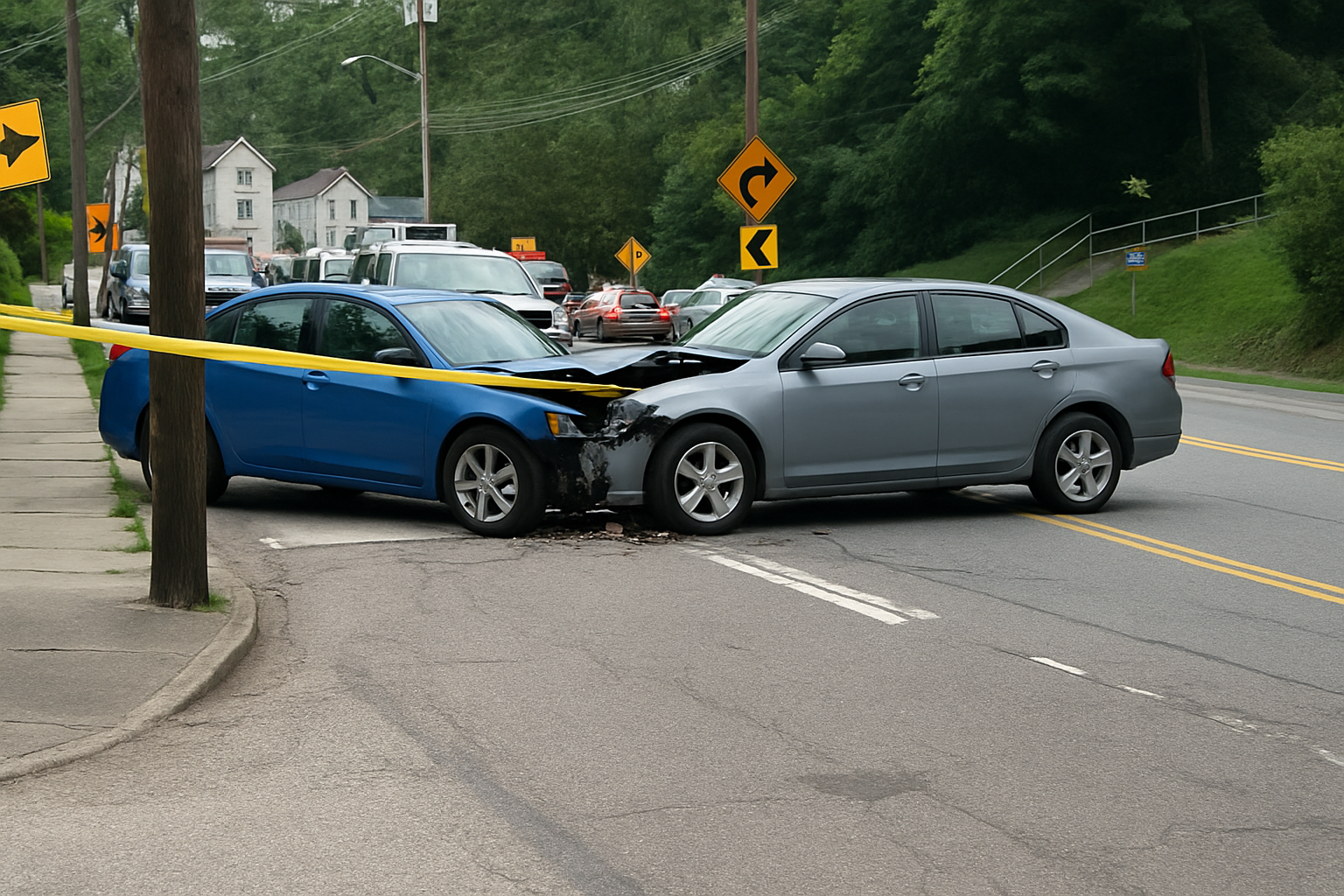
You got a ticket or had an accident in Greensboro, and your insurance premium spiked. Here's how long it takes to recover your rate, which carriers write drivers with points, and what steps accelerate the timeline.
North Carolina's Dual Point Systems: Why Your Rate Increase Lasts Longer Than You Think
North Carolina operates two distinct point systems that most Greensboro drivers confuse. The DMV assigns driver license points that affect your suspension risk — 12 points in three years triggers a suspension. But your insurance company uses the North Carolina Safe Driver Incentive Plan (SDIP), which assigns insurance points that directly determine your premium surcharge. A single speeding ticket 10 mph over the limit adds 2 insurance points under SDIP, triggering a 25% rate increase for most carriers.
Here's the trap: insurance points remain on your record for three years from the date of conviction, not the date of the violation. If you postpone your court date or delay payment, you extend the penalty period. A ticket received in January 2024 but not resolved until June 2024 carries insurance points until June 2027. Most Greensboro drivers assume the clock starts when they got pulled over — it doesn't.
The SDIP scale runs from 1 to 12 insurance points per violation. Speeding more than 10 mph over adds 2 points. At-fault accidents with $3,800+ in damage add 3 points. Reckless driving adds 4 points. Each point triggers an approximate 12.5% premium increase, compounding for multiple violations. A driver with 4 insurance points (one accident plus one speeding ticket) typically faces a 50% rate increase for three full years from the date of the last conviction. North Carolina SR-22 requirements
Greensboro Rate Recovery Timeline: What to Expect Year by Year
If you have one violation on your record in Greensboro, expect your rate to remain elevated for 36 months from the conviction date, then drop immediately once the insurance points fall off. North Carolina law requires carriers to recalculate your SDIP surcharge annually based on your three-year lookback period. You won't see gradual improvement — the rate drops in full when the violation ages out.
For a single 2-point speeding ticket, the typical timeline looks like this: Year 1 (conviction to 12 months): 25% premium increase. Year 2 (12 to 24 months): 25% premium increase. Year 3 (24 to 36 months): 25% premium increase. Month 37: full removal of surcharge, return to base rate assuming no new violations. A Greensboro driver paying $150/month pre-violation would pay approximately $188/month for three years, then drop back to $150/month.
Multiple violations extend the timeline because each conviction restarts the three-year clock. A driver who receives a second ticket 18 months after the first will carry surcharges for 4.5 years total — 36 months from the second conviction, meaning the first violation falls off midway through. The cumulative surcharge drops partway at 36 months from the first conviction, then fully at 36 months from the second.
The only way to accelerate this timeline is to enroll in a North Carolina-approved defensive driving course within 60 days of your conviction. Successful completion can reduce your insurance points by up to 3 points or eliminate the surcharge entirely for a first violation, depending on carrier policy. Not all insurers honor the course reduction equally — some apply the full credit, others cap it at 2 points. non-standard auto insurance
Which Greensboro Carriers Write Drivers With Points — and What They Charge
Not all carriers in Greensboro use the same underwriting appetite for drivers with points. Standard carriers like State Farm, Allstate, and Nationwide will continue to cover you after a violation but apply the full SDIP surcharge. Non-standard carriers like Dairyland, The General, and National General often quote lower base rates for drivers with points because they specialize in imperfect records and price risk differently.
A comparative rate example for a Greensboro driver with 2 insurance points (one speeding ticket): Standard carrier applying SDIP surcharge — $188/month. Non-standard carrier with higher base rate but reduced point penalty — $165/month. The savings emerge because non-standard carriers build point risk into their base pricing model rather than layering it as a surcharge. If you have 4 or more insurance points, the gap widens — standard carriers may non-renew you at the next policy term, while non-standard carriers remain available.
Greensboro has local independent agents who specialize in placing drivers with points. These agents access multiple non-standard carriers and can shop your risk across 5–10 insurers in one session. Captive agents (State Farm, Allstate) can only quote their own company, which rarely offers competitive pricing for drivers with violations. The highest-leverage action available to you right now is requesting quotes from at least three non-standard carriers within 30 days of your conviction — rates vary by 40% or more for identical coverage.
Be aware that Greensboro's urban density affects your base rate before any violation surcharge. Guilford County has higher collision frequency than rural North Carolina counties, so even a clean-record driver in Greensboro pays more than a comparable driver in a smaller city. Your violation surcharge stacks on top of this higher baseline.
Actions That Lower Your Premium Before the Points Fall Off
You cannot remove insurance points from your North Carolina record early, but you can reduce the financial impact while they remain active. First: complete a state-approved defensive driving course if you haven't already. North Carolina accepts courses from the National Safety Council, AAA, and other approved providers. The course must be completed within 60 days of your conviction to qualify for insurance point reduction. Cost ranges from $25 to $75, and the point reduction applies immediately upon submission of your certificate to your insurer.
Second: increase your deductibles. If you're carrying a $500 collision deductible, raising it to $1,000 can reduce your premium by 10–15%. This doesn't affect your SDIP surcharge, but it lowers the base premium that surcharge is applied to. A 25% surcharge on a $150/month policy is $188/month. A 25% surcharge on a $130/month policy (after raising deductibles) is $163/month. The savings compound over three years.
Third: shop your policy every six months while points remain active. Carrier appetite for drivers with points changes frequently — an insurer that quoted you $200/month at conviction may quote $170/month six months later as their book of business shifts. Loyalty does not benefit drivers with points. Standard carriers will not reward you for staying after a violation; your rate is determined by SDIP, not tenure.
Fourth: verify your driving record annually through the North Carolina DMV online portal. Errors happen — tickets from other drivers with similar names, incorrect conviction dates, violations that should have aged off but remain visible. If your record shows inaccurate information, file a correction request with the DMV immediately. Insurers pull your record at renewal and apply surcharges based on what appears, not what should appear.
When Points Become an SR-22 Situation in North Carolina
Most Greensboro drivers with points do not need SR-22 insurance. North Carolina requires SR-22 filing only for specific violations: DUI/DWI, driving while license suspended or revoked, accumulating 12 DMV points in three years, or at-fault accidents while uninsured. A standard speeding ticket or at-fault accident does not trigger SR-22 requirements, even if it adds insurance points to your record.
If you do accumulate 12 DMV points and face a suspension, North Carolina will require SR-22 for three years following reinstatement. The SR-22 is a certificate your insurer files with the DMV confirming you carry minimum liability coverage: $30,000 bodily injury per person, $60,000 per accident, and $25,000 property damage. Filing fee is typically $25–$50, but the real cost is the premium increase — SR-22 drivers pay 30–50% more than drivers with points who do not require SR-22.
If your violation does require SR-22, you need a carrier licensed to file SR-22 in North Carolina. Not all insurers offer this — Progressive, Dairyland, The General, and National General commonly write SR-22 policies in Greensboro. Your current carrier may drop you at renewal if SR-22 filing is required, forcing you into the non-standard market. Start shopping before your policy term ends to avoid a coverage gap, which would trigger an additional suspension and restart your SR-22 clock.
Distinguish clearly between DMV points (which count toward suspension) and insurance points (which determine your premium). You can have 10 DMV points and 6 insurance points simultaneously. The systems overlap but operate independently. Greensboro drivers often panic when they see "points" on their record without understanding which system applies and what the threshold for serious consequences actually is.
What Greensboro Drivers Should Do in the Next 30 Days
If your violation occurred within the past 60 days, enroll in a defensive driving course immediately. The point reduction window closes fast, and most drivers miss it by assuming they can complete the course anytime. If the 60-day window has passed, the course will not reduce your current insurance points but may still qualify you for a safe driver discount with some carriers — ask before enrolling.
Request quotes from at least three insurers who specialize in non-standard or high-risk drivers. Do not assume your current carrier offers the best rate after a violation. Greensboro has independent agents who can shop your risk across multiple non-standard carriers in one request — this saves you from filling out forms repeatedly and allows side-by-side comparison of identical coverage limits.
Pull your official North Carolina driving record from the DMV and verify every conviction date, point assignment, and violation description. If anything is incorrect, file a dispute immediately. Your insurance company will not fact-check the DMV record — they will apply surcharges based on what appears. Correcting an error can save you hundreds of dollars per year if it removes points you shouldn't carry.
Set a calendar reminder for 36 months from your conviction date. On that date, request a new quote from your insurer or shop the market again. Your rate should drop immediately once the insurance points fall off. If it doesn't, your carrier may not have updated your SDIP calculation — contact them and request a manual review. Some insurers auto-renew policies without recalculating surcharges unless the policyholder asks.